Osterburg (Rhön): A Romanesque Summit Castle Ruin in Germany
Site at a Glance
- Rating
- 4.6
- Popularity
- Low
- Country
- Germany
- Primary era
- Medieval
- External website
- Open
- Eras represented
- Medieval
- Civilizations
- Holy Roman Empire
- Site type
- Military
- Remains
- Castle
On this page8 sections
History
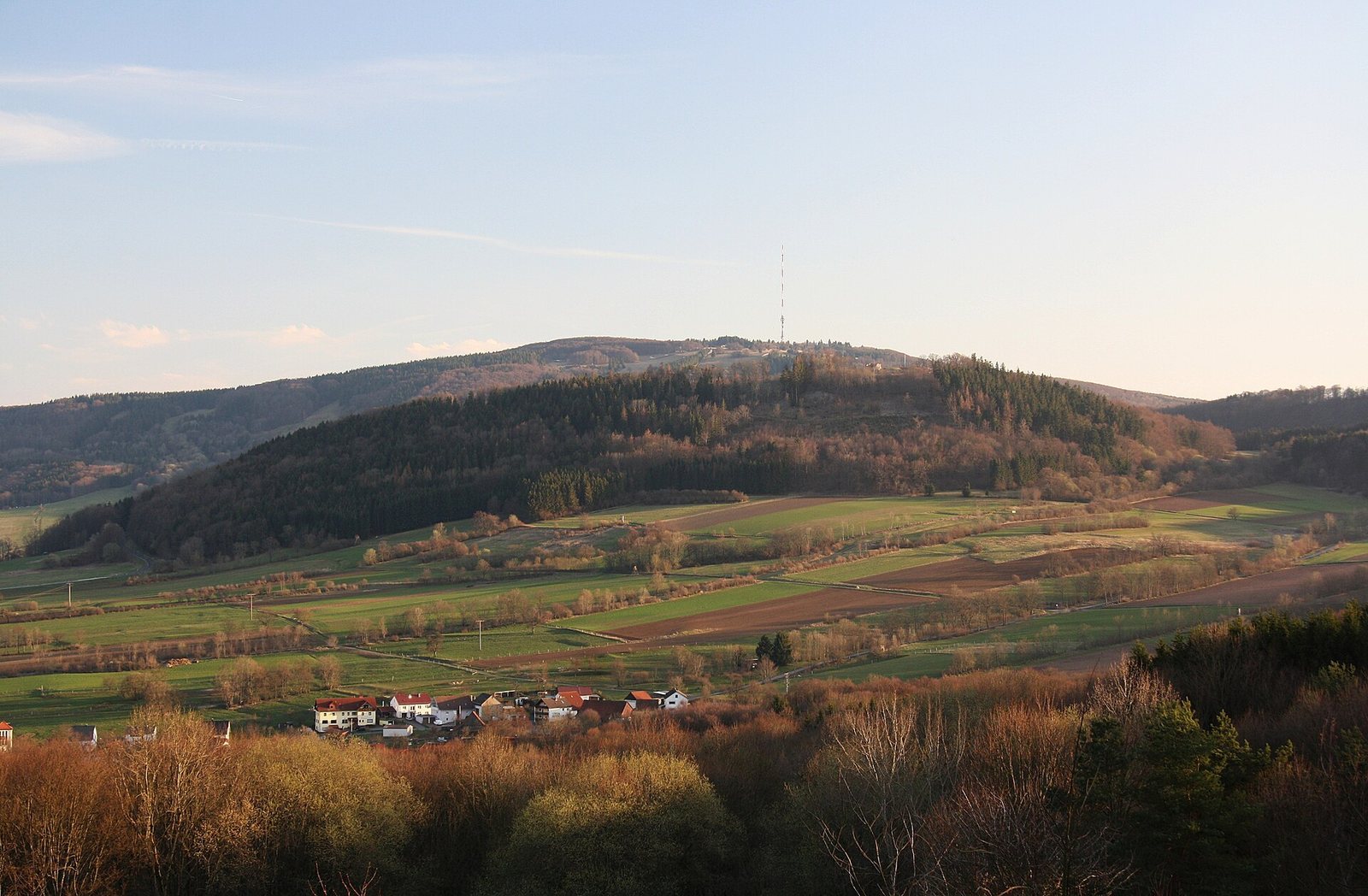
Osterburg (Rhön) is a Romanesque summit castle ruin near Bischofsheim in Germany, built around 1200 on the 714-metre Osterburg mountain in the Rhön. Its history is partly uncertain, but medieval references connect the castle with local noble families and the territorial rivalry between the Würzburg prince-bishops and the Fulda prince-abbots.
Early traditions and medieval lords
Local tradition places a hunting lodge for a Frankish king on the mountain as early as the sixth century. The tradition cannot establish the date of the surviving castle, which is associated with the period around 1200. At that time, the Salzforst, a politically important forest territory in the Rhön, belonged to the Würzburg prince-bishops. A prince-bishop combined episcopal office with territorial political authority. The castle was reportedly used to protect the area against raids by the prince-abbots of Fulda, whose abbots also controlled surrounding lands.
Reinhold of Osterburg was mentioned around 1200. Engelhard of Osterburg appeared as a witness in documents from 1217 and 1230, and Boto of Eberstein held Osterburg as a fief in 1231. A fief was land or property granted by a superior in return for service or loyalty. These references place the castle within the network of medieval lordships that governed the region.
Decline and destruction
During the twelfth century, Bischofsheim and its castle were expanded into a fortified stronghold. Osterburg probably lost importance as this nearby centre developed. Its lords repeatedly came into conflict with Abbot Bertho II of Fulda. Around 1270, the castle was probably destroyed during the Fulda abbot’s destruction of Bischofsheim. The medieval phase of Osterburg’s history ended in this period.
By around 1600, Osterburg was described as a heap of ruins during boundary disputes between Bischofsheim, Haselbach, and Frankenheim. The disputes concerned grazing, timber, and hunting rights. The remaining stones were gradually taken for other construction. In 1875, Anton Schumm wrote that Kreuzberg monastery was said to have been built from Osterburg stone. In 1928, the journal Rhönwacht stated that the walls of Bischofsheim, including the Zentturm, had also used stone from the castle. The Zentturm was a local judicial and administrative tower. Residents of Haselbach and Frankenheim also used the ruin as a quarry, after which woodland overgrew the remaining rubble.
Rediscovery and conservation
The former castle remains were rediscovered in 1897 during the construction of a timber haul road. Forestry master Fuchs arranged for the site to be cleared and exposed. In 1909, the keep, the castle’s principal fortified tower, was temporarily converted into an observation tower. Its unstable condition made climbing dangerous, and it was demolished by blasting in 1928.
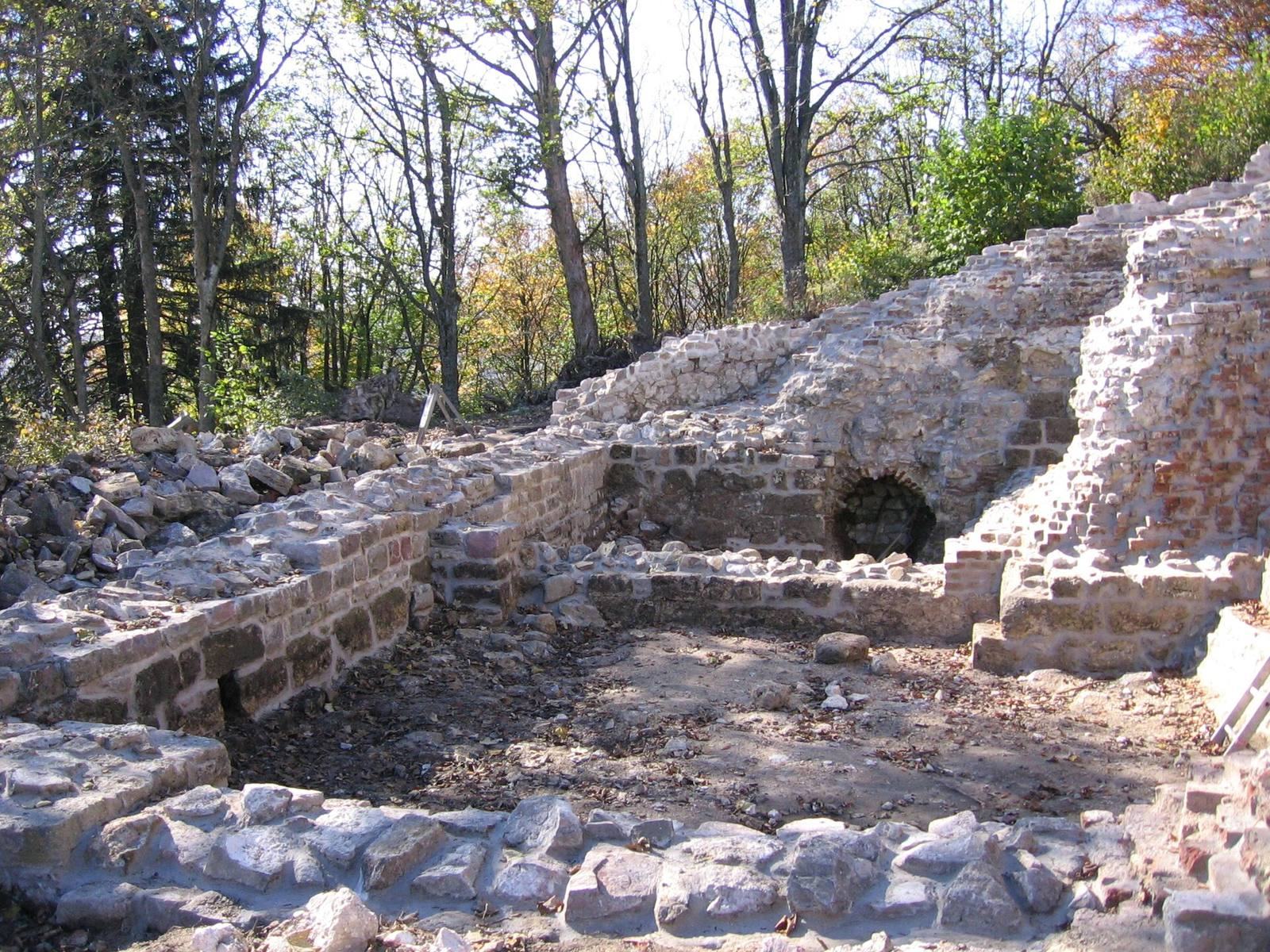
Since 2005, the Friends of Osterburg association has worked with the city of Bischofsheim and the Bavarian State Office for Monument Protection to clear the ruin again and secure the surviving walls. The work aims to preserve the remaining fabric while also helping establish the castle’s actual age.
Legends of the castle
Several local legends explain the castle’s origins, destruction, and hidden treasure. One foundation story tells of a farmer’s servant who was led by a dwarf through an underground passage to a treasure chamber. After taking the treasure, he was released from the dwarf’s power, built Osterburg on the spot, and became its first knight.
A destruction legend says that enemies discovered an underground water conduit after a horse caused the ground on nearby Arnsberg to collapse. By diverting the water supply, they forced the defenders to surrender and destroyed the castle, leaving only a few fragments. Other traditions describe a white-clad maiden connected with the hidden treasure. In one version, she was the spirit of a castle lady whose lover had been killed in a fight with a merchant attacked by men from Osterburg. Her grief was said to have caused water to run down the mountain.
Another treasure story concerns a shepherd who entered a mysterious gate and passage but could not find the entrance again after returning to his flock. A girl named Pauline supposedly followed a ball of wool into a large cellar containing vats filled with flax seeds. After she carried some seeds home, they became gold coins. In this tradition, “knotten” means flax seeds.
Remains
Summit layout
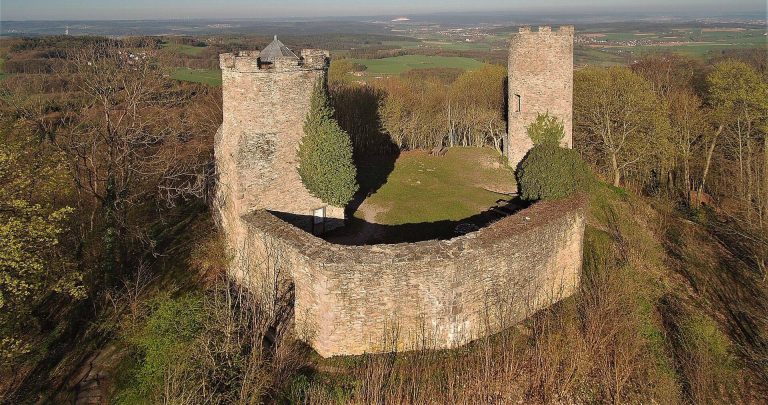
Osterburg occupies the summit of the Osterburg mountain west of Bischofsheim and lies within woodland. The castle was a hilltop complex with a purely Romanesque ground plan, a medieval architectural form known for substantial masonry and massive proportions. When the site was cleared in 1897, the plan measured approximately 114 metres from end to end and 70 metres across.
The size of the complex suggests accommodation and defensive arrangements beyond the resources of a single knight. Three or four knights were said to have lived there at the same time, each in a separate courtyard within the castle ring. This arrangement helps explain the considerable extent of the enclosure.
Walls, stairways, and archaeological material
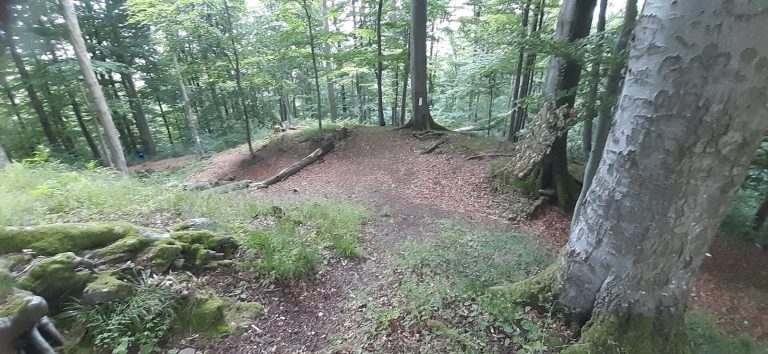
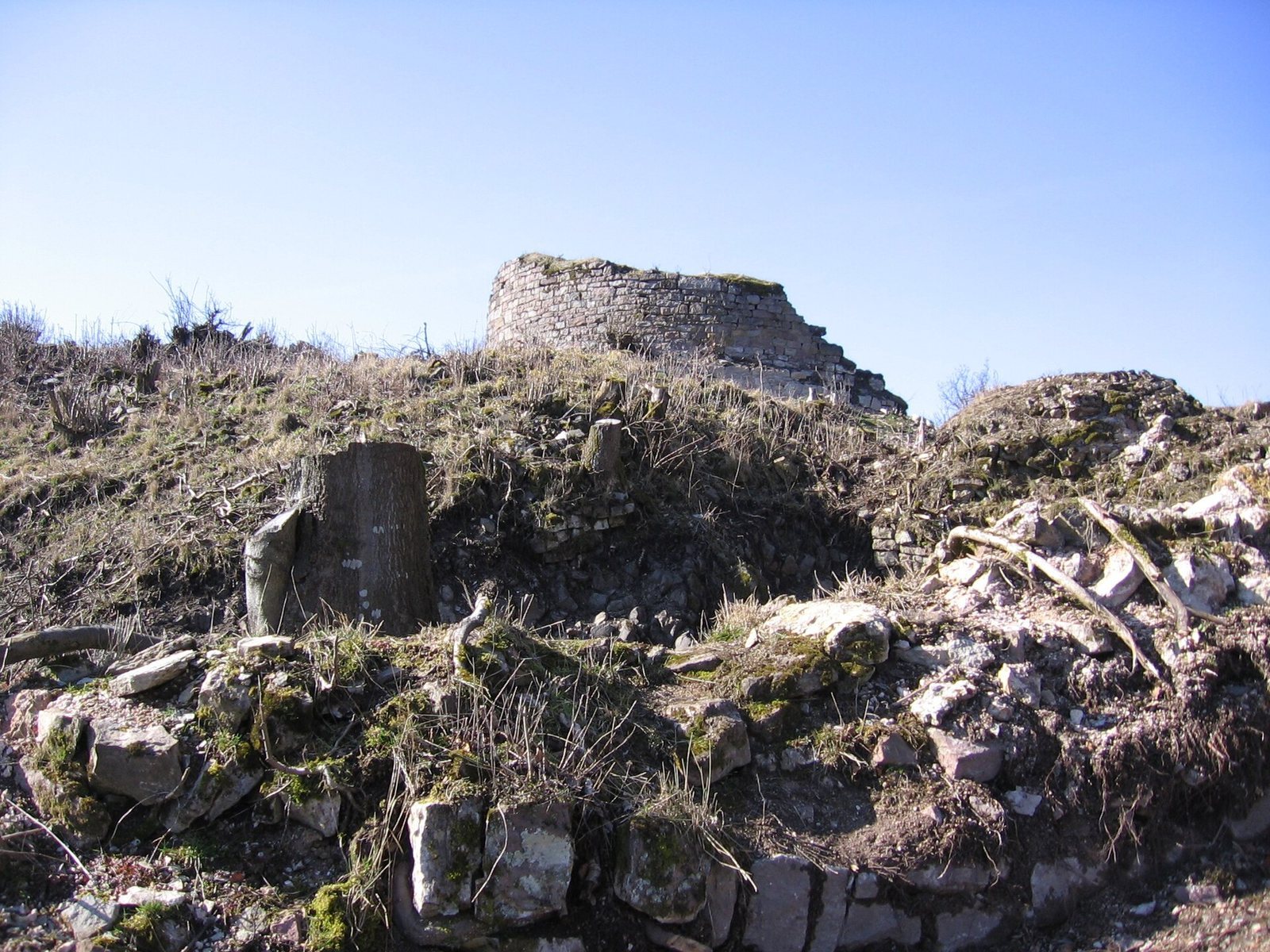
Surviving elements include sections of wall and stairways set among heavily overgrown remains. Vegetation and the loss of much of the masonry make the original plan difficult to recognize today. The former keep was briefly adapted as an observation tower in 1909 before its demolition by blasting in 1928 because of its unstable condition.
Archaeological finds from excavations are held in the Osterburg collection in Bischofsheim. Together with the exposed wall sections and stairways, these materials support continuing efforts to clarify the date and development of the summit castle.