Diaoyu Fortress: A Southern Song Mountain Stronghold in China
Site at a Glance
- Rating
- 4.5
- Popularity
- Very Low
- Country
- China
- Primary era
- Medieval
- Eras represented
- Medieval
- Civilizations
- Chinese
- Site type
- Military
- Remains
- Fort
On this page7 sections
History
Foundation and Southern Song Defense
Diaoyu Fortress is a Southern Song fortress in China, built on Diaoyu Mountain during the Southern Song period, with construction dated to 1242. The Southern Song ruled southern China from 1127 to 1279 after losing the north to the Jurchen Jin, and it fought the Mongol expansion that eventually established the Yuan dynasty. Yu Jian, a Southern Song military leader, is associated with the fortress’s construction and defense.
The name comes from a local flood legend. People who took refuge on the mountain faced starvation until a deity descended from the heavens and caught fish for them. The mountain became known as “Fisherman’s Mountain,” and the fortification took the name “Fisherman’s Fortress,” or Diaoyucheng.
The Mongol Sieges
Mongol attacks on the Song Empire began in 1235. Between 1243 and 1279, Diaoyu Fortress endured more than 200 military confrontations and resisted Mongol forces for about 36 years. Yu Jian was associated with a series of victories, including the death of Wang Tege, a commander of the Mongol vanguard.
Möngke Khan, the Mongol ruler who directed the full-scale campaign against the Southern Song in 1257, began the siege of Diaoyu Fortress in February 1259. His army numbered more than 10,000, but it failed to capture the stronghold. Möngke died during the siege in August 1259. The circumstances remain uncertain: Chinese accounts describe either a fatal crossbow wound or a stone projectile from a cannon or trebuchet, while Persian accounts attribute his death to an infectious disease. An outbreak during the siege is also recorded.
From Mongol Conquest to Protected Site
Möngke’s death without a successor led Mongol forces to withdraw from several parts of Eurasia, especially Syria. It also contributed to the Toluid Civil War, a succession struggle among the descendants of Tolui, and to Mongol losses at the Battle of Ain Jalut and the division of the Mongol Empire.
After Möngke’s death, Kublai became the Mongol ruler. He completed the conquest of China in 1279 and established the Yuan dynasty. The garrison of Diaoyu Fortress then agreed to recognize the new dynasty on the condition that neither the fortress nor its defenders would be harmed. That condition was fulfilled.
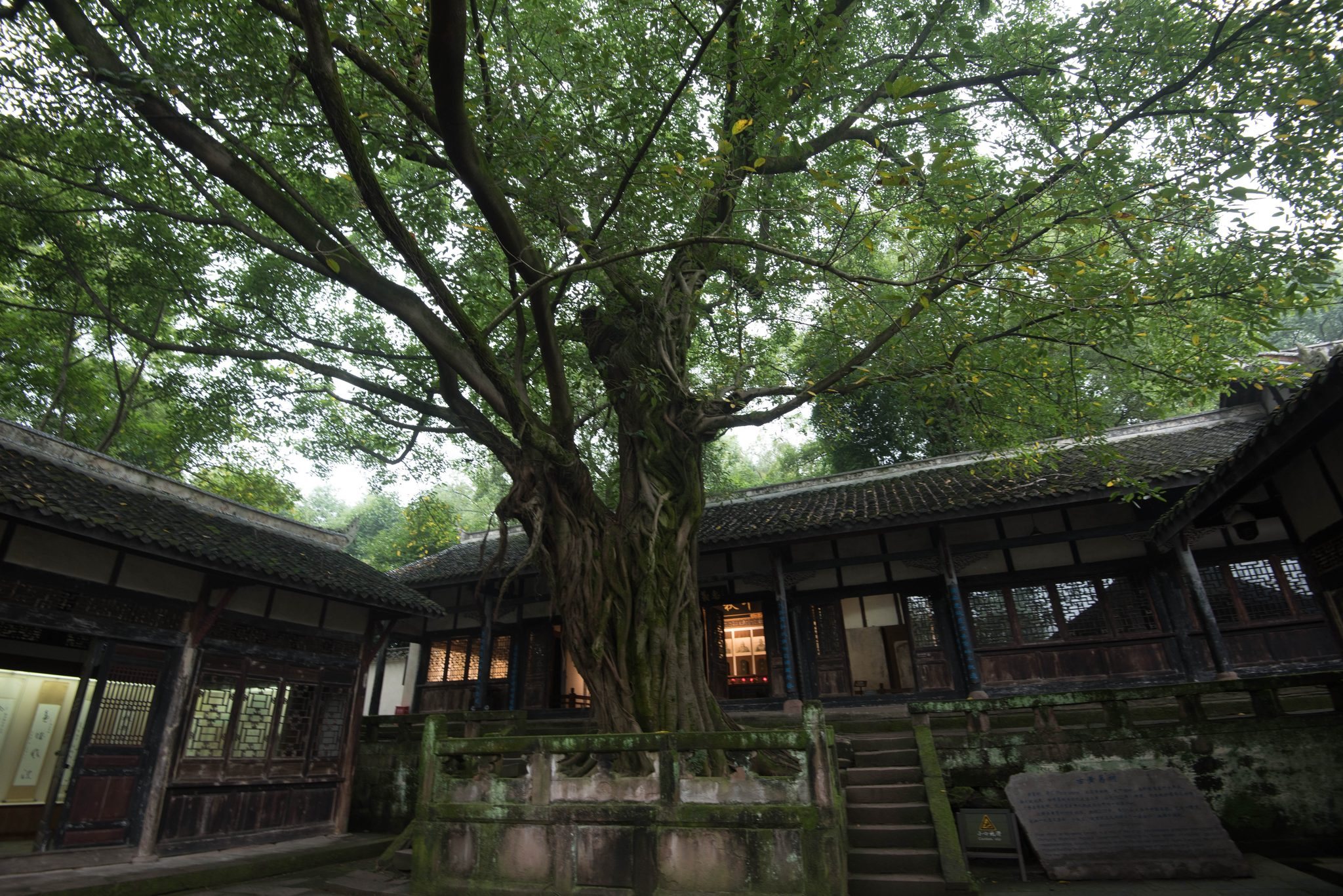
Diaoyu Fortress is described as the only surviving Chinese fortification from the pre-Mongol period. It has been a Major Historical and Cultural Site Protected at the National Level since 1996, when it was included in the fourth national list under item 55. The site also incorporates religious architectural monuments and landscapes in which natural and constructed features are combined.
Remains
Mountain Setting and Layout
The ancient fortress occupies approximately 2.94 square kilometers on Diaoyu Mountain, a steep hill or peninsula surrounded by water on three sides. It stands near the confluence of the Jialing, Fu, and Qu rivers, about five kilometers east of Hechuan and across the Jialing River from the city center. The site lies within Chongqing’s Jinyun Mountain National Park, where natural features form part of the historical landscape.
Entrances and Defensive Installations
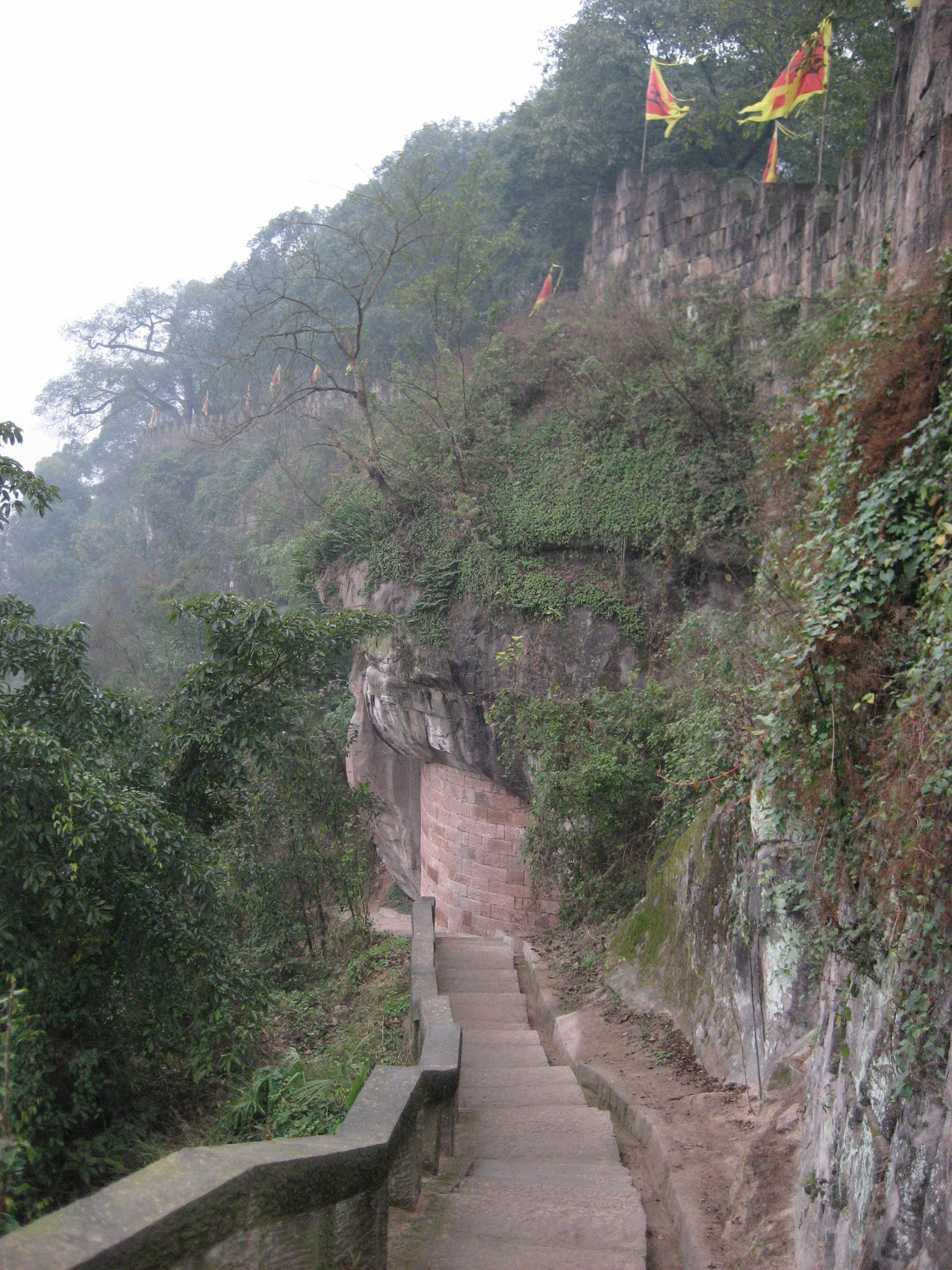
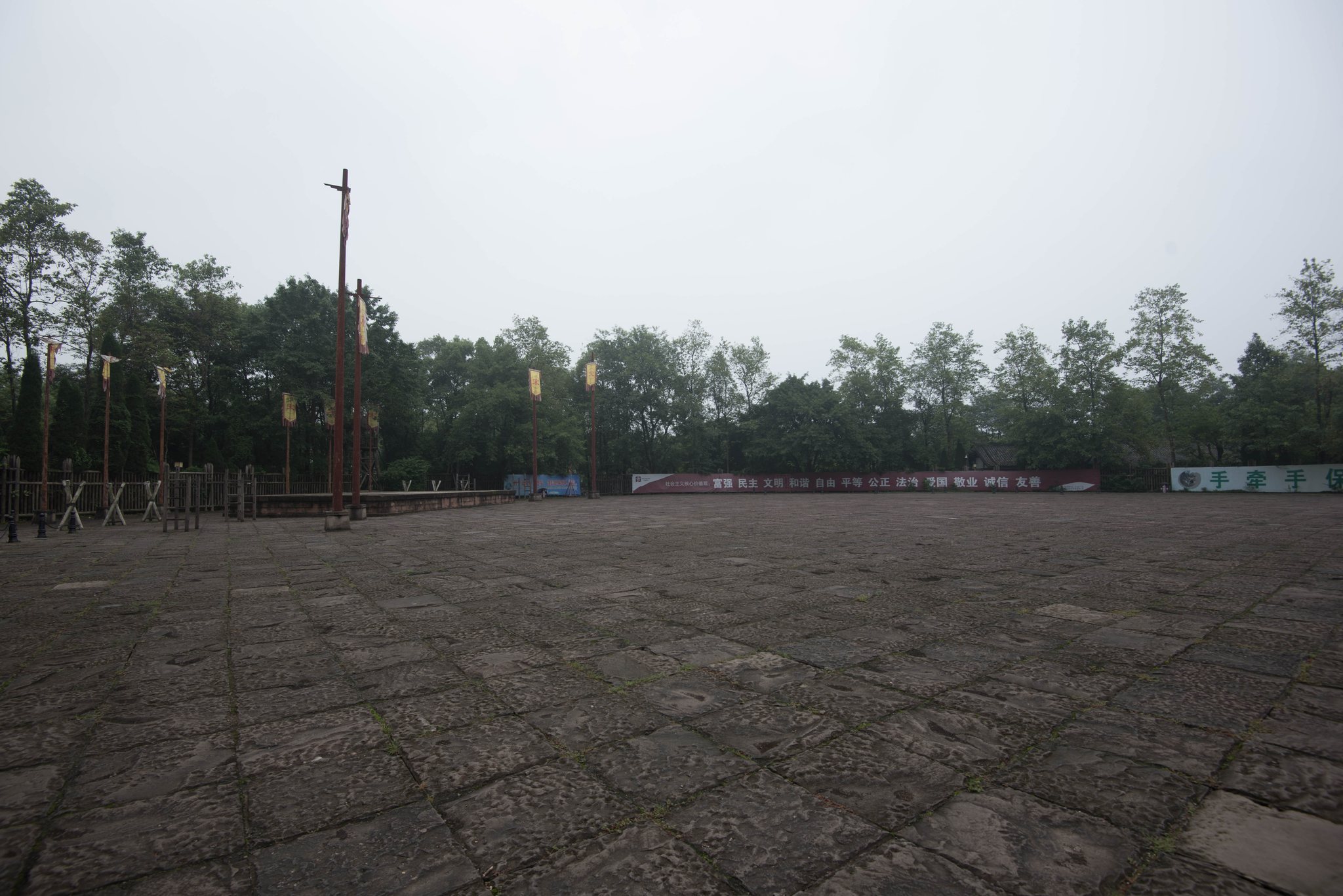
A steep stone path leads to the Huguo Gate, a fortified entrance on the mountain. The surviving military remains include a naval wharf, drilling grounds, watchtowers, and fortifications equipped with built-in cannons. These features form the physical defensive complex alongside the site’s religious monuments and natural-architectural landscapes.