Oppidum Milseburg: A Fortified Iron Age Settlement in Germany
Site at a Glance
- Rating
- 5
- Popularity
- Very Low
- Country
- Germany
- Primary era
- Iron Age
- Eras represented
- Iron Age
- Civilizations
- Celtic
- Site type
- Settlement
On this page6 sections
History
Iron Age settlement
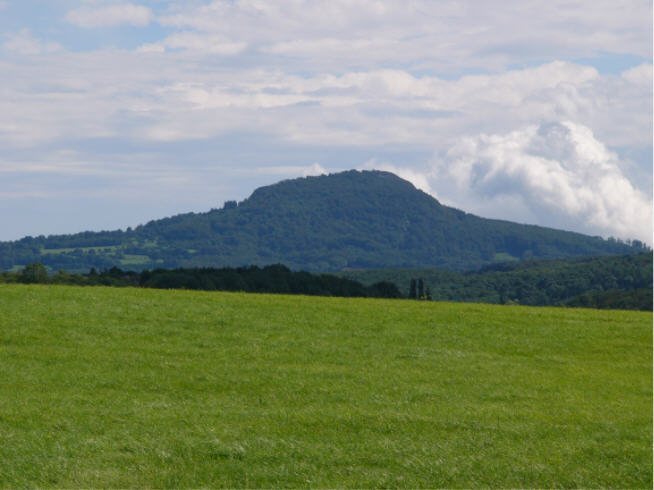
Oppidum Milseburg was a large fortified settlement, or oppidum, on Milseburg mountain in the Rhön, near Hofbieber in Germany. It probably arose toward the end of the Hallstatt period, an earlier phase of the European Iron Age, and remained occupied through the late La Tène period, the later phase associated with Celtic culture, into the first century BC. At the edge of the Celtic world, the settlement was connected to far-reaching exchange networks. Its ceramics have parallels in southern Germany and Bohemia and are interpreted as imports.
Damage and archaeological investigations
Between 1886 and 1889, construction of the Rhön Railway led to the destruction of extensive sections of the northeastern rampart, whose stones were quarried for railway works. Traces of the settlement came to light in the late nineteenth century. From 1899 to 1906, local historian Joseph Vonderau, Kassel museum director Johannes Boehlau, and Boehlau’s assistant, librarian W. Lange, excavated numerous settlement remains.
Excavations resumed in 2003 and 2004, after an interval of almost a century. Fulda district and city archaeologist Matthias Müller led the archaeological working group until his death in early 2004. Further work was led by Fulda city and district archaeologist Frank Verse and excavation director Ulrike Söder of the Prehistoric Seminar at Philipps University Marburg.
Remains
Enclosure and settlement layout
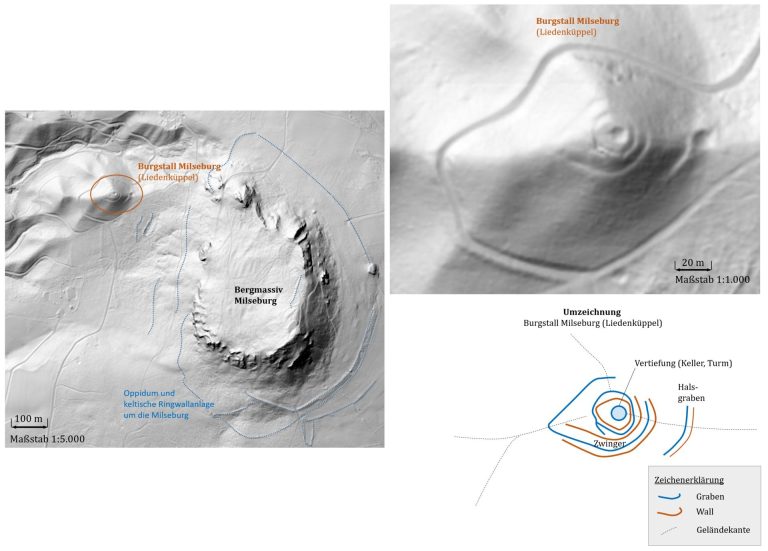
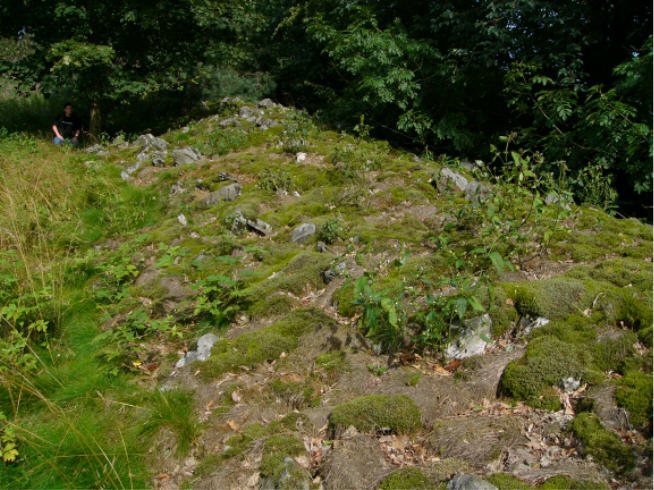
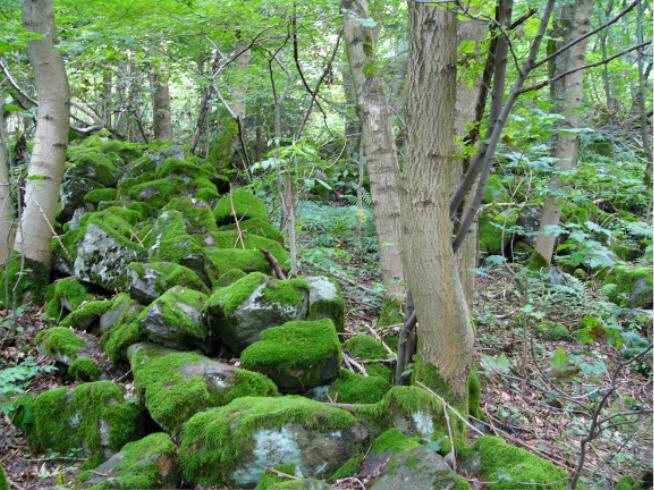
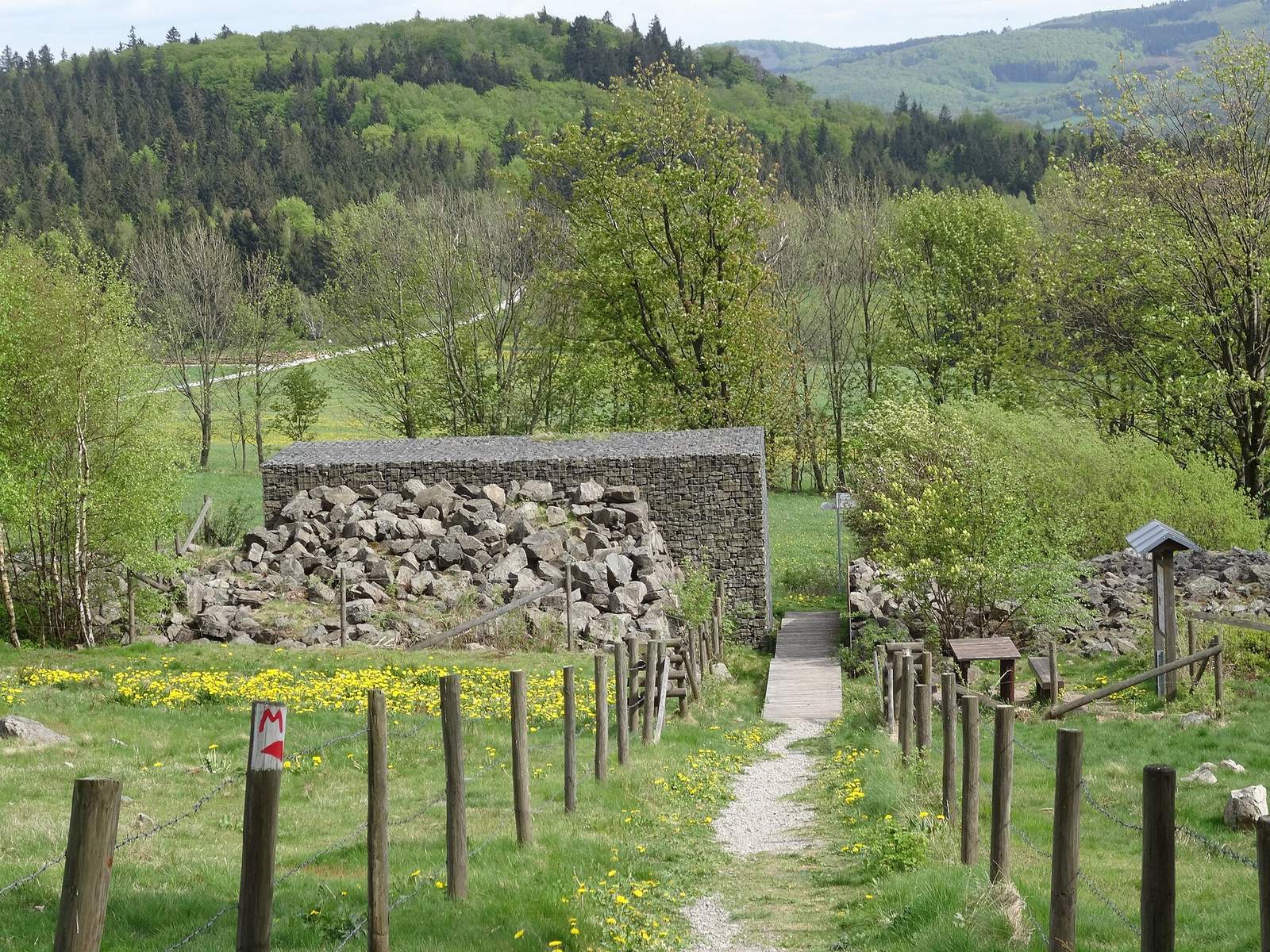
The enclosure covered more than 35 hectares. A rampart about 1,300 metres long and up to 12 metres wide defended its northern, eastern, and southern sides, using timber-box construction. On the west, steep slopes descending toward the Bieber valley provided natural protection. Two further ramparts, about 65 and 85 metres long, guarded a spring. Three gates gave access to the settlement: one could accommodate carts, while the approaches to the other two were too steep. The decayed ring rampart survives at the foot of the mountain on the eastern and southeastern sides. Terraces that once served as house platforms also remain.
Excavated finds
Excavations yielded large quantities of pottery, iron tools, and a small number of iron weapons. These objects are held principally by the Vonderau Museum in Fulda and the Hessian State Museum in Kassel. Later excavations also recovered jewellery and a potsherd with a granite coating.