Oppidum de la Cloche: An Iron Age Fortified Settlement in France
Site at a Glance
- Popularity
- Low
- Country
- France
- Primary era
- Iron Age
- Eras represented
- Iron Age
- Civilizations
- Ancient Greek
- Site type
- Military
- Remains
- Fortified Town
On this page10 sections
History
Iron Age development
The Oppidum de la Cloche is an Iron Age fortified settlement at Les Pennes-Mirabeau, France. It was probably established in the third century BC, during the later Iron Age, and may have developed from the nearby settlement of Teste-Negre. In the early first century BC, it underwent extensive remodeling.
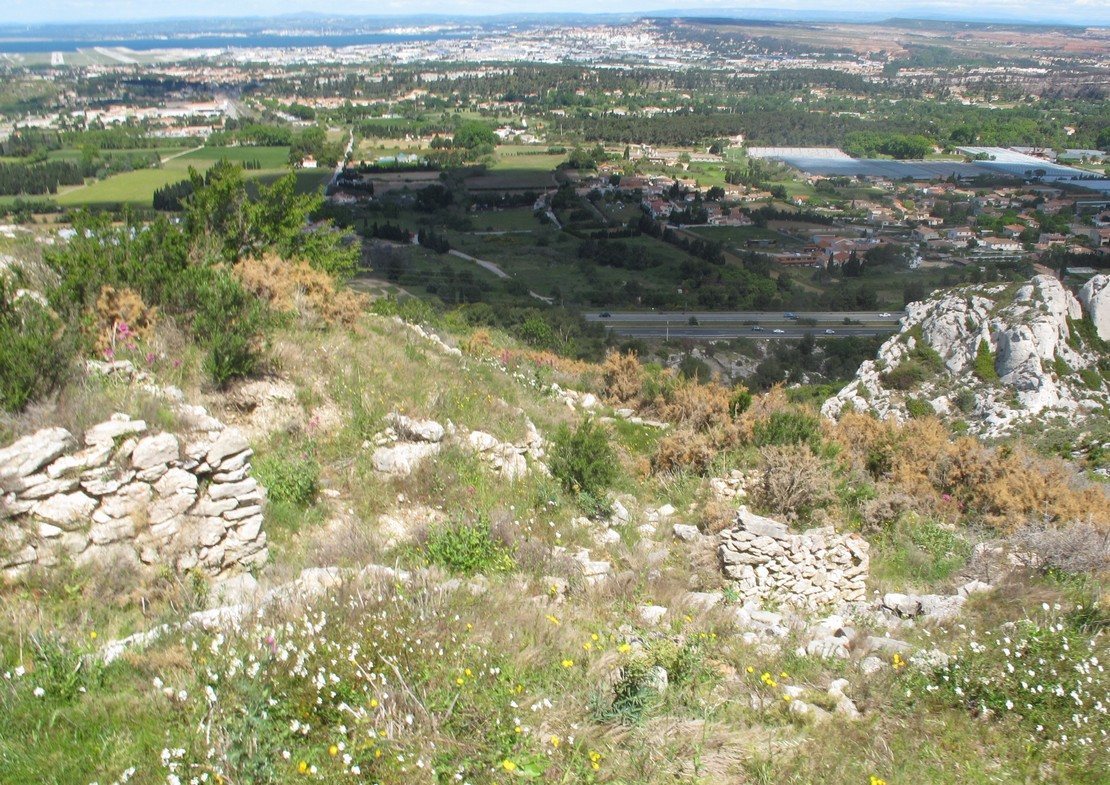
Its position allowed it to control a route linking the Berre lagoon with Marseille across the Estaque range. The settlement probably lay within the territory controlled by Massilia, the ancient Greek name for Marseille. Its destruction during the siege of that city supports this interpretation.
Destruction and archaeological study
In 49 BC, troops led by the Roman commander Julius Caesar destroyed the settlement during the siege of Massilia. Archaeological interest in the site dates to the early twentieth century, and traces of clandestine digging predate 1946. Systematic excavations began in the late 1960s. Work from 1967 to 1972 concentrated on the access route, entrance, and northeastern part of the settlement; a further phase, begun in 1972, investigated the residential quarter around the entrance.
Exploration of the summit in the 1990s suggested that it contained a place for religious activity. The Oppidum de la Cloche was classified as a historic monument in 2004.
Remains
Settlement layout
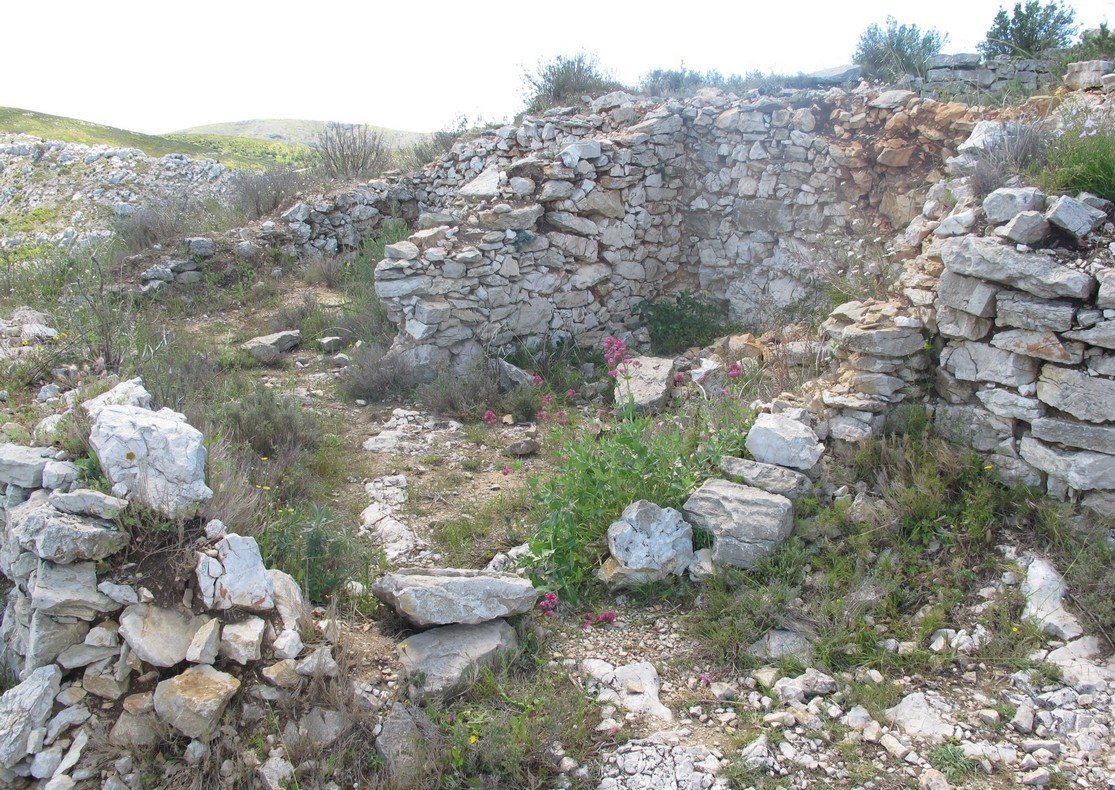
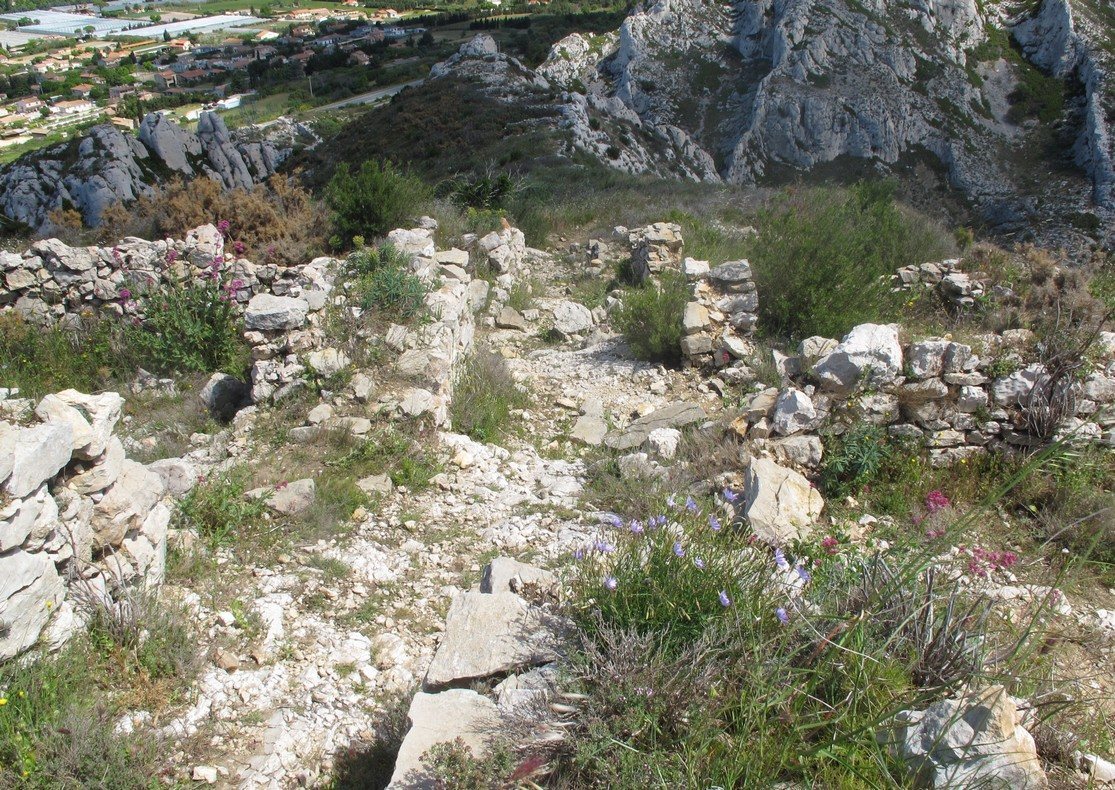
The settlement occupies a projecting hill at an elevation of 235 metres, north of the Nerthe massif and near the boundary between Le Rove and Les Pennes-Mirabeau. It overlooks the Nerthe road and has views in every direction. Two approaches lead to distinct quarters: a steep route beside a ventilation tower reaches the small quarter at the northern tip, while an approach along the southwestern ridge, bordered by an open defensive slope, leads to the larger quarter on the summit.
Northern quarter
The northern quarter contains a small group of aligned rooms. One has a basin cut into its interior, and the walls of other rooms extend more than a metre into the rock.
Summit quarter
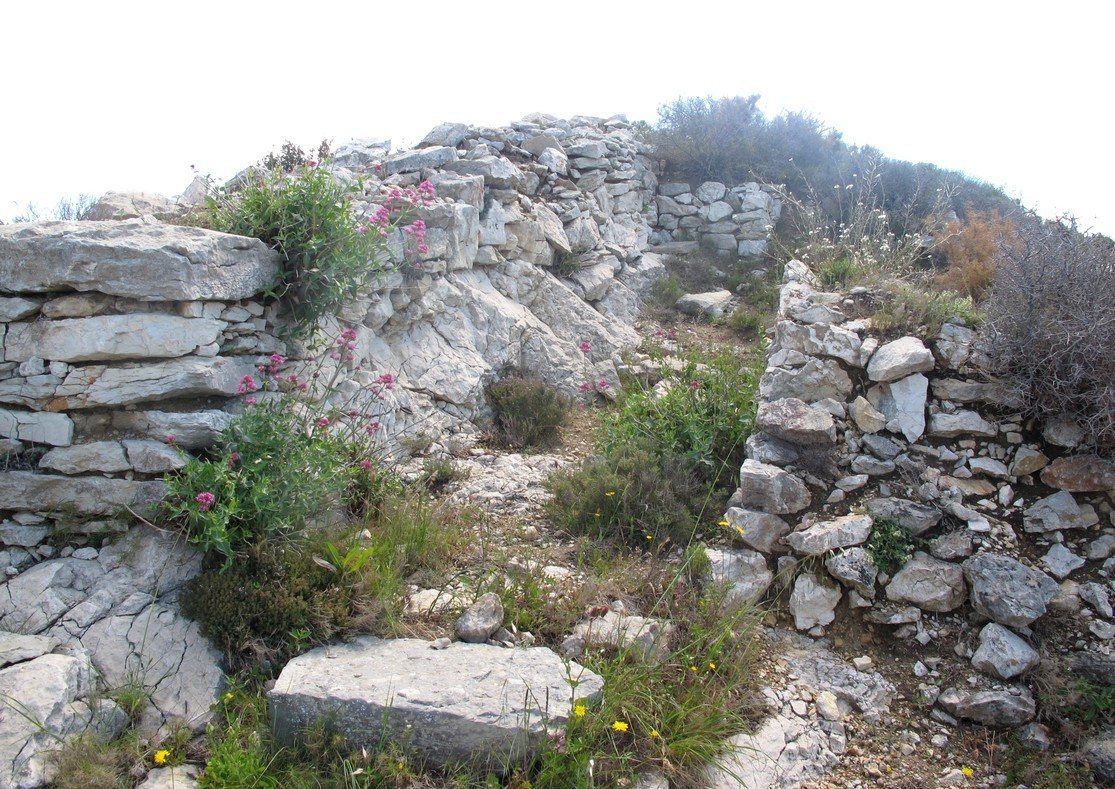
The larger quarter has a defensive wall along its western side and numerous rooms arranged across several levels. Some of these rooms also have walls cut into the rock.
Statue and associated finds
Warrior statue
Fragments of a warrior statue found at the site date to the third century BC. They depict a seated figure with crossed legs, wearing body armor. The sculpture is comparable to statues from Entremont, a fortified settlement associated with the Salyans, an ancient people of Provence. The fragments have allowed the head, part of the torso, and the left arm to be reconstructed. An engraving of a bent ring appears on the figure’s hand; rings of this type have also been recovered from excavations at the settlement and at other sites of the same period. The statue is exhibited at the Museum of the History of Marseille.
Other displayed objects
Displayed alongside the statue at the museum are human skulls intended for display on a doorway lintel, as well as tools and weapons.