Museum of the Roman Docks: A Roman Commercial Warehouse Museum in Marseille
Site at a Glance
- Rating
- 4.2
- Popularity
- Low
- Country
- France
- Primary era
- Classical
- External website
- Open
- Eras represented
- Classical, Medieval
- Civilizations
- Roman
- Site type
- Infrastructure
- Remains
- Harbour
On this page9 sections
History
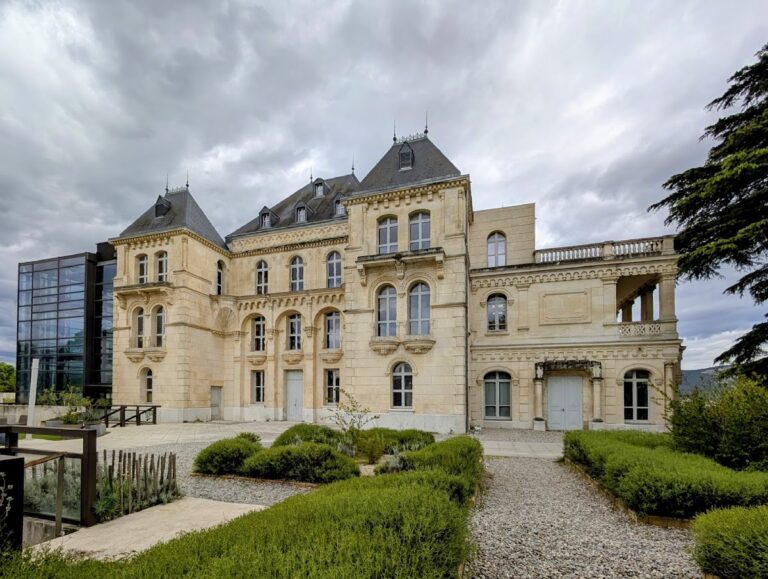
The Museum of the Roman Docks is a municipal museum in Marseille, France, preserving the remains of a Roman commercial warehouse and presenting the city’s long maritime history. Officially opened in 1963 and renovated in 1987, it is built around one of the few known Roman commercial warehouses equipped with dolia, exceptionally large ceramic vessels used mainly for storing wine and oil. Comparable installations are known at Ostia, the port at the mouth of the Tiber that served Rome.
Discovery and preservation
The Roman docks came to light in 1947 during reconstruction in Marseille’s Old Port districts. These areas had been destroyed by dynamiting carried out by the German occupying forces in 1943. The historian and archaeologist Fernand Benoit intervened to preserve part of the remains in place, allowing the warehouse to become the foundation of the museum. The preserved remains were classified as French historic monuments by an order of 22 October 1959, and the museum also holds Musée de France status.
A millennium of maritime commerce
The museum’s collections bring together material from underwater excavations of about twenty shipwrecks in Marseille’s harbor, along with finds from excavations at Jules Verne Square and Villeneuve-Bargemon Square. Together, these objects cover the sixth century BC to the fourth century and trace approximately a millennium of Greek and Roman maritime commerce in Marseille.
The wrecks reveal the range of goods and connections that passed through the harbor. The sixth-century-BC Esteou dou Miet wreck contained an Etruscan amphora, ceramics, and a black, smoke-darkened Etruscan drinking vessel known as bucchero nero. Plane II, from the end of the fifth century BC, carried Massaliot, Punic, and Greek amphorae, Attic ceramics, copper ingots, and a black-glazed Attic cup. The Campanian cargoes of Grand Congloué I and Grand Congloué II date from the end of the third or beginning of the second century BC and included amphorae, cups, bowls, and other ceramics. One amphora from Grand Congloué I bears stamps on both handles.
Other underwater finds indicate the movement of building materials, food products, and containers. Carry-le-Rouet carried stone blocks marked in the same way as stones in Marseille’s Hellenistic ramparts, linking the cargo to the city as its intended destination. Planier III produced amphorae, tableware, and amphora stoppers, while Petit Congloué carried large fixed storage vessels in its holds together with Spanish amphorae. Planier I, dating to the first century, probably came from northern Spain. The Cassidaigne area contained a large quantity of amphorae, and the Pointe de la Luque sites yielded Roman tiles, terracotta lamps, and cylindrical amphorae for brine, including material dated to the fourth century.
Remains
Roman warehouse
The central surviving feature is a Roman commercial warehouse preserved in situ. Approximately thirty large dolia remain set into the floor or ground up to their necks. These fixed storage vessels could reach 1.70 metres in height and 1.60 metres in diameter, with capacities of about 1,800 to 2,000 litres. Each was closed by a lid made from the same material and coated inside with resin. The vessels provided relatively stable temperatures for preserving wine. Their manufacture was difficult because they were fired where they had been made, and cracks that appeared during drying and firing had to be sealed carefully.
The dolia were used mainly for wine or oil and were often installed beside wine presses at ancient vineyards. An earlier interpretation that they also stored grain is no longer accepted. Within the same area, identifiable walls and wells belong to medieval habitations, showing that the warehouse space was later occupied and altered.
Archaeological collections
Amphorae and ceramics
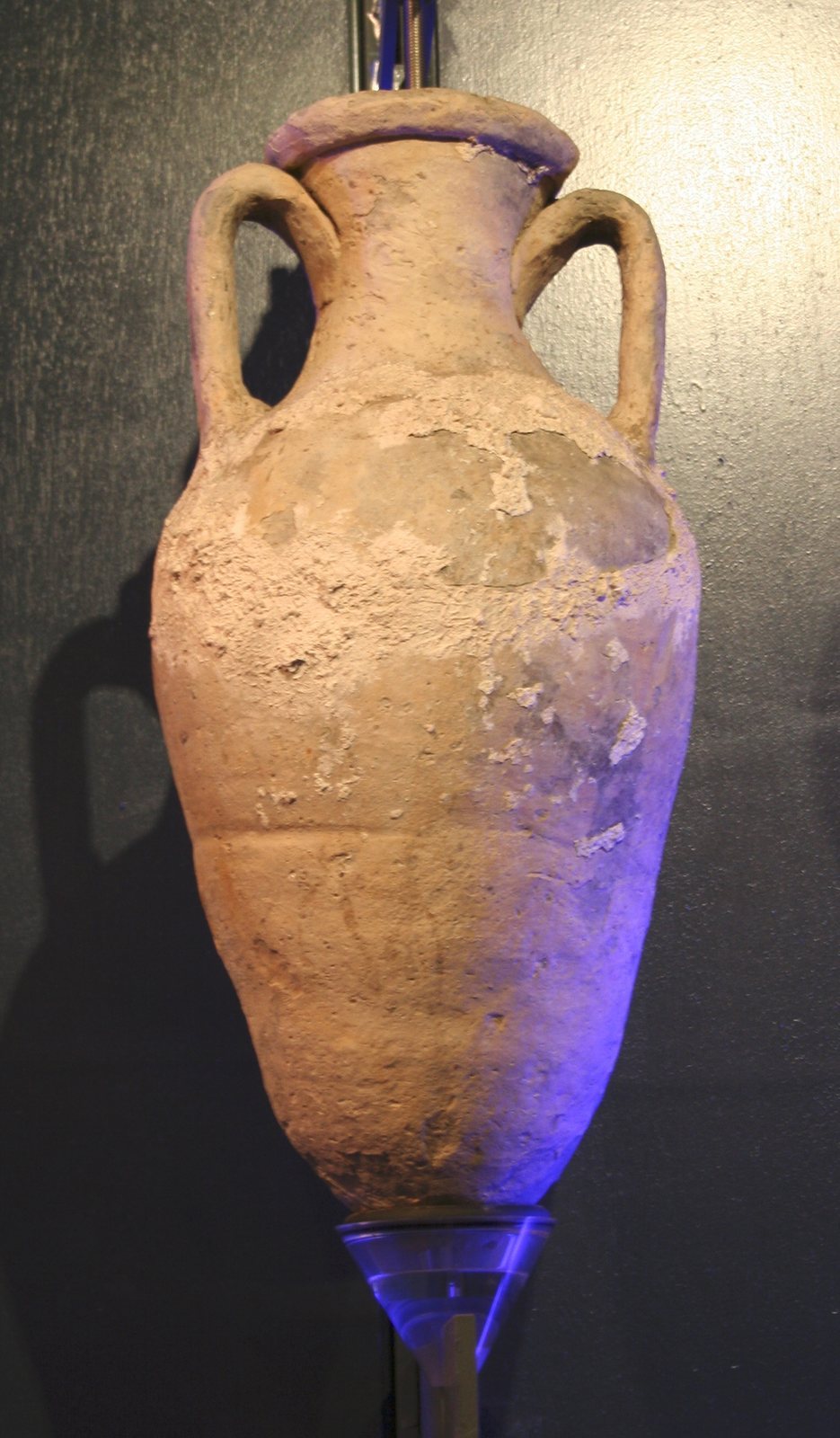
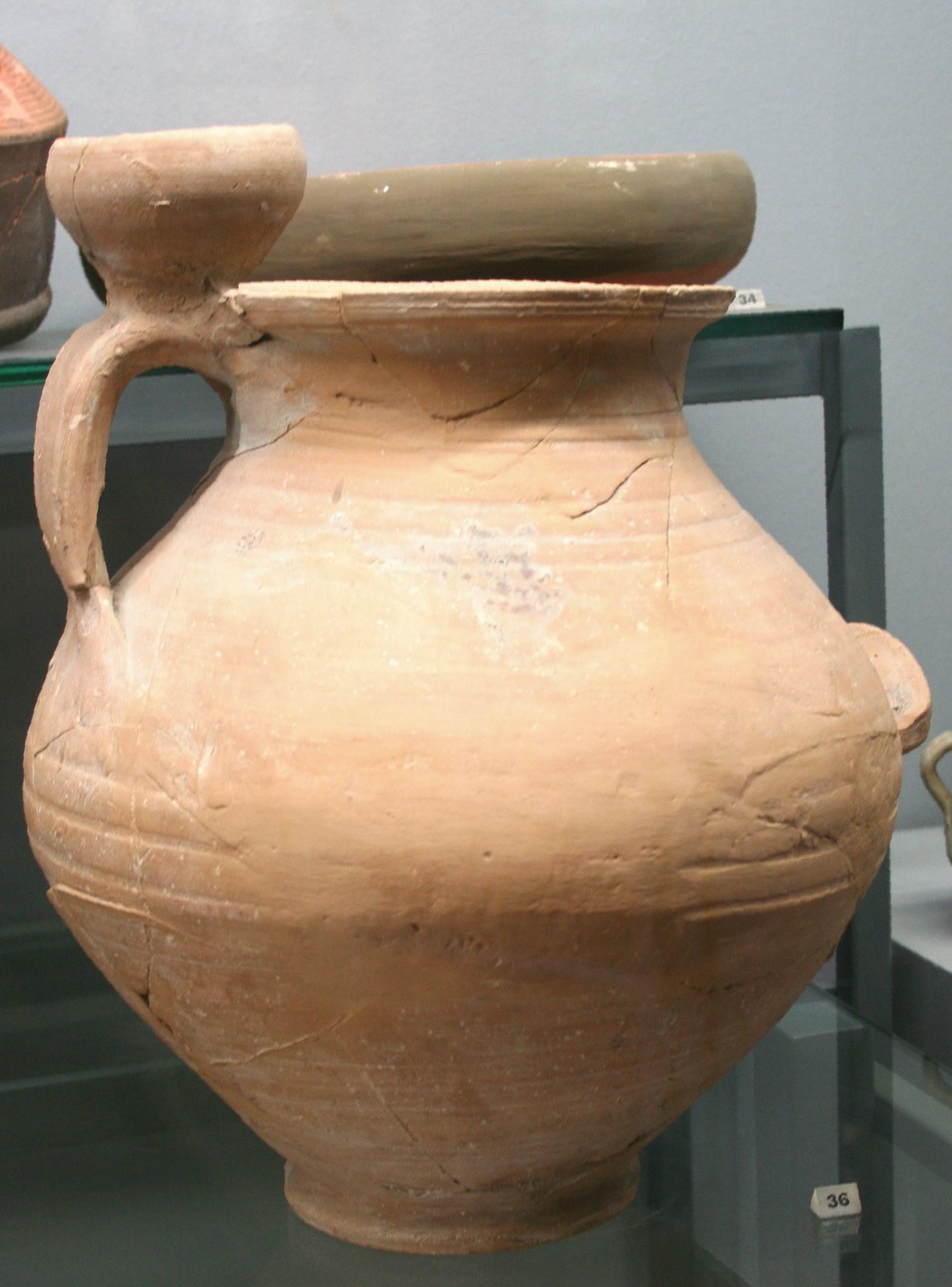
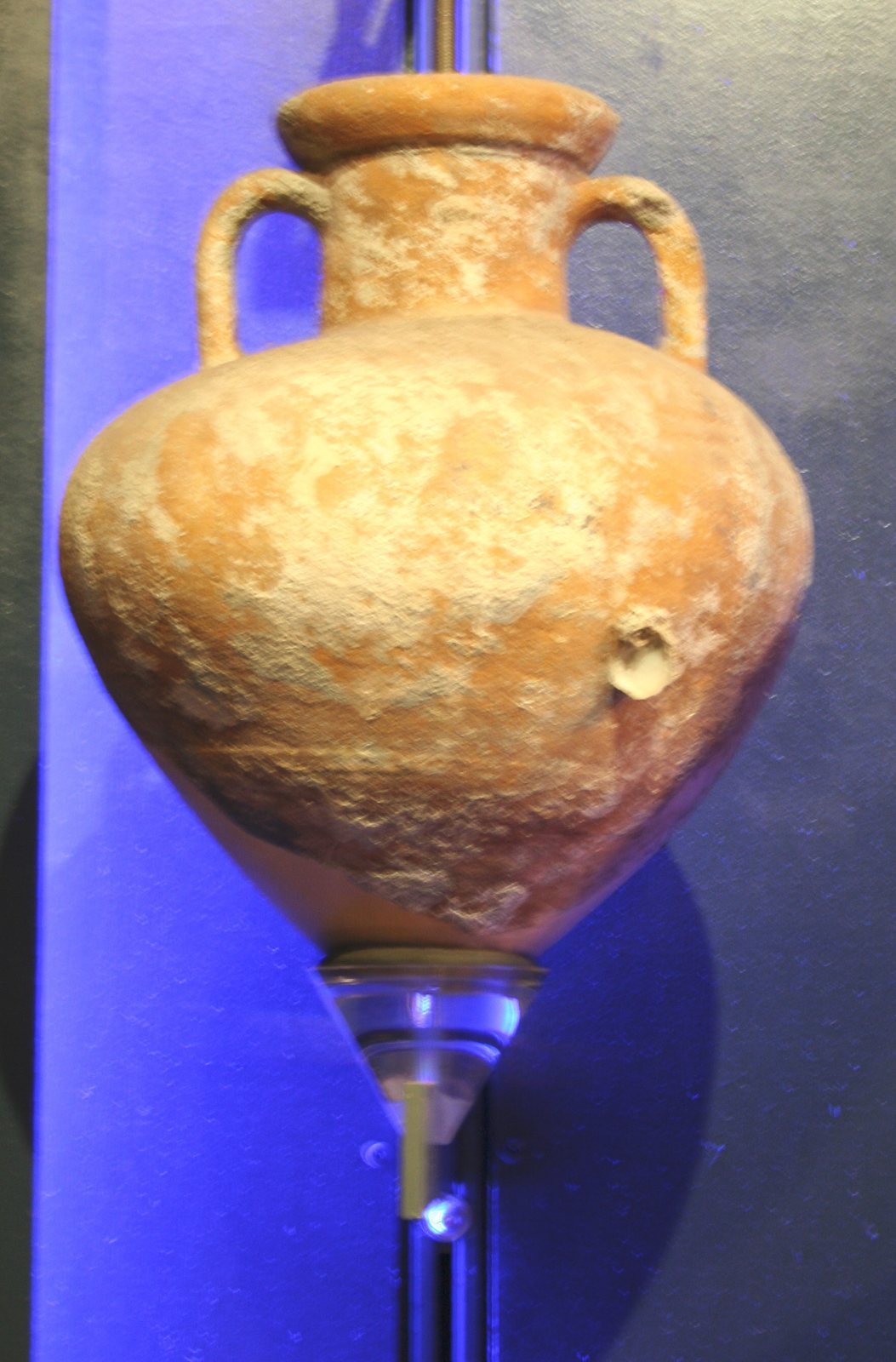
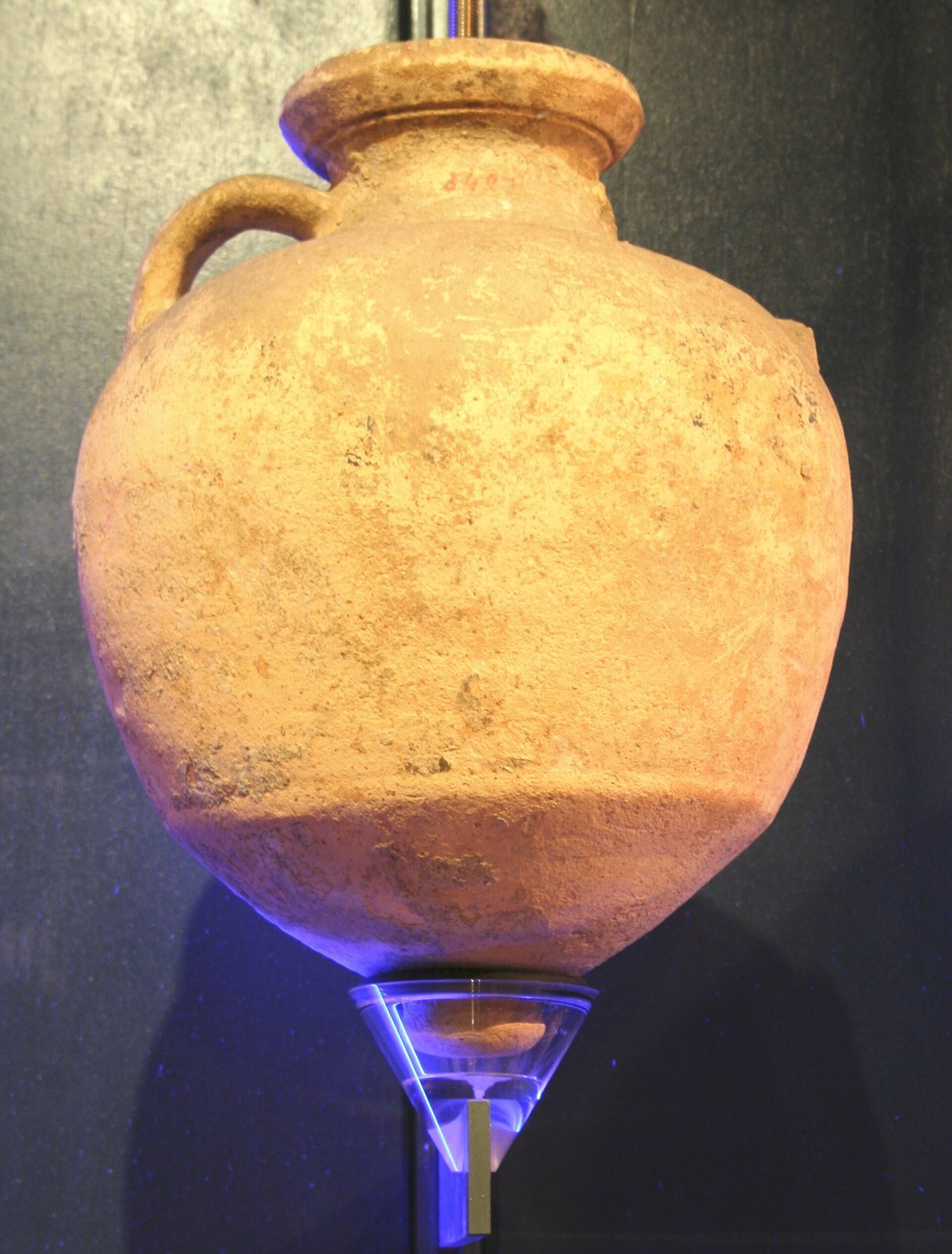
The museum displays amphorae, ceramic transport containers for commodities such as wine, oil, brine, and other traded goods. Their shapes and marks help establish dates, production areas, and commercial routes. Marseille examples include sixth-century-BC vessels with spinning-top-shaped bodies, fifth-century-BC vessels with faceted lips, spherical-bodied examples from the fourth century BC, ovoid-bodied forms dating from the end of the fifth to the third century BC, band-rim vessels, and so-called Gallic amphorae. Displayed examples include a spinning-top-bodied amphora from the sixth century BC, a faceted-lip amphora from the fifth century BC, a vessel from the end of the third or beginning of the second century BC, and a Gallic amphora.
The ceramic material also includes Etruscan, Massaliot, Punic, Greek, Attic, Campanian, Spanish, and African examples. These finds are presented with coins, balances, copper ingots, a lead chest, lamps, tiles, and amphora stoppers, connecting the containers to the wider commercial activity represented by the harbor excavations.
Ship equipment and commercial vessels
One display case contains ship fittings, anchors and their stocks, balances, coins, and part of a commercial vessel found in 1864 during the cutting of Rue Impériale, now Rue de la République. Material from the harbor wrecks adds further evidence of maritime transport, including the fixed storage vessels from Petit Congloué and the stone blocks from Carry-le-Rouet.
Mosaic and reconstructed models
A polychrome mosaic discovered on Rue des Fabre depicts a female bather. It dates to the third century and may have belonged to Roman baths near the port, although that association remains an interpretation. A model reconstructs the Roman-period shoreline and docks, while another represents a potter’s kiln found during excavations at Butte des Carmes and demonstrates the firing process used to make amphorae.