Daijo-ji Temple: A Koyasan Shingon Buddhist Temple in Japan


Site at a Glance
- Rating
- 4.3
- Popularity
- Low
- Country
- Japan
- Primary era
- Early Modern
- External website
- Open
- Eras represented
- Early Modern
- Civilizations
- Tokugawa
- Site type
- Religious
- Remains
- Temple
On this page22 sections
History
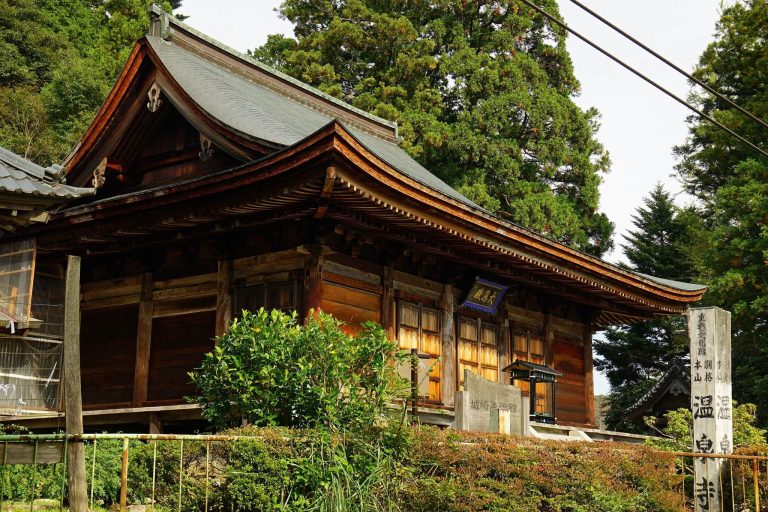
Daijo-ji Temple is a Koyasan Shingon Buddhist temple in Kami, Hyogo Prefecture, Japan, traditionally founded in 745 by the monk Gyoki. Its formal name is Koyasan Shingon Kameizan Daijo-ji, and its association with the painter Maruyama Okyo has given it the alternate name Okyo Temple.
Traditional Foundation and Revival
Temple tradition attributes the foundation to Gyoki, an eighth-century Buddhist monk known for religious propagation and public works. It also states that Gyoki carved the sacred standing image of Sho-Kannon, a form of the Buddhist bodhisattva Kannon associated with compassion, as the temple’s principal image. The foundation date and Gyoki’s role belong to the temple tradition rather than an archaeologically established account.
Daijo-ji later declined after suffering from warfare. Its revival took place during the Kansei era, from 1789 to 1800, in the late Edo period. The restoration was led by the abbot Mitsuzo and others, establishing the setting for the temple’s best-known artistic association.
Maruyama Okyo and the Temple Paintings
During a visit to Kyoto, Mitsuzo gave three kanme of silver to Maruyama Okyo, who was studying under financial hardship. Okyo later became established as a painter and repaid Mitsuzo’s assistance by working with twelve disciples on paintings for the guest hall and folding screens. Their work, together with paintings by other artists connected with Okyo’s artistic circle, left Daijo-ji with an extensive group of decorated architectural surfaces.
The guest-hall barrier paintings and related works are collectively designated as 165 items among Japan’s Important Cultural Properties. The group consists of 164 paintings and one scroll containing seven letters. Okyo’s 38 panels received designation in 1901, Nagasawa Rosetsu’s 11 panels in 1953, and the remaining works were added in 1969. Daijo-ji is also the twenty-eighth temple on the Saigoku Forty-Nine Yakushi Sacred Sites pilgrimage, a religious route linking temples associated with Yakushi, the Buddha of healing.
Remains
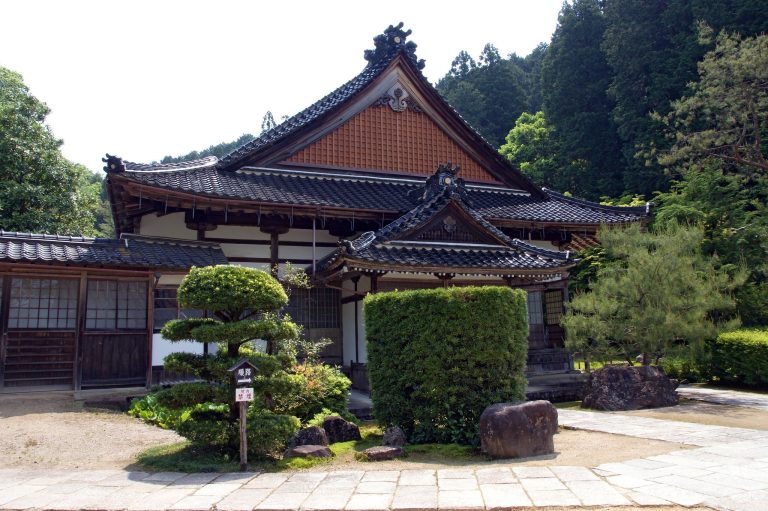
Daijo-ji’s documented remains include wooden Buddhist sculptures and a guest hall whose rooms are organized by groups of paintings applied to sliding screens, walls, cabinet doors, shoji, and other partitions. A barrier painting is a work placed on an architectural surface such as a screen, wall, door, or partition. The collection combines ink and colored paintings, often set against gold leaf, with works by several painters of the late eighteenth and early nineteenth centuries.
Buddhist Sculptures
Kannon Images
The temple’s listed wooden Buddhist sculptures include a standing Sho-Kannon, a standing Eleven-Headed Kannon, and another standing Kannon. The Eleven-Headed Kannon is a manifestation of Kannon represented with multiple heads. All three sculptures are nationally designated Important Cultural Properties and are associated with Daijo-ji as sculptural works.
Guest-Hall Paintings
Mountain Landscape Room
The Mountain Landscape Room contains fourteen ink landscapes by Maruyama Okyo, painted on paper over a gold-leaf ground. The set comprises two panels for the raised display alcove, two panels for staggered shelves, three wall panels, and seven sliding-screen panels. One panel carries a date inscription from December 1787. Four gold-ground colored paintings of fruit by Okyo are attached to upper cabinet doors in the same room.
Basho Room
Eight colored paintings of Guo Ziyi by Okyo occupy the sliding screens of the Basho Room. They are painted on paper with a gold-leaf ground and carry a date inscription from April 1795. The room also contains eight light-colored paintings of playing turtles by Kinoshita Oju, placed on small wall panels.
Peacock Room
The Peacock Room has sixteen ink paintings of pine trees and peacocks by Okyo, mounted on paper with a gold-leaf ground and attached to sliding screens. Eight light-colored paintings of playing turtles by Kinoshita Oju are placed on small wall panels in the room.
Agriculture Room
Twelve light-colored paintings by Goshun depict the four seasons of farming on the Agriculture Room’s sliding screens. Two light-colored paintings of flying swallows by Yamato Kakurei are attached to small wall panels.
Bare-Mountain Room
The Bare-Mountain Room contains fourteen light-colored paintings by Goshun. Their subject is a series of mountain groups with exposed summits, painted on sliding screens.
Monkey Room
Nagasawa Rosetsu’s eleven light-colored paintings of groups of monkeys occupy eight sliding-screen panels and three wall panels in the Monkey Room. The room also includes nine light-colored paintings of varied tits by Mori Tetsuzan, attached to small wall panels.
Dog Room
The Dog Room contains eleven light-colored paintings by Yamamoto Shurei, showing plum blossoms and puppies on sliding screens.
Messenger Room
Eight colored paintings by Yamamoto Shurei depict young men traveling on the Messenger Room’s sliding screens. Four colored paintings of lotus gathering by Kameoka Kirei are also attached to sliding screens in the room.
Immortal Room
The Immortal Room contains eight light-colored paintings by Shusettei depicting groups of immortals. The paintings are attached to sliding screens and bear a date inscription from September 1787.
Buddhist Room
Maruyama Ozui’s eight light-colored paintings of a lotus pond fill the Buddhist Room’s partitions. Four are sliding-screen panels and four are lower shoji panels, the translucent sliding screens used in traditional Japanese rooms.
Carp Room
The Carp Room contains eight light-colored paintings by Maruyama Ozui showing playing carp on sliding screens. Ten light-colored paintings of moths and butterflies by Yamaguchi Soken occupy small wall panels, and these paintings bear a date inscription from February 1795.
Wisteria Room
Three colored paintings by Oku Bunmei depict wisteria and birds on the Wisteria Room’s wall panels.
Freestanding Screen
A freestanding screen in the guest-hall collection bears one colored painting of a chicken by Maruyama Ozui.
Letters and Calligraphy
The collection also includes a scroll of Okyo’s ink-written letters and related calligraphy. The scroll contains seven letters.
Plum-Blossom Panels
Five light-colored paintings by Komai Genki show birds playing among plum blossoms. The group consists of one wall panel and four sliding-screen panels.