Obermünster: A Former Imperial Abbey in Regensburg
Site at a Glance
- Popularity
- Medium
- Country
- Germany
- Primary era
- Medieval
- Eras represented
- Medieval, Early Modern, Modern
- Civilizations
- Duchy of Bavaria, German, Holy Roman Empire
- Site type
- Religious
- Remains
- Monastery
On this page9 sections
History
Foundation and rebuilding
Obermünster was a women’s religious house in Regensburg, Germany, probably founded in the late eighth century by Tassilo III, Duke of Bavaria. It was described as a Benedictine nunnery intended to complement St Emmeram’s Abbey, and first appears in the historical record in 866. A separate, unconfirmed tradition places its acquisition by Louis the German, king of East Francia, in 833, at the request of his wife Hemma, in exchange for Mondsee Abbey. The house passed to the bishops of Regensburg soon after its foundation and became a private monastery of the Bavarian dukes in the early tenth century. Hemma served as abbess until her death in 876.
A fire in 1002 destroyed the religious house and its church. Emperor Henry II supported the church’s reconstruction and gave Obermünster gifts and privileges that raised it to the status of an imperial abbey, a religious institution directly connected to the empire, though not necessarily a territorial ruler. Henry is traditionally regarded as its founder. Efforts to impose stricter monastic rules on the community’s canonesses, women belonging to a shared religious life who were not necessarily bound by a strict monastic rule, did not succeed. Membership remained exclusive: applicants had to prove descent from eight noble ancestors, while women from abroad had to demonstrate sixteen.
Imperial abbey and collegiate status
In 1029, Emperor Conrad II presented Obermünster with a royal scepter. He and his wife Gisela also joined the community as a canon and a canoness. In 1216, Emperor Frederick II confirmed the abbey’s imperial immediacy, meaning that it answered directly to the emperor rather than an intervening territorial lord. The pope granted it protection in 1219. In 1315, Emperor Louis the Bavarian raised the abbesses to the rank of imperial princes, after which they were known as princess-abbesses.
Pope Innocent VIII confirmed Obermünster as a secular collegiate house for noblewomen in 1484, formalizing a way of life it had followed for many years. The community’s members were not bound to the same strict monastic rule as nuns. Obermünster also gained a seat and vote in the Reichstag, the assembly of the empire’s estates. Its single collective vote was cast on the Rhenish Prelates’ Bench within the Council of Princes, and the abbey was represented in the Bavarian Imperial Circle, a regional administrative grouping.
The abbey’s recorded obligations included both military service and payments. In 1521, its assessment listed one mounted soldier, thirteen foot soldiers, and 90 gulden, a historical currency. At a district assembly in 1532, the assessment was four mounted soldiers and 26 foot soldiers. A later assessment listed one mounted soldier and three foot soldiers, or 24 gulden; an adjustment on 18 August 1684 left 10 gulden outstanding. During the seventeenth and eighteenth centuries, the church and other buildings were refurbished in the Baroque style.
Secularization and later use
In 1802, after the Principality of Regensburg was established, Obermünster came under Karl Theodor von Dalberg, an ecclesiastic and statesman with the title of Prince-Primate, a senior clerical and political office. The abbey was dissolved in 1810 during secularization, the transfer of religious institutions or property into secular control, and Regensburg and Obermünster became part of the Kingdom of Bavaria. The canonesses were permitted to stay until 1822, when the last abbess died.
In 1822, Bishop Johann Michael Sailer secured the return of the buildings from state ownership to the Diocese of Regensburg. They first served as a seminary for clergy. An episcopal boys’ seminary opened there in 1862, followed in 1882 by the episcopal study seminary of St Wolfgang, named for a tenth-century bishop of Regensburg later venerated as a saint.
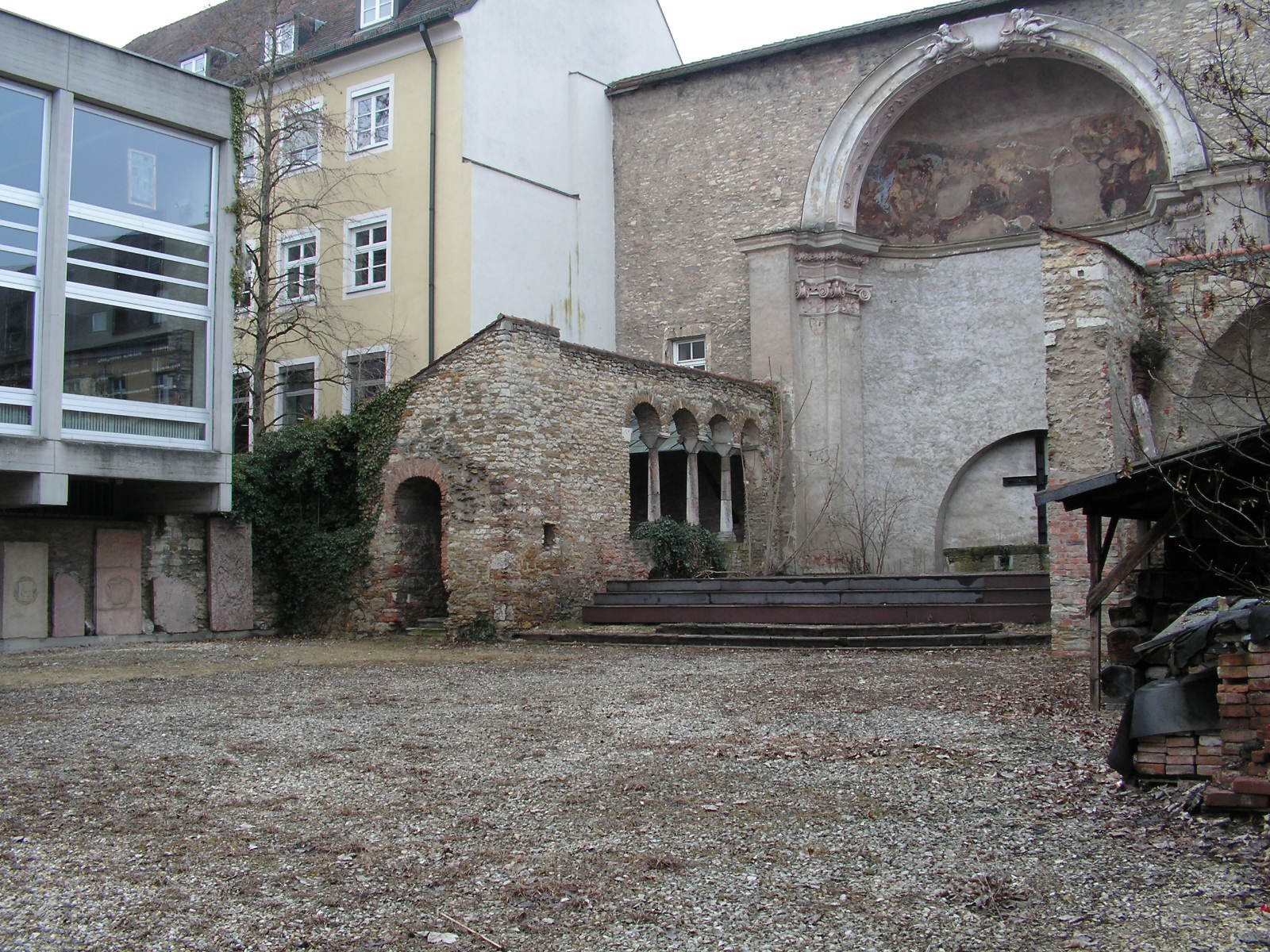
Bombing on 13 March 1945 destroyed part of the abbey buildings and almost all of the church. The church ruins were kept as a memorial. Since the postwar period, Regensburg scouts have received the Bethlehem Peace Light there each year. The flame is lit at the Church of the Nativity in Bethlehem and shared internationally as a sign of peace. From 1969 onward, the former abbey buildings have served the Diocese of Regensburg as an administrative center, central archive and library, and home to art collections in the Diocesan Museum Obermünster.
Remains
Surviving fabric
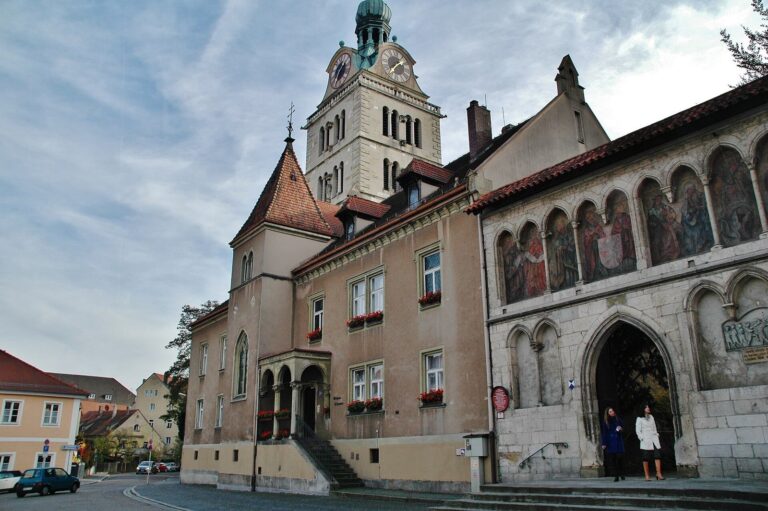
The former abbey lies in the southern part of Regensburg’s old town, west of Jesuitenplatz. Its holdings in the city comprised a small number of buildings. The surviving complex brings together remains of the church, a separate bell tower, portions of other former abbey buildings, and later construction.
Church and bell tower
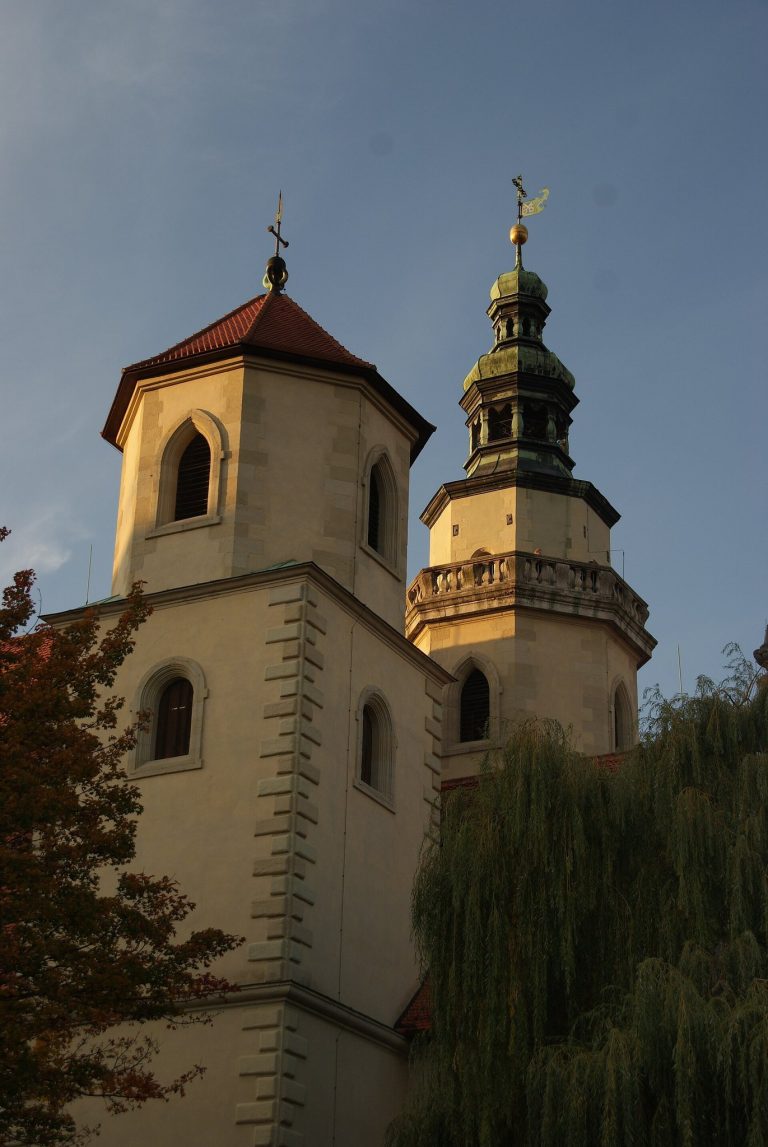
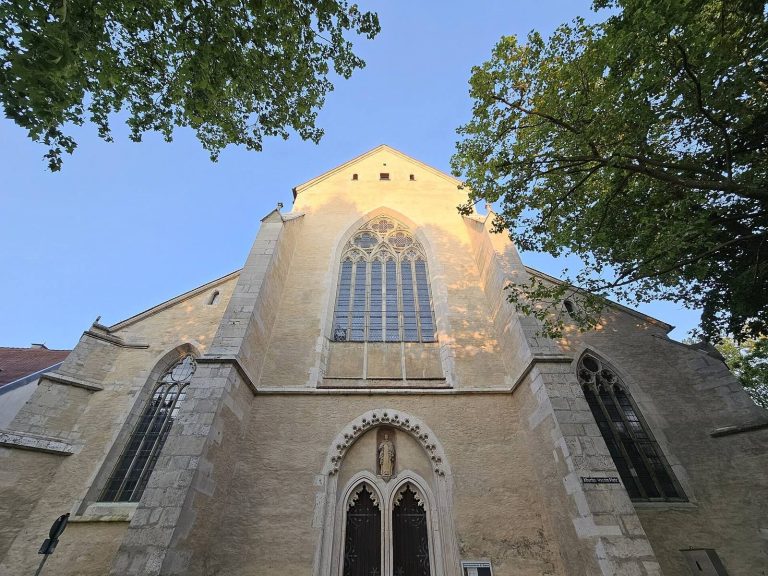
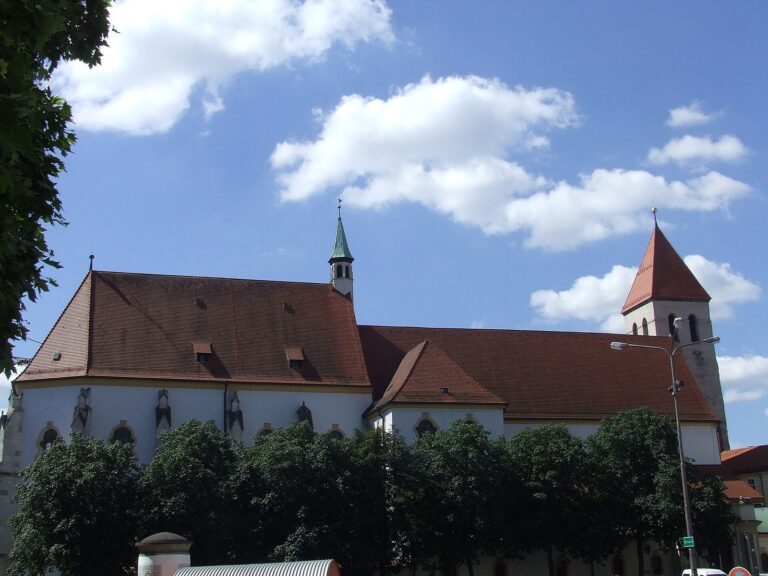
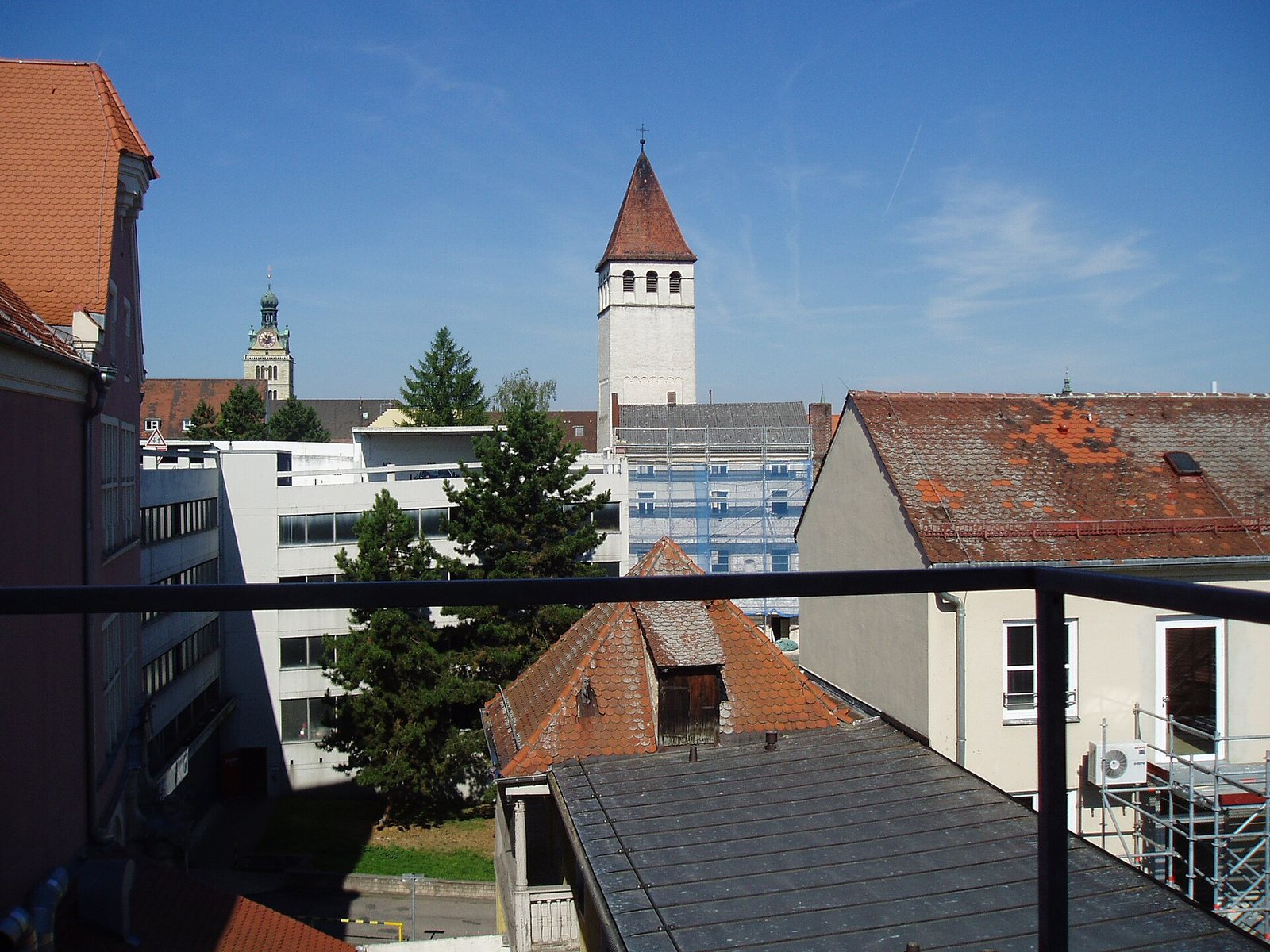
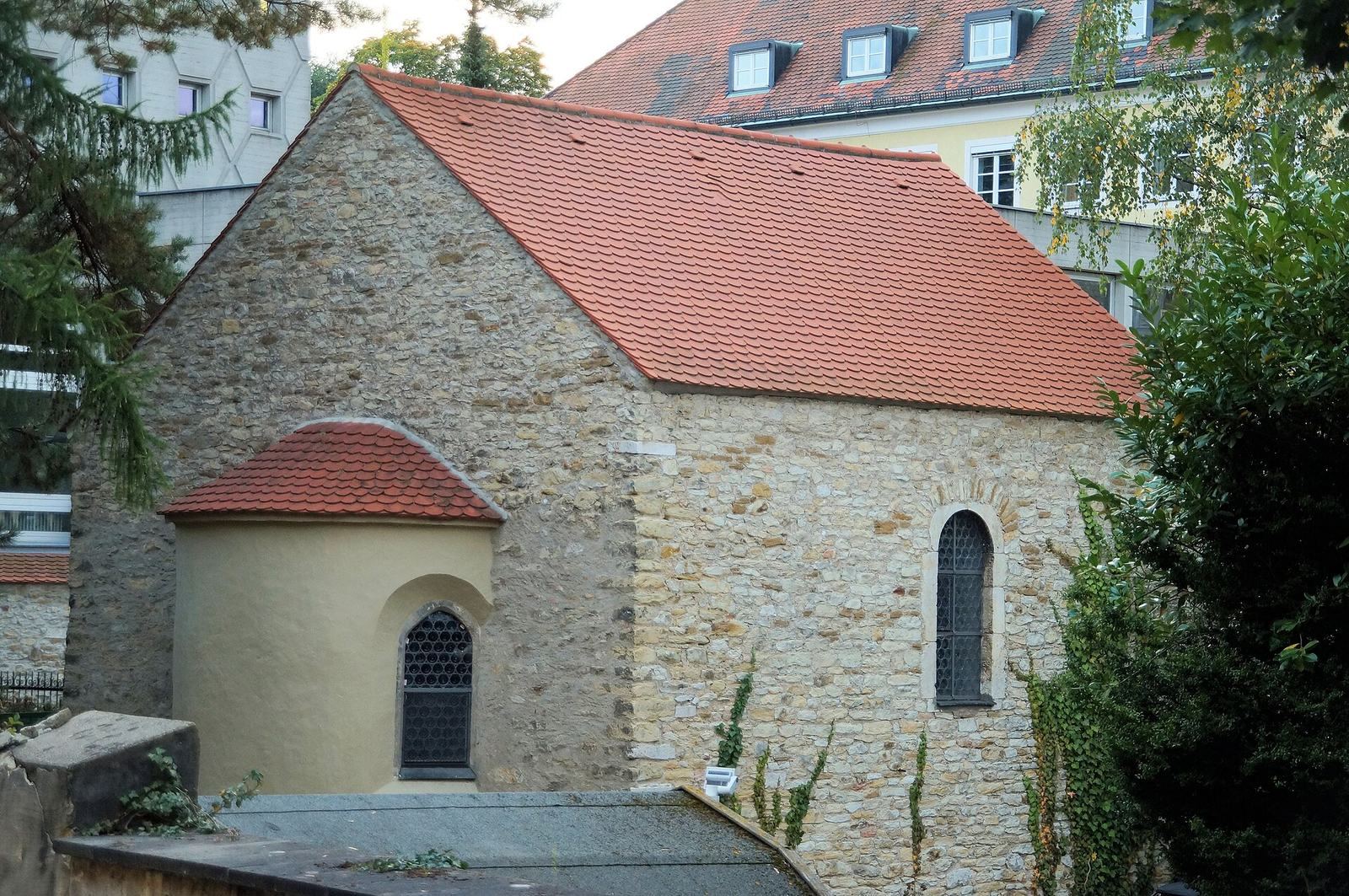
The church was a Romanesque basilica, built in a medieval style characterized by rounded arches and substantial masonry. Dedicated to the Assumption of the Virgin Mary, the Christian belief that Mary was taken bodily into heaven, it survives in part through remains of its choir. A tall bell tower stands separately to the north of the former church. It largely escaped the 1945 bombing and remains a prominent landmark.
Works formerly in the church
An altar made between 1534 and 1540 for the church’s north side aisle was donated by Wandula von Schaumberg, and its design is attributed to the German Renaissance artist Albrecht Altdorfer. The 1945 bombing damaged its gable area; the altar was restored and transferred to the Cathedral Treasury Museum. A seventeenth-century Madonna image by an unknown artist, portraying Mary with a radiant halo or as a crescent-moon figure, is now in St Josef Parish Church in Dingolfing.
Later buildings
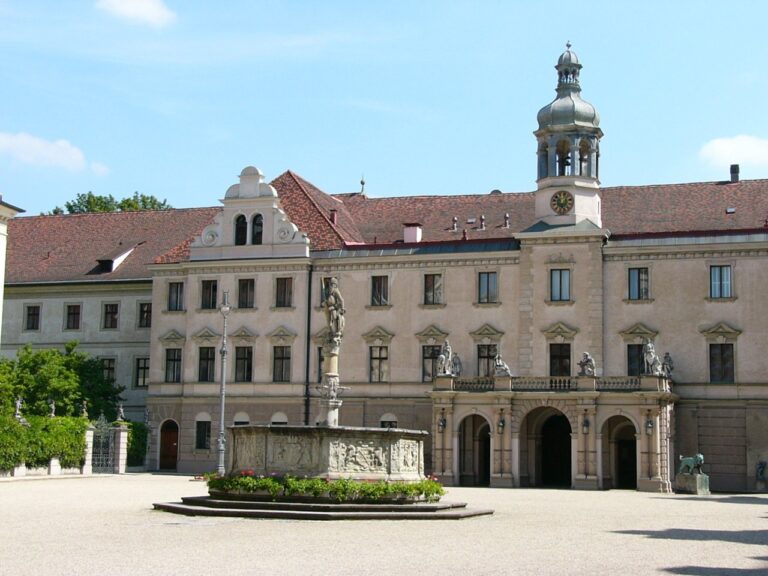
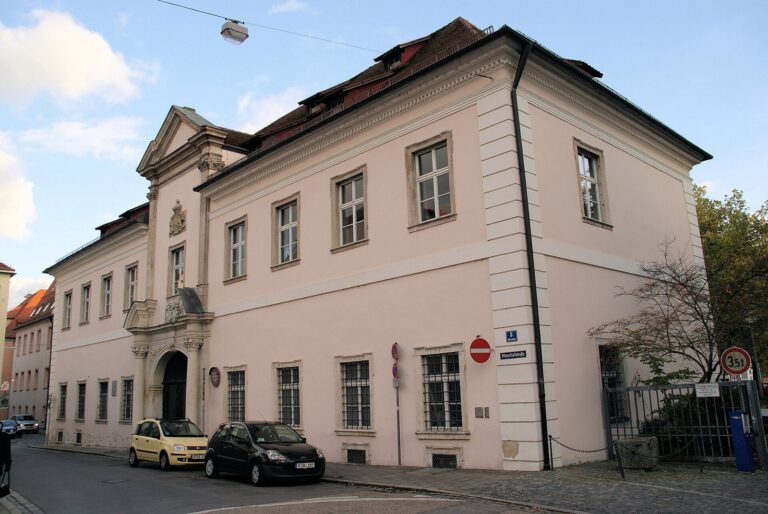
Renovated former abbey buildings are joined to newer construction in the present complex. Portions of the older buildings survive alongside the additions.