Nový Falkenburk: A Renaissance Manor in Czechia
Site at a Glance
- Rating
- 4.4
- Popularity
- Very Low
- Country
- Czechia
- Primary era
- Early Modern
- External website
- Open
- Eras represented
- Early Modern, Modern
- Civilizations
- Holy Roman Empire, Kingdom of Bohemia
- Site type
- Domestic
- Remains
- Manor House
On this page9 sections
History
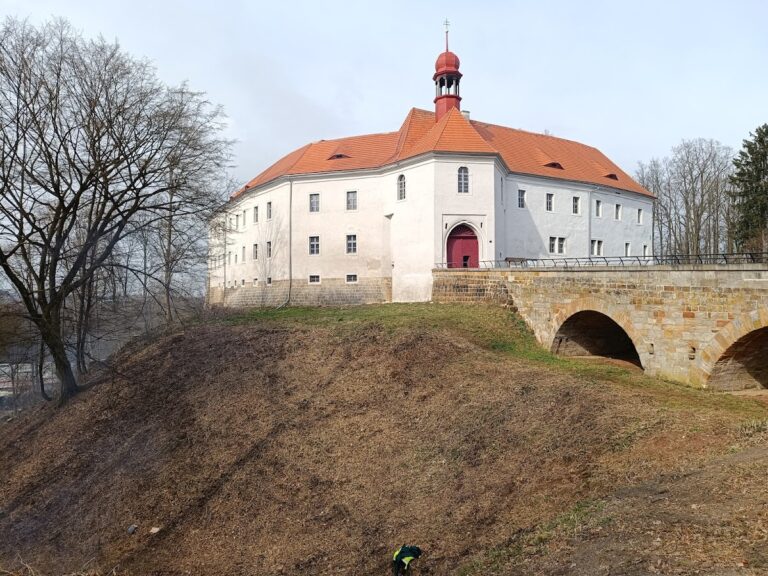
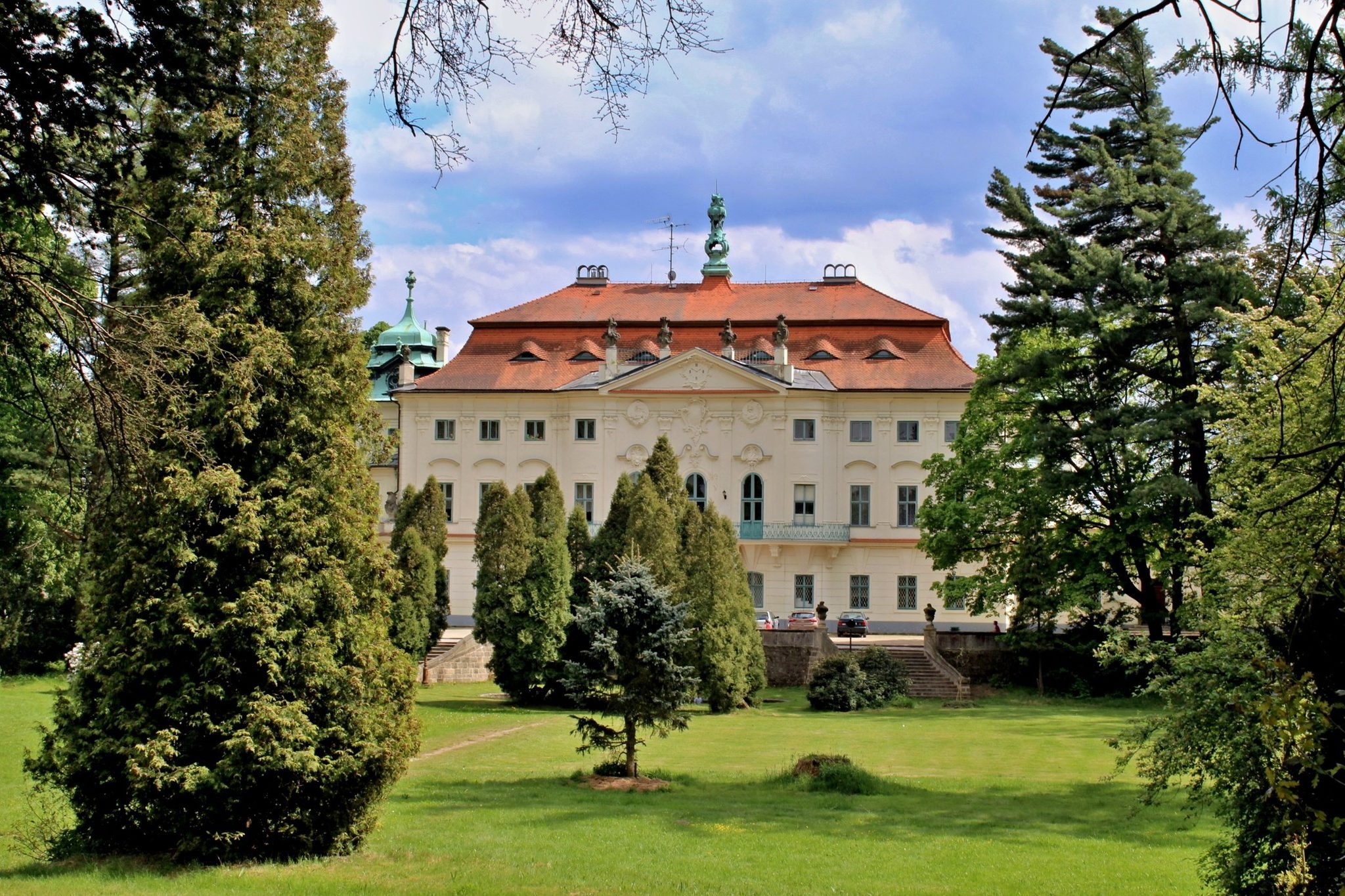
Nový Falkenburk is a historic manor in Jablonné v Podještědí, Czechia, whose Renaissance stone origins date to the sixteenth century. Built for the local estate, it was later transformed through Baroque reconstruction and early twentieth-century neo-Rococo alterations.
Medieval and Renaissance origins
A wooden fortress probably occupied the site during the fourteenth century, but it had disappeared before 1450. Between 1562 and 1572, Jindřich Berka of Dubá, then owner of the local estate, commissioned a stone Renaissance manor beside a pond now called Mlýnský Pond. The first building had a small tower and two wings.
After the death of František Antonín Berka of Dubá, ownership passed through the Nostitz, Kinsky, and Bruntálský of Vrbno families. In 1718, the Jablonné estate and Nový Falkenburk came into the possession of the Pachta of Rájov family. The family retained the property until 1867, beginning with Jan Jáchym Pachta of Rájov.
Baroque reconstruction
František Josef Pachta of Rájov, who held high provincial offices in the Kingdom of Bohemia, commissioned a radical rebuilding in 1759. The work was carried out by Filip Heger, who reshaped the manor and created its Baroque garden setting. During the Seven Years’ War, a conflict between major European powers from 1756 to 1763, the manor housed a military hospital for sick and wounded soldiers. It later fell into decline.
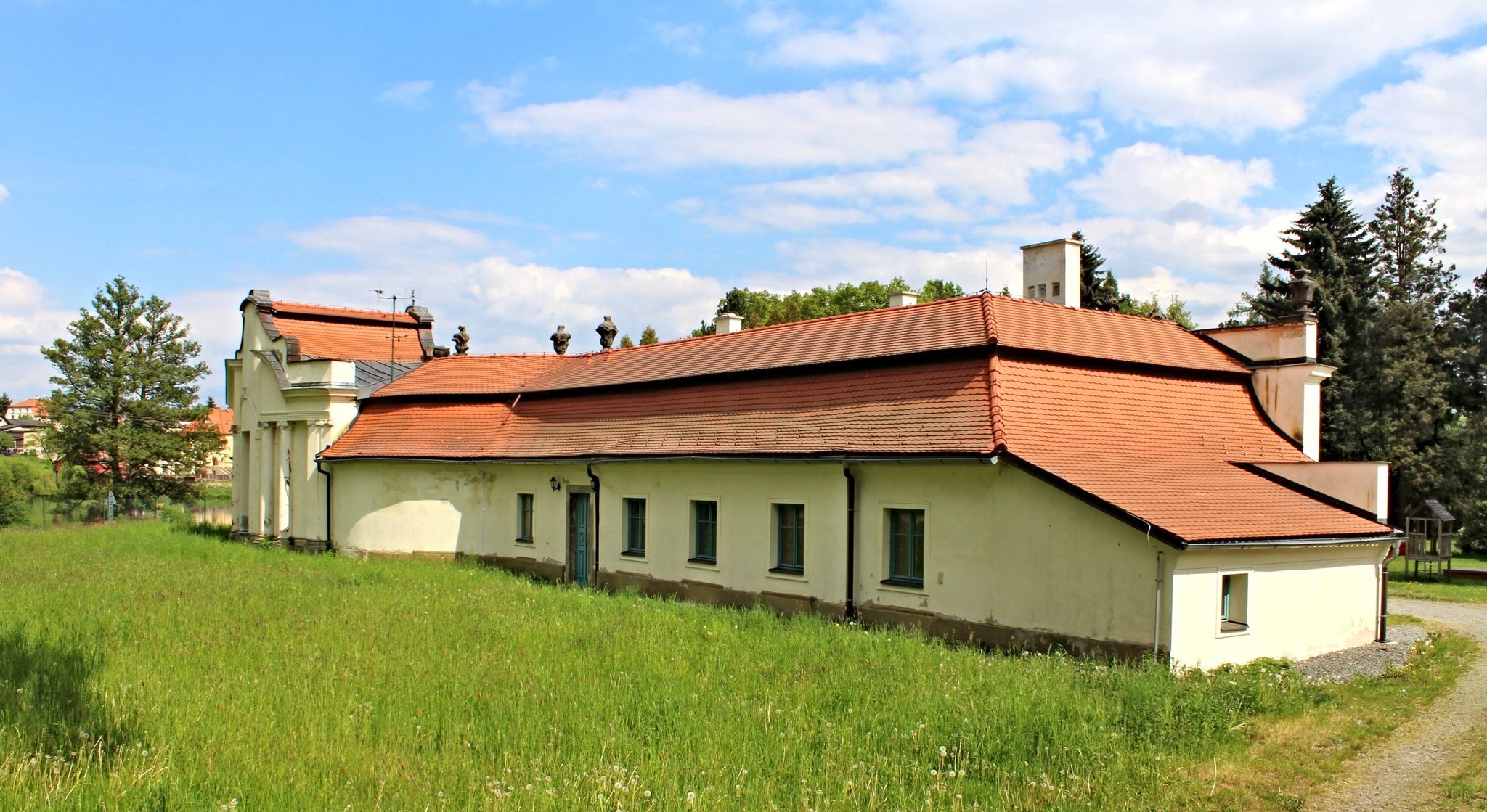
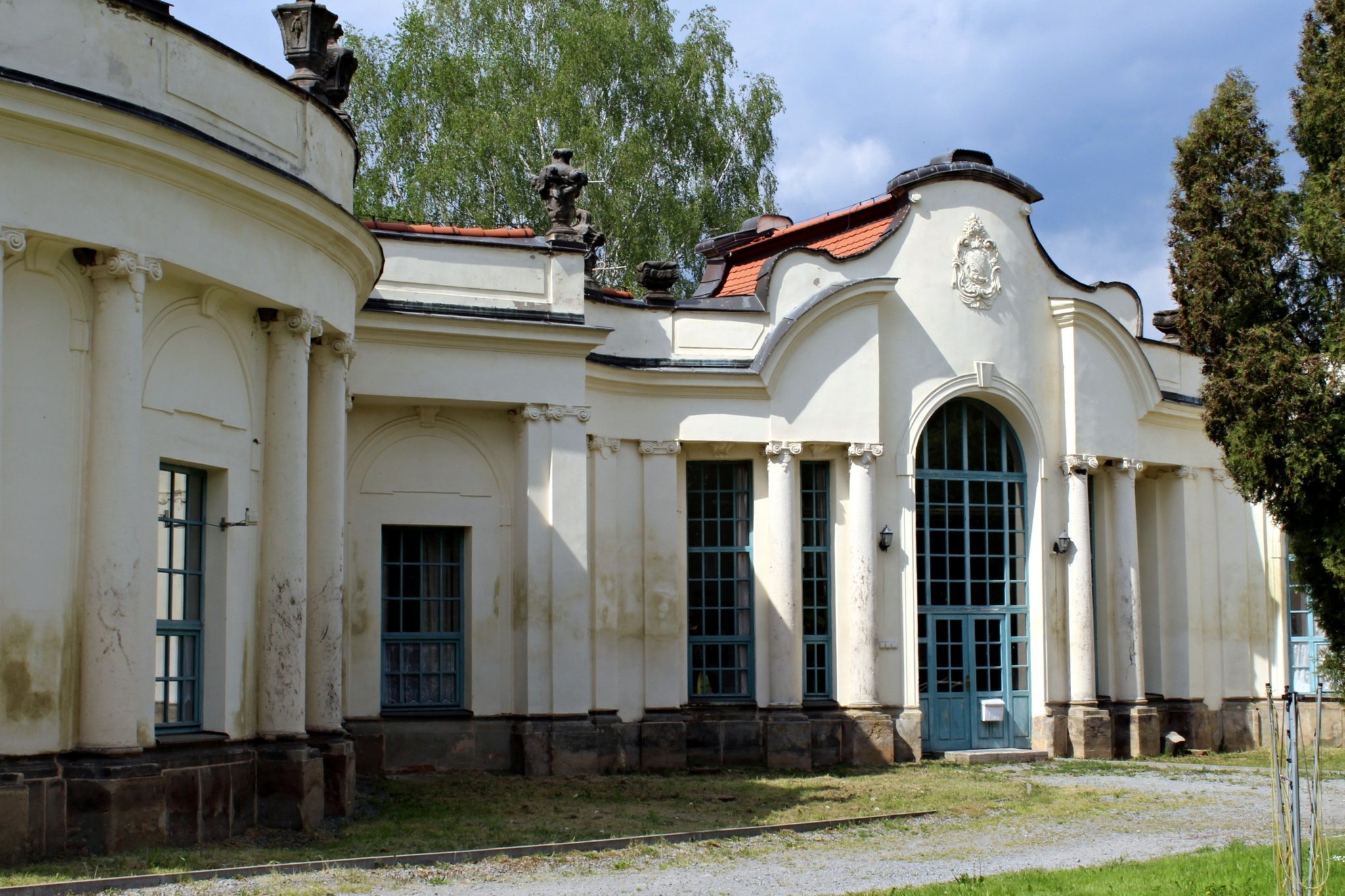
Heger’s work also included the garden orangery, built in 1760. An orangery is a specialized building for protecting citrus and other plants from frost. The complex’s architectural development therefore moved from its Renaissance foundation to an eighteenth-century Baroque reconstruction, followed by later Classical and neo-Rococo interpretations.
Ownership and twentieth-century changes
Karl Palme, a large landowner from Saxony, purchased the manor in 1867. In 1872, Franz Mattausch, a wealthy manufacturer from Benešov nad Ploučnicí, became its owner and used the estate mainly for agriculture. In 1883, the property was valued at 195,000 gulden and included 410 hectares of land.
Johann Moritz Liebieg, a member of the wealthy Liebieg industrial family, acquired Nový Falkenburk in 1901. He made it his principal residence and ordered extensive alterations that introduced neo-Baroque or pseudo-Rococo forms. Pseudo-Rococo refers to a later revival of the ornate, light, and curving decoration associated with eighteenth-century Rococo.
After 1945, the manor housed a vocational school. It is now used as a children’s home and is owned by the Liberec Region. Renovation took place in 2001. On 16 October 2025, a silver treasure identified as belonging to Baron Liebieg was found beside the garden wall and transferred to the North Bohemian Museum in Liberec for restoration.
Remains
The manor complex
Nový Falkenburk stands on the western edge of Jablonné v Podještědí beside the pond now known as Mlýnský Pond. The surviving complex retains the basic arrangement of the Renaissance manor, a stone building with a small tower and two wings, although its appearance was substantially reshaped in 1759 and altered again in the early twentieth century. Its architectural character is variously described as Renaissance in origin, Baroque after the eighteenth-century rebuilding, and late Classical or neo-Rococo after later changes.
Orangery and formal park
The garden contains a Baroque park conceived by Filip Heger as a French-style landscape. Such a park uses planned geometry, ordered plantings, and designed views. The orangery that Heger built in 1760 has a curved, undulating plan and represents a late expression of dynamic Baroque architecture. Its purpose was to shelter citrus and other frost-sensitive plants.
Granary and agricultural features
A large Baroque granary was added north-west of the manor during the second half of the eighteenth century. Under Franz Mattausch, the manor’s ornate Rococo halls were used for storing grain, reflecting the estate’s agricultural role during the late nineteenth century.
Archaeological discovery
The silver treasure found beside the garden wall on 16 October 2025 was identified as belonging to Baron Liebieg. The complete find was handed over to the North Bohemian Museum in Liberec for restoration.