Nostra Signora di Loreto: A Catholic Sanctuary in Genoa
Site at a Glance
- Popularity
- Medium
- Country
- Italy
- Primary era
- Early Modern
- Eras represented
- Early Modern, Modern
- Civilizations
- Genoese, Italian
- Site type
- Religious
- Remains
- Sanctuary
On this page10 sections
History
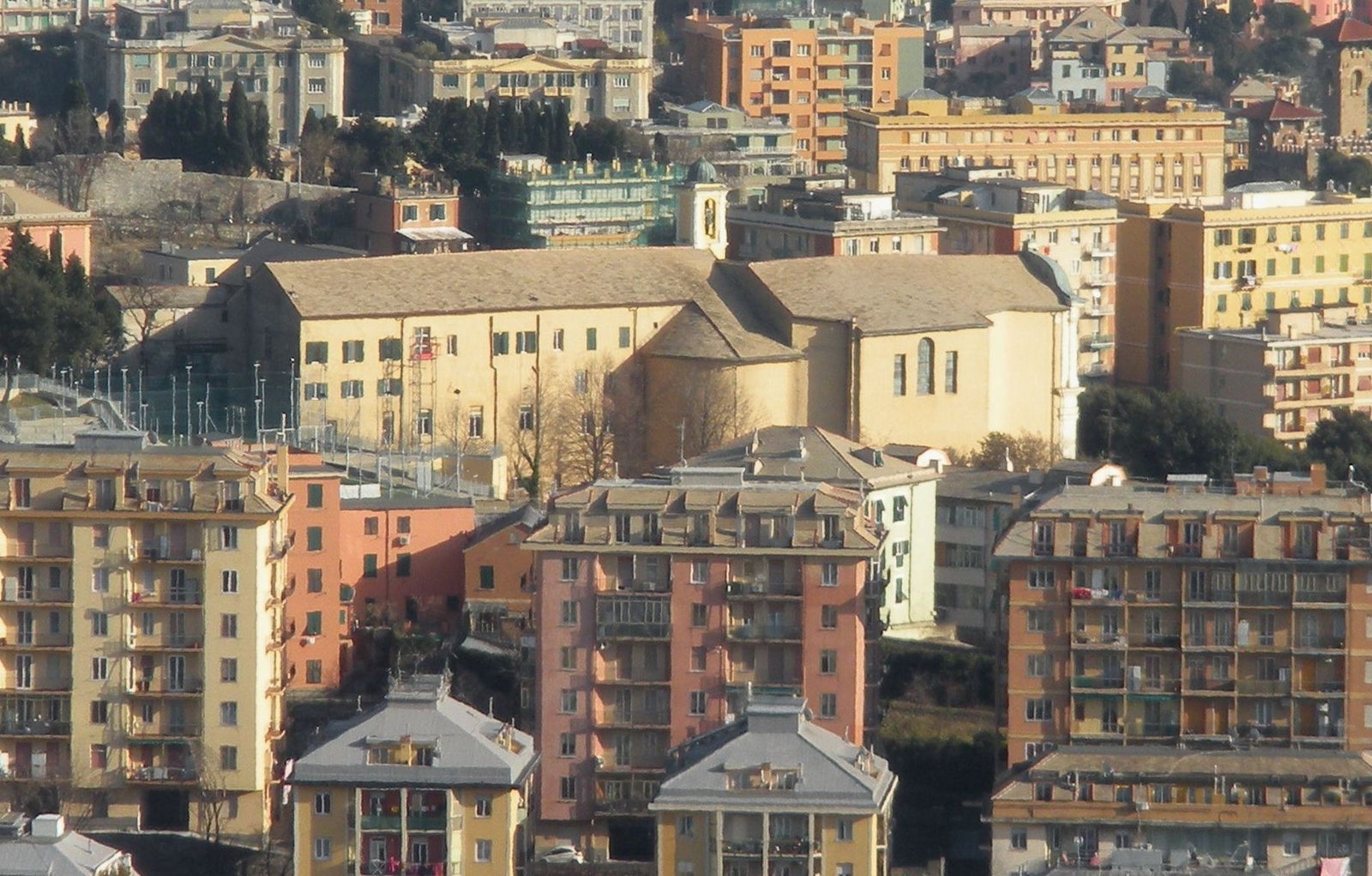
Nostra Signora di Loreto is a Catholic sanctuary in Oregina, Genoa, Italy, dedicated to the Madonna of Loreto. Its origins lie in a chapel built in 1634 by four hermit monks led by Guglielmo Musso, who had come from Voltri to establish a new religious order.
From chapel to sanctuary
The Inquisition, an ecclesiastical tribunal that investigated religious orthodoxy, condemned the monks’ conduct. It dissolved their congregation soon afterward and expelled them; responsibility for the chapel then passed to the Franciscan Friars Minor, members of the Catholic order founded by Saint Francis of Assisi.
In 1635, the decision was made to enlarge the existing religious building into a sanctuary and convent. The sanctuary was built between 1650 and 1655, as other churches dedicated to the Madonna were also being built or enlarged in Genoa.
Vision, civic observance, and national song
During the War of the Austrian Succession, a mid-eighteenth-century conflict involving Habsburg claims, Genoa came under Habsburg occupation. The Portoria revolt began in 1746 and led to the city’s liberation. In gratitude, the government of the Republic of Genoa vowed to hold an annual observance on December 10. That date was also the feast of the translation of the Holy House, the structure venerated as the Virgin Mary’s home and traditionally believed to have been miraculously carried to Loreto.
The observance followed a vision said to have occurred on the night of December 9–10, 1746. Candido Giusso, the friar responsible for the sanctuary, reported seeing the Madonna with a serpent at her feet and Saint Catherine of Genoa kneeling before her. Genoa’s Senate, the republic’s governing council, understood the vision as a sign of the Madonna’s intercession for the city. From 1747, the Doge, Genoa’s chief elected magistrate, led the annual observance. It was interrupted in 1796, resumed in 1846, and continues today.
On December 10, 1847, the square in front of the sanctuary hosted the first public performance of The Song of the Italians, written by Goffredo Mameli and set to music by Michele Novaro. The Sestrese Philharmonic band performed it during the revolt commemoration before the patriots gathered in Genoa, numbering about 30,000 and arriving from across Italy. The song later became Italy’s national anthem.
Convent, parish, and wartime damage
During the first half of the nineteenth century, the convent closed for a period after legislation suppressed some religious orders. On January 7, 1940, Archbishop Carlo Dalmazio Minoretti made the sanctuary an autonomous parish, a local church community.
A bombing in November 1944 damaged the church’s exterior but left its structure intact. Soon after the war, an explosion at a nearby powder magazine destroyed a large painting of the Madonna, the organ, and the choir. The sanctuary is also the burial place of patriot Alessandro De Stefanis, who died of wounds received while defending Forte Begato during the Genoa uprisings, and sculptor Bartolomeo Carrea.
Remains
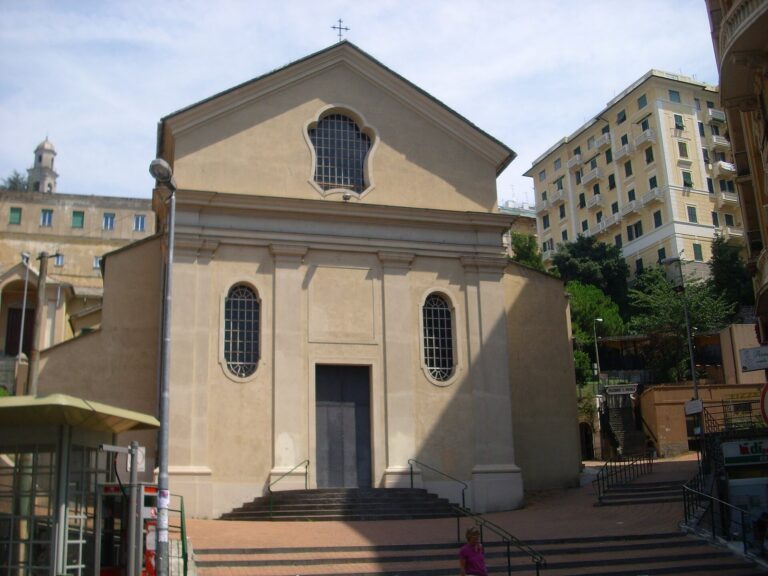
The church has an elongated, eight-sided plan and a broad single nave beneath a central dome. Its design took shape around the earlier chapel.
Chapel and exterior
The original chapel
The chapel measured 9 by 4 metres and stood beside a wall painted with an image of the Madonna. Its design recalled the Basilica of the Holy House at Loreto, and its altar was positioned at the centre of the larger sanctuary. The original chapel was demolished in 1928, and its venerated Madonna image was placed above the sanctuary’s high altar.
Façade and entrance
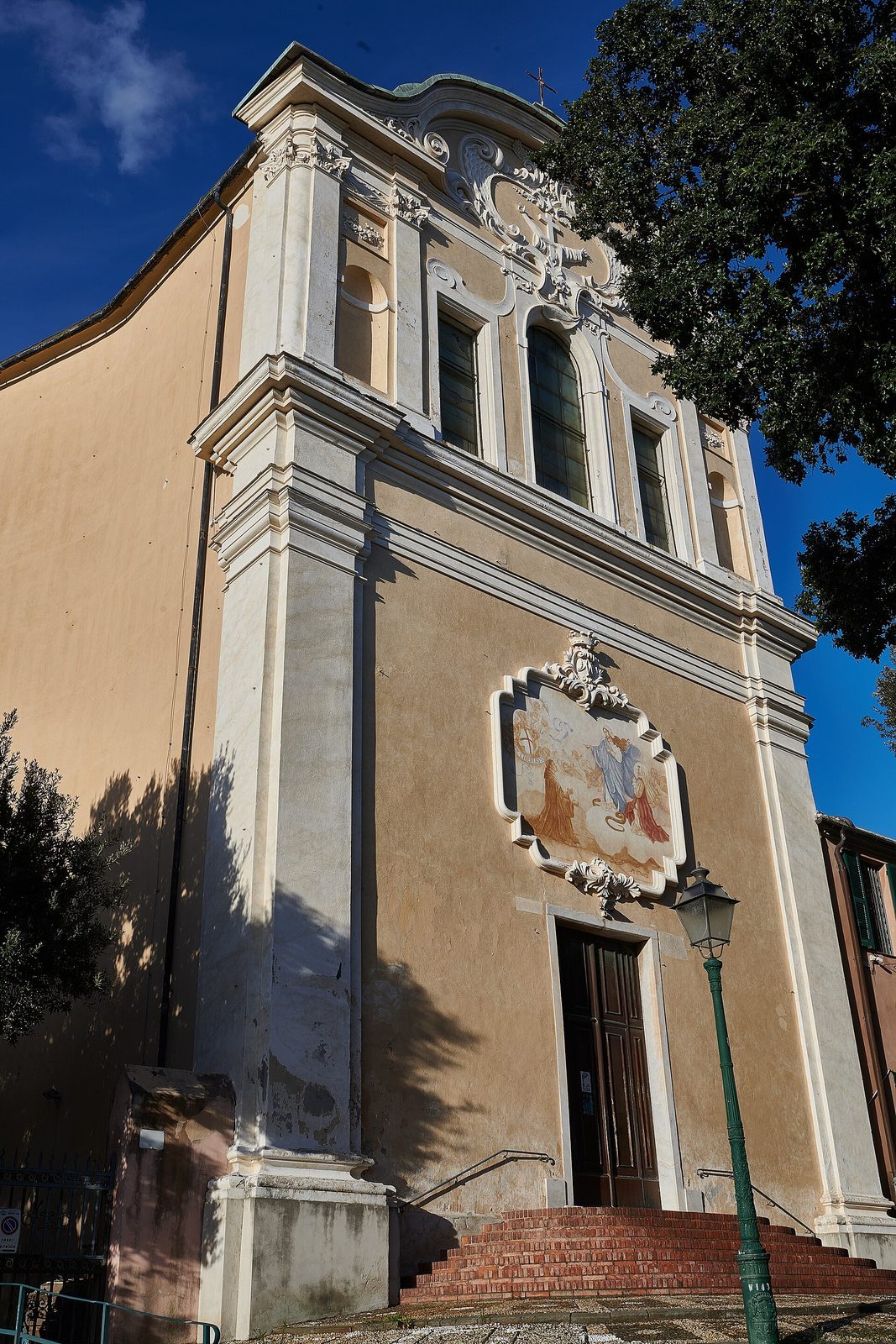
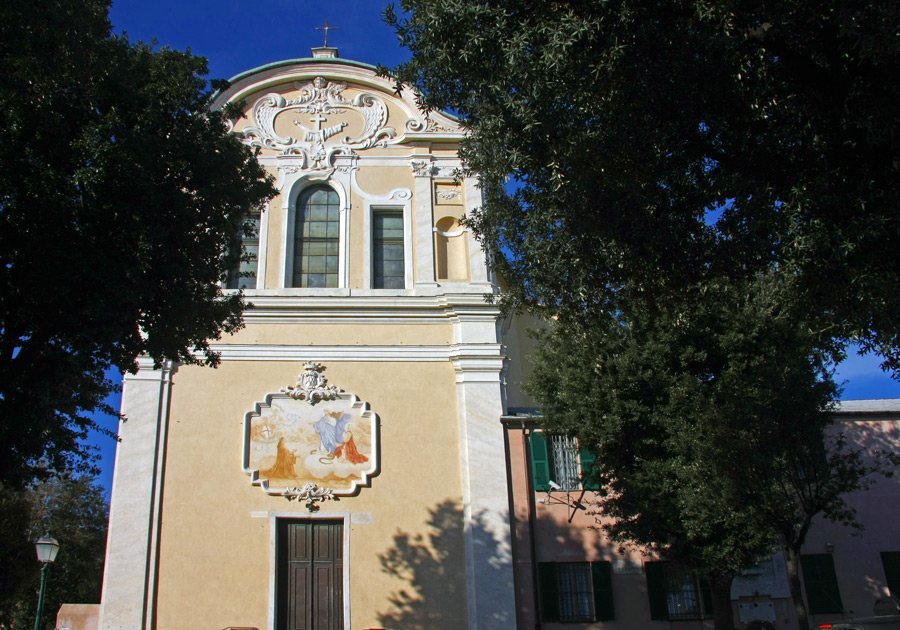
Built in 1707, the façade has pilasters, shallow wall projections resembling columns, along its sides, with decoration concentrated above. Two pilasters mark the outer edges of its lower section. A fresco above the entrance portal depicts Giusso’s vision; Angelo Vernazza painted it in 1906. The entrance staircase dates to the eighteenth century.
Interior
The interior is bright and simply arranged. Two side altars remain, where the church originally had four. The right altar holds Giovanni Maria delle Piane’s large painting The Guardian Angel; Giovanni Andrea Carlone’s painting of Saint Joseph with the child Jesus is at the left altar. A memorial slab to Candido Giusso, who lived from 1706 to 1756, stands to the left of the altar area.
Convent and square
The adjoining convent preserves small eighteenth-century nativity figurines made in the Genoese artistic tradition. In front of the sanctuary, a large square is shaded by centuries-old trees.