Noorderkerk: A Protestant Church in Amsterdam
Site at a Glance
- Rating
- 4.5
- Popularity
- Medium
- Country
- Netherlands
- Primary era
- Early Modern
- Eras represented
- Early Modern, Modern
- Civilizations
- Dutch
- Site type
- Religious
- Remains
- Church
On this page9 sections
History
The Noorderkerk is a Protestant church beside the Prinsengracht in Amsterdam, the Netherlands, built from 1620 to 1623 as one of the city’s first churches after the Reformation, the sixteenth-century movement that led to the formation of Protestant churches. Its design reflects Renaissance ideas, part of a European revival of classical art and architecture, alongside Protestant principles.
Construction and purpose
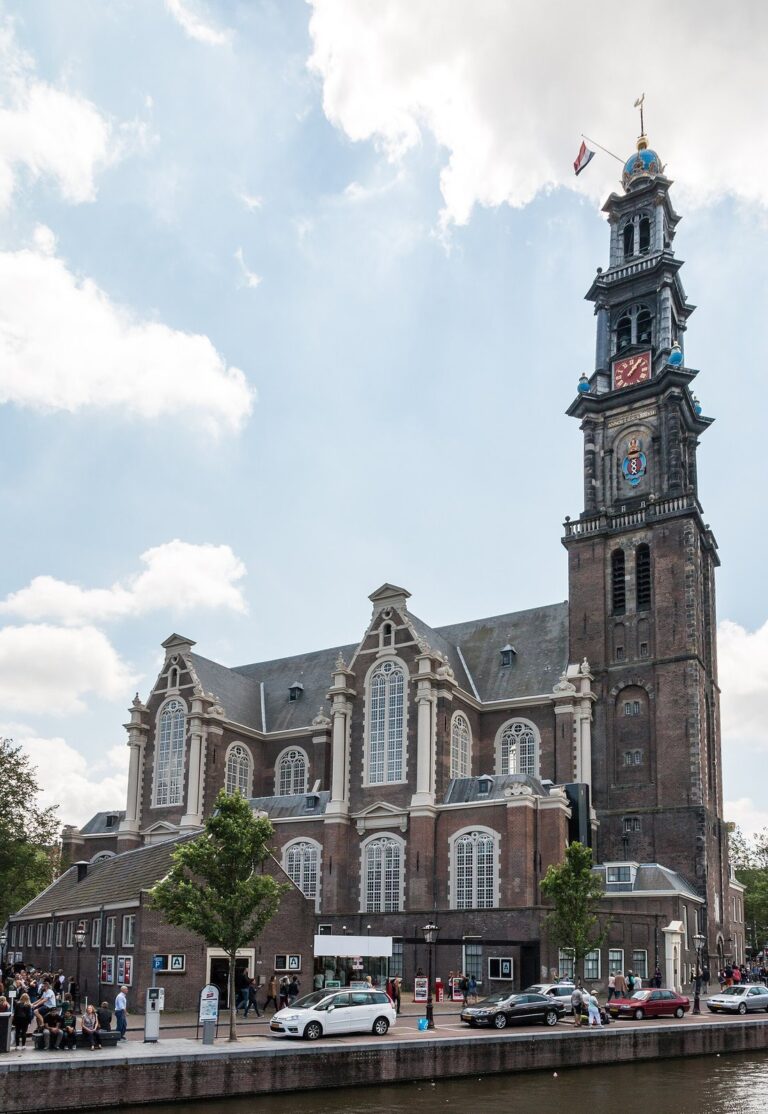
Amsterdam’s western districts, particularly the Jordaan, were growing quickly. City authorities commissioned the Noorderkerk to serve the district’s northern area, where the Westerkerk already stood. The Noorderkerk served ordinary people, while the Westerkerk was attended mainly by people from the middle and upper classes.
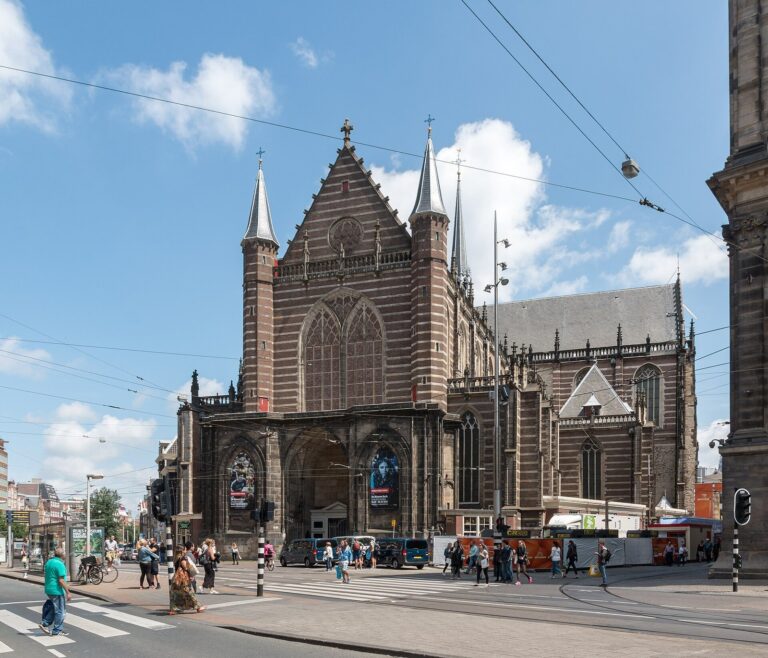
Hendrick de Keyser designed the church. After his death in 1621, his son Pieter, also an architect, took charge of the work and saw it through to completion. The design later provided a model for the Nieuwe Kerk in Groningen. Trade at Noordermarkt also repeatedly affected the church’s operations.
Closure, wartime activity and restoration
The church closed in 1929 as its congregation declined. After the Eilandskerk on Bickersgracht closed because of its poor condition, the Noorderkerk was renovated and reopened for worship in 1941. In February of that year, organizers held unauthorized public meetings on Noordermarkt in defiance of the German occupation authorities. The gatherings supported the February Strike, a protest in the German-occupied Netherlands against the persecution of Jews.
The Noorderkerk received Dutch national-monument status in 1970, a designation protecting sites for their heritage value. The church was restored from 1993 to 1998, its small tower in 2003 and 2004, and its organ in 2005; the organ returned to use on 16 September that year. The congregation belongs to the Reformed Association, a Reformed body within the Protestant Church in the Netherlands, and is affiliated with Protestant Church Amsterdam. The church continues to hold Protestant services and classical-music concerts.
Remains
Plan and exterior
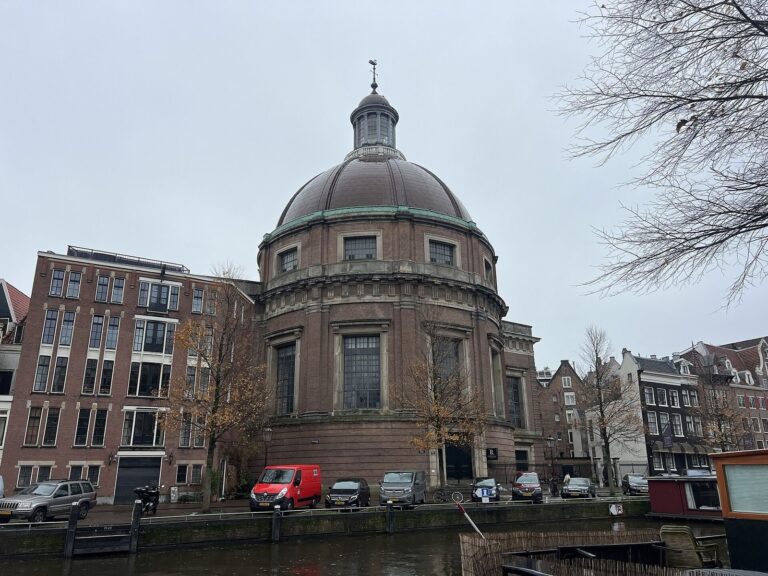
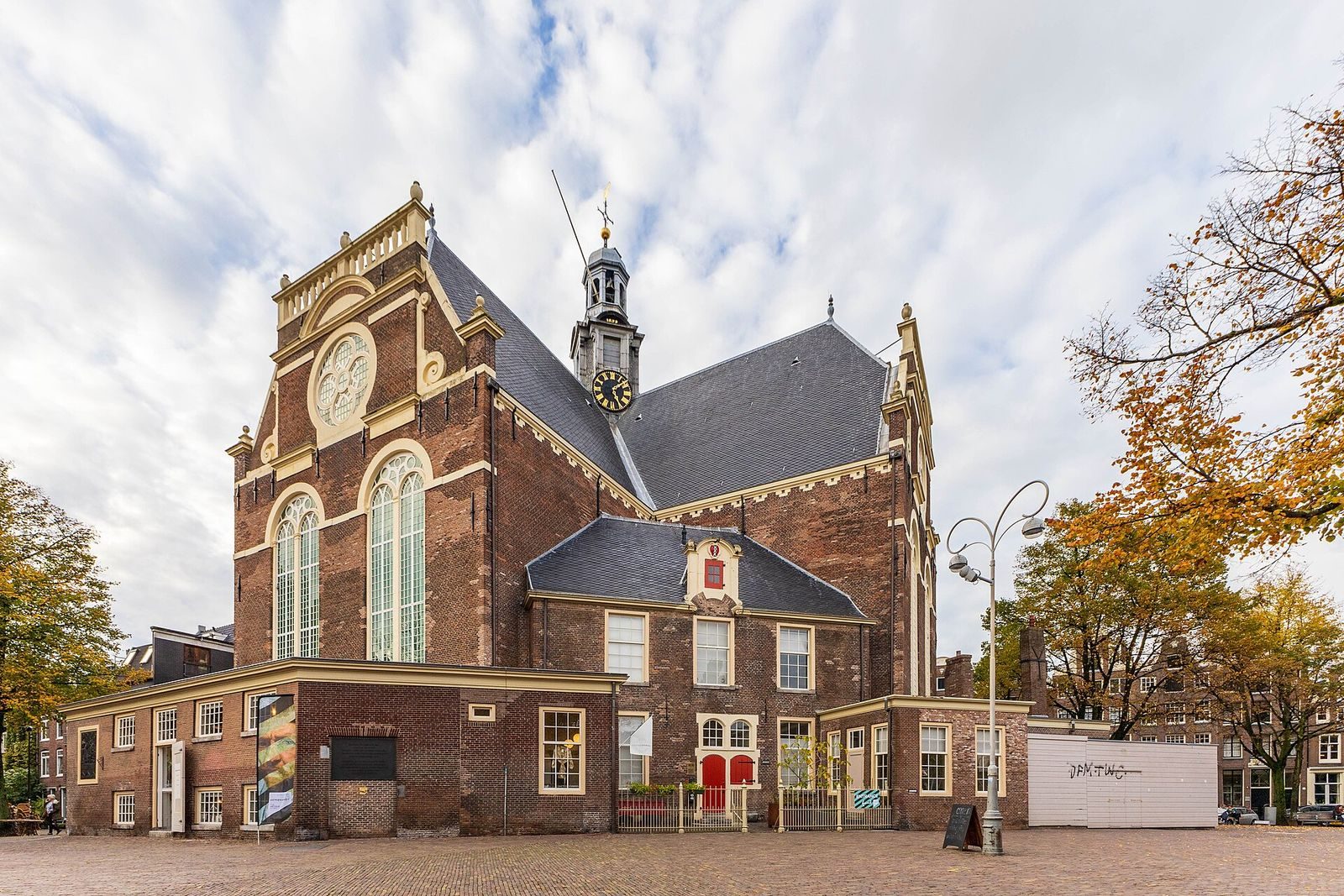
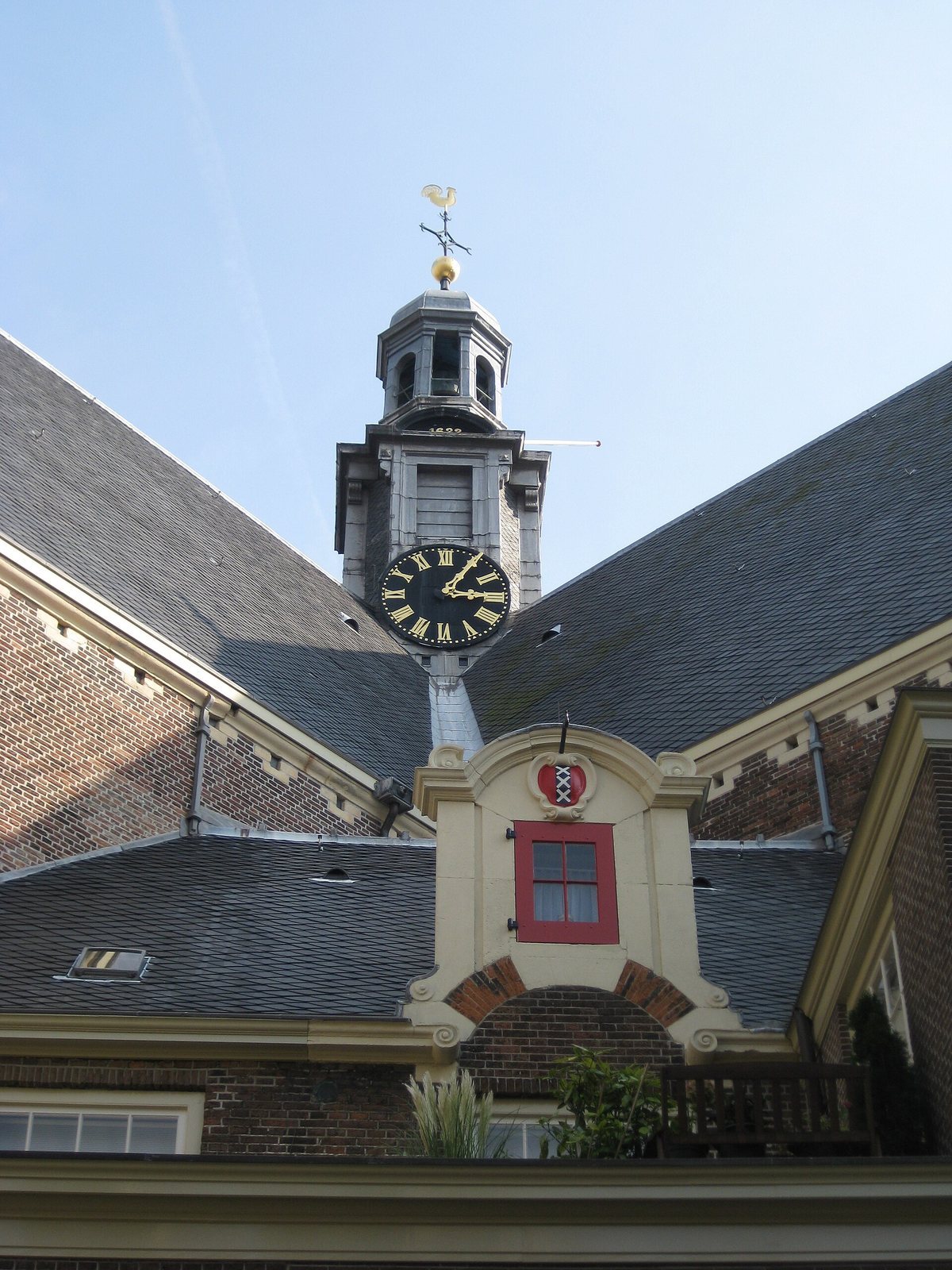
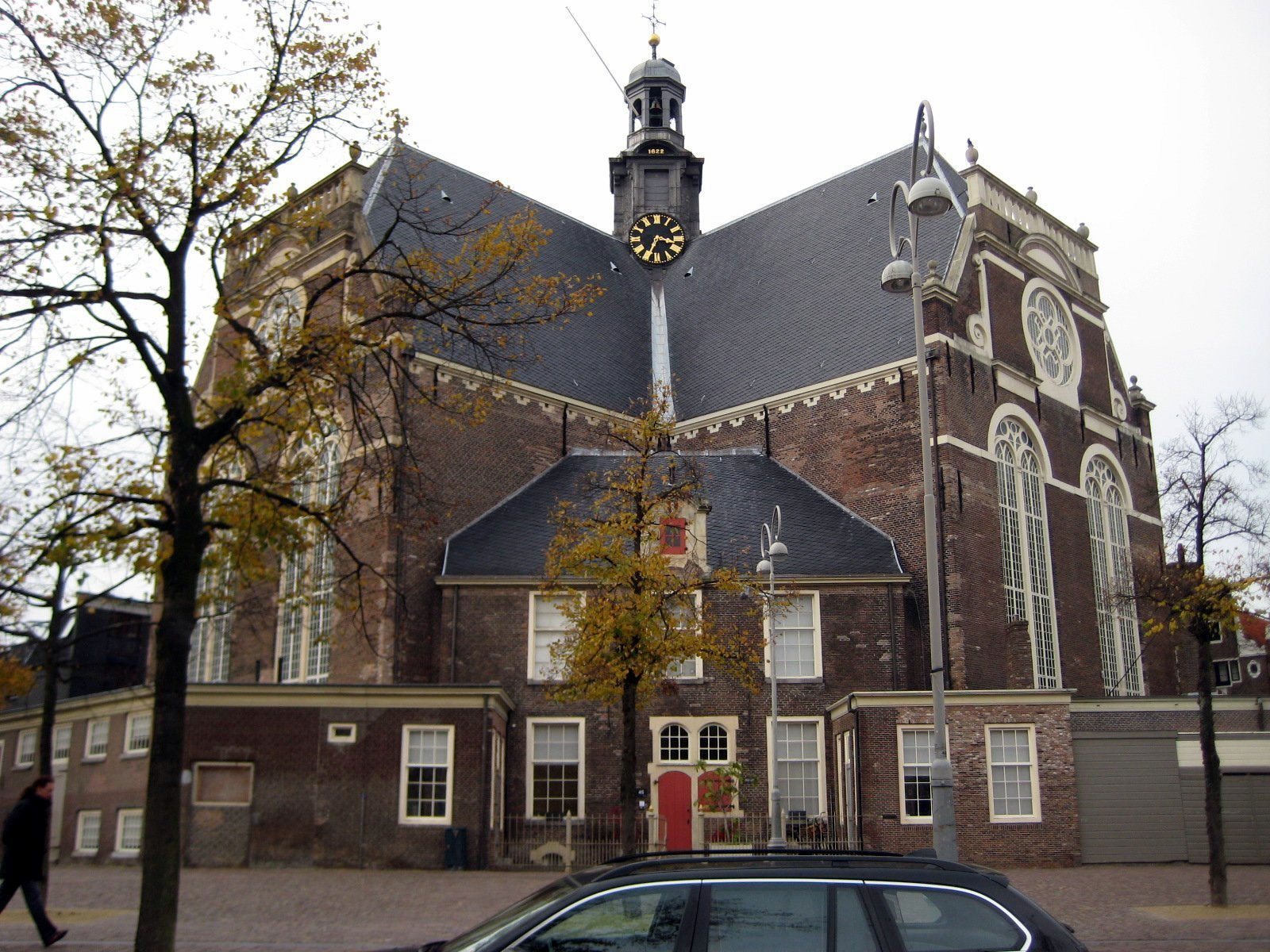
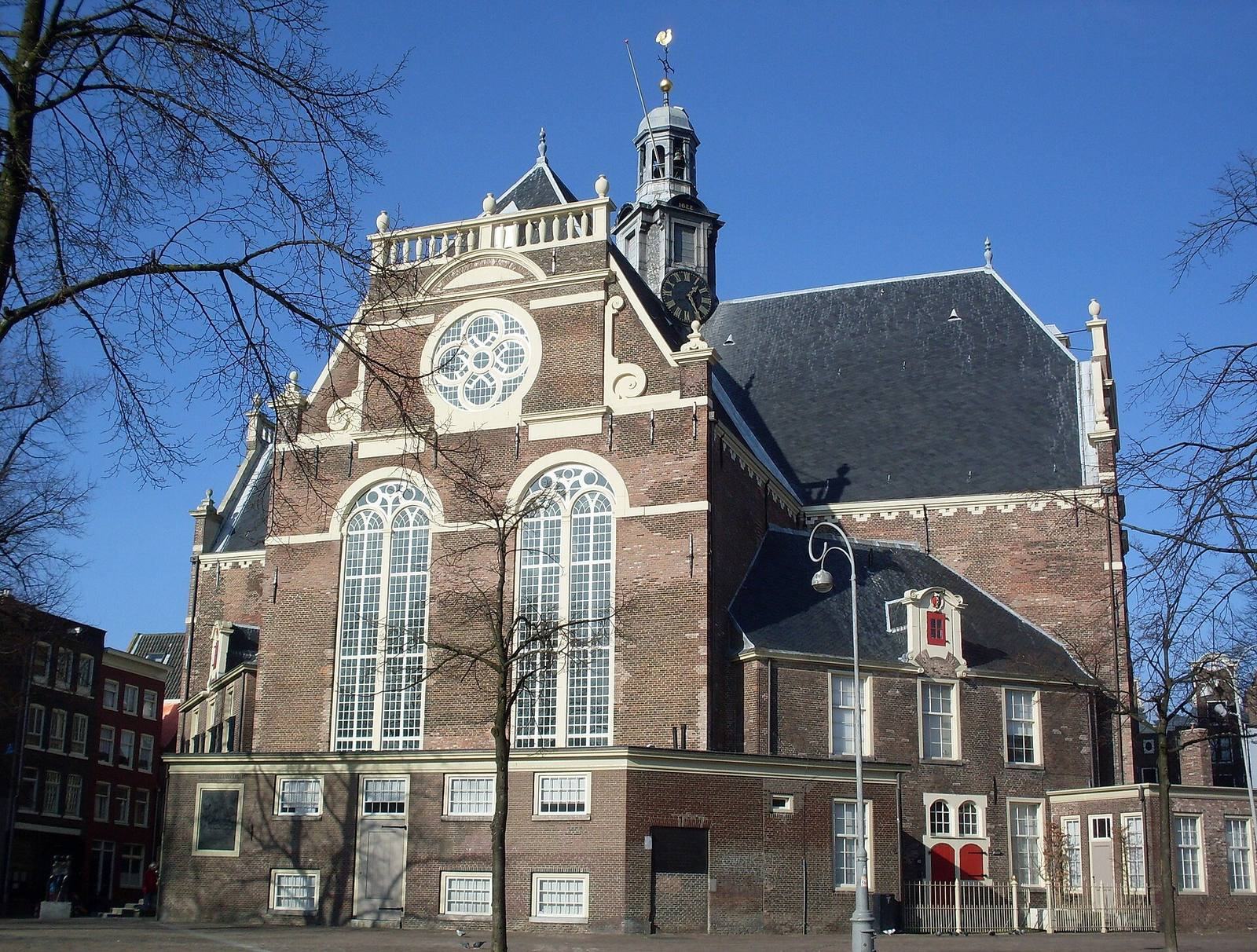
Beside the Prinsengracht canal and Noordermarkt, at the edge of the Jordaan, the church has a symmetrical plan combining an octagonal footprint with a Greek cross, whose four arms are equal in length. Annexes occupy the corners of the cross, while triangular service spaces fill the areas between its arms. A small tower, built in 1621, stands where the arms meet. The southern annex houses the municipal archaeology office.
Interior
Columns, furnishings and floor
Large Tuscan columns, a simple form of classical column design, dominate the interior. Surviving seventeenth-century features include the wall plaster, the marble base of the pulpit, and oak used in some benches. The floor remains covered with grave slabs; at times, more than five people were buried beneath one slab. Copper chandeliers once provided light, and electric lighting has been used since 1941.
Organ
Built in 1849 by H. Knipscheer, the organ is the largest made by his organ-building family. It is constructed around a large pillar.
Exterior memorials
Bronze plaques on the south exterior commemorate victims of the Second World War and the February Strike of 1941. A small monument beside the entrance commemorates unrest in the Jordaan in 1934.