Nikolaikirche in Freiberg: A Historic Church and Concert Hall
Site at a Glance
- Rating
- 5
- Popularity
- Very Low
- Country
- Germany
- Primary era
- Early Modern
- Eras represented
- Medieval, Early Modern
- Civilizations
- Electorate of Saxony, Holy Roman Empire, Margraviate of Meissen
- Site type
- Religious
- Remains
- Church
On this page9 sections
History
Romanesque foundation and fires
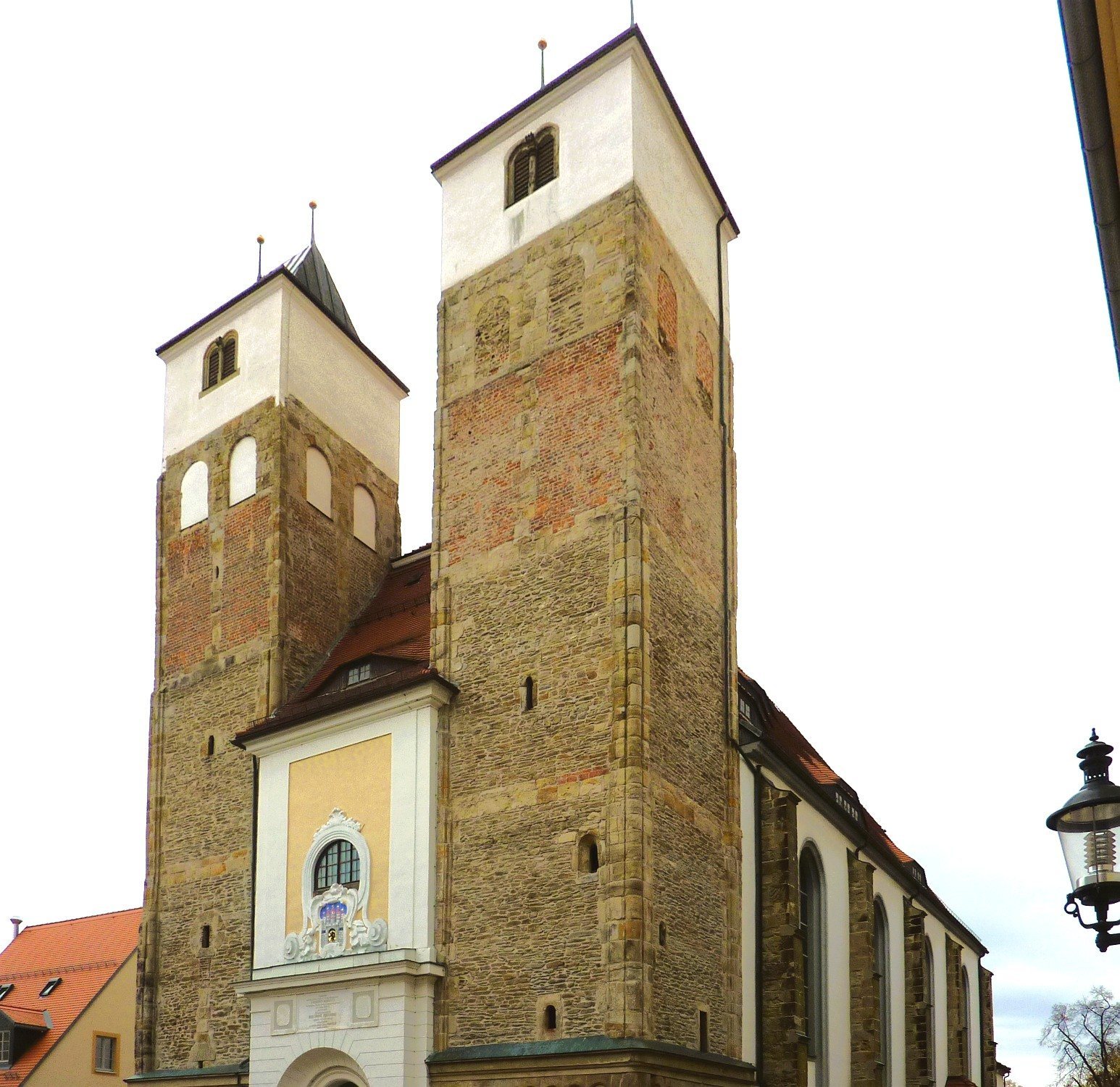
Nikolaikirche is a church in Freiberg, Germany, built between 1185 and 1190 in the Romanesque style. It is the city’s second-oldest church building. Fires in 1375, 1386, and 1471 probably caused severe damage. On June 21, 1484, a fire that began in a coppersmith’s house near the Dominican monastery’s horse stable spread through much of Freiberg. Nikolaikirche was almost entirely destroyed; its two towers and side walls survived.
Rebuilding and redesign
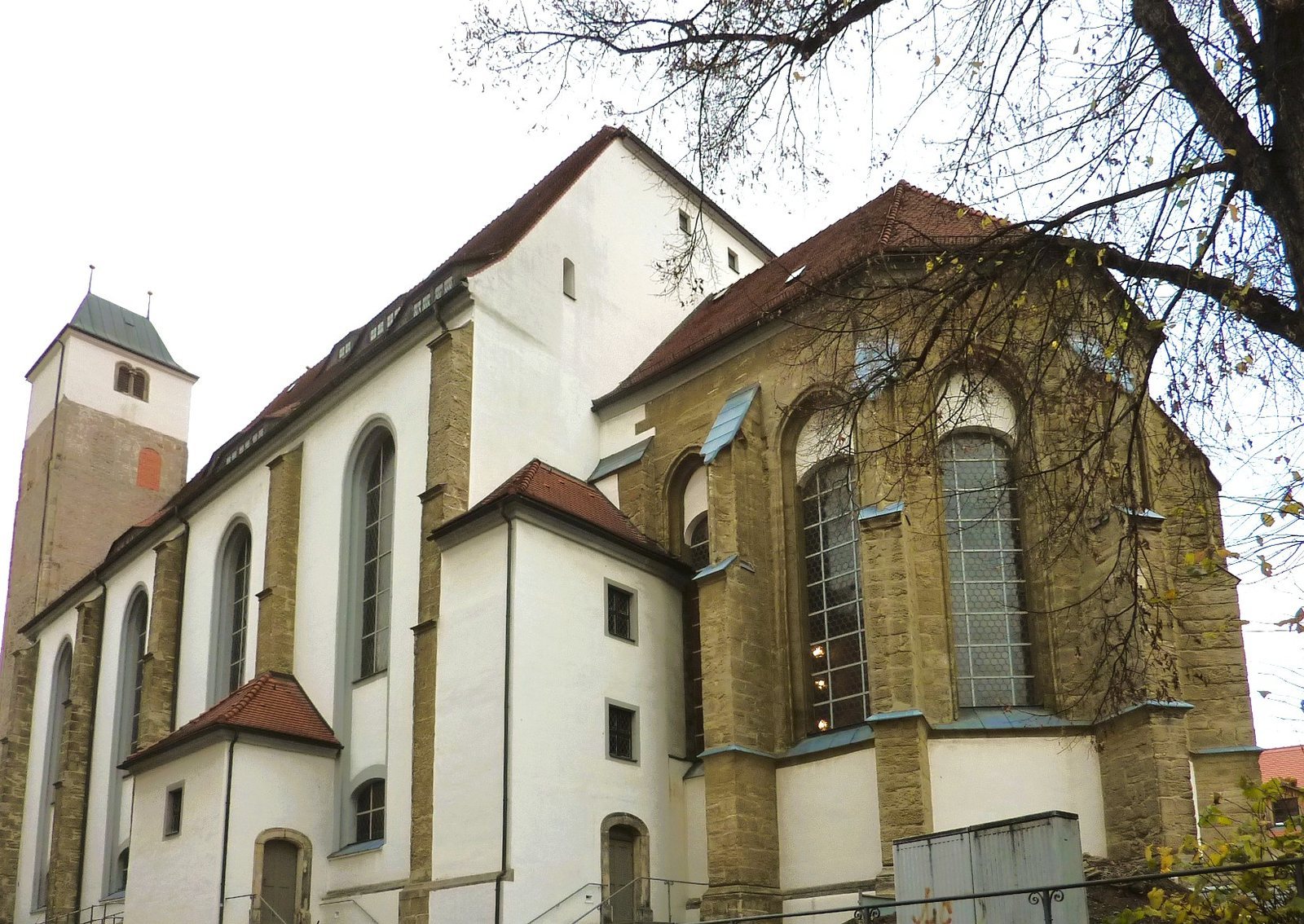
A papal nuncio, the pope’s diplomatic representative, granted an indulgence to those who helped restore the church. In Catholic theology, an indulgence remits temporal punishment associated with sin. Two bells were cast during the rebuilding, and from June 1512 Bishop Johann VI of Meissen organized collections for the work. The church was largely restored by 1518, while its nave was renewed as a Gothic hall church through 1578. In this type of church, the nave and side aisles are of roughly equal height.
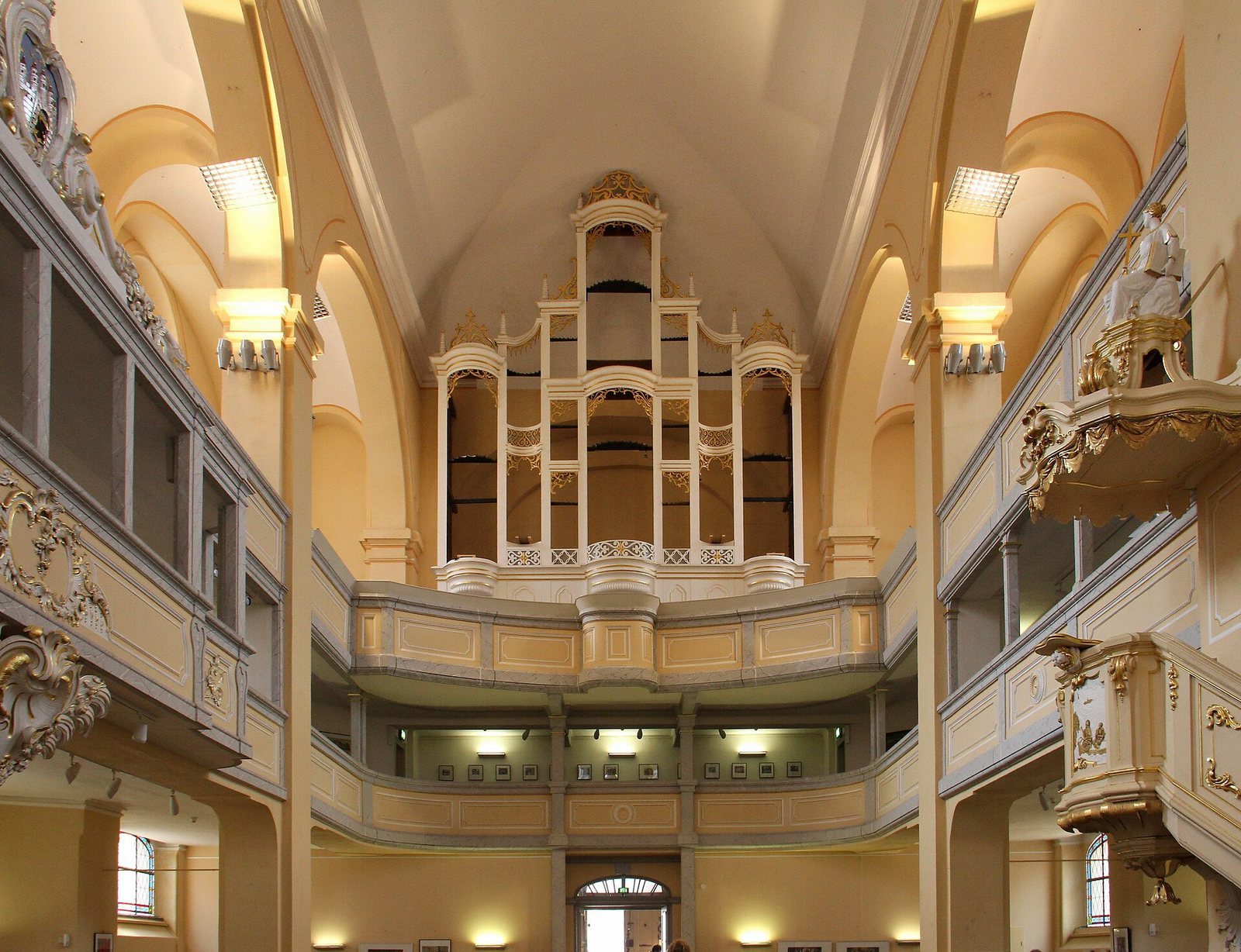
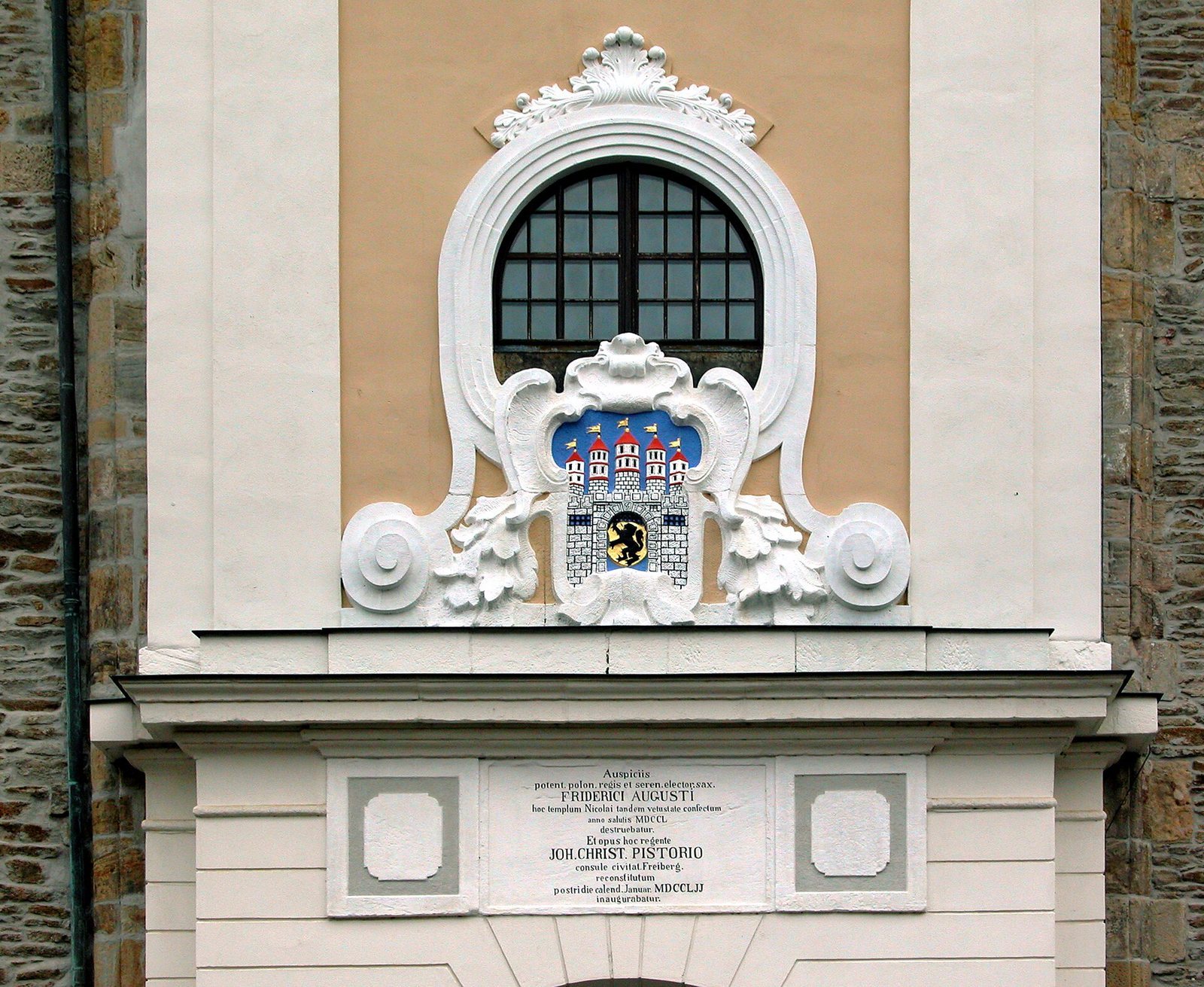
The west towers were heightened in 1630. From 1750 to 1753, architects Johann Christoph Knöffel and Johann Gottlieb Ohndorff supervised a Baroque remodeling. Johann Gottlob Mende built an organ between 1842 and 1845, and the Jehmlich company of Dresden modified it in 1888.
Deconsecration and later use
In 1975, the Evangelical-Lutheran Church of Saxony, the regional Protestant church body, sold the deteriorated building to the city for 28,000 East German marks, payable in ten annual installments. Its furnishings were excluded from the sale. The church was deconsecrated, or formally withdrawn from religious use, and briefly served first as a fruit store and then as a prop room for the theater opposite. It received no structural maintenance.
Official correspondence in 1975 revealed that preservation was not the authorities’ intention. In March, Mayor Ullmann argued that the building’s condition and heritage value did not justify preserving it, and anticipated redevelopment of the area in the mid-1980s. In November, district council chairman Heinz Arnold described its use as politically unacceptable and cited the risk that a West Berlin resident would photograph it. State authorities had insisted that the furnishings be removed. On January 31, 1976, the Petri-Nikolai congregation relinquished the church’s inventory, while retaining ownership of the bells and their frame. Proceeds from the organ’s sale helped fund the restoration and conversion of Freiberg’s Petrikirche into a congregational center through a program of the East German foreign-trade company Limex-Bau Export-Import.
After the political transition, Nikolaikirche underwent thorough renovation. It has since been used as a concert and event hall.
Remains
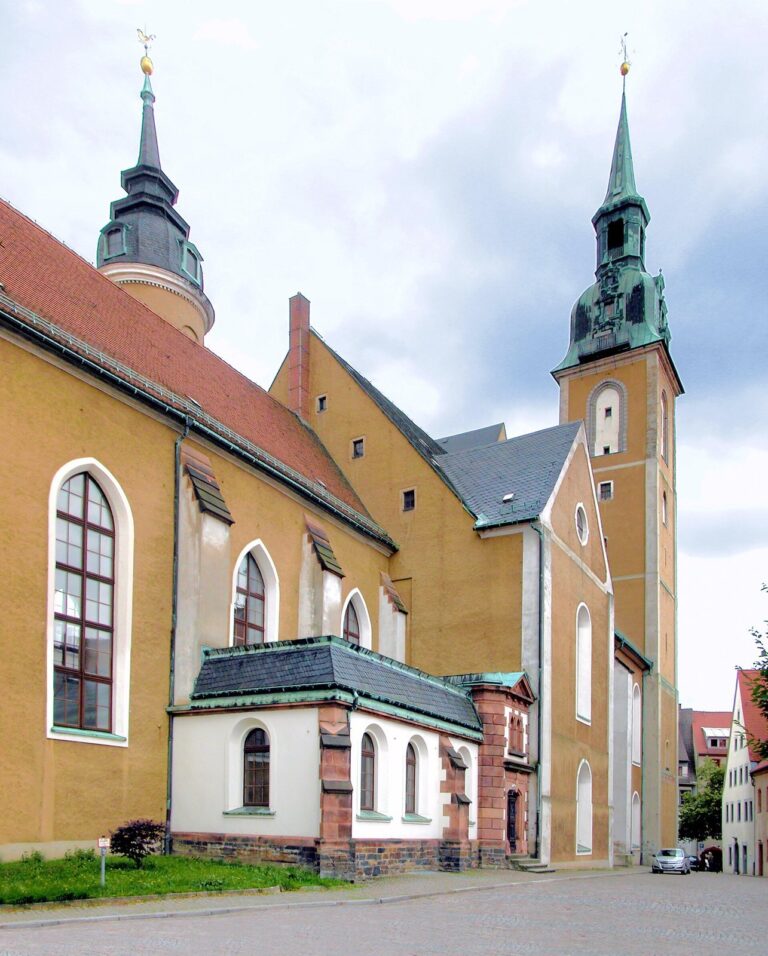
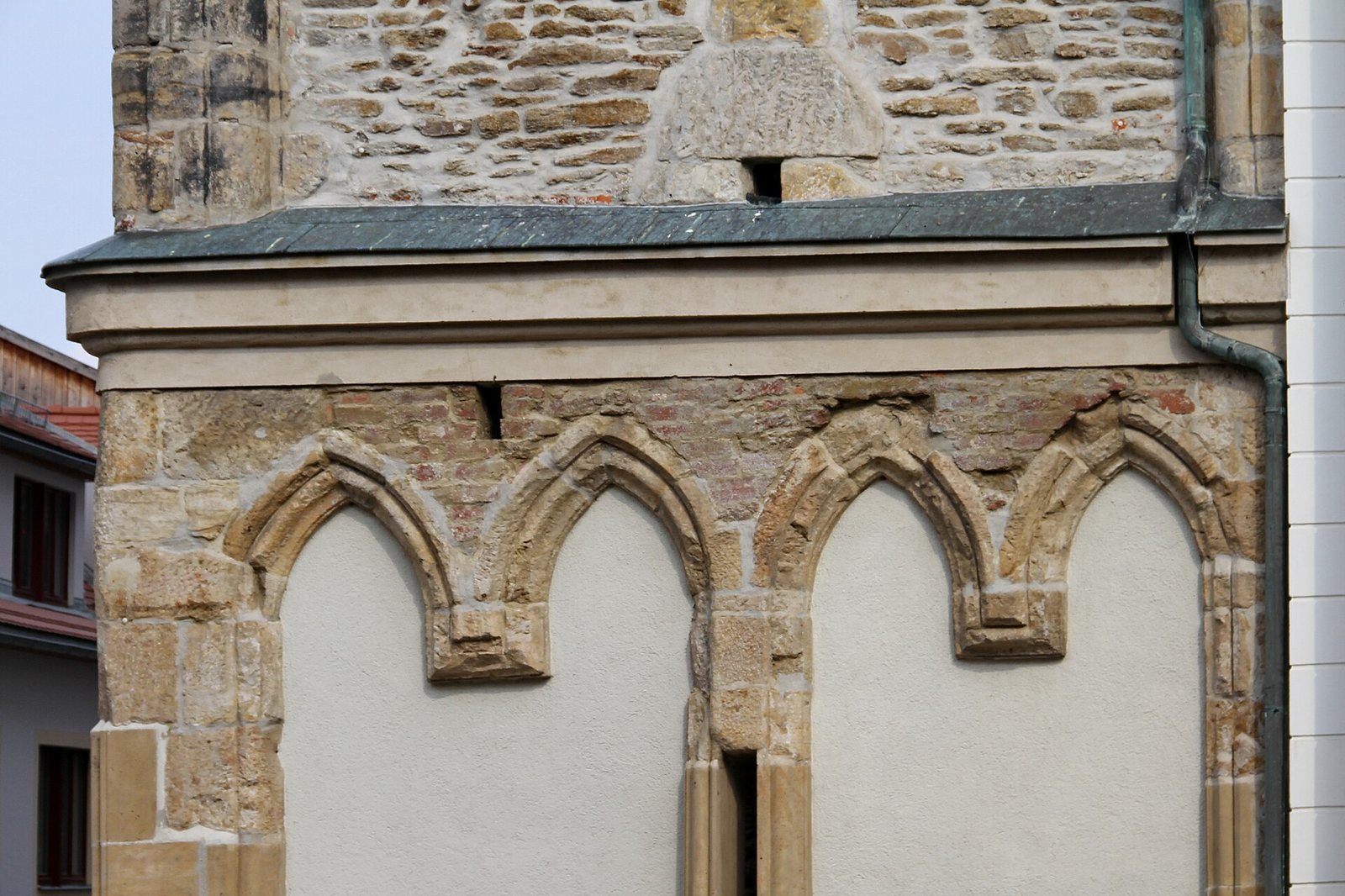
The building’s surviving form brings together a Romanesque double-tower west facade, a nave renewed as a Gothic hall church, and later Baroque remodeling. The original Romanesque fabric survives only in the double-tower facade.
West facade and nave
The two west towers are the most clearly preserved Romanesque feature, although they were heightened in 1630. The nave’s hall-church form reflects its Gothic rebuilding, while the church as a whole was later remodeled in the Baroque style.
Organ
Mende’s organ had two manuals, or keyboards, and 28 stops, which control sets of pipes with particular sounds. After the 1976 sale, it was transferred to Nikolaikirche in Wismar.
Bells and bell frame
The church’s two bells were cast at the Hilliger bell foundry in 1487 and 1498. The bells and their frame remained the property of the Petri-Nikolai congregation after the church’s inventory was relinquished.
Baptismal font
Sculptor Johann Gottfried Stecher made the baptismal font in 1753. It was consecrated on January 25, 1754, and later transferred to Dresden’s Frauenkirche, where it can be viewed.