Nikolaikirche: A Sorbian Parish Church in Bautzen
Site at a Glance
- Rating
- 5
- Popularity
- Very Low
- Country
- Germany
- Primary era
- Medieval
- Eras represented
- Medieval, Early Modern, Modern
- Civilizations
- Holy Roman Empire, Kingdom of Bohemia, Kingdom of Saxony
- Site type
- Religious
- Remains
- Church
On this page11 sections
History
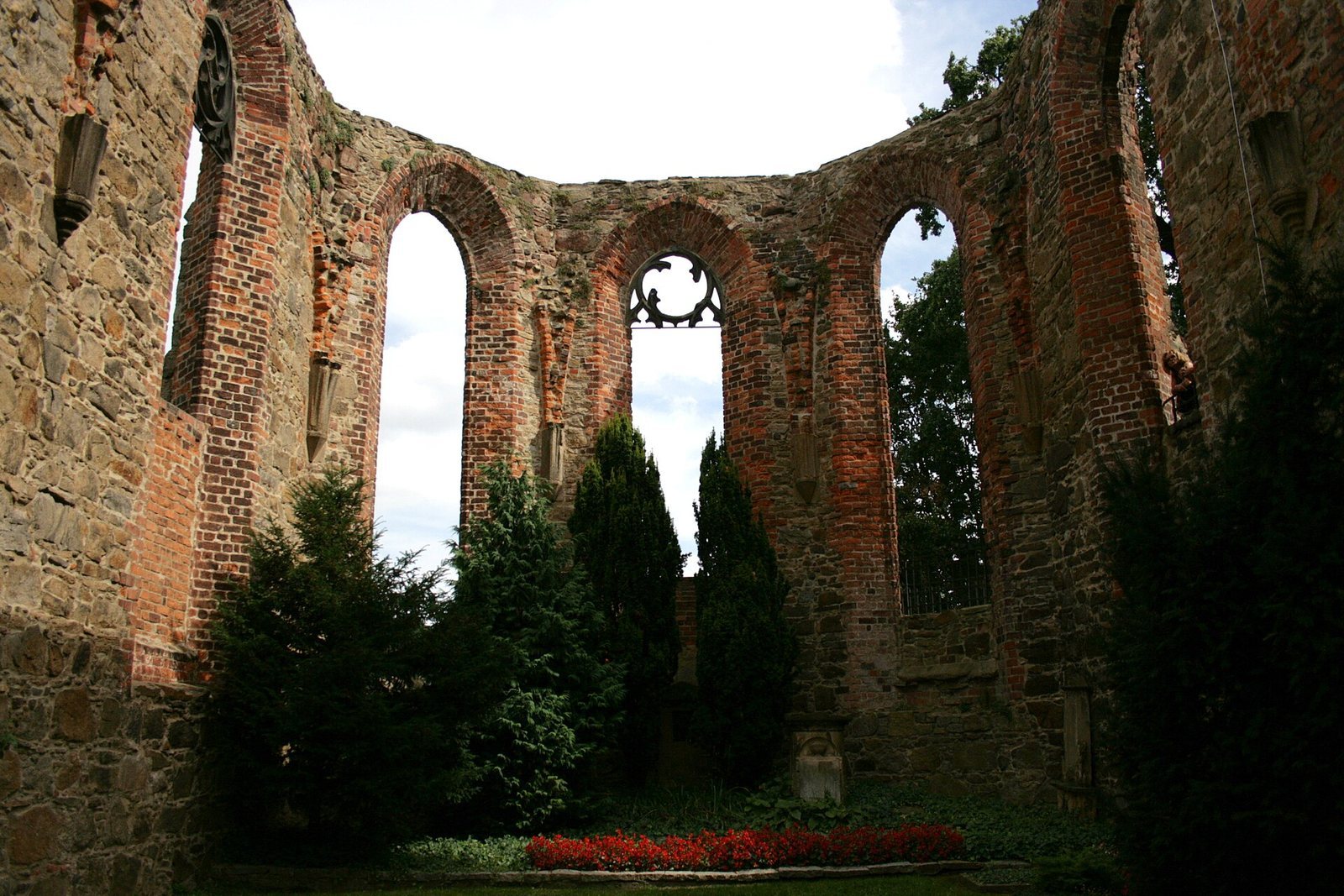
Nikolaikirche is the ruin of a church in Bautzen, Germany, begun as an early fifteenth-century chapel and later made the parish church for the Sorbs, a West Slavic people with a distinct cultural and linguistic heritage associated with Lusatia. Dedicated to Saint Nicholas and Saint Barbara, it became a center of worship for the Sorbian community.
Foundation and medieval worship
In 1407, Hermann von Unaw gave St Peter’s Church a garden or vineyard outside the gates of Ortenburg, toward Seidau, for use as a cemetery. He presented the gift to Bautzen’s newly elected council on 8 June. A chapel funded by donations was begun in the early fifteenth century. It burned in 1441 before completion, and the townspeople then financed a much larger rebuilding, largely finished by 1444.
On 2 May 1444, Simon Jode, a priest of the Church of Our Lady, led the first Vespers, an evening prayer service, in the rebuilt church. The following Sunday he celebrated a high Mass, a solemn form of the Eucharistic service, and organized a procession, followed by a feast. At Jode’s urging, his relative Paulinus Richard of Luckau endowed St Peter’s Church to fund recurring services at Nikolaikirche, particularly Passion services focused on Jesus’s suffering and death, and processions. Six altars were established, each served by an altarist, a priest assigned to a particular altar. Together with two other priests, the six chaplains formed a confraternity, a religious association whose members shared devotional practices. They followed a common rule but took no monastic vows. Processions were held at Nikolaikirche from 1460 and elsewhere in Bautzen from 1476, drawing many worshippers, especially Sorbs.
Reformation and parish change
Bishop Kaspar von Schönberg consecrated the churchyard in 1455. After Nikolaikirche became the Sorbs’ parish church, the cemetery served mainly Catholic Sorbs from the surrounding area. In Advent 1525, the city council and Protestant townspeople plundered both St Peter’s and Nikolaikirche. During the Reformation, the sixteenth-century movement that created Protestant churches and changed religious practice and church authority, a priest appointed in 1527 began preaching in Sorbian in an effort to prevent the Sorbs from becoming Protestant. Nikolaikirche received parish rights and became their parish church, while services by the altarists ended. In 1552, with the cathedral chapter’s approval, the council repurposed two churchyard houses to shelter people suffering from plague.
On 27 August 1619, an uprising took place at St Peter’s. A few days later, on 1 September, the council arranged for Archdeacon Sommer, a senior diocesan administrator, to preach in Sorbian at St Michael’s Church for Protestant Sorbs who also belonged to Nikolaikirche’s parish. St Peter’s chancel was transferred to the council on 18 May 1620, and Catholic services for its congregation moved to Nikolaikirche from Pentecost that year. The transfer was arranged by Widerinus von Ottersbach, a Catholic dean, or senior church official. He died on 27 June, aged 49, and was buried at Nikolaikirche. Several weeks later, mercenaries opened and plundered his grave during the siege. Local tradition attributed his death to the distress of upheavals in church life, particularly the Reformation.
Sieges and the church’s ruin
In 1620, Saxon Elector Johann Georg I, one of the princes entitled to choose the Holy Roman Emperor, besieged Bautzen. On 9 September, at the beginning of the siege, Governor Dick, commander of the Jägerndorf troops stationed in the city, ordered the church roof removed so that guns could be installed on its vault. The seating, altars, pictures, and galleries were then smashed and partly burned, and the tower was destroyed. Members of the cathedral chapter were also buried in the churchyard from the time of the church’s destruction.
After a city fire on 2 May 1634, the cathedral chapter planned to rebuild Nikolaikirche, and the council supplied timber. Swedish forces used that timber to build palisades during their siege of Bautzen in 1639. The chapter considered rebuilding again but chose, for financial reasons, to restore the Church of Our Lady, which had also burned in 1634. Nikolaikirche remained a ruin. During the Swedish siege, earthworks were raised in front of Nikolai Gate and the churchyard, which was completely destroyed. Rubble from the earthworks remained visible until the end of the eighteenth century.
Burials and the chapel
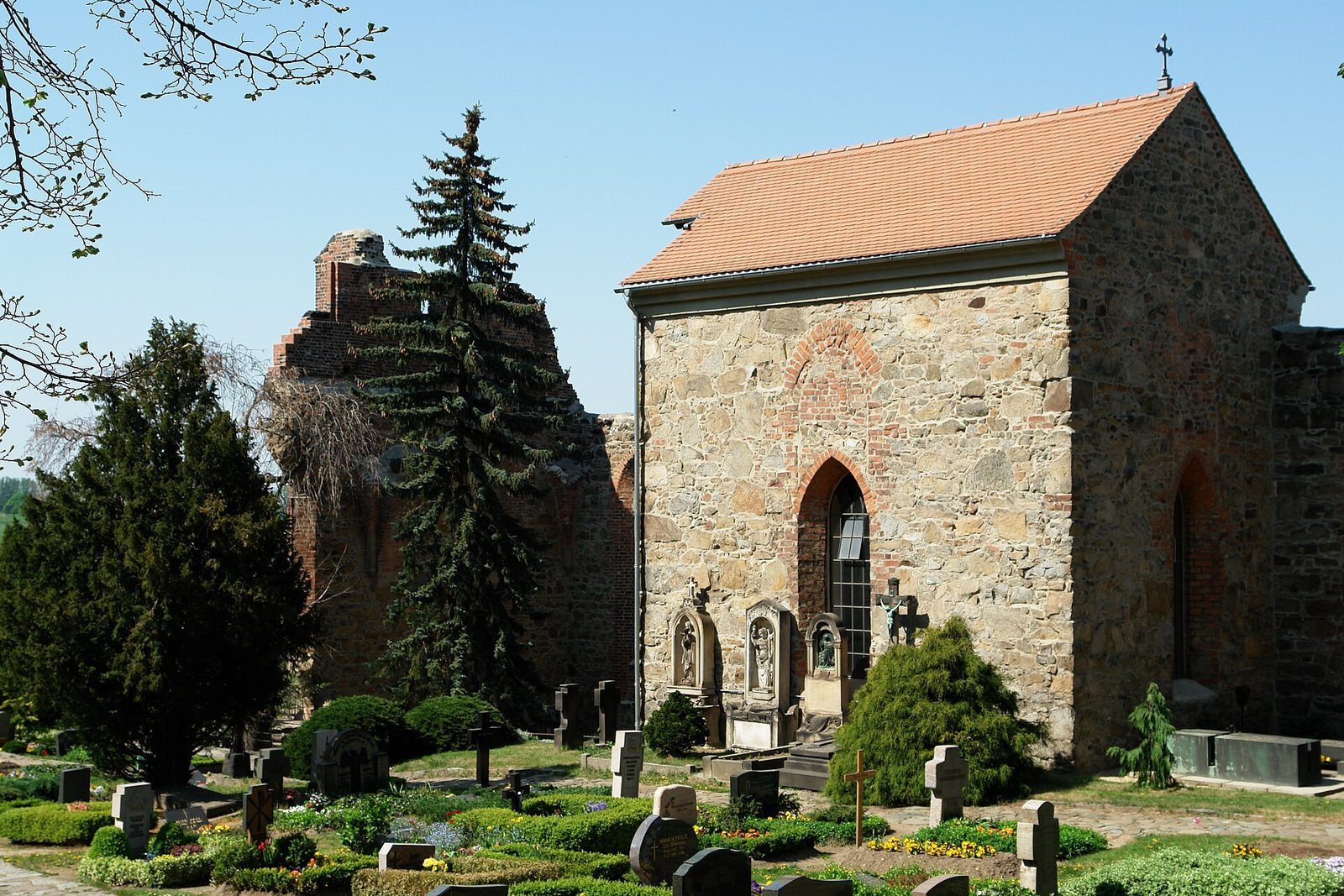
A local legend places a miraculous discovery at the former altar on the Saturday before Pentecost in 1702. It tells of a drunken citizen who woke to find a spring at the altar steps, with gold and silver coins flowing from it. From 1745, the church ruin itself was also used for burials. In 1848, the cathedral chapter commissioned a chapel for the churchyard; it was completed and consecrated in 1852, and funeral services have been held there since.
Remains
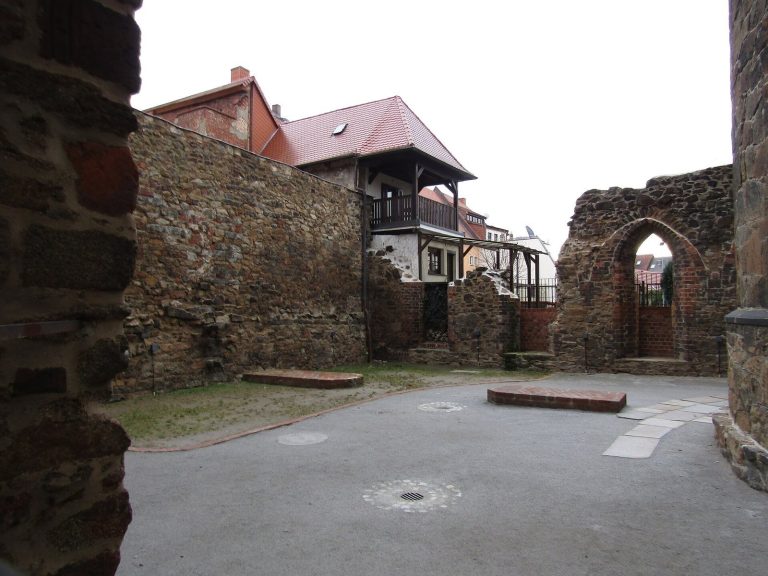
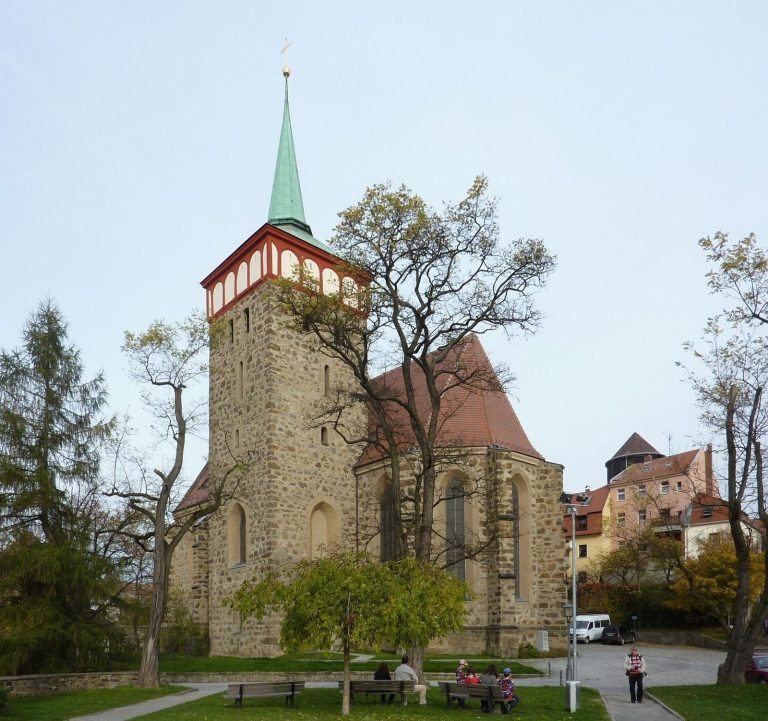
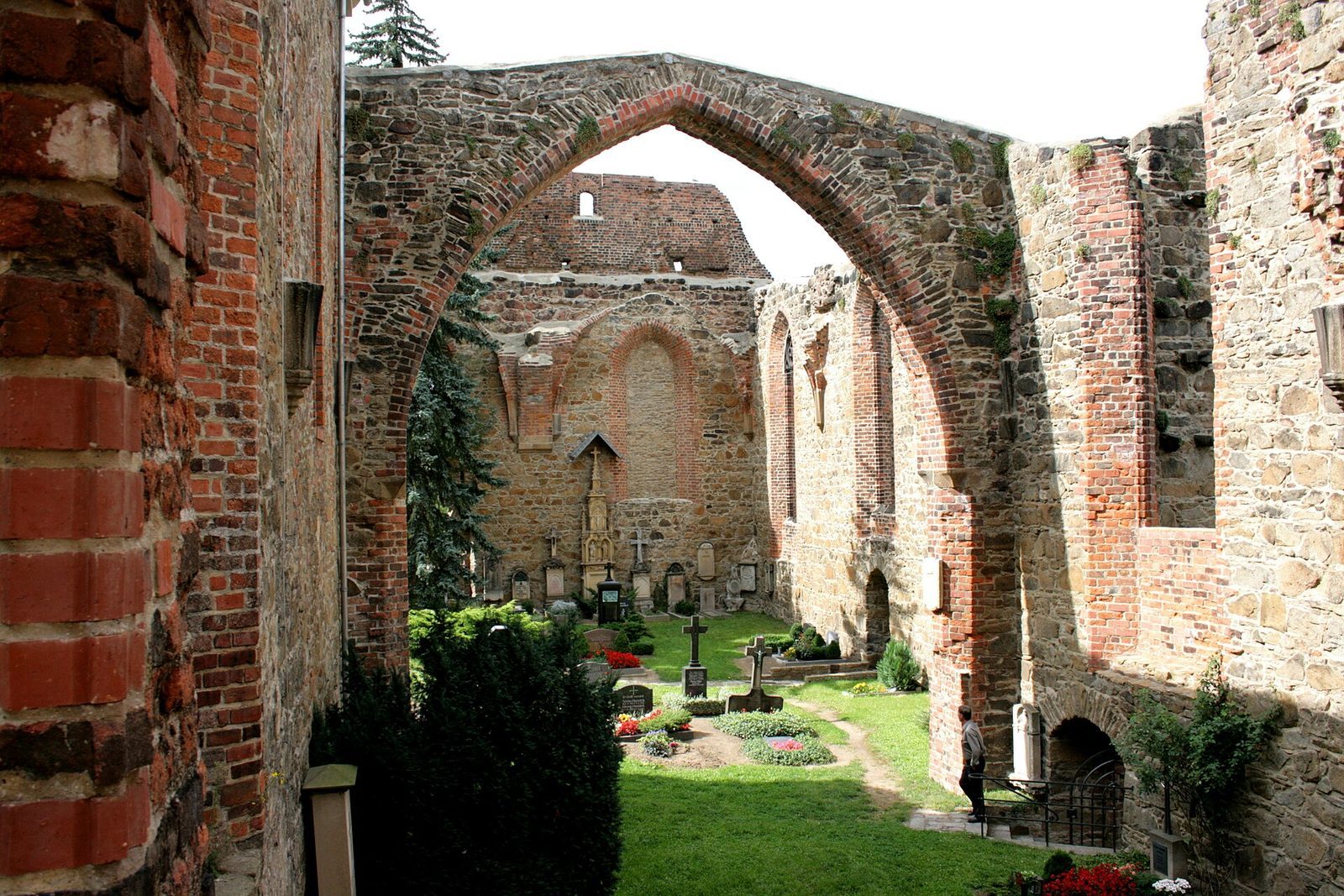
The surviving complex is centered on the church ruin in front of the historic Nikolai Gate, with a small chapel incorporated into it. The church’s former layout included passages on its east, west, and north sides, as well as a defensive wall-walk along the north side.
Church fabric and circulation
Processional passages and wall-walk
The passages allowed processions to pass through the space between the church and the outer wall of the city fortifications. Along the church’s north side, the defensive wall-walk formed a passage for defenders along the fortification.
Interior features
A baptismal font stood at the church’s center, and the building eventually contained ten altars. Its high altar was renewed in 1601. A cross stood above it, flanked by representations of the two thieves crucified alongside Jesus; traces of the cross remain visible.
Western churchyard houses
Two small houses were built on the churchyard’s rocky western projection to accommodate priests and altarists. These were the houses later repurposed as shelter for people suffering from plague.
Chapel and bell
Built by the master masons known as the Marche brothers, the chapel is integrated into the church ruin and has a bell tower. In 1852, a Catholic bell was transferred there from the tower of St Peter’s, where it had hung below the Protestant bells.