Neustädter Hof- und Stadtkirche St. Johannis: A Lutheran Court and Parish Church in Hanover
Site at a Glance
- Popularity
- Medium
- Country
- Germany
- Primary era
- Early Modern
- Eras represented
- Early Modern, Modern
- Civilizations
- German, Holy Roman Empire
- Site type
- Religious
- Remains
- Church
On this page13 sections
History
Chapels before the present church
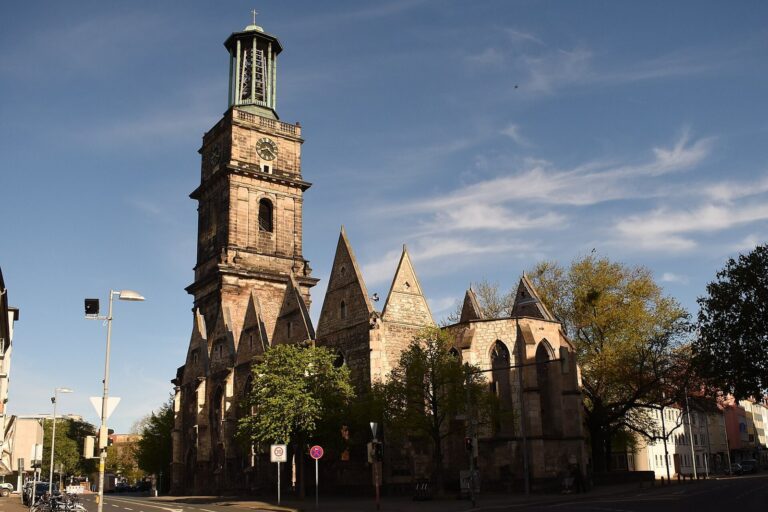
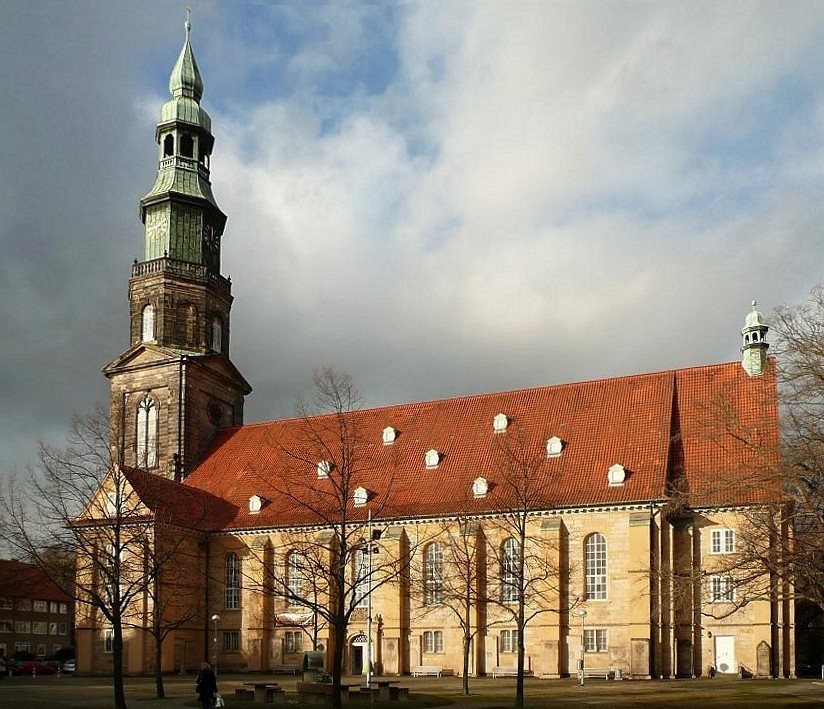
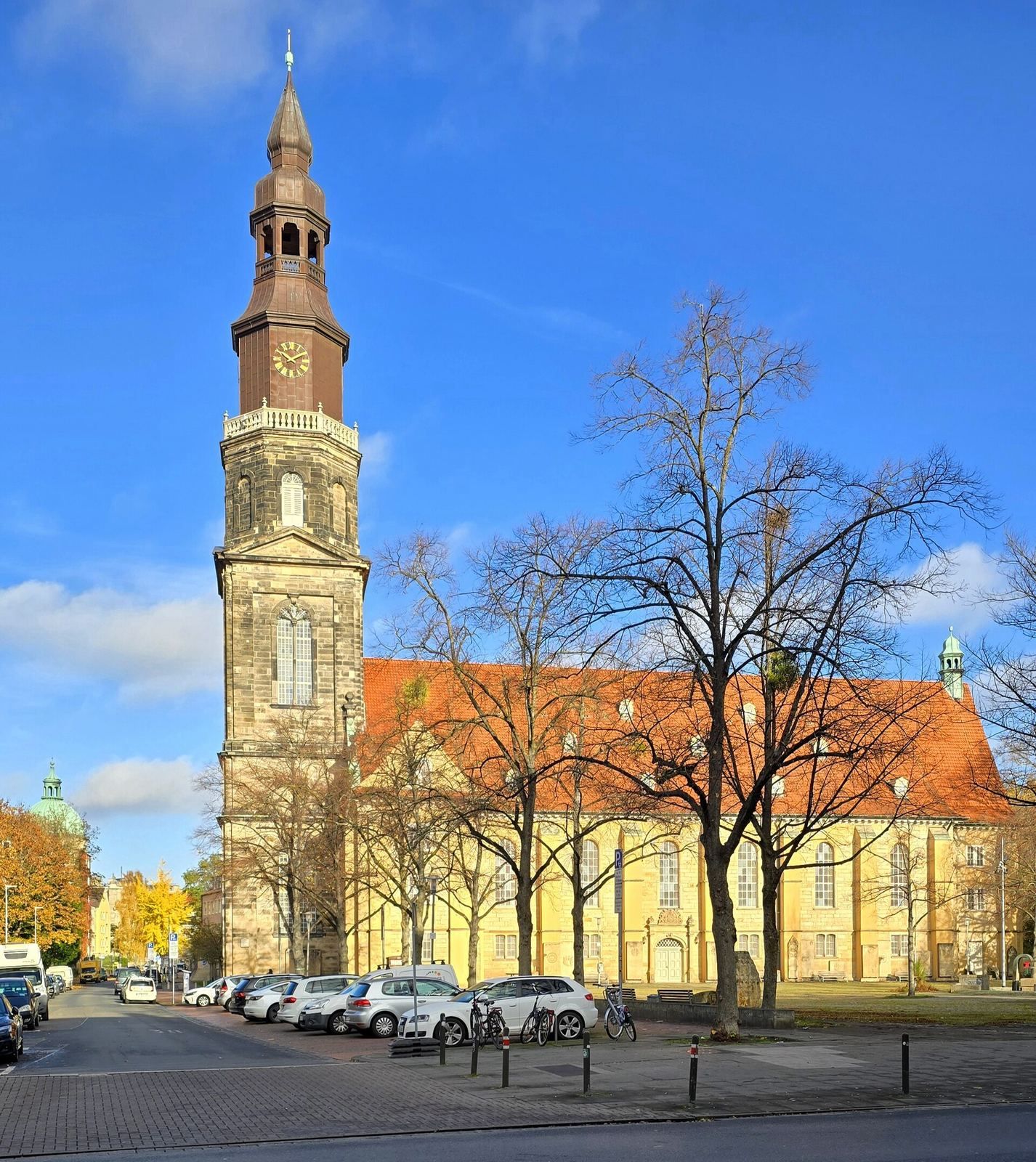
The Neustädter Hof- und Stadtkirche St. Johannis is a Lutheran church in Calenberger Neustadt, Hanover, Germany. Built from 1666 to 1670 in an early Baroque style, it became a preaching church for the Protestant court community and a burial place for members of the court. Its history continues that of an earlier chapel dedicated to Saint Gall, an early medieval Christian saint, which the Counts of Lauenrode founded for their castle. The chapel is first recorded in 1241 as ecclesia Galli, or the Church of Saint Gall.
After the castle was destroyed during the Lüneburg War of Succession, a dynastic conflict over inheritance in the territory of Lüneburg, Cord van Alten built a replacement chapel before 1388 at Rosmarinhof, within Hanover’s town walls and near the present church. Dedicated to the Virgin Mary, it became both a collegiate church, serving a chapter of clergy, and a parish church for Calenberger Neustadt around 1396. It adopted Lutheranism, a Protestant tradition that developed during the Reformation, in 1533.
A court church for the Protestant community
Duke George established his residence in Hanover in 1636, prompting the city to expand west across the Leine for the court and its staff. In 1665, Duke John Frederick converted to Catholicism and took control of Calenberg. The court chapel at the Leineschloss then became Catholic, leaving the Protestant court community in need of a church. That year, the existing chapel became a parish church for Protestant congregations in Calenberger Neustadt.
The chapel was subsequently demolished and the Judenteich, a pond, filled in before the present church was built. The duke and the estates of the Principality of Calenberg financed construction, with substantial assistance from merchant and banker Johann Duve. Building material from the former Saint Gall chapel in Hanover’s old town was reused. Girolamo Sartorio, a Venetian architect, probably designed the church; Brand Westermann, the duke’s court building official, is also identified as its architect. The building united a hall plan focused on preaching with the restrained forms of early Baroque architecture.
The first tower was considered unsafe, so a replacement was erected above the west entrance between 1691 and 1700. After the chapel at the Leineschloss returned to Lutheran use under Duke Ernst August, St. Johannis continued as the church for Protestant court officials outside the ruler’s immediate household. Its role as a court church ended after Hanover acquired a new residence, the Welfenschloss, and a new court church, the Christuskirche.
Changing roles and modern history
In 1859, King George V transferred his royal patronage from St. Johannis to the Christuskirche and placed the former church under Hanover’s city magistrate. St. Johannis served as the church of the General Superintendent, a senior regional Lutheran official, until 1936. Johann Adolf Schlegel held that office from 1775 until his death in 1793. Many court officials, court preachers, general superintendents, and their relatives were buried in the church. Gottfried Wilhelm Leibniz, the German mathematician and philosopher, was buried there on 14 December 1716. In 1958, the remains of Hanoverian field marshal Carl August von Alten, who had died in 1840, were moved from a mausoleum in Wilkenburg to the church tower.
Air raids on Hanover during the Second World War left the church standing only to its exterior walls. Wilhelm Ziegeler directed its reconstruction from 1956 to 1958 in simpler forms. An interior renovation in 1992–94 moved the church closer to its original design, although the Baroque furnishings were not restored as a complete ensemble. The church remains an Evangelical Lutheran parish church and serves as the preaching church of the regional bishop for the Hannover church district. The office was called regional superintendent until 2020. The church also serves the nearby church administration and the Evangelical Agency, previously known as the House of Church Services from 2002.
Church music is centered on the Kantorei St. Johannis, the church choir founded in 1958. At the first postwar service, held on the first Sunday of Advent, the choir performed Bach’s Cantata BWV 61 under cantor Werner Burckhardt and adopted the name Kantorei. Christhard Vandré succeeded Burckhardt in 1968, followed by Erhard Egidi from 1972 to 1991 and Lothar Mohn from 1991 to 2020. Jonathan Hiese is the current cantor. The choir’s work combines services and concerts, with Bach a recurring focus. Egidi also performed music by his teacher Ernst Pepping and contemporary composers; under Mohn, the church continued an annual Lenten concert, often featuring Bach’s St Matthew Passion or St John Passion.
Remains
Architecture and interior
Hall and tower
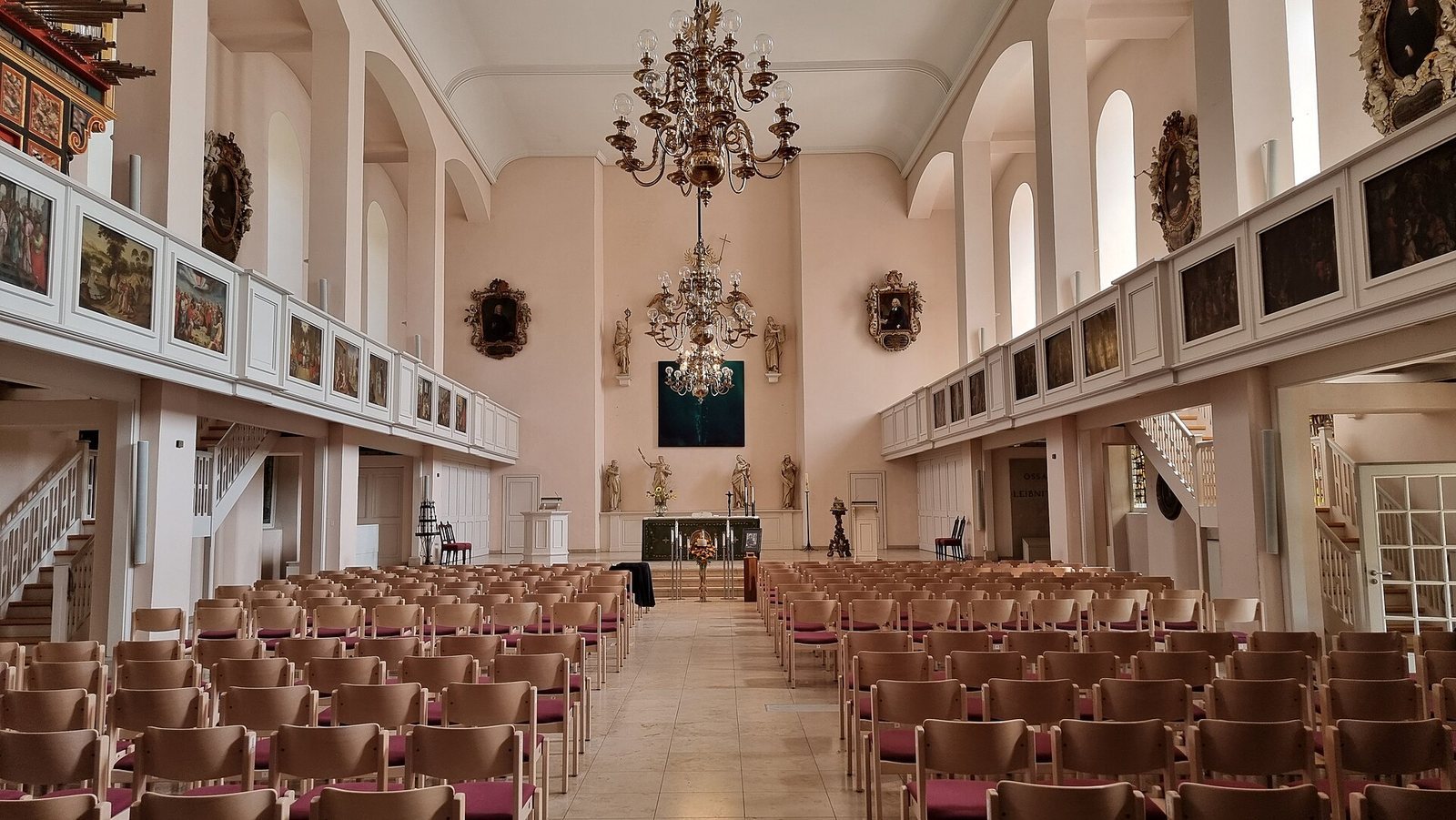
The church is a long, spacious aisleless hall, meaning that its interior forms one space without side aisles. The chancel narrows slightly at the east end. A large gallery for the organ occupies the west end, while smaller galleries run along the north and south sides. This arrangement directs attention toward preaching. The building is an early example of the Protestant hall-church ideal in Lower Saxony, described as the oldest example of that ideal in the region and among its oldest Protestant aisleless churches. Above the west entrance, the tower has a square lower section and an octagonal upper story. A copper-covered cupola with a lantern and a pointed roof crowns it.
Paintings and furnishings
A gallery extending along three sides of the church carries 23 paintings from the building’s construction period. Their subjects include the Passion, the Resurrection, and scenes from the Acts of the Apostles; seven were based on designs by Matthäus Merian. Original furnishings that survive include figures of Christ, angels, saints, and allegorical subjects, as well as portraits and monuments. These pieces were arranged with modern elements rather than reunited as a complete Baroque interior.
Memorials and burials
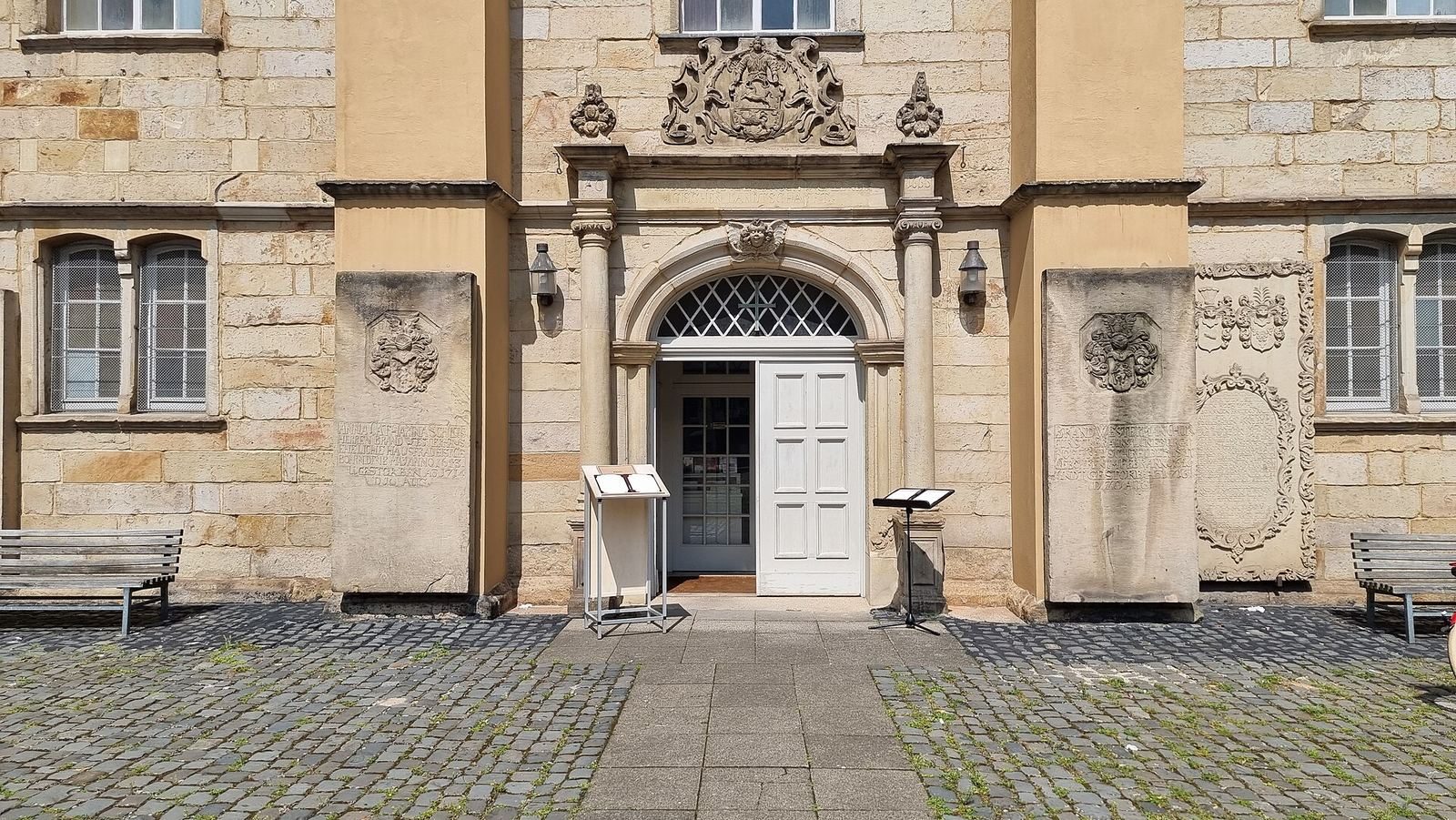
Since 1902, tombstones and epitaphs that once covered the church floor have been fixed to its exterior walls. The 35 exterior slabs and memorials include those for senior court preacher David Ruprecht Erythropel and court building official Brand Westermann. Near the pulpit, in the choir, is the family crypt established by Jobst Hermann von Ilten. He was buried there beside his wife, Hedwig Lucia Grote.
Bells and organs
Bells
Two cast-steel bells made by the Bochumer Verein in 1923 sound at pitches c1 and e1.
West-gallery organ
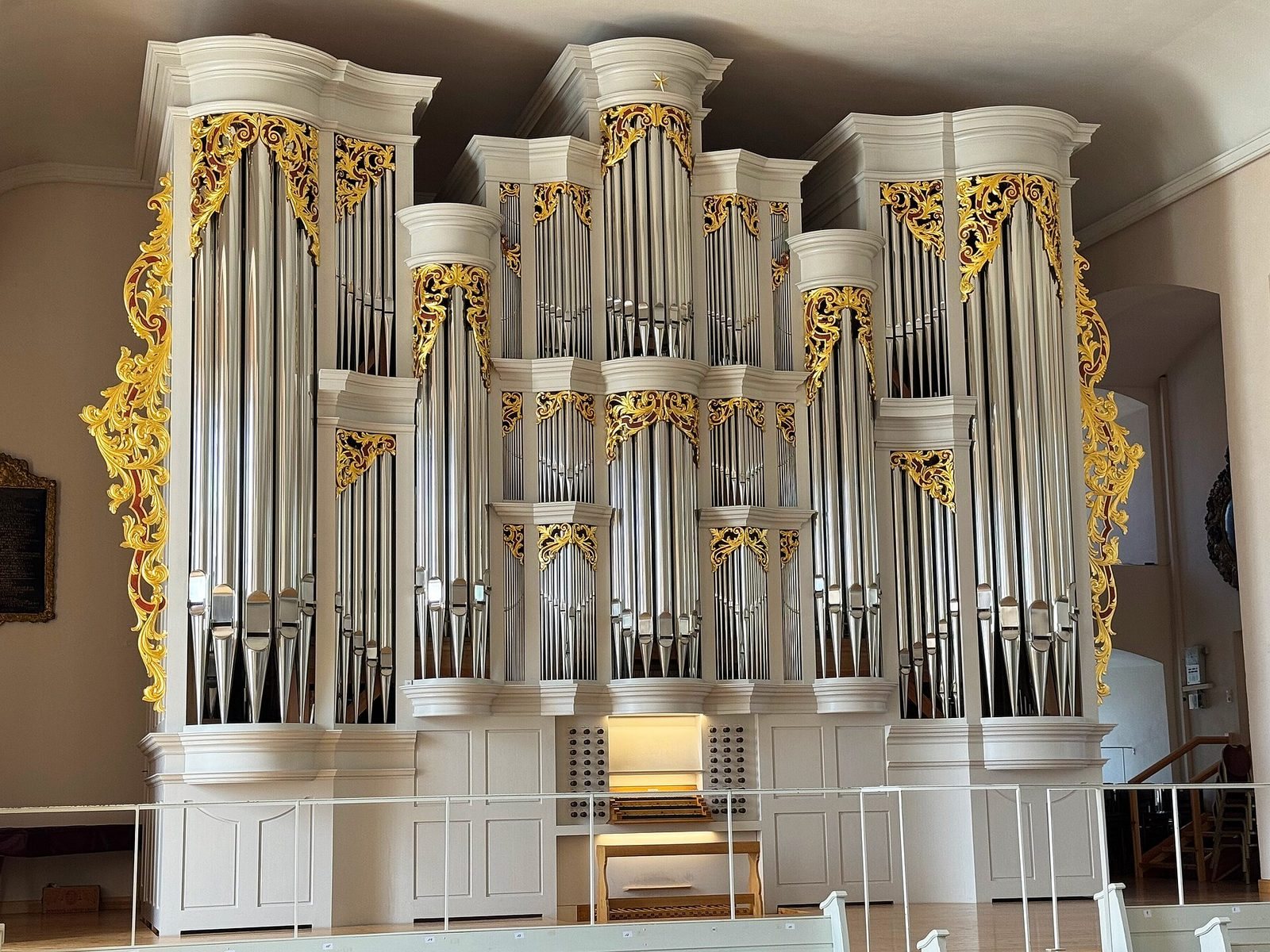
Detlef Kleuker’s main organ was installed on the west gallery in 1963. It had three keyboards and 38 stops, the controls that select the instrument’s sounds. Judged beyond repair, it was sold in 2010, and a temporary movable organ has served in the church.
Spanish organ
Patrick Collon, a Belgian organ builder, installed the Spanish organ on the north gallery between 1998 and 2001. It draws on Spanish Baroque organ-making traditions without copying a single historical instrument, and is suited to early Baroque music. Its models included a seventeenth-century organ in the collegiate church at Lerma and instruments in churches at Covarrubias and Liétor. The Hannover University of Music, Drama and Media owns the organ, which is used for student teaching and master classes as well as church services and concerts. It is the only Spanish Baroque organ in Germany.