Welfenschloss in Hanover: A Royal Palace and University Building
Site at a Glance
- Popularity
- High
- Country
- Germany
- Primary era
- Modern
- Eras represented
- Modern
- Civilizations
- German, Kingdom of Hanover
- Site type
- Domestic
- Remains
- Palace
On this page12 sections
History
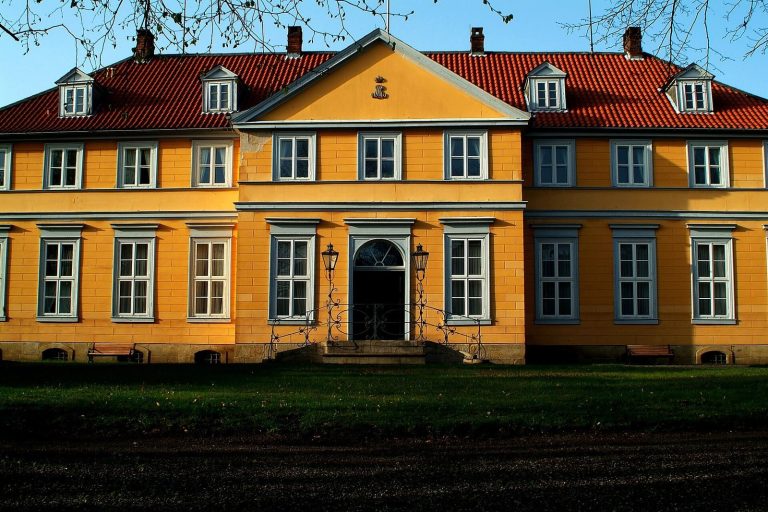
The Welfenschloss is a nineteenth-century Neo-Gothic palace in Hanover, Germany, built for the House of Hanover as a royal residence. Construction began in 1857, but political events halted the project in 1866. Since 1879, the building has served as the main building of Leibniz University Hannover.
Plans for a royal residence
Plans for a new dynastic residence were under consideration by 1814, when Hanover became a kingdom. From 1714 to 1837, Hanover and Britain shared a monarch while remaining separate states, and their monarchs generally lived in London. Hanoverian succession law barred inheritance through the female line. When Queen Victoria took the British throne, Hanover therefore passed to her uncle Ernest Augustus and later to her cousin George V.
Before the Welfenschloss, Schloss Monbrillant stood on the site. Built in the first half of the eighteenth century, it served as a summer residence for Ernest Augustus and George V. The building was dismantled and reassembled at Georgsmarienhütte, where it was demolished in the 1920s.
George V’s palace project
In 1856, George V decided to build a new residence, first intended for summer use and later planned as the main royal seat in place of the Leineschloss in central Hanover. He commissioned architect Christian Heinrich Tramm. After Tramm’s death, construction manager Eduard Heidelberg took over the project. Work began in 1857.
The palace was initially named Schloss Königsitz. In 1861 it was renamed Welfenschloss, after the House of Welf, also known as the Guelph dynasty, of which the House of Hanover was a branch. The 1866 Austro-Prussian War, in the aftermath of the Battle of Langensalza, ended Hanover’s independence. Prussia annexed the kingdom, George V’s reign ended, and work on the palace stopped. The unfinished building remained unoccupied for more than a decade.
University use and later changes
After extensive alterations supervised by architect Hermann Hunaeus, Hanover’s Polytechnic School moved into the palace in 1879. The building has remained the university’s main building since that year. In 1899, Emperor Wilhelm II raised the school to university status.
Allied air raids during the Second World War heavily damaged the chapel on the palace’s east side. It was demolished in 1955, and a new extension was built on the site between 1956 and 1958.
Remains
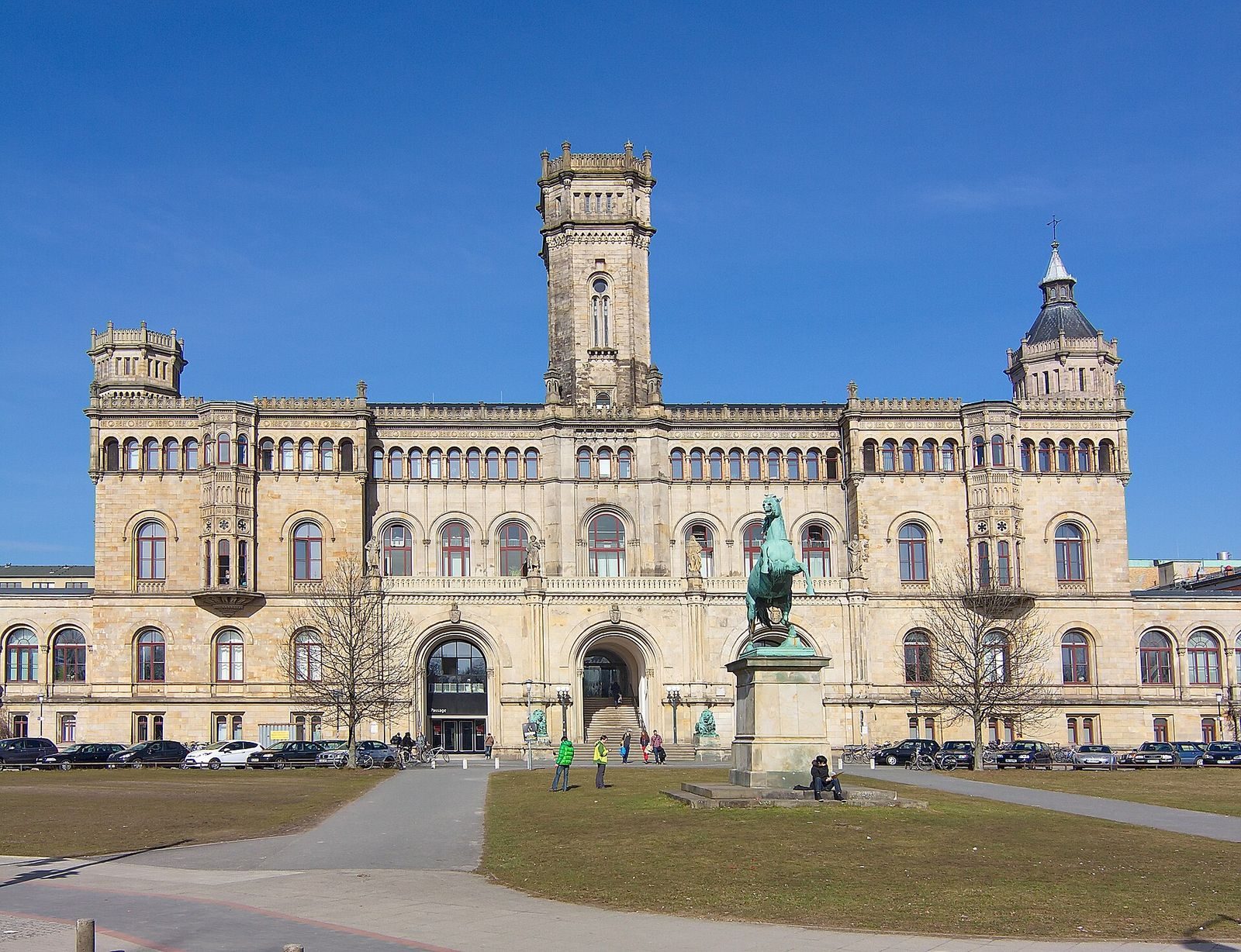
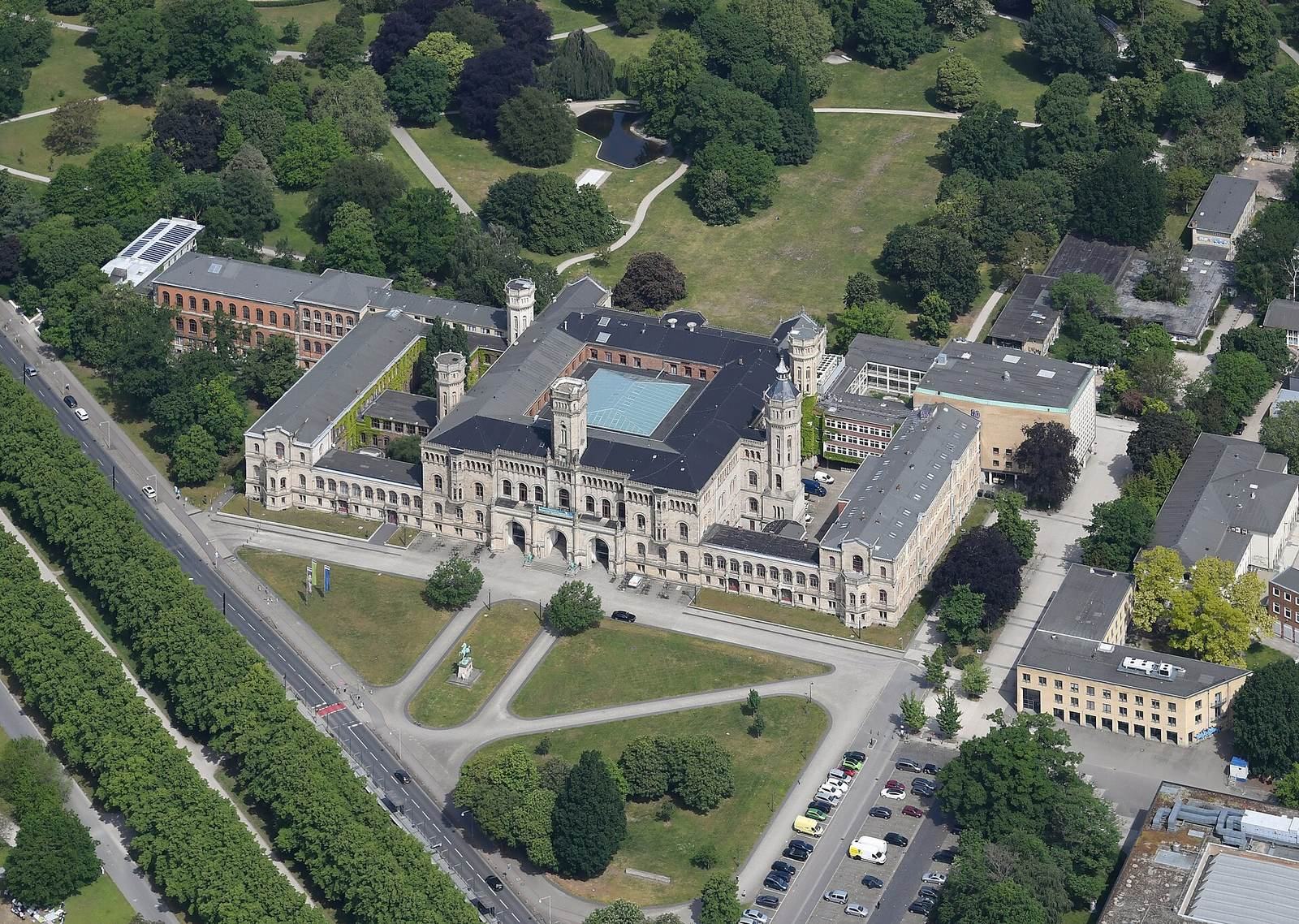
The palace stands in Hanover’s Nordstadt district, surrounded by the Welfengarten, a large English landscape garden designed in a naturalistic style. It lies at the edge of the Royal Gardens of Herrenhausen, once associated with Herrenhausen Palace, the official summer residence of Hanover’s princely and royal family. The Welfenschloss forms a closed complex of four wings arranged around several courtyards. Its principal building material is yellowish-white sandstone from Danndorf and Velpke near Helmstedt, supplemented by sandstone from nearby Nesselberg.
Facades and dynastic sculptures
Front facade
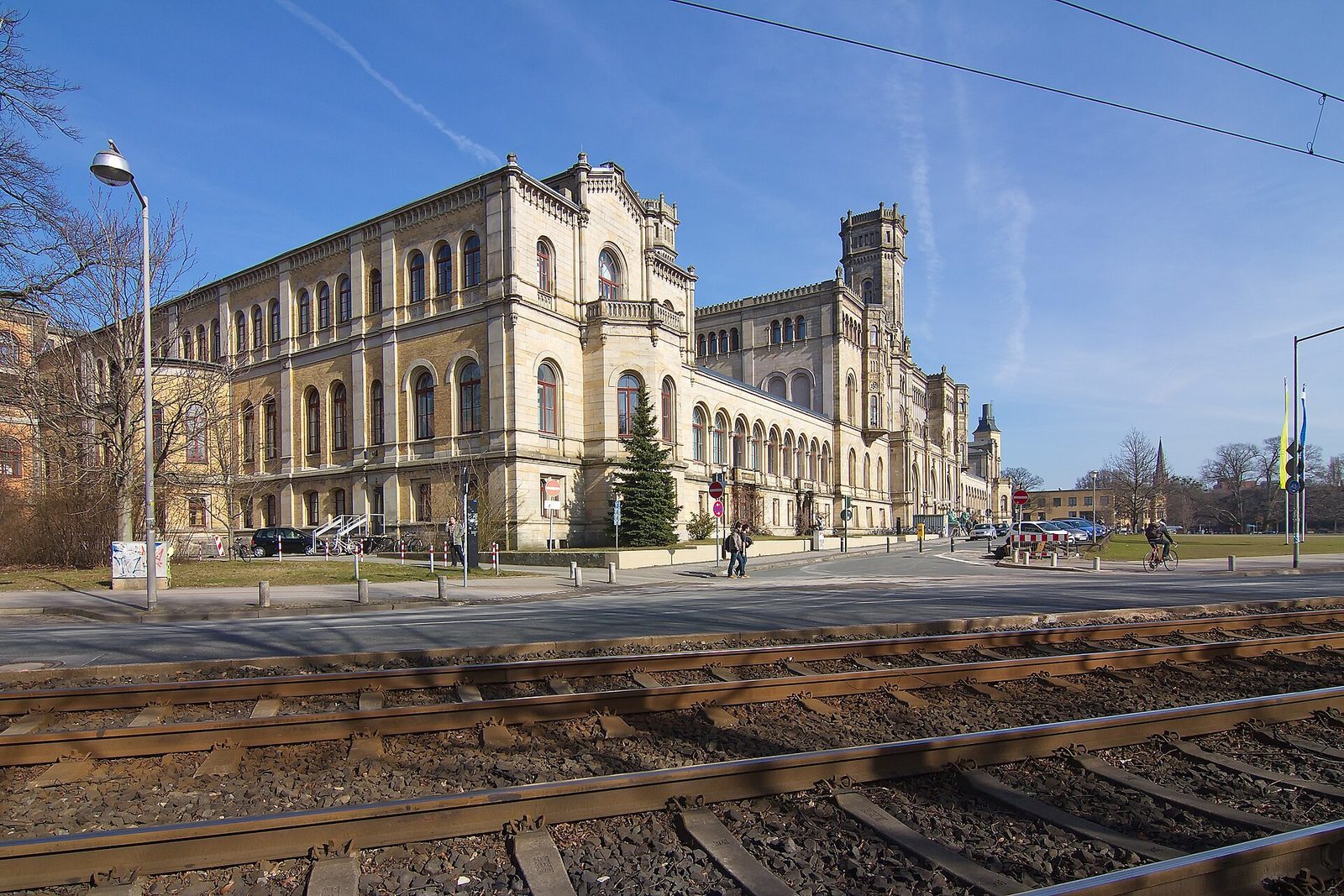
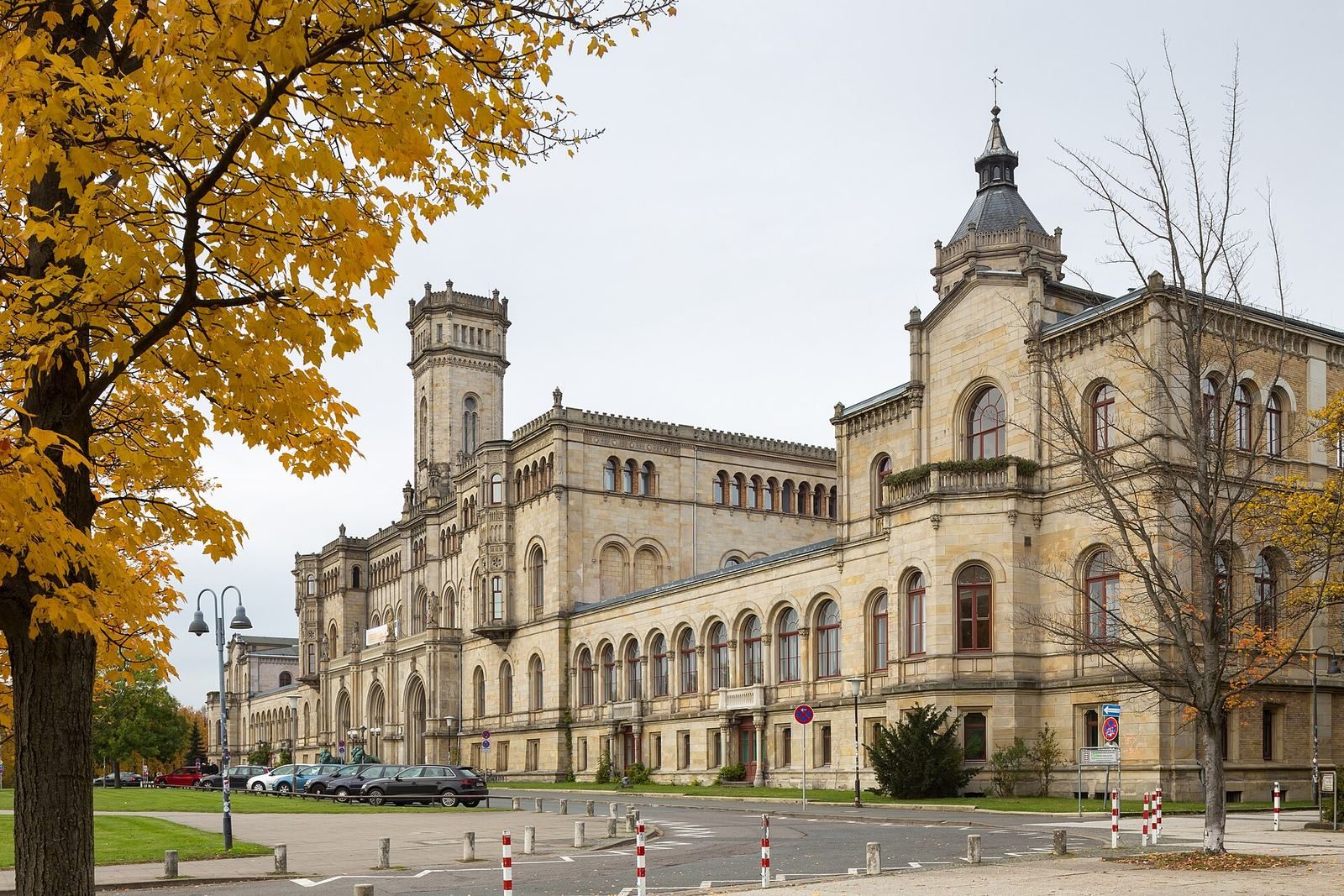
The facade facing Herrenhäuser Allee is divided by pilasters, shallow columns attached to the wall, and bay windows that project outwards. Round-arched windows and castle-like towers contribute to the building’s Neo-Gothic appearance.
Garden-facing facade
On the side facing the Welfengarten, a semicircular section projects from the centre of the wall. Eight Welf rulers appear in sculptures on this facade at the principal floor. Henry the Lion, a medieval Welf ruler, is the central figure; other represented rulers include George I, George II, George III, and George IV.
Sculpture at the entrance
Bronze lions
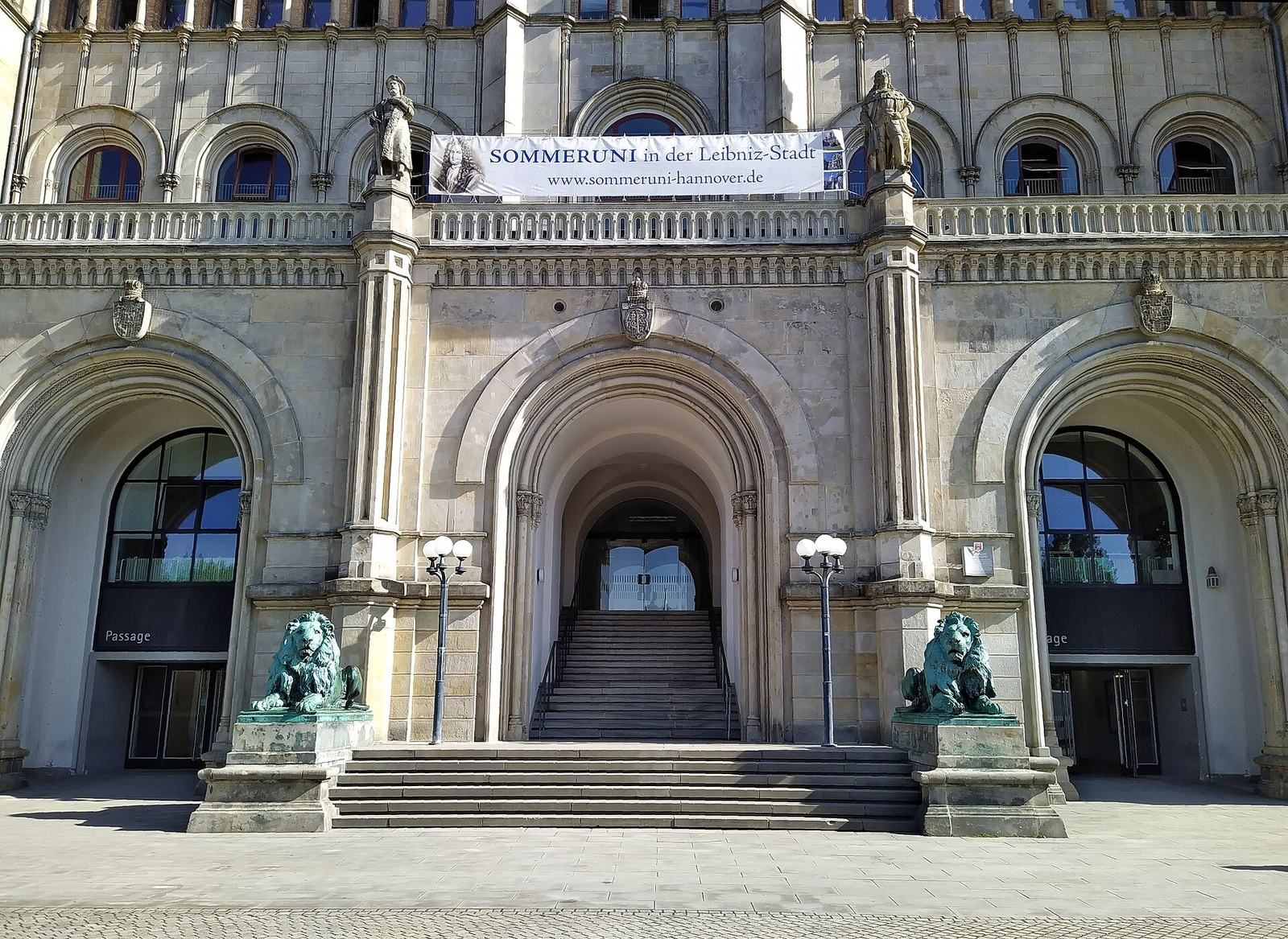
Bronze lions by sculptor Adolf Rosenthal decorate the entrance.
The Saxon Steed
A bronze rearing horse stands directly in front of the palace. Created in 1866 and installed there in 1879, the Saxon Steed copies the horse in Albert Wolff’s Lion Fighter sculpture group at Berlin’s Altes Museum. It is sometimes incorrectly attributed to Friedrich Wilhelm Wolff. The horse emblem is associated with Hanover, Lower Saxony, Westphalia, and the Dutch region of Twente.
East extension and surviving towers
The extension on the east side contains a main auditorium, a large hall for gatherings and presentations, and a large physics lecture hall. Four of the palace’s original five rounded tower roofs were destroyed during the Second World War.