Necropolis of Li Muri: A Neolithic Burial Site in Sardinia
Site at a Glance
- Popularity
- Medium
- Country
- Italy
- Primary era
- Stone Age
- Eras represented
- Stone Age
- Civilizations
- Unclassified
- Site type
- Burial
- Remains
- Necropolis
On this page9 sections
History
The Necropolis of Li Muri is a Neolithic burial site in Arzachena, Sardinia, Italy, associated with the proposed Arzachena, or Gallurese, culture, a cultural grouping linked to the Gallura region. The site is dated to the Middle or Late Neolithic, with one chronology placing it in the second half of the fourth millennium BC. Its burial chambers, built from stone slabs and known as cists, have been central to discussion of its cultural identity.
Researchers have also interpreted Li Muri as a late development of the Ozieri culture, a Neolithic culture of Sardinia, or an early expression of the Abealzu-Filigosa grouping, a later prehistoric culture of the island. The concentration of stone circles around cists is distinctive, but does not establish that the Arzachena culture was independent of Ozieri.
Burials may have been individual, unlike the generally collective burials found elsewhere in Sardinia. The evidence does not settle whether people were buried in the cists soon after death, whether their remains were transferred later, or whether a cist could hold more than one person. Comparisons between Li Muri’s architecture and grave goods and contemporary sites in Corsica, Provence, and the Pyrenees place it within a wider set of parallels. Similarities to stone-chest tombs in southern Corsica also support close connections between Gallura and southern Corsica from the late fourth to the early third millennium BC.
Michele Ruzittu discovered the necropolis in 1939. Francesco Soldati excavated it for Sardinia’s antiquities authority, and Salvatore Maria Puglisi studied it in 1941. In 2025, Li Muri became part of a UNESCO World Heritage property devoted to Sardinia’s prehistoric funerary tradition.
Remains
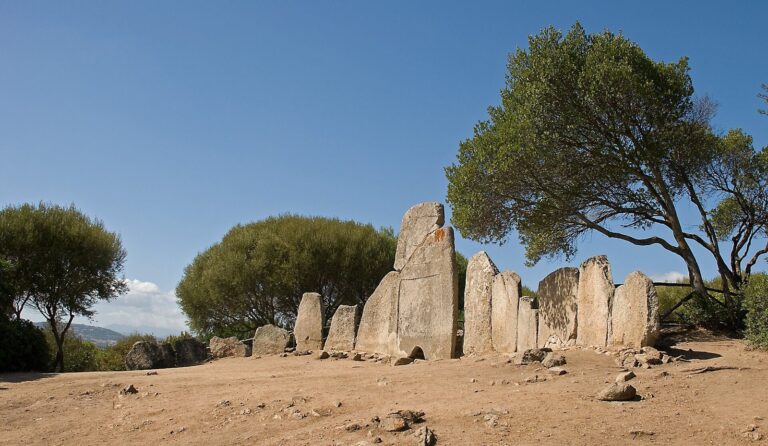
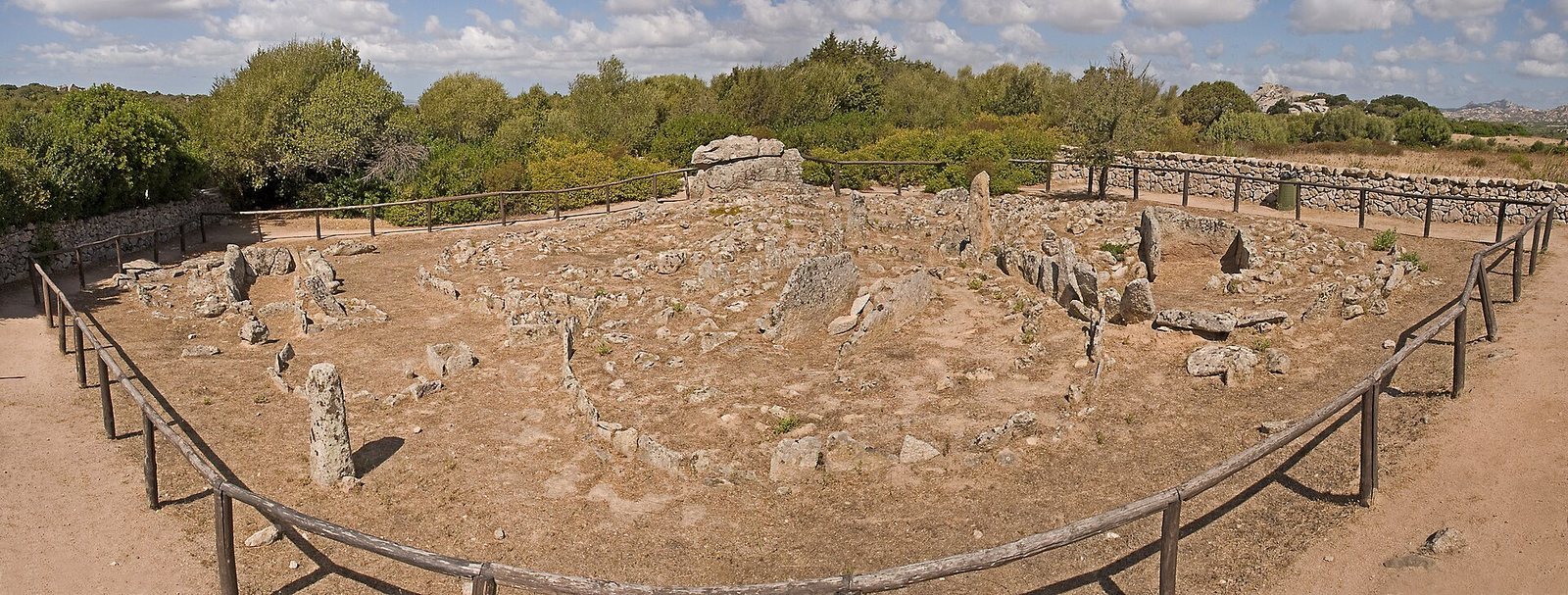
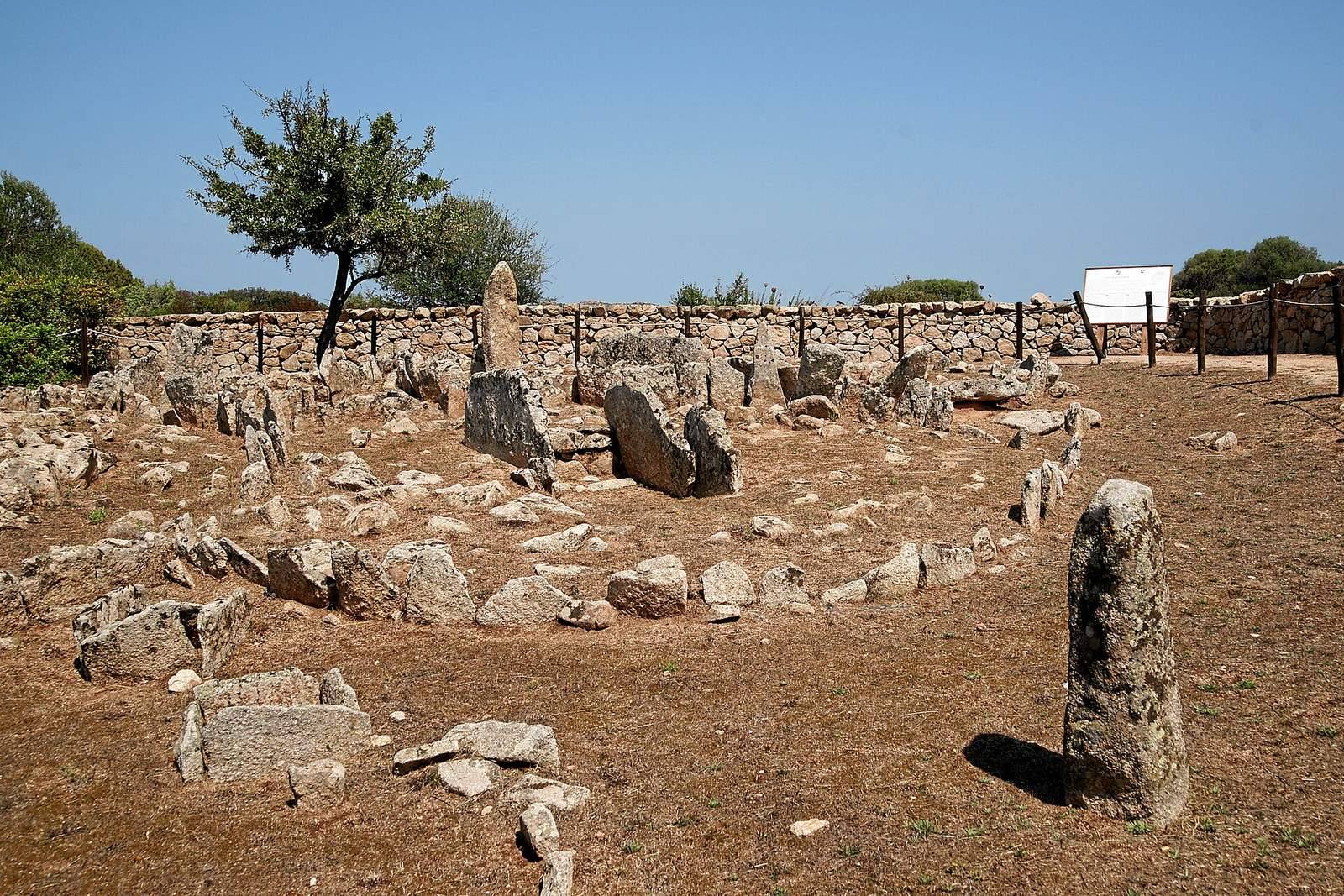
The site’s main elements are five stone-slab cists, four enclosed by stone circles, with a mound and passage grave in a peripheral area. Standing stones occur both outside the funerary circles and within the associated ritual area.
Cists and mound structures
Stone cists and circles
The five four-sided cists are generally aligned north to south. They measure from about 1.6 by 1.2 metres to a maximum of 2 metres on a side. Four are surrounded by stone circles with outer diameters of 5.3 to 8.5 metres. Some circles meet at a single point, while others intersect. The circles marked the edges of earth-and-rubble mounds over the burials and may also have helped hold the mounds in place. The four cist-and-circle structures are also described as having rings arranged one inside another.
Macciunitta and the passage grave
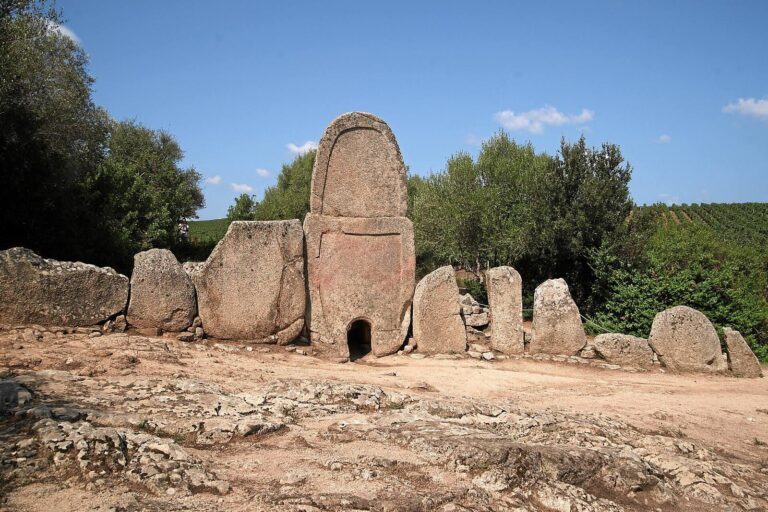
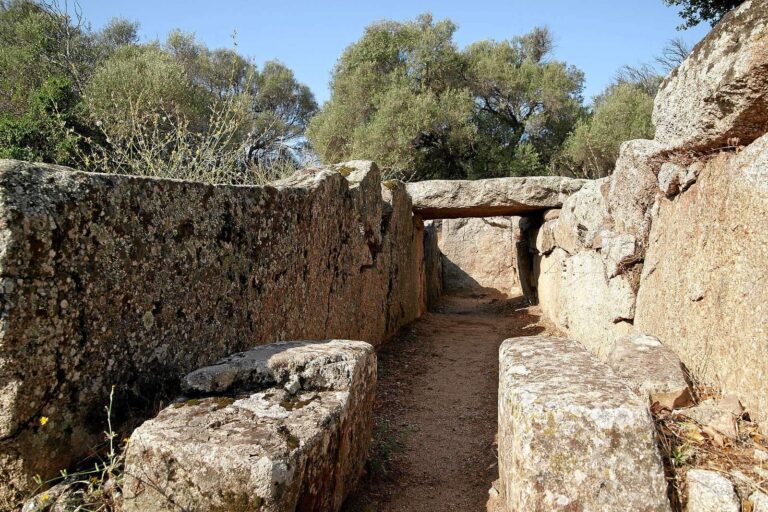
The site also includes the stone mound Macciunitta and a small passage grave, a burial chamber reached through a passage, set apart from the four cists. A remaining semicircular section of mound surrounds the grave on three sides, and its entrance faces southeast. Three smaller cists, each about 0.4 by 0.5 metres, belong to the nearby ritual area. They have been tentatively interpreted as possible containers for food offerings.
Standing stones and ritual features
Six granite menhirs, or upright standing stones without figures, stand beyond the funerary circles. The tallest measures 1.45 metres and the shortest 0.77 metres. Each of the four cist-and-circle structures also has a small menhir in its outer ring. Within the ritual area, two upright stones have forms that suggest human figures without fully depicting them. A square-sectioned stone known as the sacred stone stands among upright slabs and appears to be associated with the passage grave.
Burial evidence and grave goods
Bones and red ochre
The acidic granite soil preserved only a few altered fragments of long bones. Pebbles bearing traces of red ochre were found in the cists, suggesting that pigment may have played a part in funerary rites. Applying it to bodies is one possible explanation, though it may have been used in other ways.
Objects from the burials
Finds include pottery, stone vessels, small axes, and necklace beads made from soapstone and hard or semiprecious stone. A finely made small soapstone cup has two solid handles and a raised, ring-shaped base. It has been compared with cups from Crete, while some of the vessels have also been likened to pottery of the Diana culture of southern Italy. Other finds include fine flint blades, polished triangular axes of hard stone, and perforated spherical objects whose purpose is uncertain. These objects have been proposed as close-combat weapons or signs of command. Numerous soapstone beads are shaped like small olives, spheres, and discs. The pottery consists of tiny fragments of handmade ware that appears undecorated.