Giants’ Grave of Coddu Vecchiu: A Nuragic Funerary Monument in Sardinia
Site at a Glance
- Popularity
- Medium
- Country
- Italy
- Primary era
- Bronze Age
- Eras represented
- Bronze Age
- Civilizations
- Nuragic
- Site type
- Burial
- Remains
- Tomb
On this page7 sections
History
The Giants’ Grave of Coddu Vecchiu is a monumental Sardinian tomb near Arzachena in northern Sardinia, Italy. It belongs to the Nuragic civilization, a prehistoric Sardinian culture of the Bronze Age known for stone towers called nuraghi. The monument is generally dated to about 1800–1600 BC.
Two-stage construction
The tomb developed in two stages. An earlier burial structure was enlarged later with a forecourt and a monumental entrance. Finds have been interpreted as pointing to construction early in the Nuragic period.
Excavation and disturbance
Archaeologist Editta Castaldi led excavations at the site in 1966. Earlier clandestine digging had disturbed the archaeological deposits, and the burial area had been emptied and looted at different times. A local farmer removed the upper part of the entrance stele and used it as a plow; it was later recovered and restored to the monument.
Remains
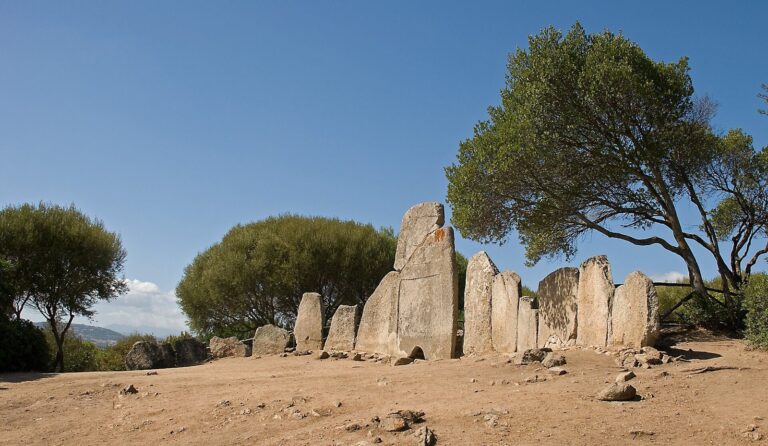
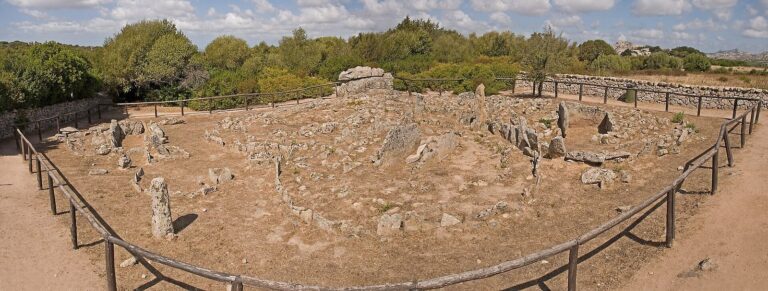
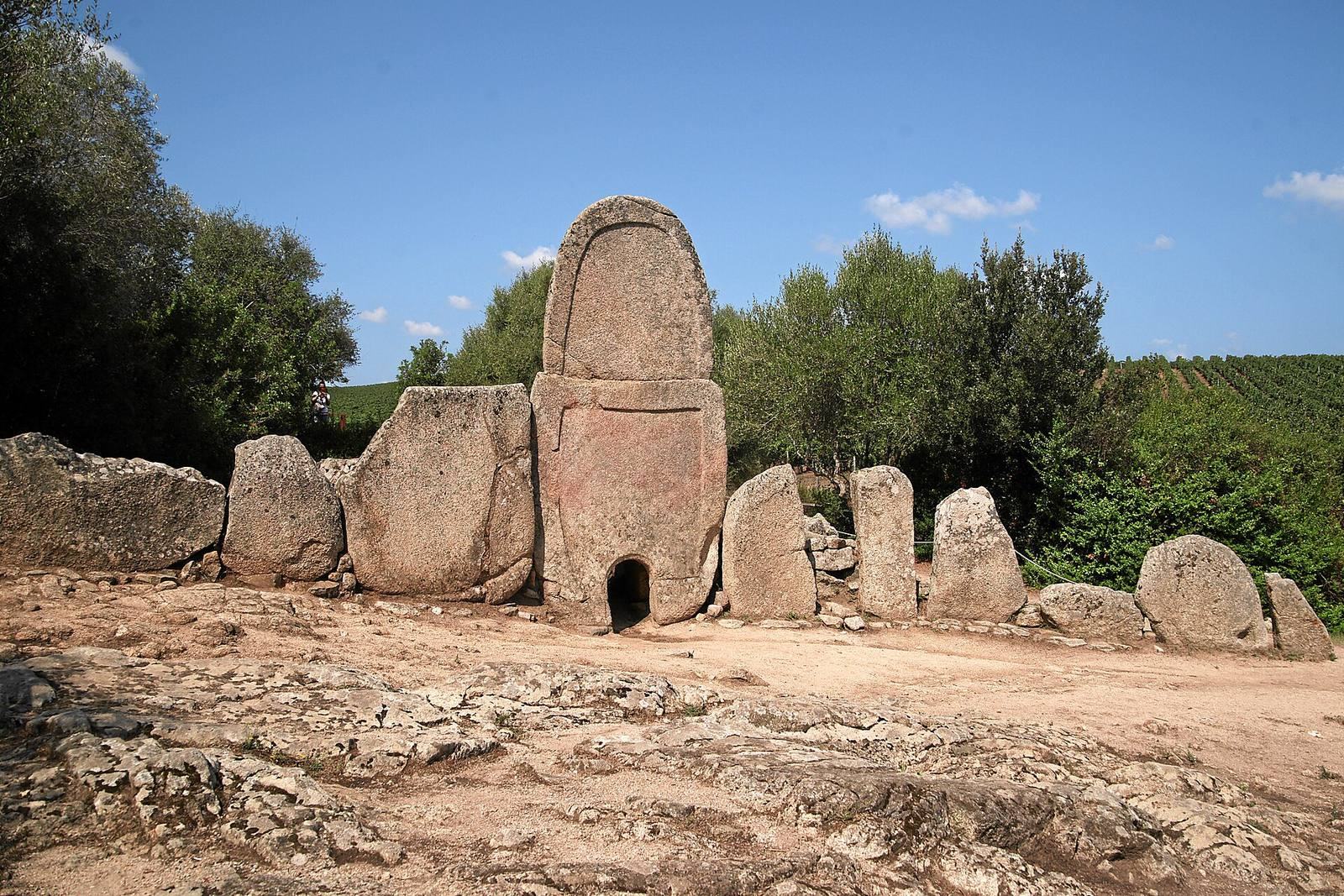
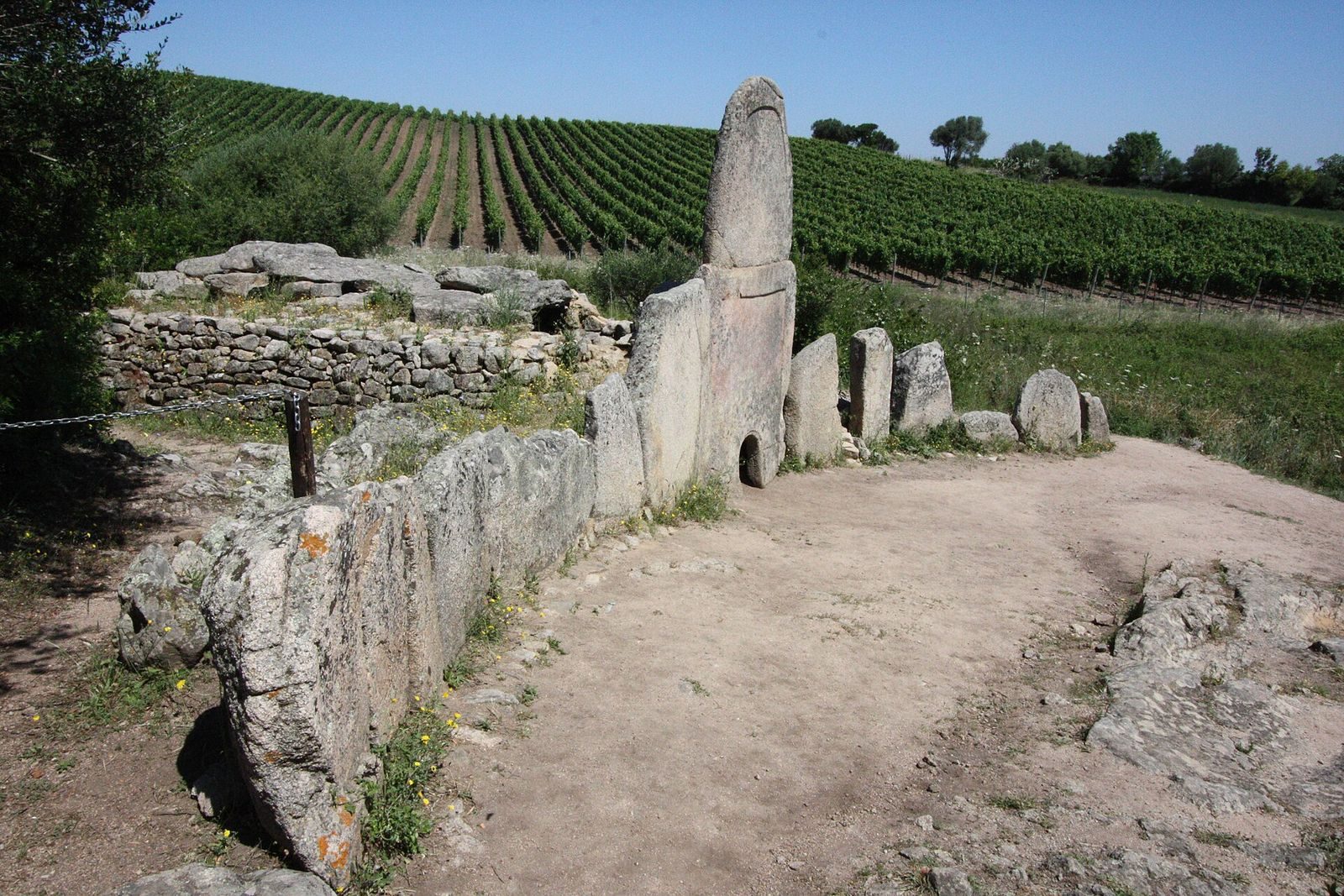
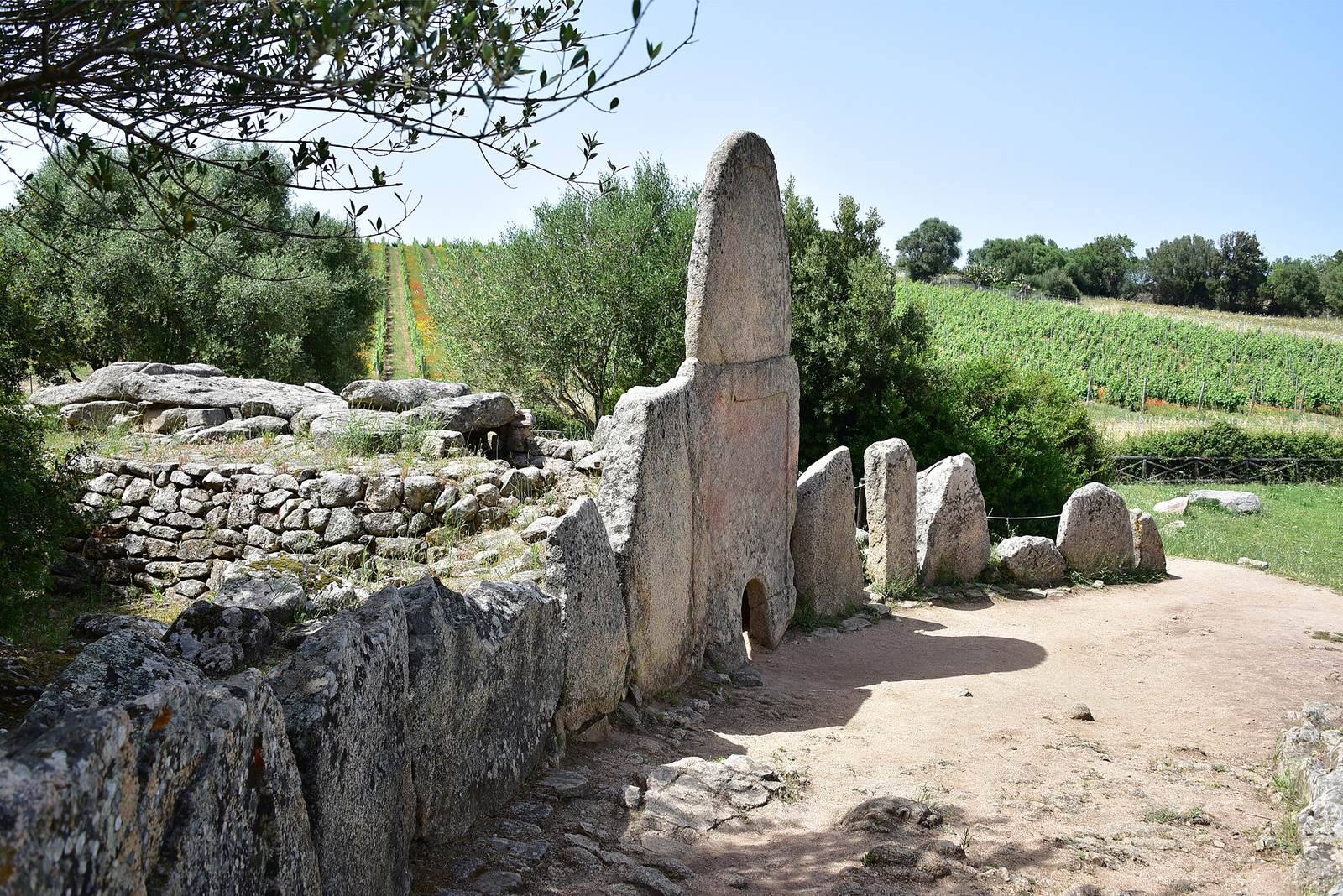
The archaeological site covers 3.73 hectares. Built of granite, the ruined monument consists of a semicircular forecourt, an upright entrance slab and a gallery tomb. It is among the better-preserved examples of a giants’ grave, a type of monumental Sardinian tomb.
Forecourt and entrance
The forecourt is about 12 m wide, with 11 granite stones arranged in a semicircle in front of the older gallery. The stones become shorter farther from the central entrance slab, defining a ceremonial area. This portal stele, an upright monumental slab marking a tomb entrance, is about 4 m high and 1.9 m wide at its base. It comprises a lower rectangular panel containing the entrance and an upper, curved panel. Both have slightly raised borders, and the stele is carved in relief. Behind it, two slightly sloping upright slabs bound a short passage connecting the forecourt to the gallery. A curved wall of medium-sized stones supports the forecourt and links it to the older gallery through an intermediate space. One interpretation proposes that the semicircle was intended to harness a supposed earth-generated force for rejuvenation, but this remains an interpretation rather than an established physical effect.
Gallery tomb
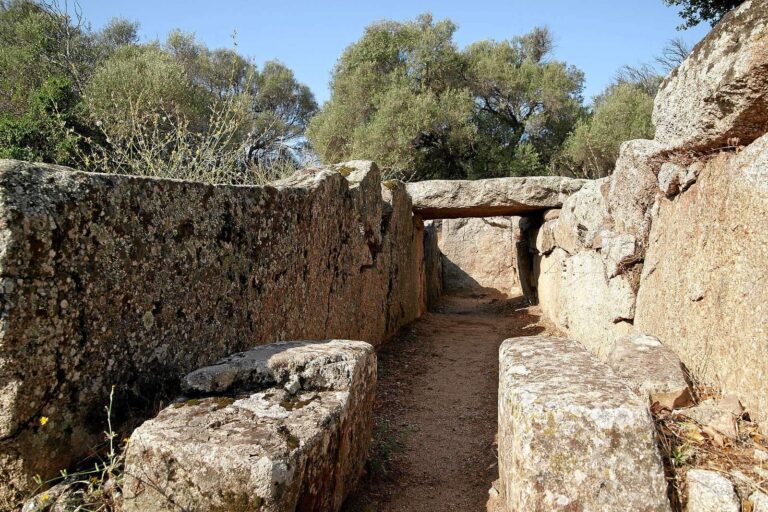
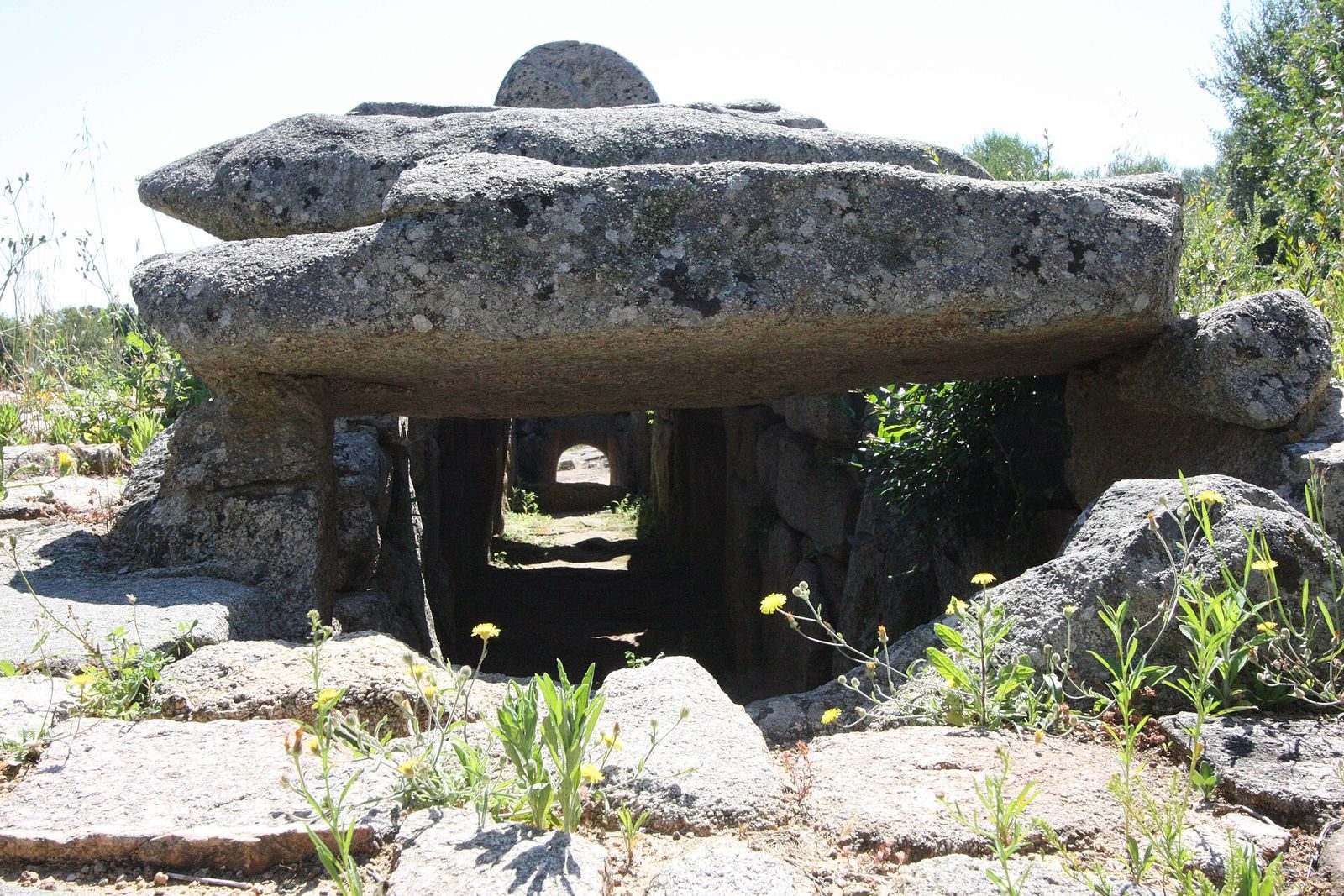
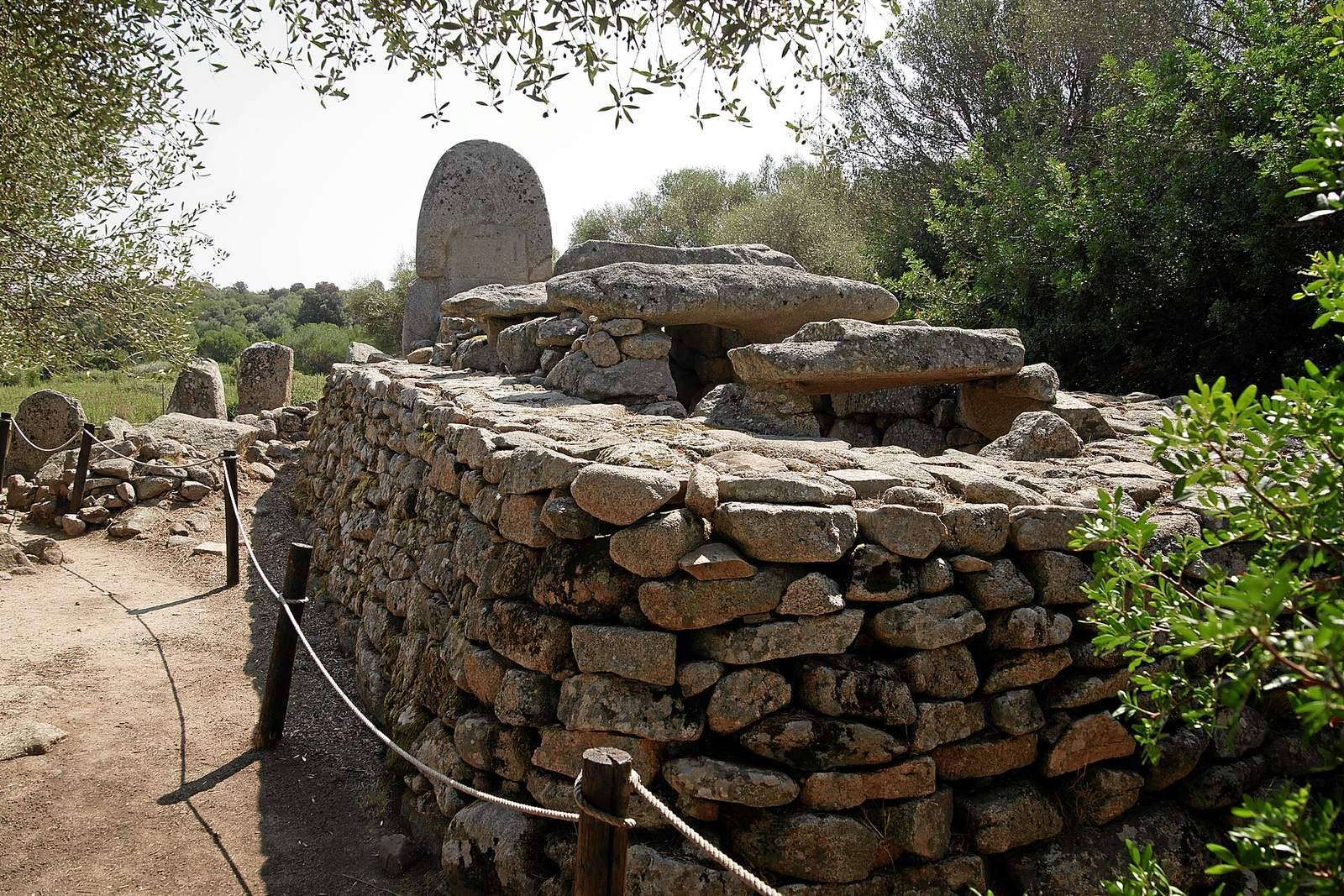
The gallery’s exterior is about 10 m long and 3.5–4 m wide; the burial chamber measures about 10.5 m long and 3.5–4 m wide. Its granite blocks rest on vertically set slabs and rise in courses that project slightly inward. Crosswise slabs form the roof, which remains intact. The outer facing consists of medium-sized stones, roughly dressed on their visible sides and set in horizontal courses. The tomb was probably covered by a mound made mainly of medium and small stones, which may have concealed the gallery’s outer face. The paved floor follows the ground’s natural slope. Its central portion survives, and the floor has been damaged, probably by clandestine digging.
Finds and nearby structures
Ceramics from the forecourt include comb-decorated pans, bowls and plates, as well as vessels with bent-back necks. Other fragments are attributed to the Bonnanaro culture, a Sardinian Bronze Age culture that preceded the Nuragic culture, and to the older Monte Claro culture of the Copper Age.
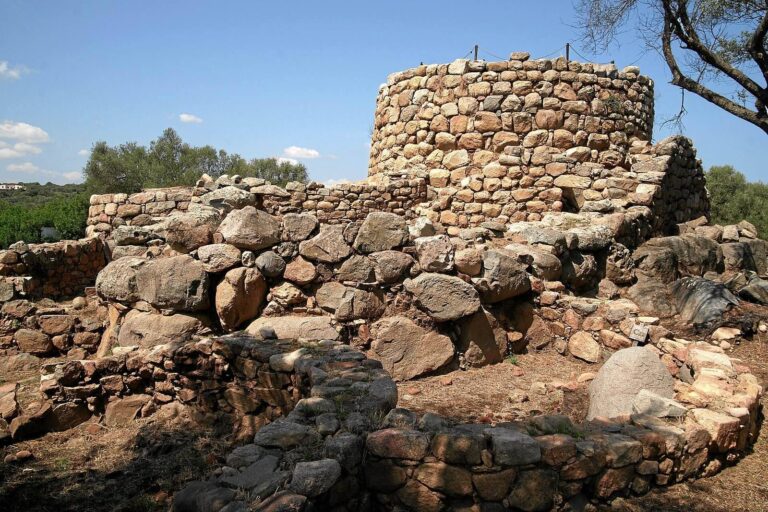
Coddu Vecchiu forms part of an archaeological group that includes Nuraghe La Prisgiona, about 600 m to the southeast, and Nuraghe Demuro, about 20 m away. Demuro survives as a few rows of stones. It was a complex nuraghe, with a central circular chamber roofed by progressively projecting stone courses, at least two additional towers, and a projecting defensive structure completed by walls.