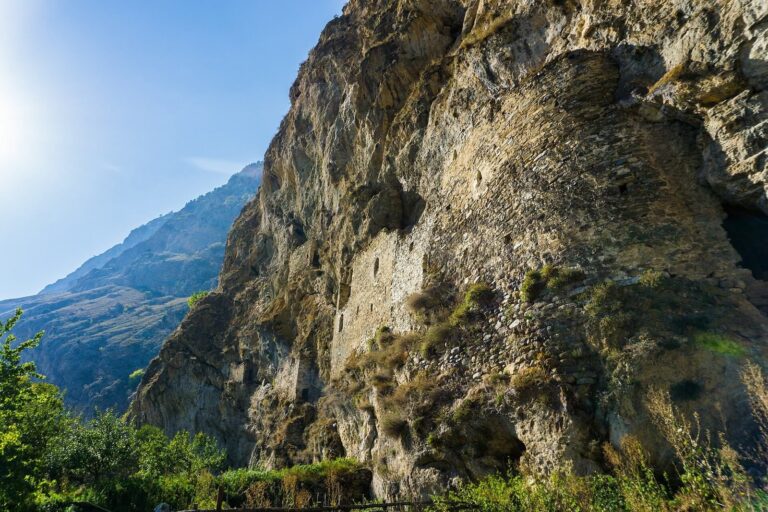
Nazran Fortress: An Early Russian Military Stronghold
Site at a Glance
- Popularity
- Medium
- Country
- Russia
- Primary era
- Modern
- Eras represented
- Early Modern, Modern
- Civilizations
- Russian
- Site type
- Military
- Remains
- Fort
On this page5 sections
History
Nazran Fortress is an early nineteenth-century Russian military fortification in Russia, begun in 1810 to defend settlements near the Sunzha and Kambileevka rivers and secure the approaches to Vladikavkaz and the Georgian Military Road. An Ingush watch post occupied the site by 1781.
Military post and imperial fortress
In 1810, Russian commander A. P. Tormasov proposed building a fortress there. A force of 150 Cossacks, 200 musketeers, and three guns was assigned to the work, which local residents also helped carry out. The stronghold became part of the Russian Empire’s Grozny-Nazran-Vladikavkaz military line and was reinforced in 1817 and 1832.
In March 1832, the Dagestani religious and political leader Ghazi-Muhammad, who led armed resistance in the North Caucasus, was defeated near the fortress during his advance toward Vladikavkaz and forced to retreat. In April 1841, Shamil, another prominent Dagestani leader, attacked while seeking to bring the Ingush under his authority and move toward Vladikavkaz and the Georgian Military Road. From 6 to 8 April, the garrison and local residents resisted his forces and compelled them to withdraw. More than 60 militiamen and residents subsequently received St George’s Crosses, a Russian bravery decoration, medals, and officer ranks.
Shamil’s campaign of 1846 also met resistance from the garrison and local people and failed. In 1858, during the Nazran uprising, 5,000 insurgents attacked the fortress, but the assault was repelled and the uprising suppressed. Its organizers were executed or sent to penal labor in Siberia.
Education and district administration
Ingushetia’s first two-class school opened in the fortress in 1868. In the late nineteenth and early twentieth centuries, the site also served as a guardhouse and prison for opponents of tsarist rule. When Ingushetia became the separate Nazran District in 1905, directly subordinate to the regional administration, the district offices were established there.
Revolution and political congresses
In 1918, after Cossacks stormed and occupied Vladikavkaz, the government of the Caucasian Mountain Republic, a short-lived political entity representing peoples of the North Caucasus, was based at the fortress. Following the October Revolution, the Bolshevik seizure of power in 1917, the fortress became a center of the struggle over Soviet rule in Ingushetia. An Ingush congress met there in January 1918. On 15 April, a gathering of 3,500 people voted to establish local Soviets, disband the Ingush cavalry regiment of the Wild Division, a Russian Imperial Army formation, and restore railway service on the Beslan-Grozny-Khasavyurt line.
At a congress chaired by Sergo Ordzhonikidze on 14 September 1918, delegates declared Ingushetia part of Soviet Russia and supported Soviet rule. A further congress on 12 October expressed unanimous support for the Bolshevik Party and Soviet government.
On 24 January 1919, an Ingush congress at the fortress resolved to take up arms against General Anton Denikin’s Volunteer Army, an anti-Bolshevik force. Soviet supporters were defeated, and survivors temporarily withdrew to the mountain districts. On 22 June, Ingush representatives met at the fortress to consider Denikin’s ultimatum, which demanded that Ingush men be mobilized into his army and that a large indemnity be paid. They rejected the demands. After learning that men conscripted by force were being loaded onto trains at Nazran station, delegates went there, killed or arrested the officers overseeing the mobilization, and released the conscripts to return home.
On 4 April 1920, a congress of 15,000 Ingush people met at the fortress, with Ordzhonikidze and Soviet political figure S. M. Kirov in attendance, and proclaimed the restoration of Soviet rule in Ingushetia. A district party conference on 19 June elected the Nazran District Committee of the Russian Communist Party (Bolsheviks), the Bolshevik political party. The first Congress of Soviets of Ingushetia opened there on 25 July, attended by writer A. S. Serafimovich as a representative of the party’s Central Committee. On 27 August, 25 delegates held the first conference of the Nazran District Communist Youth Union.
A conference of Ingushetia’s working people met at the fortress on 16 February 1924, with 1,500 delegates. Ordzhonikidze and Soviet political figure A. I. Mikoyan delivered reports. In the same year, the region’s first agricultural school and an agrotechnical site opened there; the school later became the basis of Ingushetia’s first secondary educational institution. The Nazran District Hospital occupied the fortress during the 1980s.
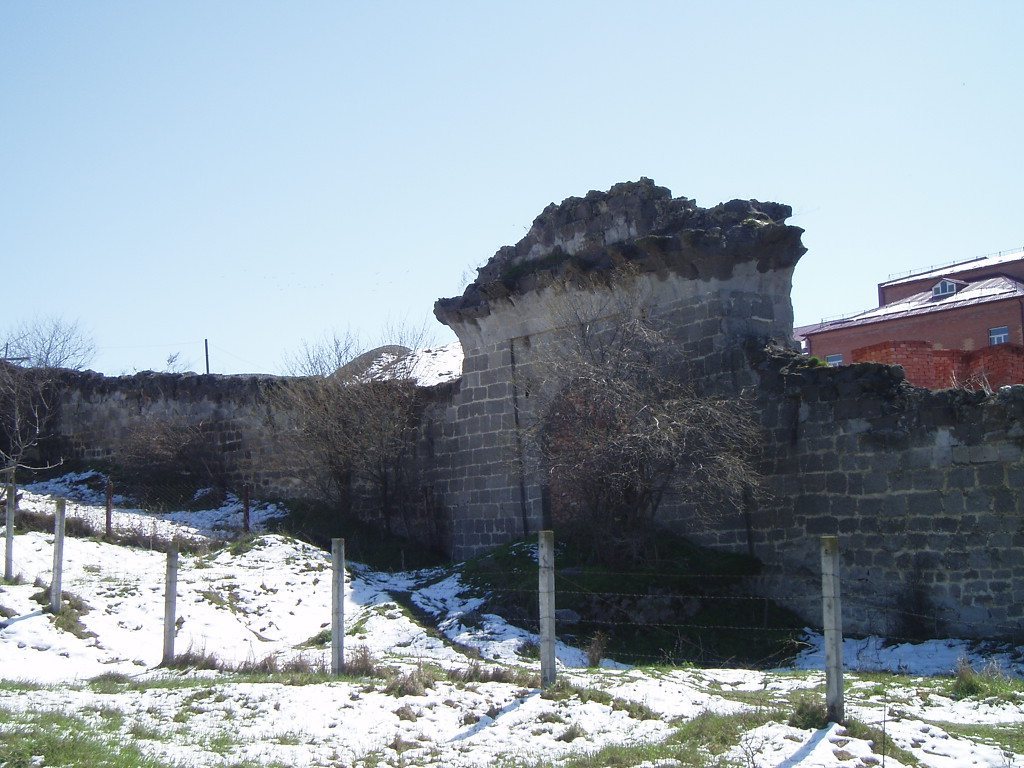
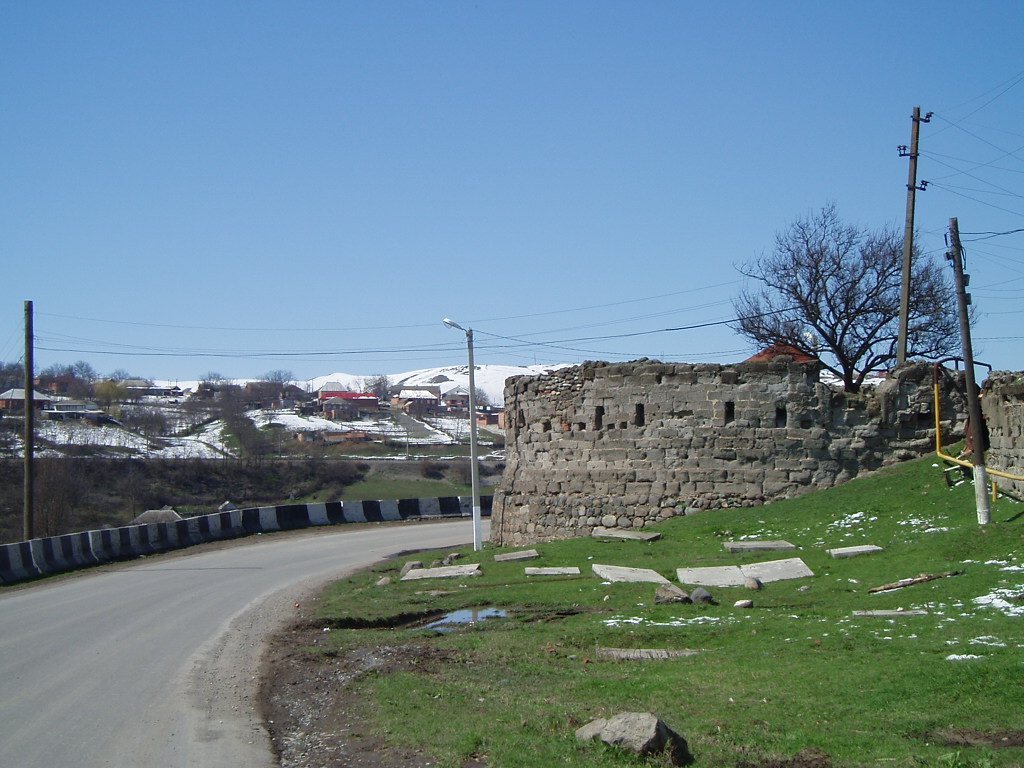
Remains
The fortress stands on elevated ground between the Sunzha and Nazranka rivers and represents early nineteenth-century Russian military fortification architecture. In 1781, Russian army quartermaster L. Shteder described the small Nazranka flowing northeast through marshes thick with brush and reeds. Its boggy channel could be crossed only at shallow points. The Sunzha ran east through wooded hills, while the high ground and difficult river crossings narrowed the area into a defensible gorge.
Russian artist G. G. Gagarin visited the fortress in 1842 and made several sketches of it. The fortress is in need of restoration.