Nannestad Church: A Medieval Church and the 1814 National Election
Site at a Glance
- Popularity
- Low
- Country
- Norway
- Primary era
- Early Modern
- Eras represented
- Medieval, Early Modern, Modern
- Civilizations
- Denmark–Norway, Norwegian
- Site type
- Religious
- Remains
- Church
On this page15 sections
History
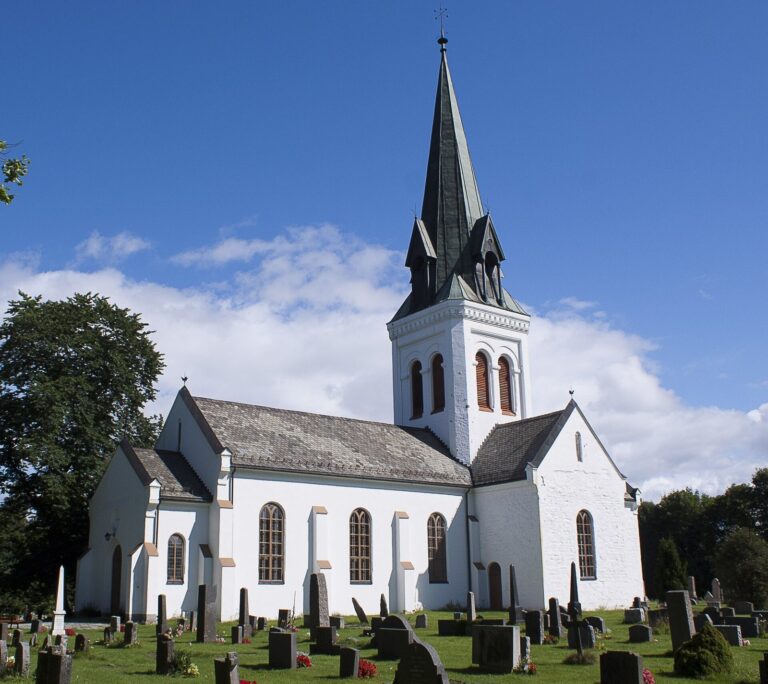
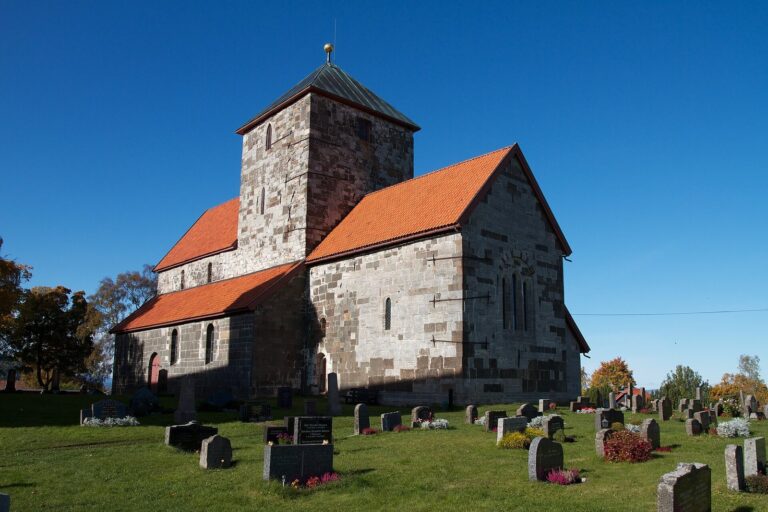
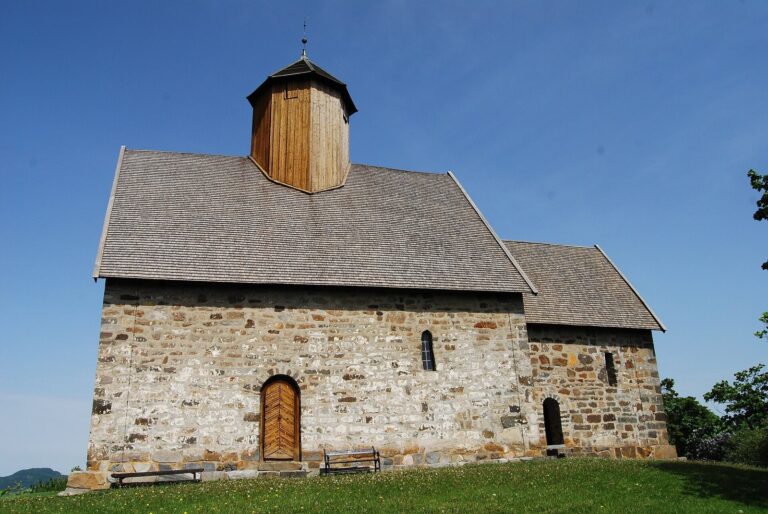
Nannestad Church is a medieval stone church in Nannestad, Norway, with its earliest phase dated to about 1150–1250. This early building was Romanesque, a medieval style associated with rounded arches and massive masonry. A stone church at the site appears in the saga of Håkon Håkonsson, the medieval narrative of the reign of a thirteenth-century Norwegian king. The church was originally dedicated to John the Baptist.
Medieval origins and the Birkebeiner tradition
Tradition associates the former south doorway, called the Birkebeiner Gate, with events after the Battle of Låke in 1240. Lodin Gunnesson was said to have led defeated Birkebeiner, a faction in Norway’s medieval civil conflicts, to seek sanctuary in the church. Sanctuary here means protection for fugitives. The story cannot refer to the doorway in its present setting: the south wall was built during the 1692–93 rebuilding. The portal continued in use for some years after that work, then was blocked with masonry in the early eighteenth century.
Rebuilding and the 1814 election
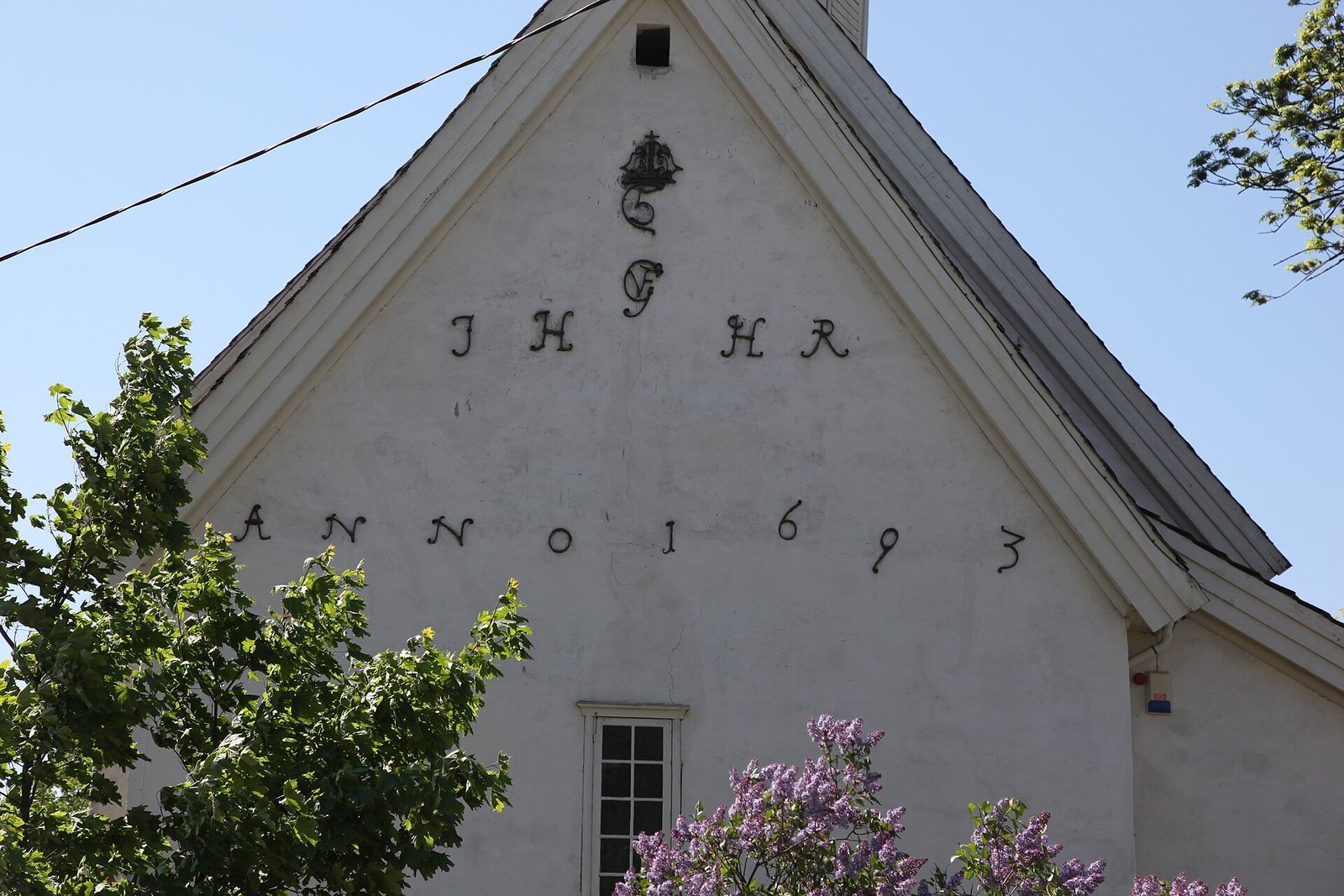
The church was substantially enlarged and rebuilt in 1693, while retaining its original plan. It was consecrated on 29 September that year. In 1814, the first round of voting for Norway’s Constituent Assembly took place at the church. The Assembly drafted the country’s constitution, and the election was Norway’s first national election. A plaque commemorating the church’s part in the event was installed in 2014, the constitution’s bicentenary.
Restoration and continuing use
An interior restoration in 1946 was led by architect Ragnar Nilsen and painter Ulrik Hendriksen. The exterior was renovated in 1992 and again in 2015. The church’s organs were successively replaced: a 1954 electro-pneumatic instrument by J.H. Jørgensen took the place of an 1873 organ by Brantzæg, and a Rieger Orgelbau instrument from Austria replaced it in 2007. Nannestad Church belongs to the Church of Norway and is part of Borg Diocese, a regional church area, and the Øvre Romerike deanery, a subdivision of that area.
Remains
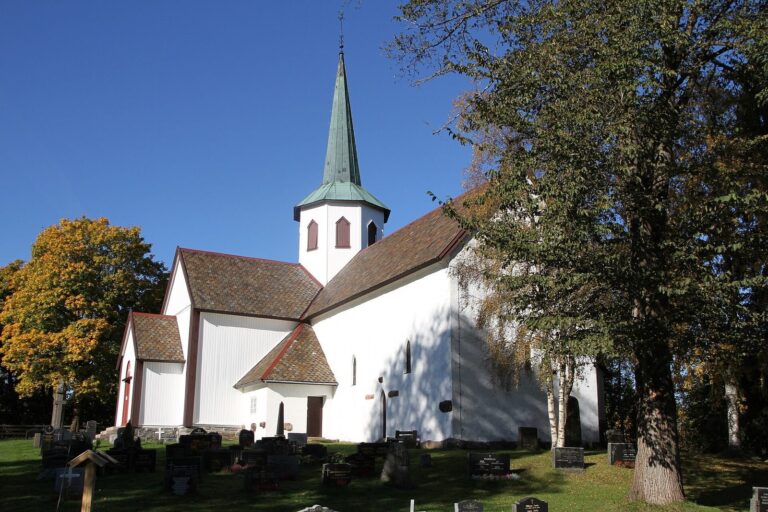
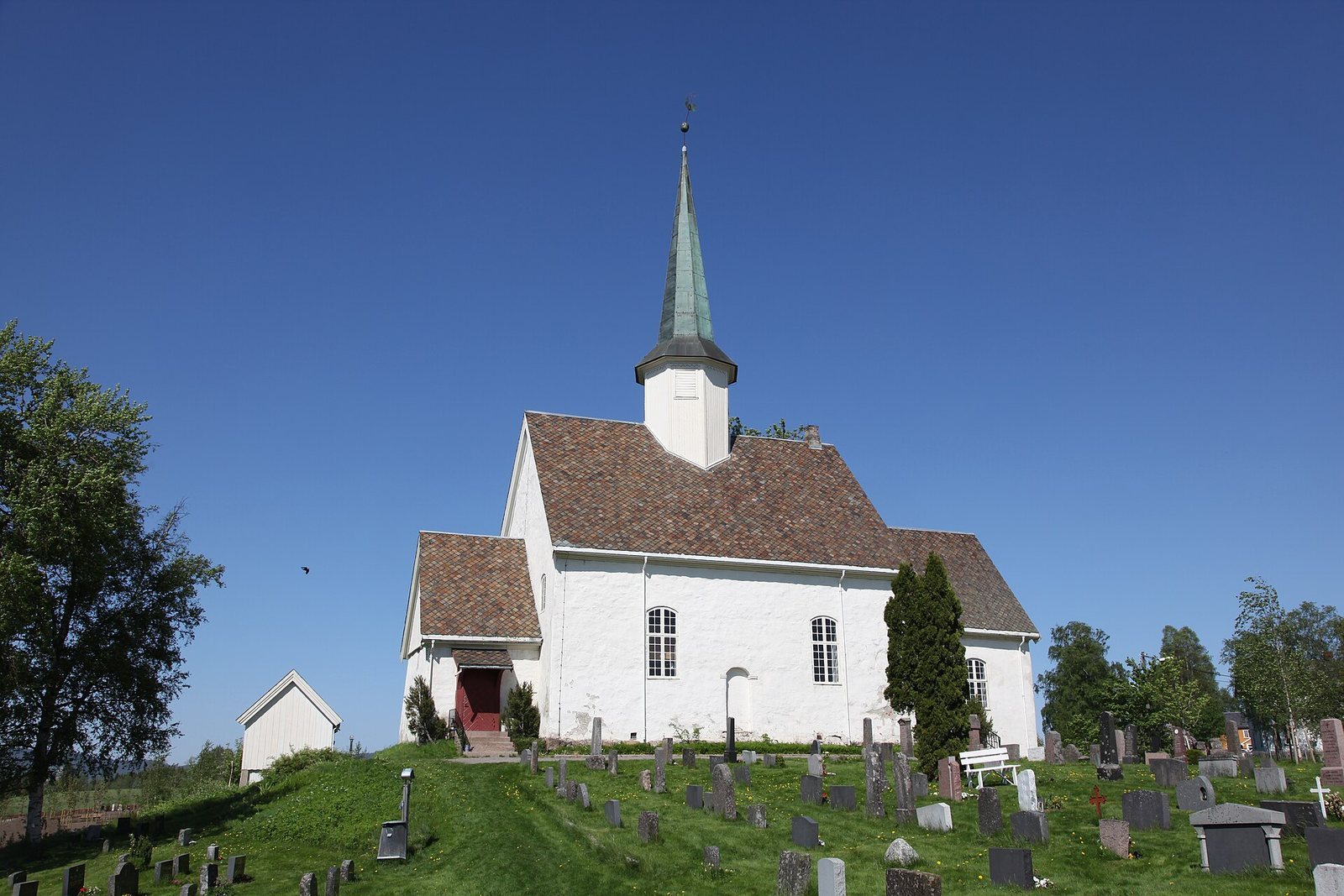
The present church combines stone masonry with some timber. Its lengthwise layout places a rectangular nave, the main worship space, along the same axis as a lower, narrower choir, the area around the altar, which ends in a straight wall. The main space measures 10 by 8.5 metres externally, and the choir measures 5 by 6 metres. Parts of the earlier Romanesque stone church are incorporated into the building. The church has 206 seats and a churchyard.
Exterior additions and openings
West entrance and sacristy
The west porch uses a timber frame with masonry infill, and an organ gallery stands at the west entrance. A sacristy, a room for preparing services and storing religious items, was added on the north side of the choir in 1721.
Roof turret and south portal
An octagonal roof turret with a tall spire rises from the church. Built in 1693 by Andreas Holsteiner, it is a small tower set on the roof. The former south portal is now blocked with masonry.
Interior fittings and furnishings
Pulpit and seating
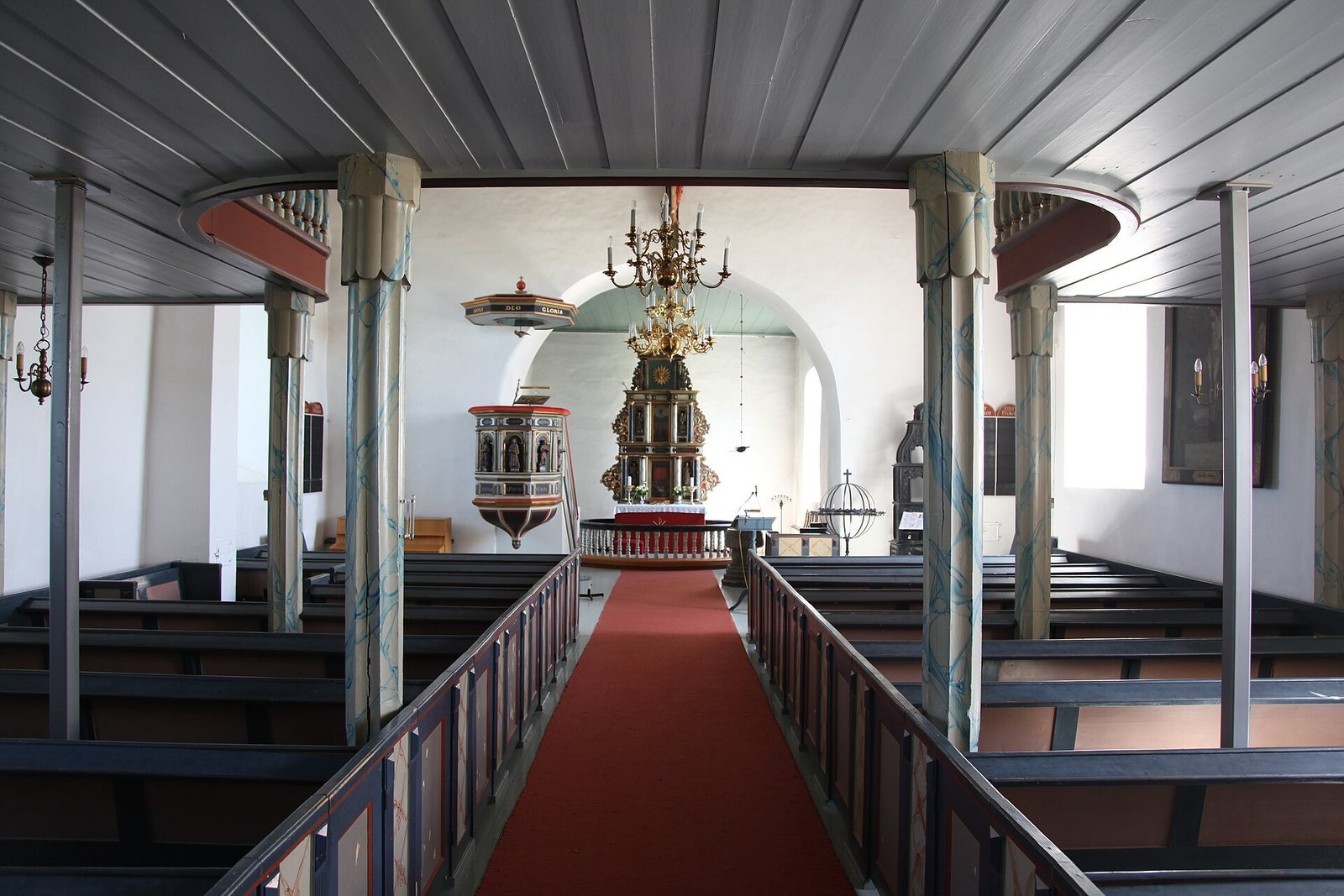
The wooden pulpit was made by Povel Erichsen in 1692 and received a canopy during the 1946 restoration. In that work, curved ends on the nineteenth-century benches were replaced with straight ones, and the interior was given new colors.
Altarpiece
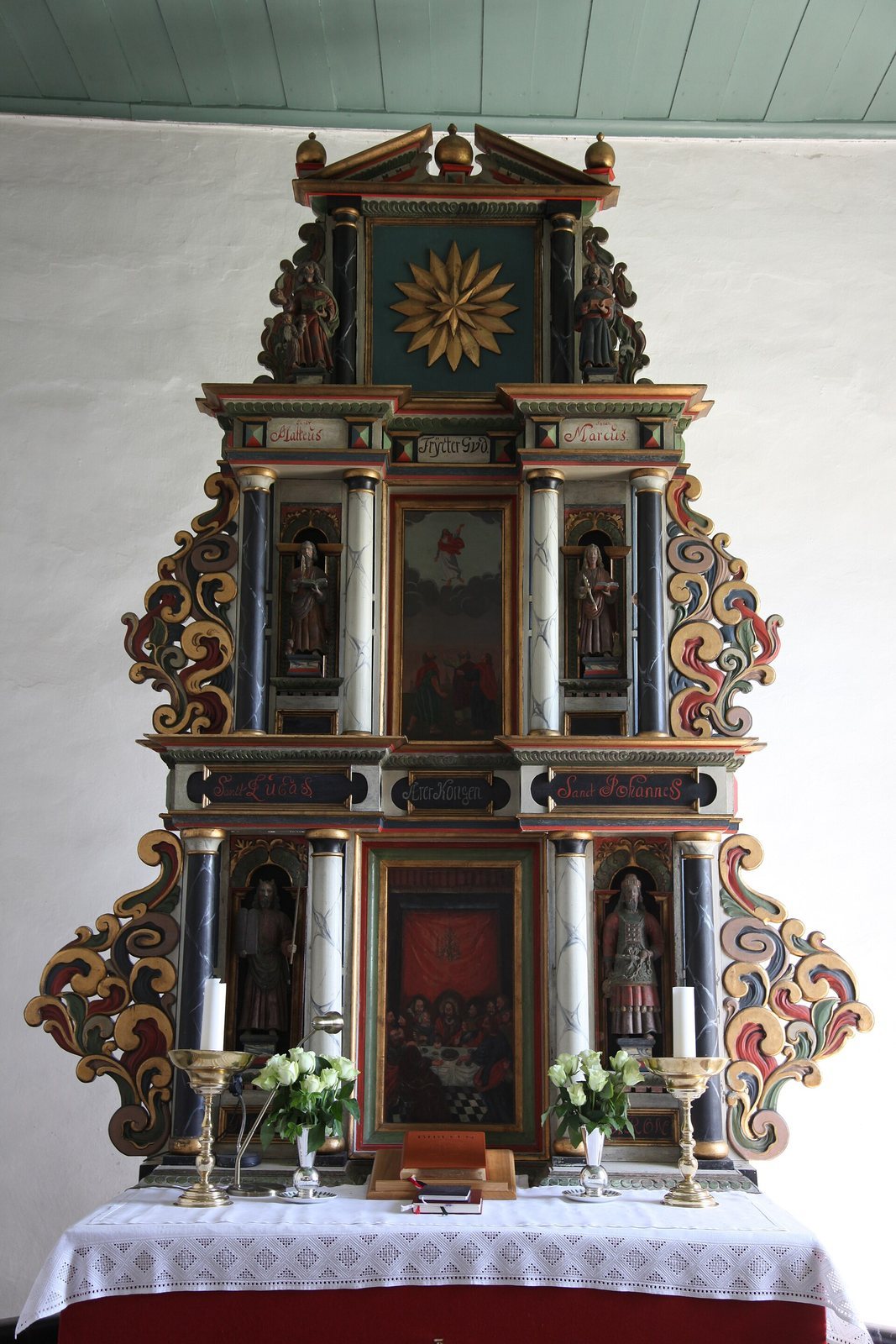
Povel Erichsen made the wooden altarpiece in 1693. It depicts Moses and Aaron along with Matthew, Mark, Luke, and John, the traditional authors of the Gospels. A section added in 1946 by U. Hendriksen and E. Weiglin shows the Ascension of Jesus.
Baptismal font
The soapstone baptismal font dates to the 1140s and bears a runic inscription, written in characters used in northern Europe. A dove above the font comes from an earlier canopy made for it.
Crucifix
A crucifix hangs above the chancel arch, the opening that divides the main worship space from the choir. Farmer Karl Laache gave it to the church in 1954. Sculptor Oscar Lynum made it following the model of a crucifix at Mosvik Church in Trøndelag. Lynum had also worked on restoration at Nidaros Cathedral.
Organ
The Rieger instrument has 23 stops, controls for sets of pipes, across two hand-operated keyboards and a foot-operated pedal. An older division can also be played remotely, bringing the available stops to 30. The action is mechanical apart from the electrically operated remote division, and the system for selecting stop combinations is computer-controlled. The organ retains the facade from the 1954 Jørgensen instrument.
Liturgical textiles
A purple textile set comprises a chasuble and stole, garments worn by clergy during services, as well as an altar frontal and lectern cloth. Ellen Fostvedt designed the set and wove its damask, a patterned fabric; Margherita Ficko embroidered all four pieces.