Náměšť nad Oslavou Castle: A Historic Castle and Museum
Site at a Glance
- Popularity
- Medium
- Country
- Czechia
- Primary era
- Early Modern
- Eras represented
- Early Modern
- Civilizations
- Habsburg, Habsburg Austria, Holy Roman Empire, Margraviate of Moravia
- Site type
- Domestic
- Remains
- Castle
On this page9 sections
History
The Žerotín castle and printing press
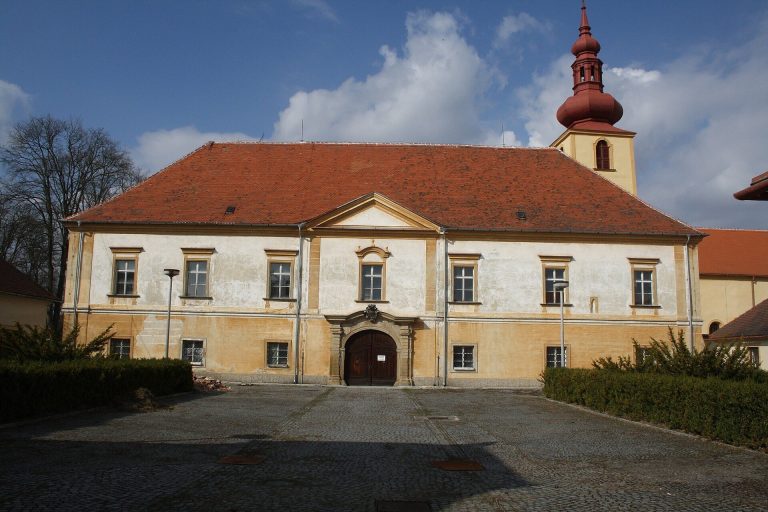
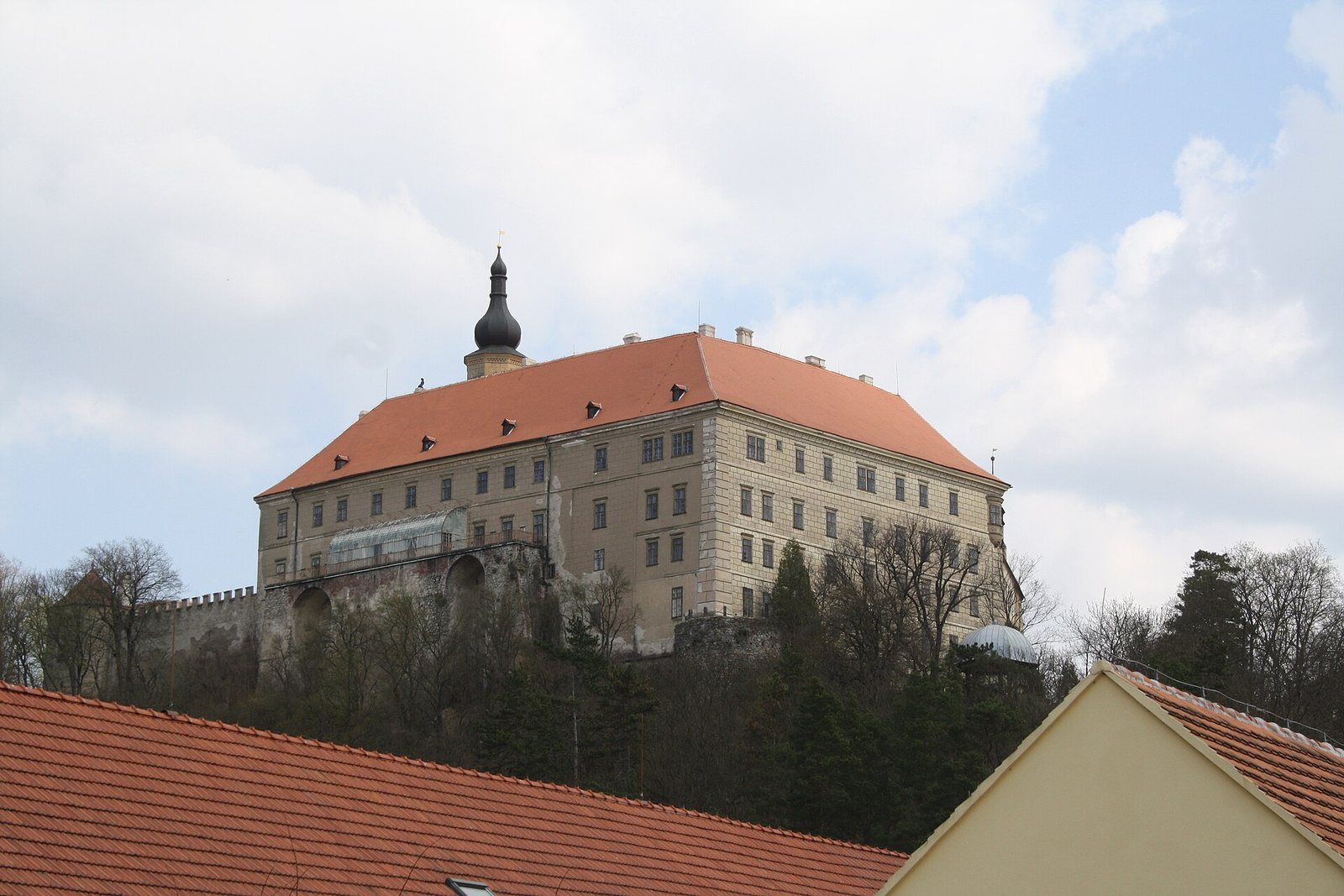
Náměšť nad Oslavou Castle stands in the town of Náměšť nad Oslavou in Czechia. Between 1565 and 1578, the House of Žerotín, a prominent Moravian noble family, converted an existing Gothic castle into the castle at Náměšť. This rebuilding took place during a wider period of construction and renewal in Bohemia and Moravia.
The Žerotíns collected books and prints and established a printing press at Náměšť. It became known for the first Czech grammar and the Kralice Bible, a Czech translation published from 1579 to 1601.
Changing ownership and the Haugwitz family
Karl the Elder of Žerotín sold the lordship to his brother-in-law, Albrecht von Wallenstein, a Bohemian nobleman and military commander. Wallenstein then sold it to Johann Baptist Verda von Verdenberg, a court chancellor, or senior official serving the ruler’s government. Verda von Verdenberg became Count of Náměšť in 1630. After his eldest daughter married Adrian von Enkevort, the estate passed through their family to the Enckevorts.
The estate came to the Haugwitz family in 1752. The County of Náměšť encompassed the towns of Náměšť and Groß Bittesch, the market town of Mohelno, and 50 villages with about 9,000 inhabitants. Associated estates included Batauchowitz and Hermannschlag in the Iglau district.
From 1753, Friedrich Wilhelm von Haugwitz served as chief Bohemian chancellor and, under Empress Maria Theresa, as the first Austrian chancellor. His grandson Heinrich Wilhelm (1770–1842) adapted works by Gluck, Mozart, Salieri, and Handel. He performed them with his own orchestra and choir, which together comprised 64 musicians. Among these works were oratorios, large vocal and instrumental compositions usually based on religious subjects and performed without staging.
From wartime expropriation to museum
Count Heinrich (1901–1966), the castle’s last owner until 1945, organized financial support for Czech families persecuted by German occupiers during the war. He was nevertheless expelled and expropriated as an alleged German sympathizer. In 1947, Czechoslovak President Edvard Beneš briefly used the castle as a summer residence. The castle has served as a museum since 1949.
Extensive renovation work has been carried out since 2016 under the National Heritage Institute and the Czech Ministry of Culture.
Remains
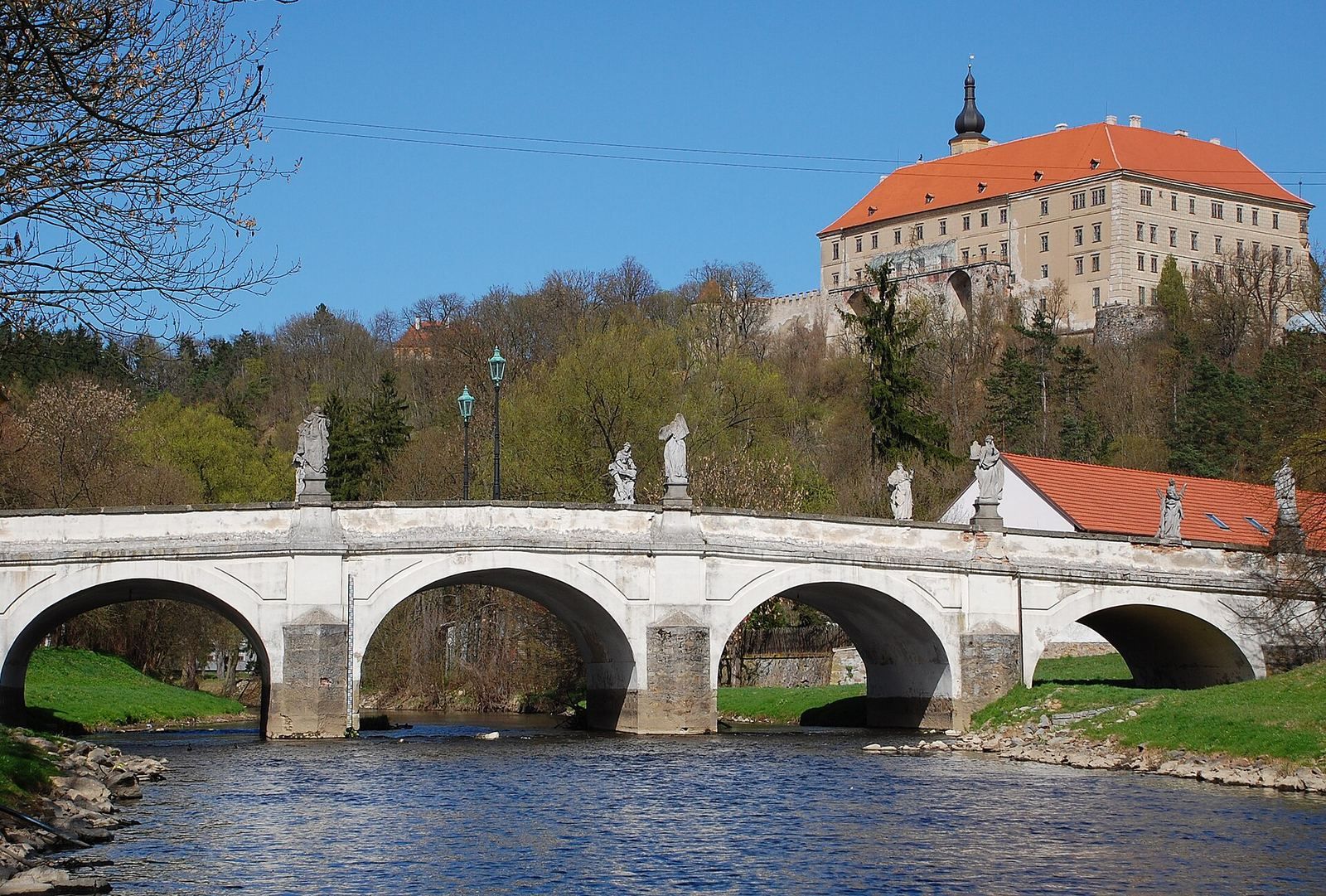
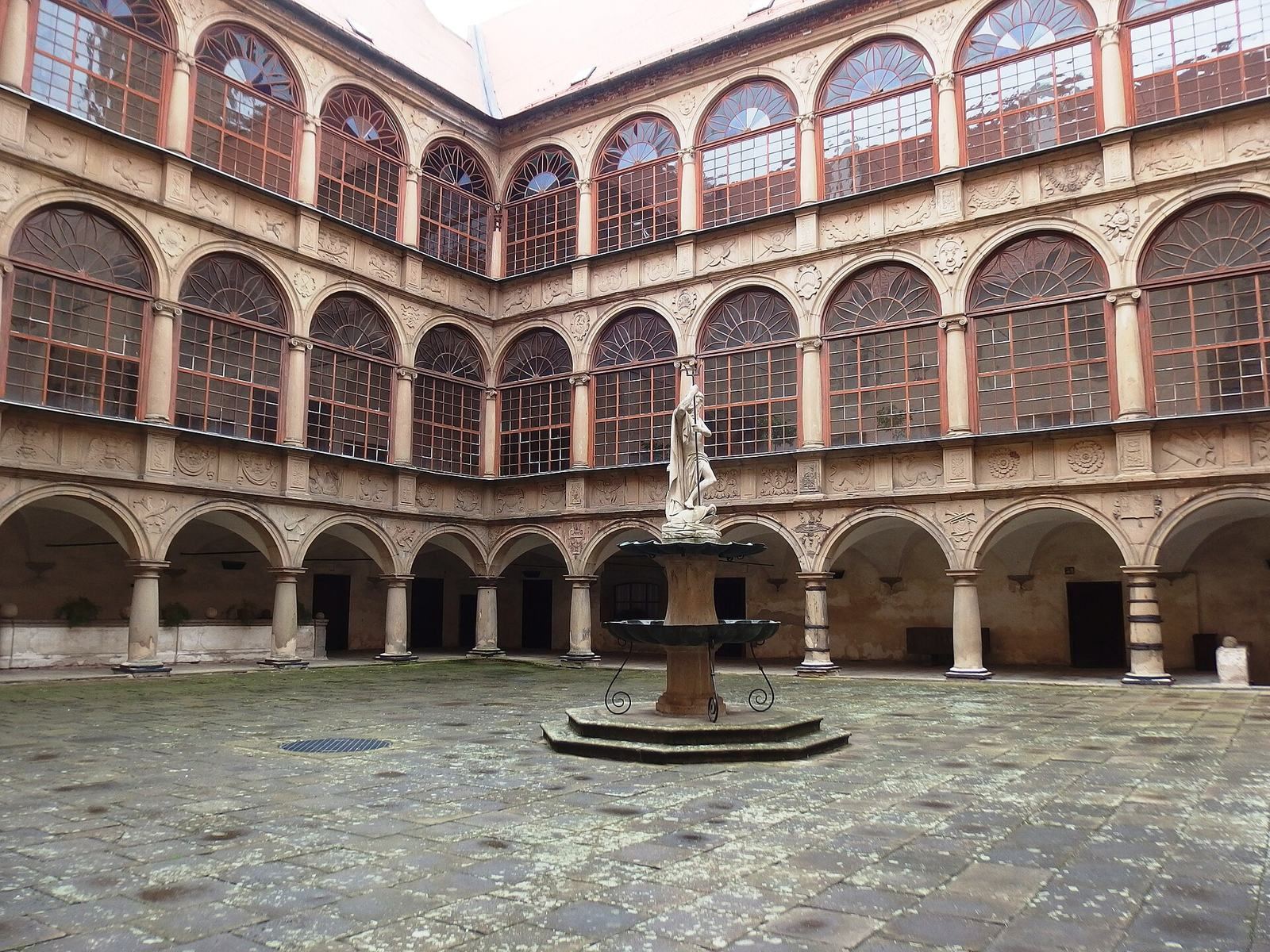
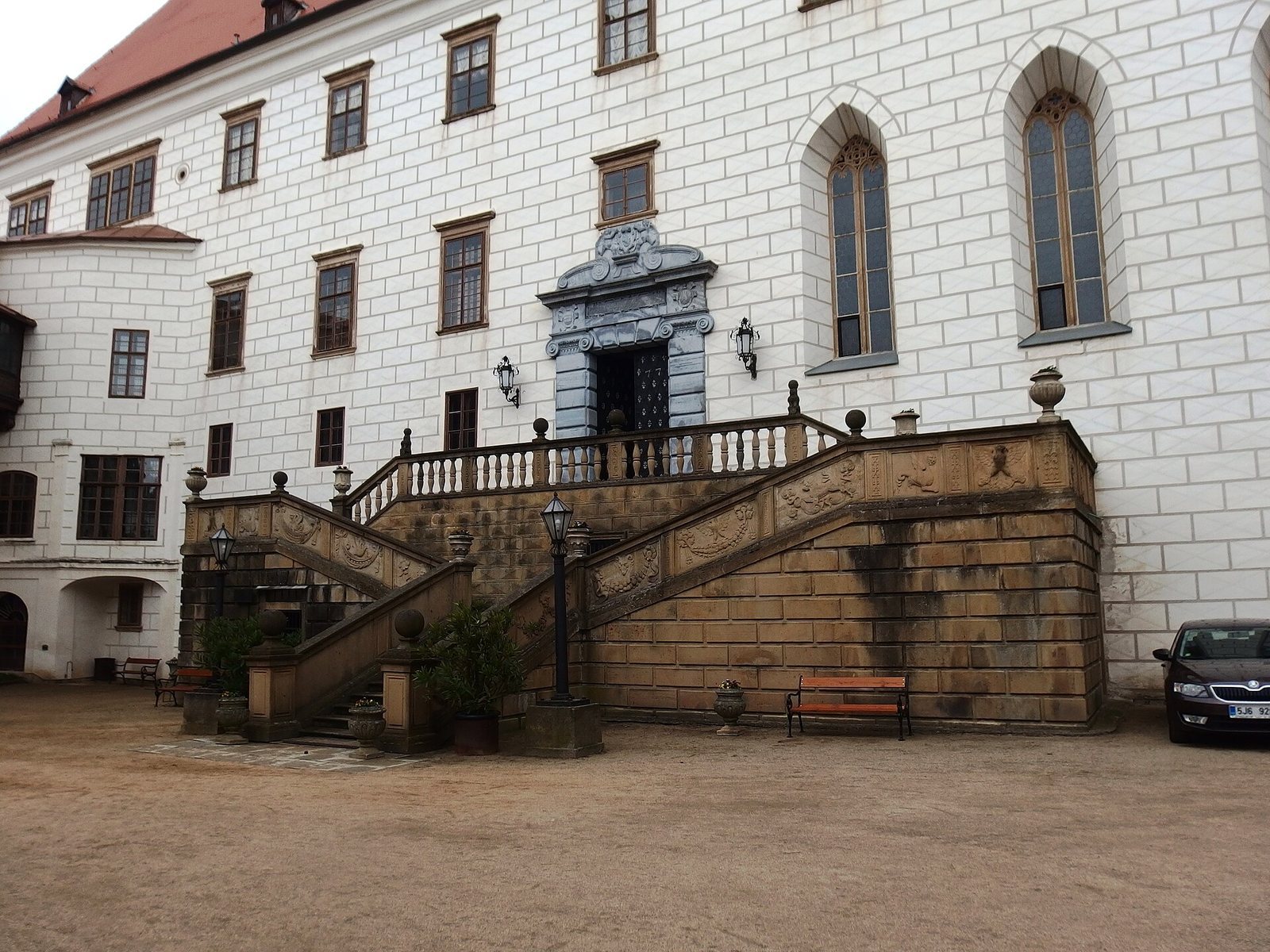
The castle’s physical features include decorated interior spaces and furnishings, as well as a bridge over the Oslava River bearing sculpted figures.
Castle interiors and collections
Ground-floor hall
A ground-floor hall, a type of space often associated with a garden, is decorated with frescoes by the painter Carpoforo Tencalla.
Tapestries and principal rooms
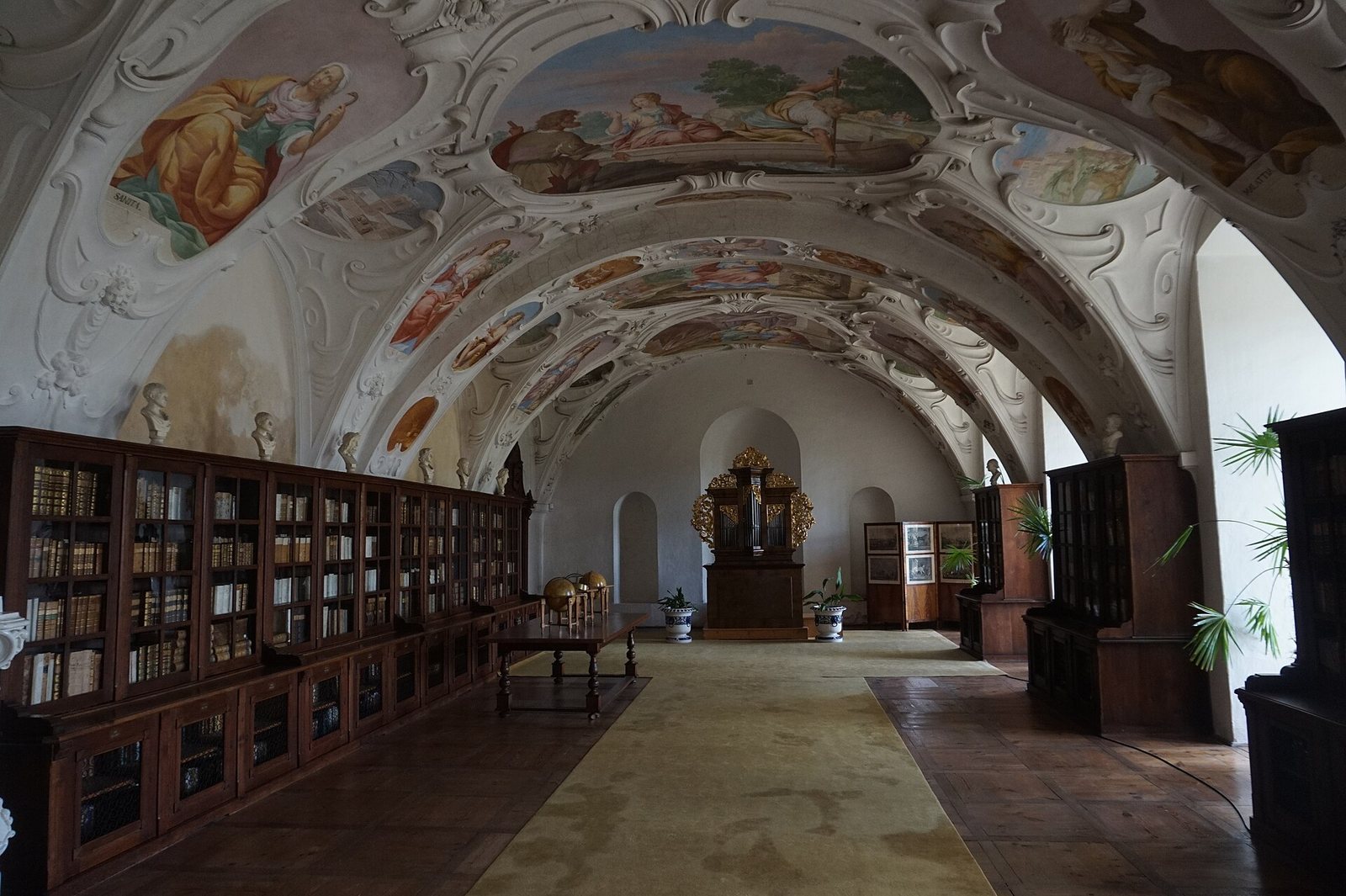
The castle holds an extensive collection of tapestries, most dating from the seventeenth and eighteenth centuries, with some older examples. The former dining hall is also notable, and the castle library is richly furnished.
Bridge over the Oslava River
The bridge carries twenty sandstone figures of saints and angels, each larger than life. Josef Winterhalder the Elder made the sculptures in 1737 on commission from Adrian, Count of Enkevort.