Namak Haram Deorhi: Mir Jafar’s Palace and Main Gate
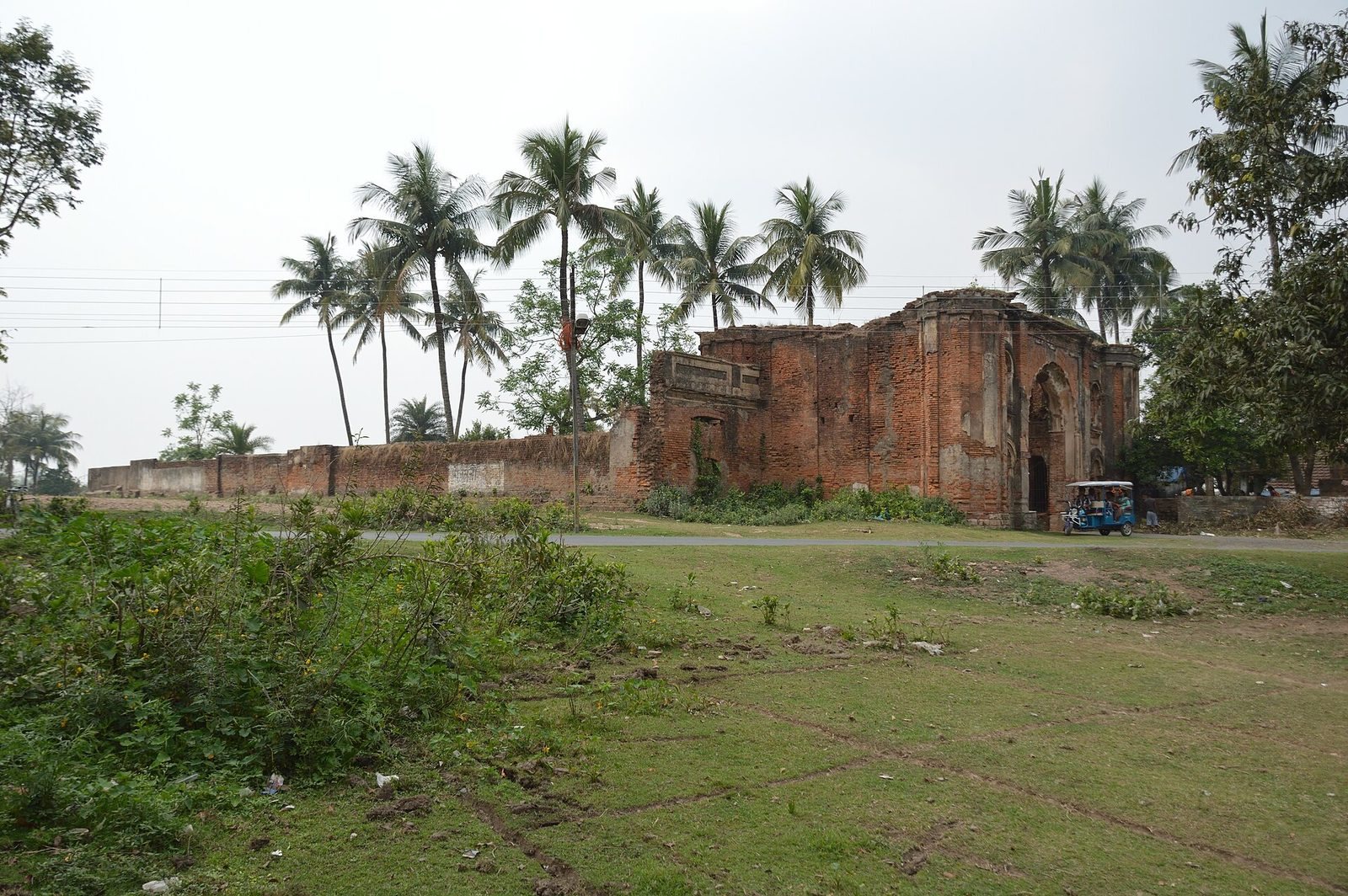
Site at a Glance
- Popularity
- High
- Country
- India
- Primary era
- Early Modern
- Eras represented
- Early Modern
- Civilizations
- Unclassified
- Site type
- Domestic
- Remains
- Elite Residence
On this page4 sections
History
Namak Haram Deorhi refers to Mir Jafar’s former palace and its main entrance gate in Murshidabad, India. The site is closely associated with the 1757 Battle of Plassey and the events that led to Mir Jafar becoming Nawab of Bengal, a regional ruler.
Mir Jafar and the Battle of Plassey
Before becoming Nawab, Mir Jafar lived at the palace while serving as commander-in-chief of Bengal’s forces. The residence was formerly called Jafragunj Deohri. “Namak Haram” means treacherous or untrustworthy, while “Deorhi” means gate. The name reflects an accusation that Mir Jafar and his son Mir Miran plotted to have Muhammad-Ali-Beg kill Siraj ud-Daulah, allowing Mir Jafar to take the throne.
On the eve of the Battle of Plassey, a major 1757 conflict between Bengal’s forces and the East India Company, company official William Watts met Mir Jafar and Mir Miran at the palace. Miran received Watts in the household’s secluded women’s quarters. Watts placed the Quran, Islam’s holy book, on Mir Jafar’s head, while Mir Jafar rested a hand on his son’s head and swore to betray Siraj in the battle the next day. The betrayal enabled a British victory and Mir Jafar’s accession, and helped the Company extend its political and territorial power in India.
Siraj ud-Daulah’s murder and aftermath
Siraj ud-Daulah was murdered on 2 July 1757, but accounts place the killing in different locations. The historical chronicle Seir Mutaqherin locates it on the palace grounds, beside a public road and beneath a neem tree. British historian Robert Orme instead places it inside Mansurganj Palace, where Mir Miran lived, on the west bank of the Bhagirathi River opposite Namak Haram Deorhi.
After the murder, Siraj’s body was carried across the river and kept at Jafargunj overnight. The next morning it was placed on an elephant and paraded through Murshidabad, past the house of his mother, Amina Begum. It was then taken across the river to Khushbagh.
Remains
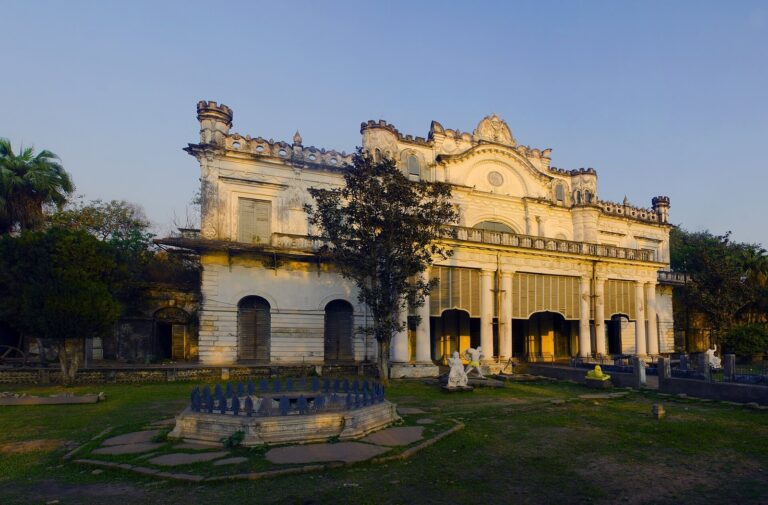
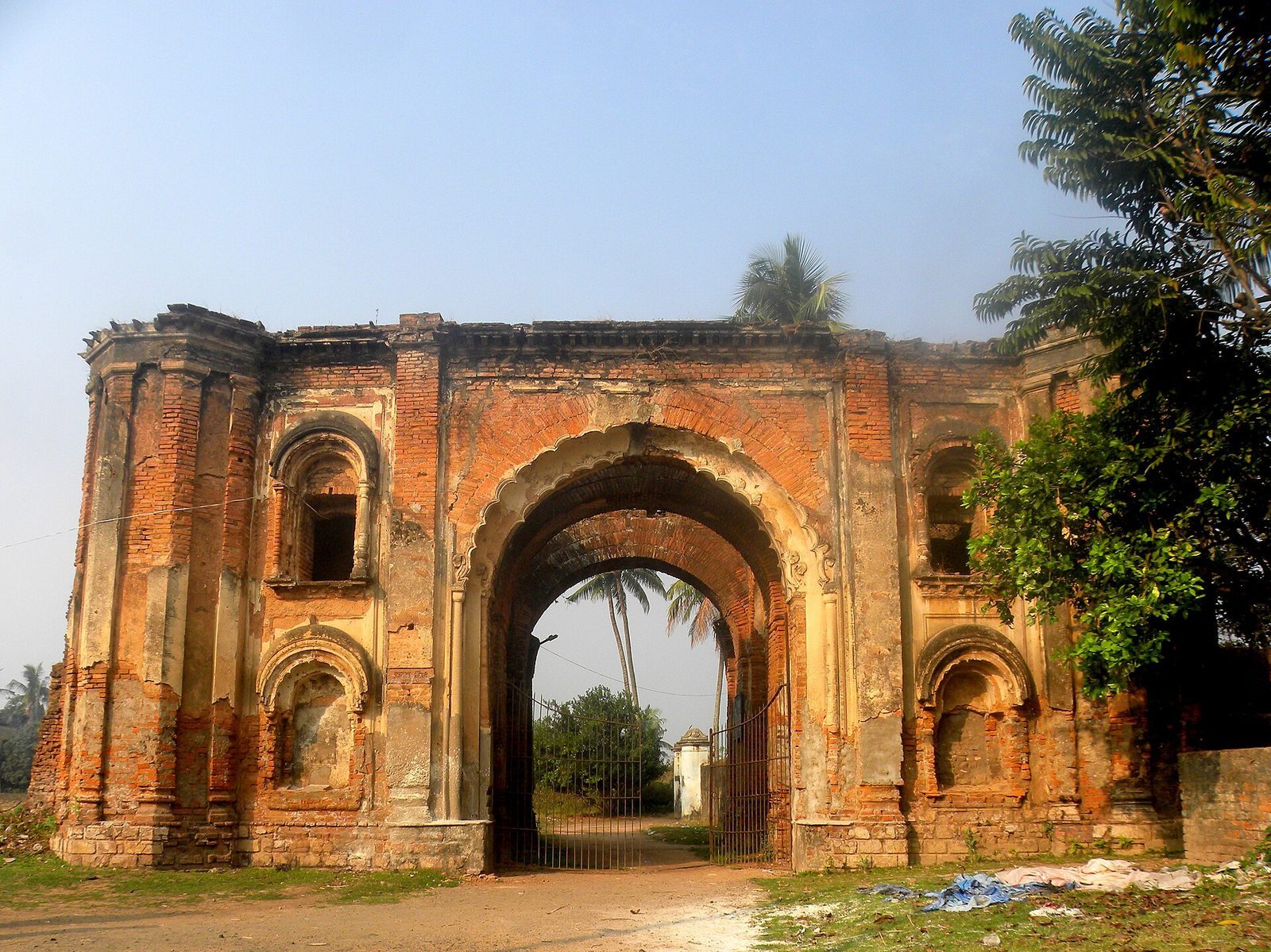
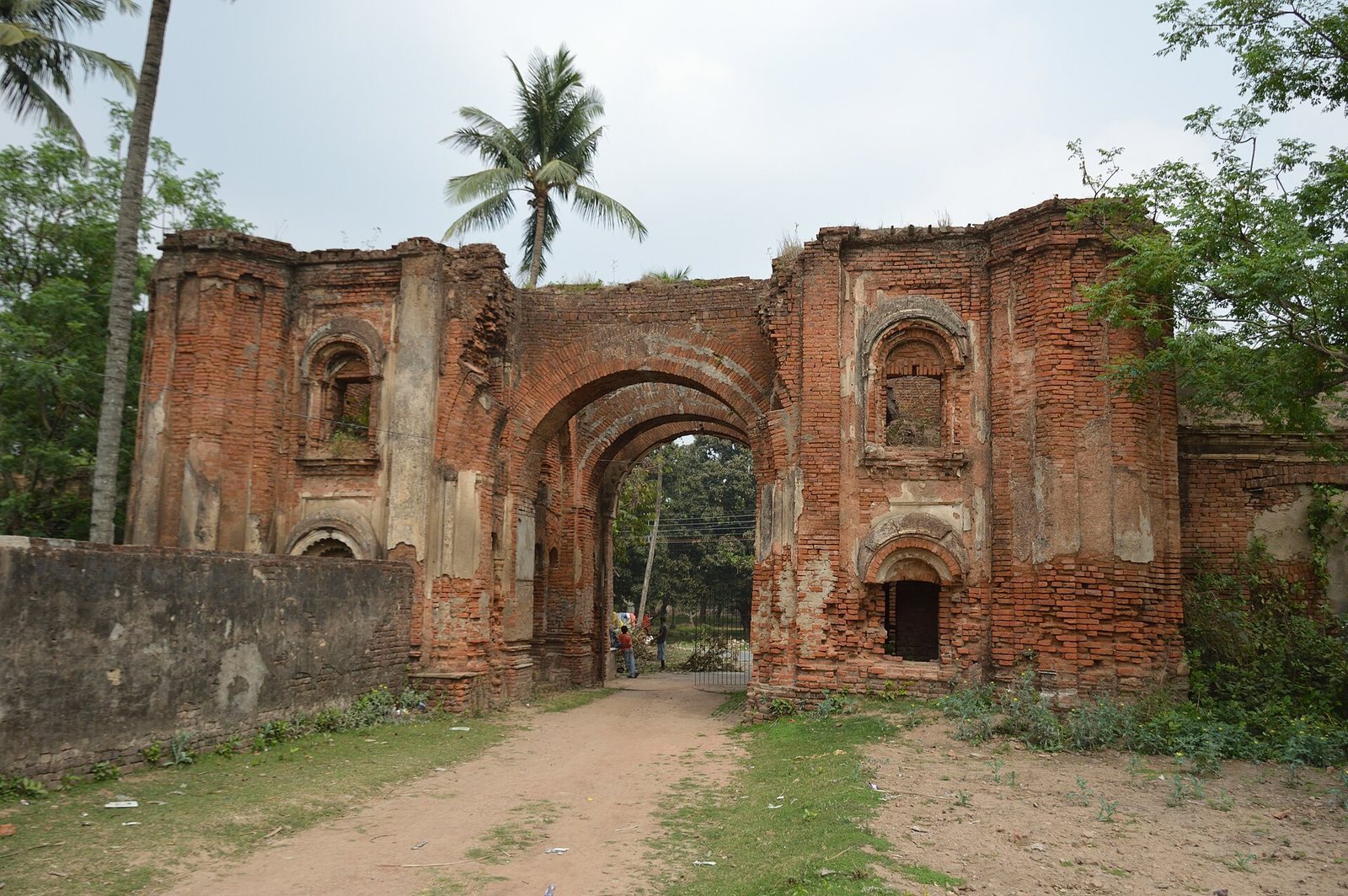
The site comprises the ruined palace and its main entrance gate, opposite Jafarganj Cemetery in the Lalbagh area of Murshidabad. The palace was fortified with towers and turrets and had a cannon for protection against attack. The palace now lies in ruins, while the entrance gate survives as its remaining structure.