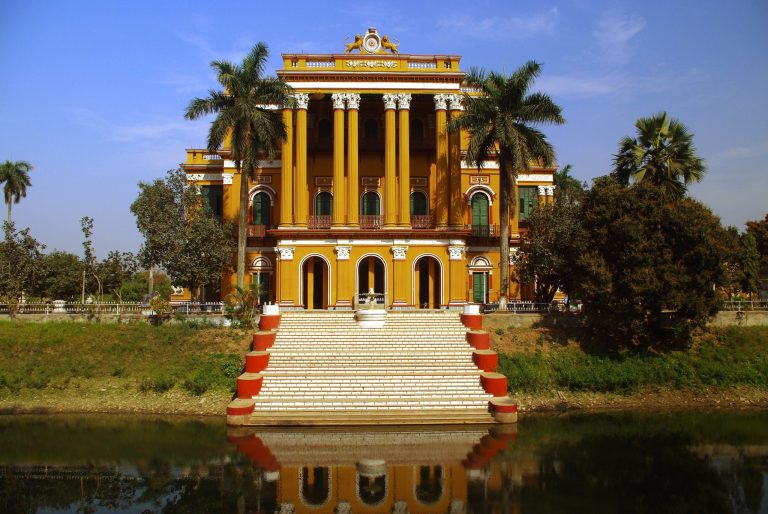
Hazarduari Palace: A Neoclassical Palace and Museum in Murshidabad, India
Site at a Glance
- Rating
- 4.5
- Popularity
- Very High
- Country
- India
- Primary era
- Modern
- Eras represented
- Modern
- Civilizations
- British
- Site type
- Domestic
- Remains
- Palace
On this page9 sections
History
Hazarduari Palace is a former palace and public cultural museum in Murshidabad, India, completed in 1837 in the Neoclassical Italianate style with Doric influences. It was commissioned by Humayun Jah, the Nawab of Bengal from 1824 to 1838, and replaced the old Nizamat Fort on the Kila Nizamat campus near the Ganges. The palace is also a national monument and preserves collections associated with the Nawabs.
Construction under Humayun Jah
Construction began on 9 August 1829 and ended in December 1837. Colonel Duncan MacLeod designed the building, which was erected at a cost of 16.50 lakh gold coins. The earlier Nizamat Fort, also known as Kila Nizamat or Nizamat Kila, was demolished to make way for the new palace.
The name Hazarduari means “the one with a thousand doors.” Tradition holds that 100 of the palace’s 1,000 doors are false. Their supposed purpose was to confuse thieves and robbers long enough for the Nawab’s guards to capture them.
Museum and preservation
The former palace was later converted into a museum containing paintings, furniture, and other antiquities connected with the Nawabs. Its collections include an ivory miniature of the palace made by Sagore Mistri, portraits of the Nawab and his son, and a badge and insignia of the Royal Guelphic and Hanoverian Order, a British-Hanoverian order of chivalry associated with the former Kingdom of Hanover. The honours were conferred on the Nawab after he sent gifts to King William IV, who ruled the United Kingdom from 1830 to 1837.
Hazarduari Palace and the Nizamat Imambara have been Monuments of National Importance since 1977. The Government of West Bengal initially managed the site, while the Archaeological Survey of India has administered it for preservation since 1985.
Remains
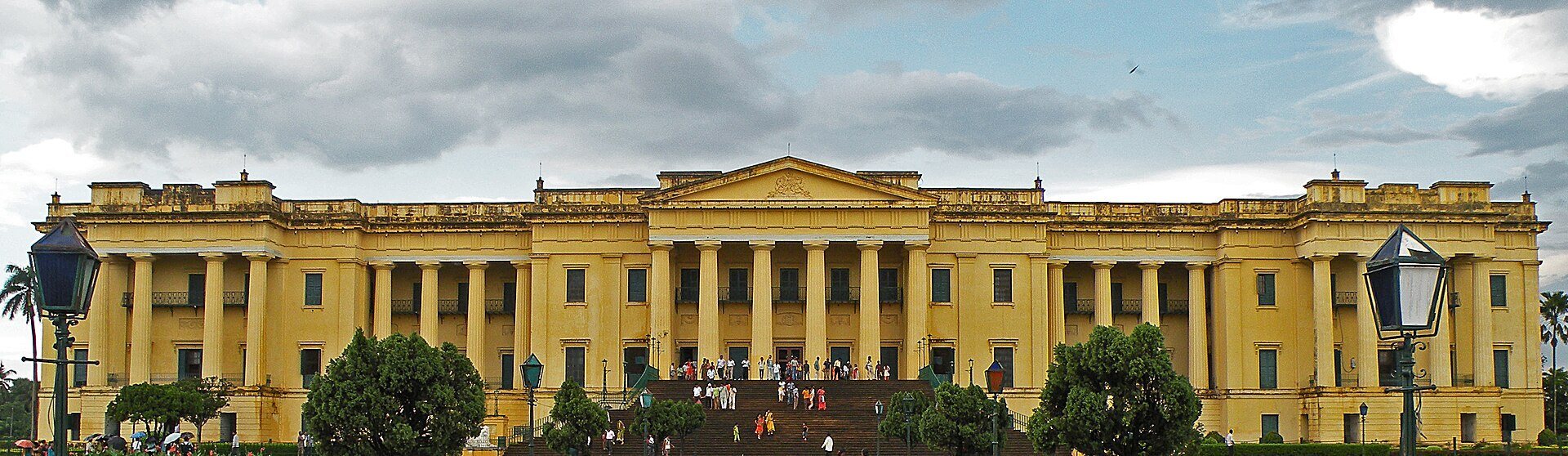
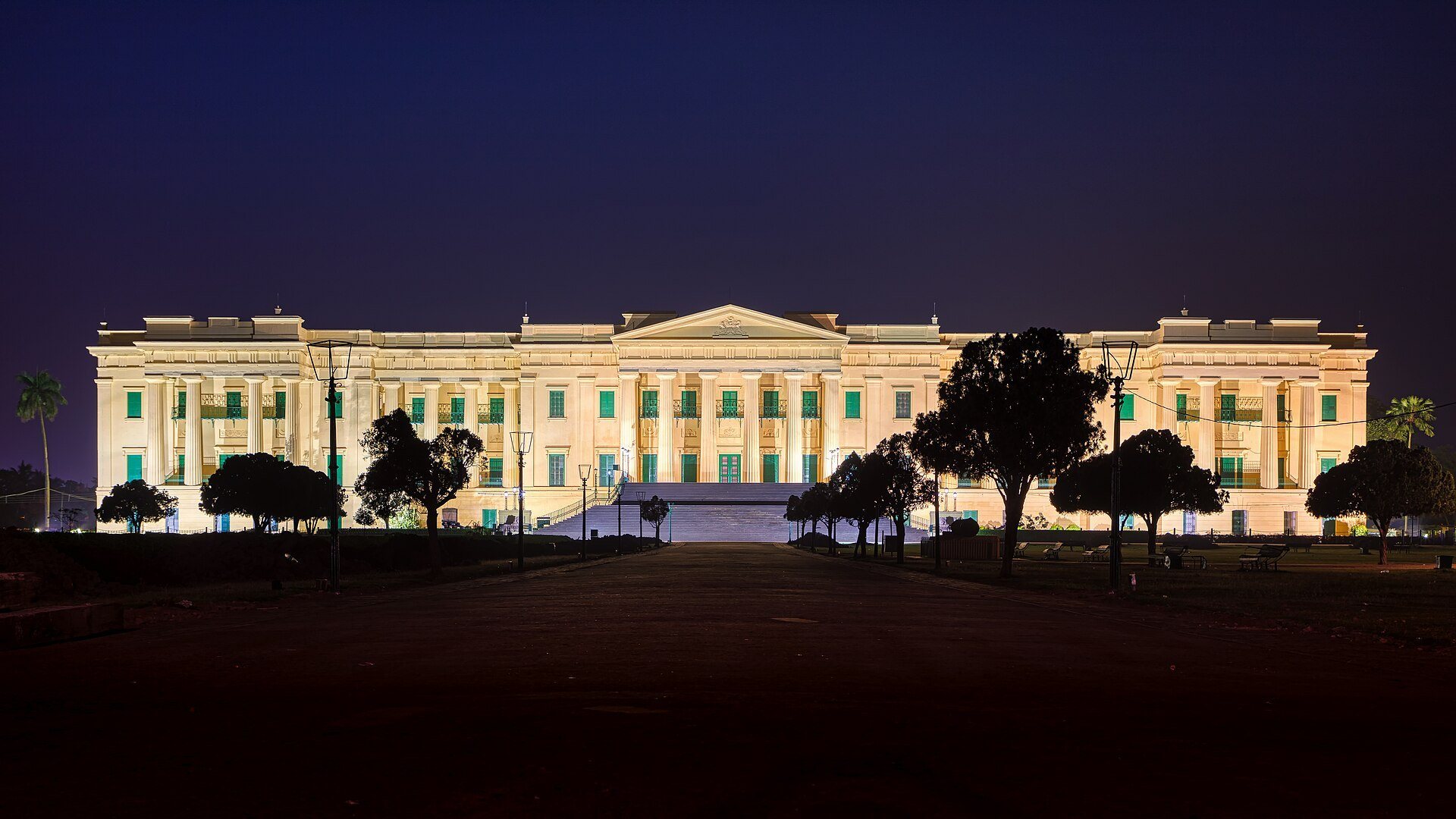
Hazarduari Palace occupies a 17-hectare site and is a three-storey building measuring 129 metres in length, 61 metres in width, and 24 metres in height. Its symmetrical Neoclassical Italianate design combines forms derived from ancient Greek and Roman architecture with an Italian architectural vocabulary and the sturdy, simply capped columns of the Doric order.
Exterior and entrance
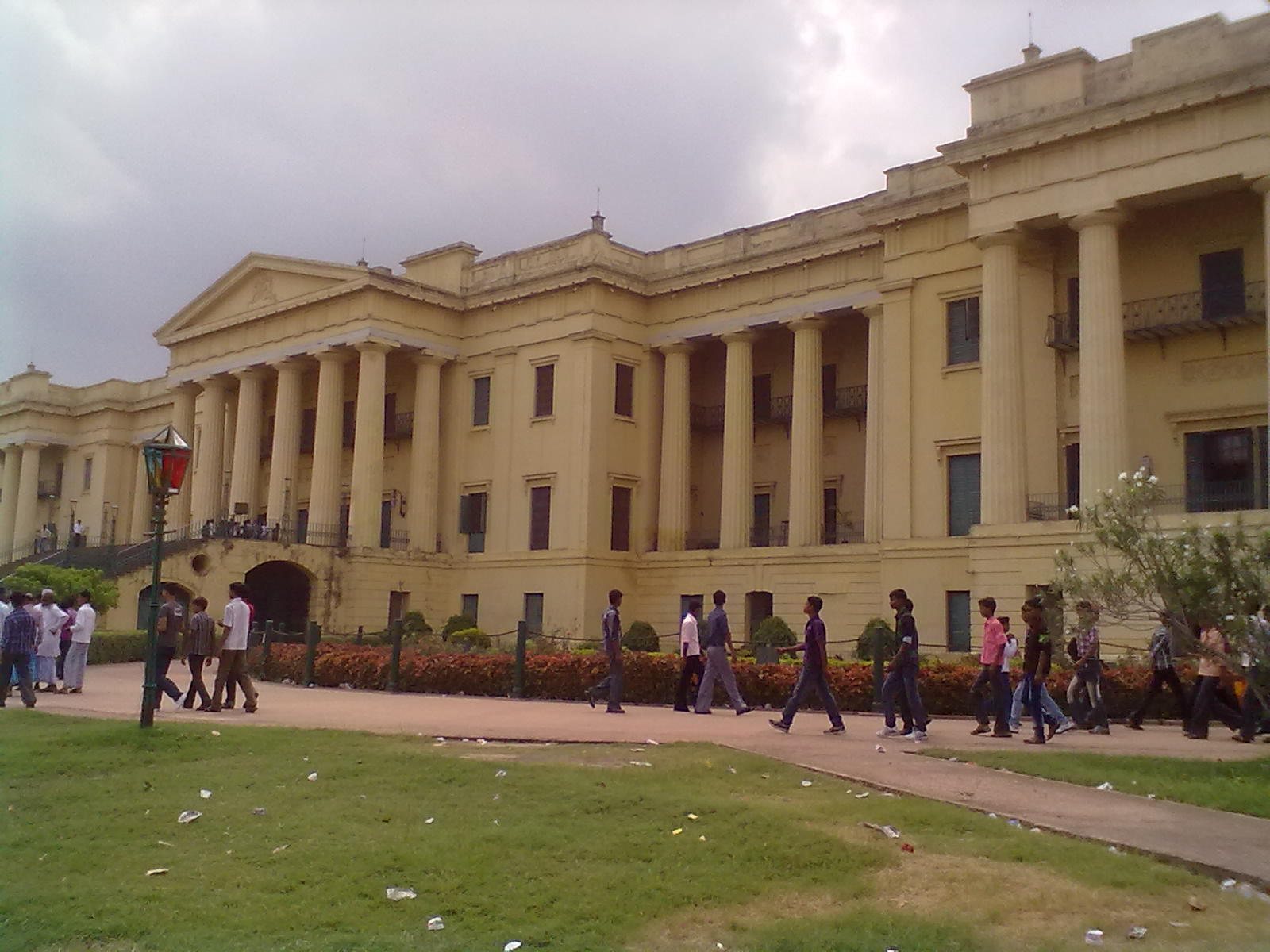
The main facade is arranged symmetrically around a triangular pedimented portico supported by 52 Doric columns. The principal gates are fitted with Naubat Khana galleries, pavilions associated with musicians who performed ceremonial music at a ruler’s entrance. Each gate is large and high enough for an elephant carrying a howdah, a seat or enclosed carriage mounted on an elephant, to pass through.
The northern entrance is reached by 37 stone steps. The lowest step is 33 metres wide and has a stone lion statue at each side. The scale of the approach and the entrance reflects the palace’s ceremonial design.
Interior and collections
The palace contains 114 large, richly decorated rooms. These include a Durbar Hall, where formal court business took place, as well as a banqueting hall, drawing rooms, sitting rooms, billiard rooms, a ballroom, a committee room, and a portrait gallery.
Library
The library holds more than 3,000 Arabic, Persian, and Urdu manuscripts and almost 12,000 books in English, Arabic, and Persian. Its holdings also include a copy of the British Constitution, a handwritten Quran measuring 1.2 metres in length and 0.91 metres in width and weighing about 20 kilograms, and historical texts and maps from the Mughal era.
Museum displays
Among the museum displays are a secret mirror and a large chandelier originally designed to hold 1,001 candles. The chandelier now contains 96 electric light globes. Together with the palace rooms and the Nawab-related collections, these objects preserve aspects of the building’s ceremonial and institutional use.
Structures within the Nizamat campus
The palace stands within the wider Kila Nizamat campus, alongside the Nizamat Imambara, Murshidabad Clock Tower, old and new Madina Mosques, Chawk Masjid, Bacchawali Tope, the Shia complex, Wasif Manzil, two Zurud Mosques, and Nizamat College.