Nagayon Pagoda: A Buddhist Cave Temple at Bagan
Site at a Glance
- Rating
- 4.3
- Popularity
- Low
- Country
- Myanmar
- Primary era
- Medieval
- Eras represented
- Medieval
- Civilizations
- Burmese Kingdoms, Pagan Kingdom
- Site type
- Religious
- Remains
- Pagoda
On this page7 sections
History
Nagayon Pagoda is a Buddhist temple at Bagan, Myanmar, built in the late 11th century early in King Kyanzittha’s reign (1084–1113). Its construction was a meritorious religious work, an act of giving understood to bring spiritual benefit. Kyanzittha ruled Pagan, the Burmese kingdom centered at Bagan.
A foundation tradition links the pagoda to Kyanzittha’s rise to the throne. While hiding near Myinkaba village because of hostility from King Sawlu, he was visited regularly by his wife, Apeyadana. On one visit, she saw a nāga, a serpent-like supernatural being in Buddhist traditions, spread its hood over the sleeping Kyanzittha. The creature disappeared when he awoke, and he took the event as an omen that he would become king. After gaining the throne of Pagan, he built the pagoda where the nāga had sheltered him.
Remains
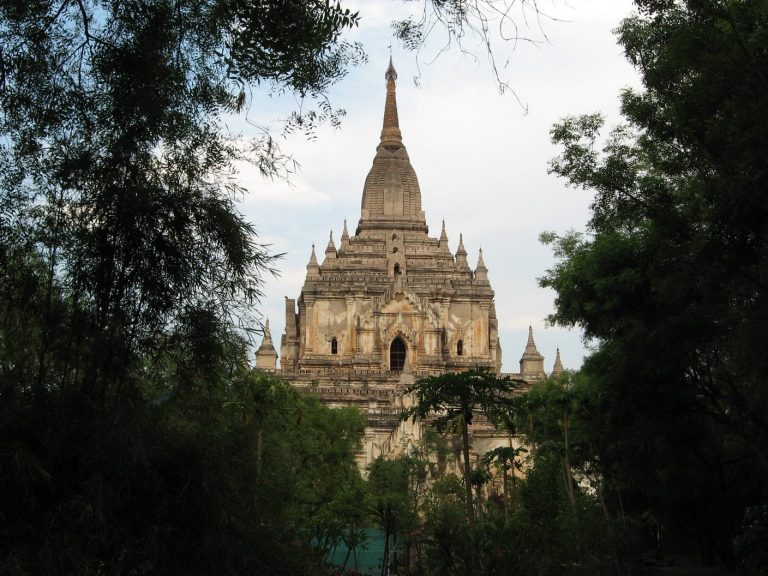
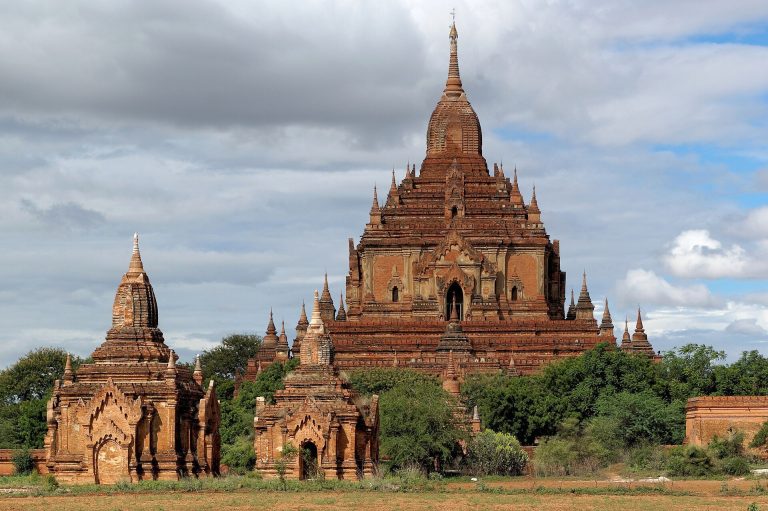
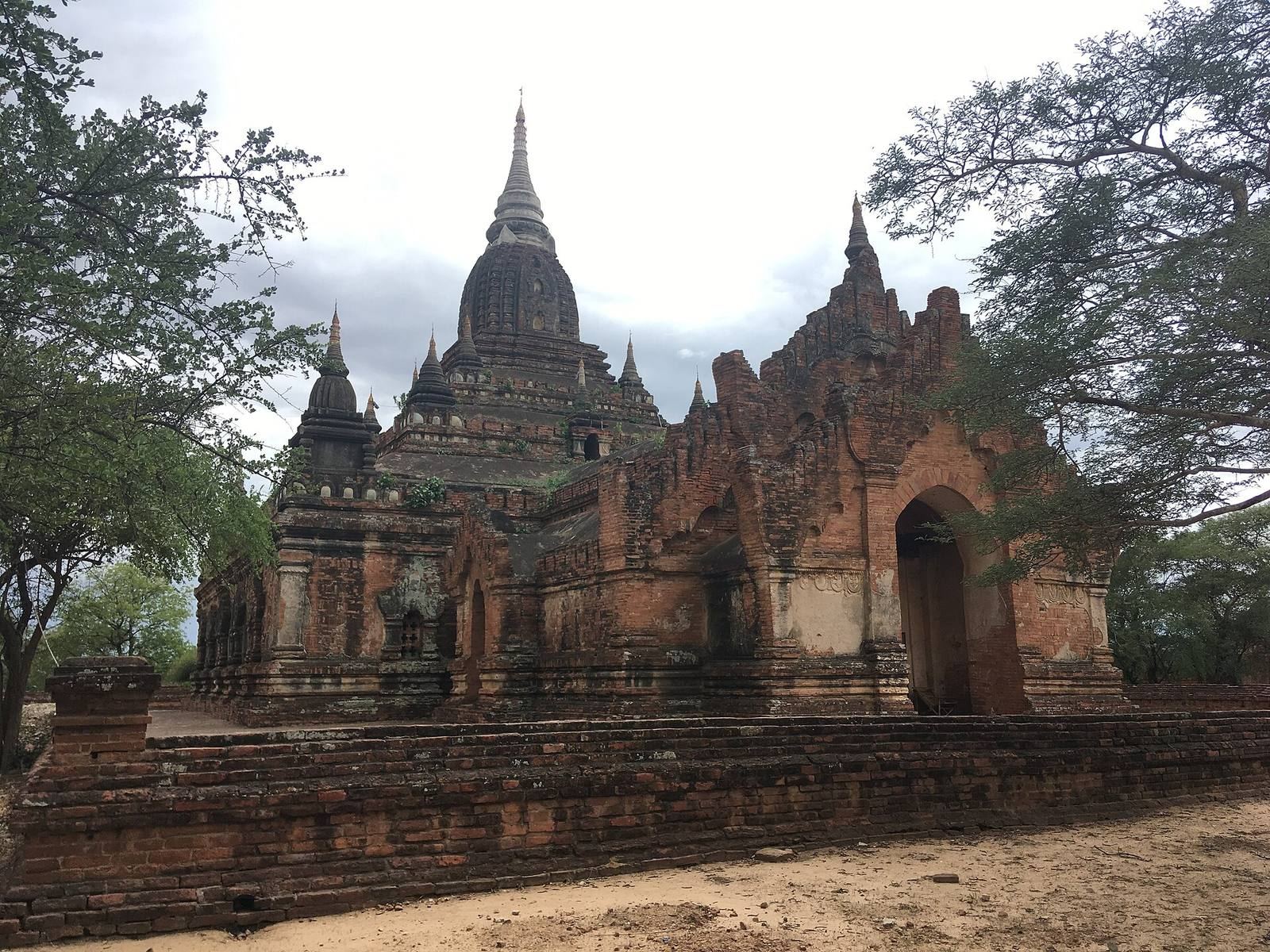
The single-storey cave temple stands within a fairly spacious enclosure. Its layout includes porches on four sides and an interior sequence leading from the north entrance through an entrance chamber to the shrine. The overall design has some resemblance to Ananda Temple.
Enclosure and roofs
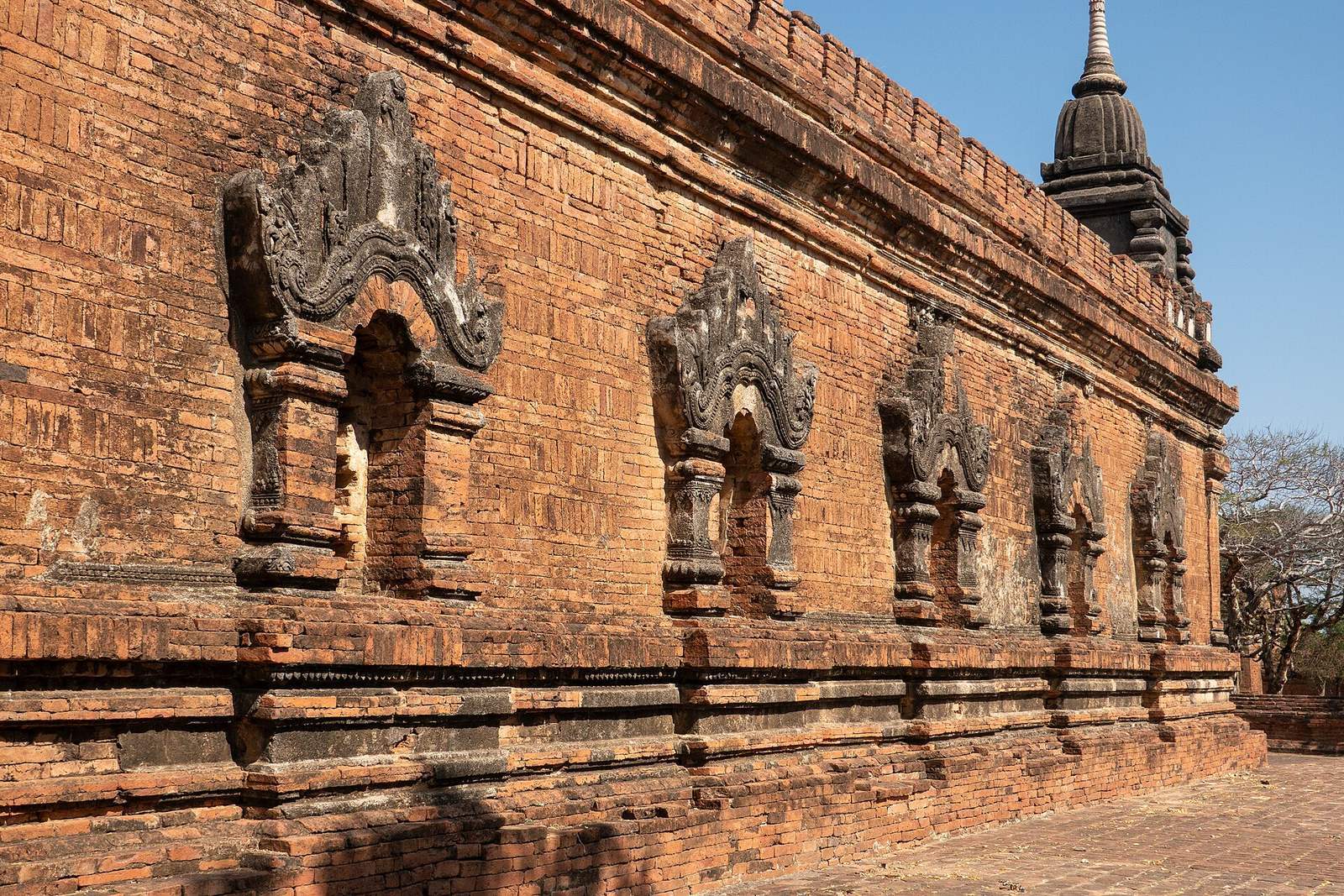
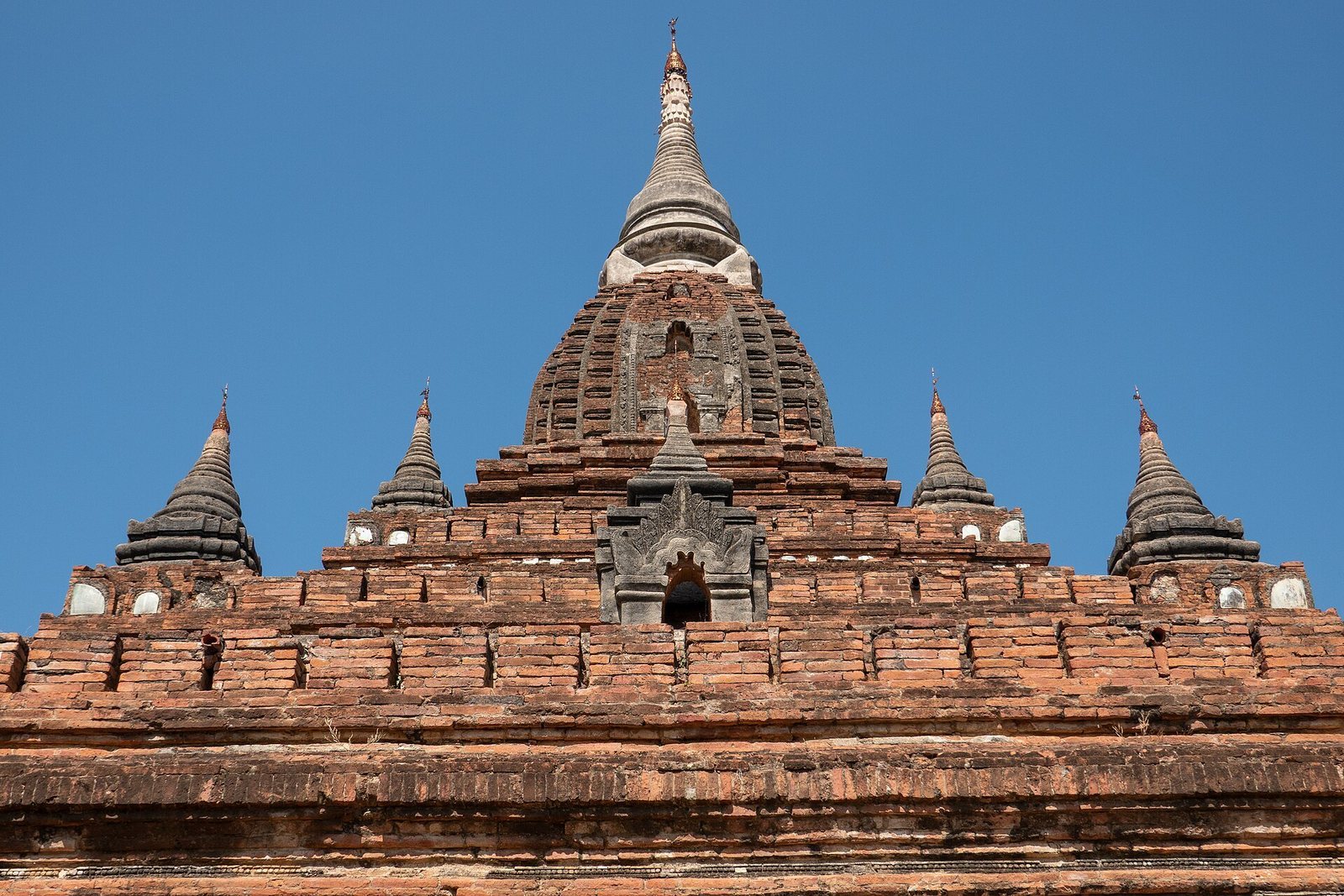
Sloping roofs rise above successive terraces, with small stupas, Buddhist monuments associated with relics or commemoration, at the terrace corners. A decorative crown and another stupa top the upper terrace. Each of the enclosure’s four sides has a porch with a small stupa above it. The exterior walls carry molded plaster ornament, including hanging ogre-shaped forms and floral designs. Similar decoration frames the windows, door lintels, and roof edges. The temple’s side profile is well proportioned.
Interior structure and paving
Large timber beams support the building, and some are thought to date from Kyanzittha’s reign. The beam above the entrance and those above the entrance chamber and shrine chamber bear carvings from the Pagan period. Green-glazed bricks pave the ground between the pagoda’s base and the inner enclosure wall, with further bricks visible in the courtyard around the base.
Murals and inscriptions
Murals on the walls and along the walkway around the shrine depict episodes from the Buddha’s life and scenes of his preaching. Inscriptions beside them use Old Mon, an early form of the Mon language. Faded traces of earlier paintings remain in the plaster inside the porches, while the old murals in the shrine chamber are badly damaged.
Carved panels and wall niches
Carved stone panels in niches in the entrance hall illustrate events in the Buddha’s life. Their subjects include Queen Maya’s dream, the floating of the Buddha’s golden bowl, his descent from Tavatimsa, a Buddhist heaven, his preaching, his retreat in the Parileyyaka forest, and his parinirvana, or final passing. Niches on the left and right interior walls hold sandstone Buddha images seated on lotus thrones. A carving there also shows the ascetic Sumedha receiving a prophecy from Dipankara Buddha.
Guardians and shrine images
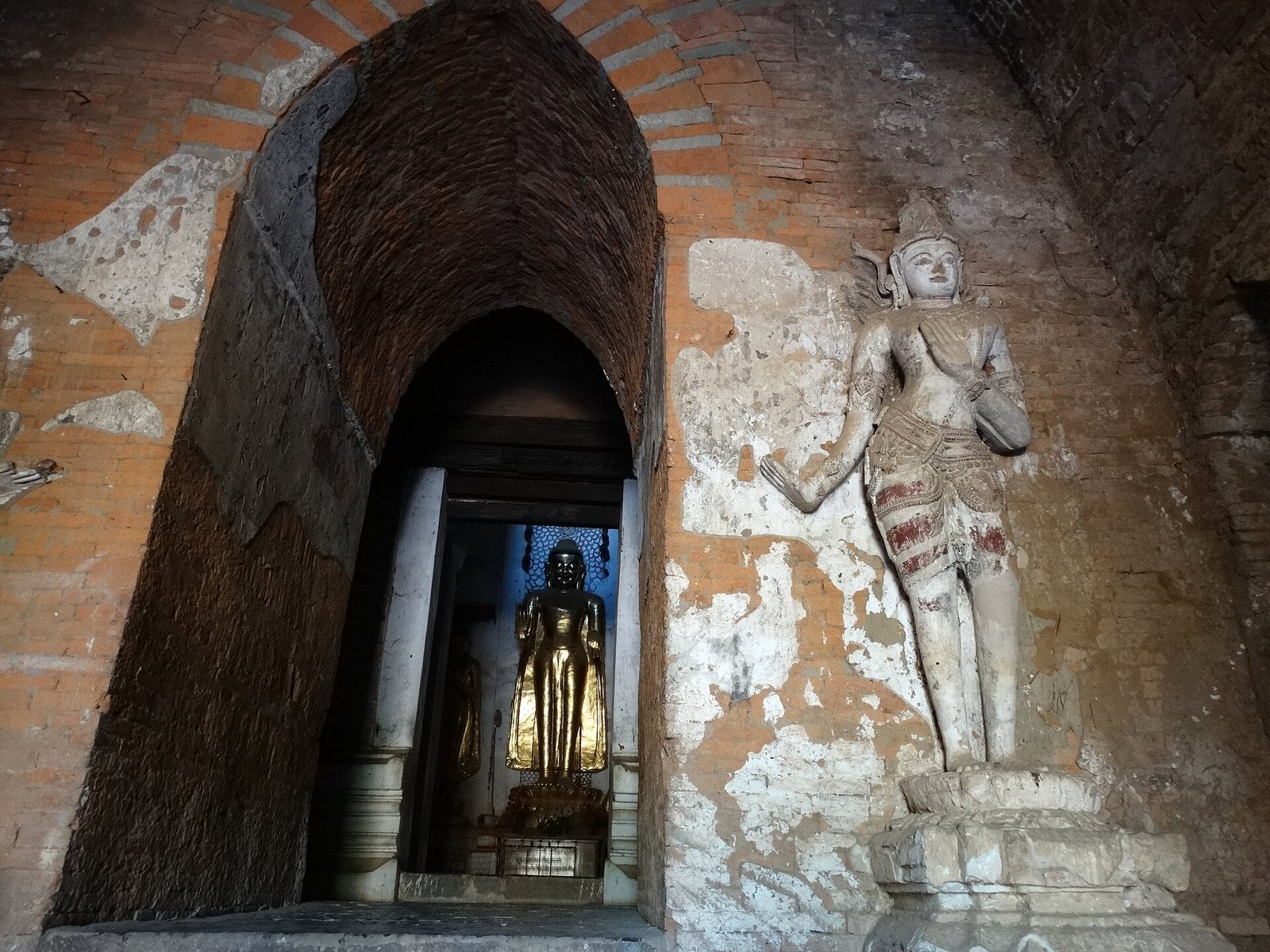
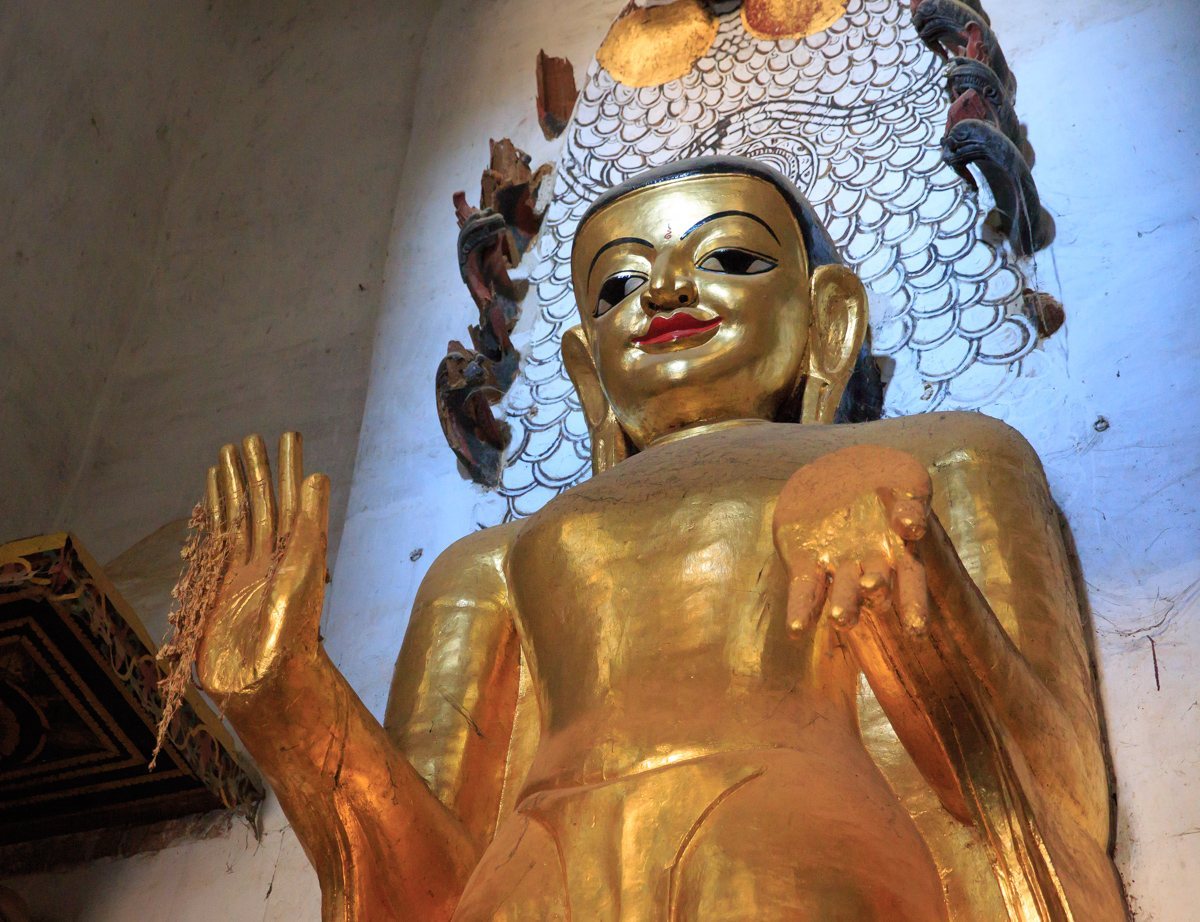
Two slightly damaged figures from the Pagan period flank the inner entrance. In the shrine chamber, a large standing Buddha appears beneath a nāga hood, with one hand in the abhaya mudra, a gesture associated with reassurance or fearlessness. Two more standing Buddha images flank it; their dharmachakra mudra represents the Buddha teaching.