Murallas del Cerro de San Cristóbal: Medieval Walls of Almería
Site at a Glance
- Rating
- 4.7
- Popularity
- Very Low
- Country
- Spain
- Primary era
- Medieval
- External website
- Open
- Eras represented
- Medieval
- Civilizations
- Kingdom of León, Taifa Kingdoms, Taifa of Almería, Umayyad
- Site type
- Military
- Remains
- Wall
On this page12 sections
History
The Murallas del Cerro de San Cristóbal are the surviving medieval city walls of Almería, Spain, built under the Muslim ruler Jayrán between 1012 and 1028 to protect the La Musalla quarter. They formed part of the fortified development of Almería, whose urban status and defenses had been expanded under Abd al-Rahman III, the first caliph of Al-Andalus, in the tenth century.
Almería under Muslim rule
In 955, Abd al-Rahman III elevated Almería to the status of a medina, an established Islamic city, and ordered the construction or enlargement of its fortified citadel, congregational mosque, and city walls. During the rule of Jayrán, the first king of the Taifa of Almería, a Muslim kingdom formed after the political fragmentation of the Córdoba caliphate, the wall was built or substantially developed to defend the former La Musalla quarter and the city’s outer districts.
Christian occupation and rebuilding
Almería came under the rule of Alfonso VII, the king of León and Castile, for a short period in the twelfth century. During this phase, a castle dedicated to Saint Christopher was erected on the hill, giving Cerro de San Cristóbal its Christian name. Alfonso VII also ordered the construction of four circular towers as part of the defensive system in 1147.
After the conflict of the twelfth century, collapsed parts of the towers were repaired with stone projectiles known as bolaños. These were used by medieval artillery or siege engines and were found on the ground around the damaged structures.
Castilian rule and the survival of the walls
On 26 December 1489, Almería capitulated to Isabella I of Castile and Ferdinand II of Aragon, known together as the Catholic Monarchs, transferring the city to Castilian sovereignty. The walls remained part of a fortified stronghold until a royal decree in 1855 authorized the demolition of Almería’s walls and citadel. Most of the medieval enclosure was subsequently destroyed, while substantial remains survived on Cerro de San Cristóbal.
The monument was declared a Historic-Artistic Monument in 1931. In 1985, it received recognition as an Asset of Cultural Interest under Spain’s historic-heritage legislation. The protected surroundings were delimited in 2004 and include the walls, the hilltop castle, and towers dating from the fifteenth and sixteenth centuries. The Barranco de la Hoya, a largely undeveloped area between the hill and the Alcazaba, preserves the visual relationship between the two fortified sites.
Remains
Wall and defensive towers
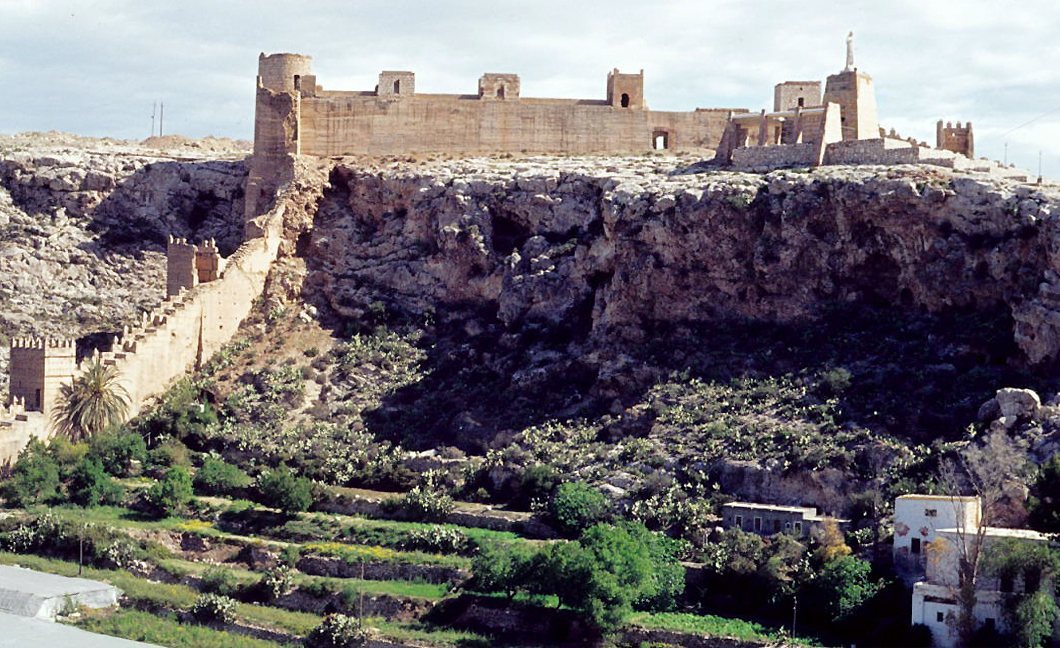
Surviving wall
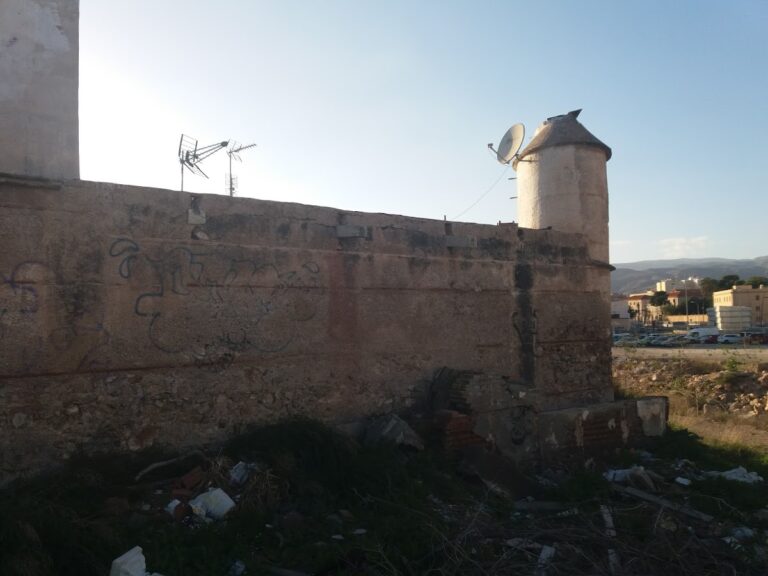
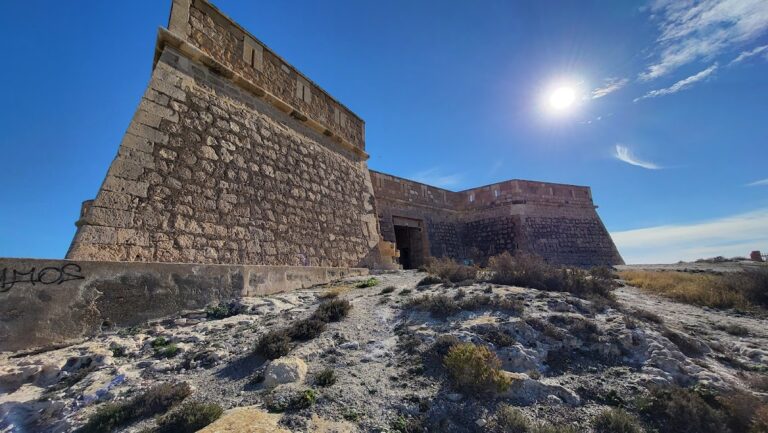
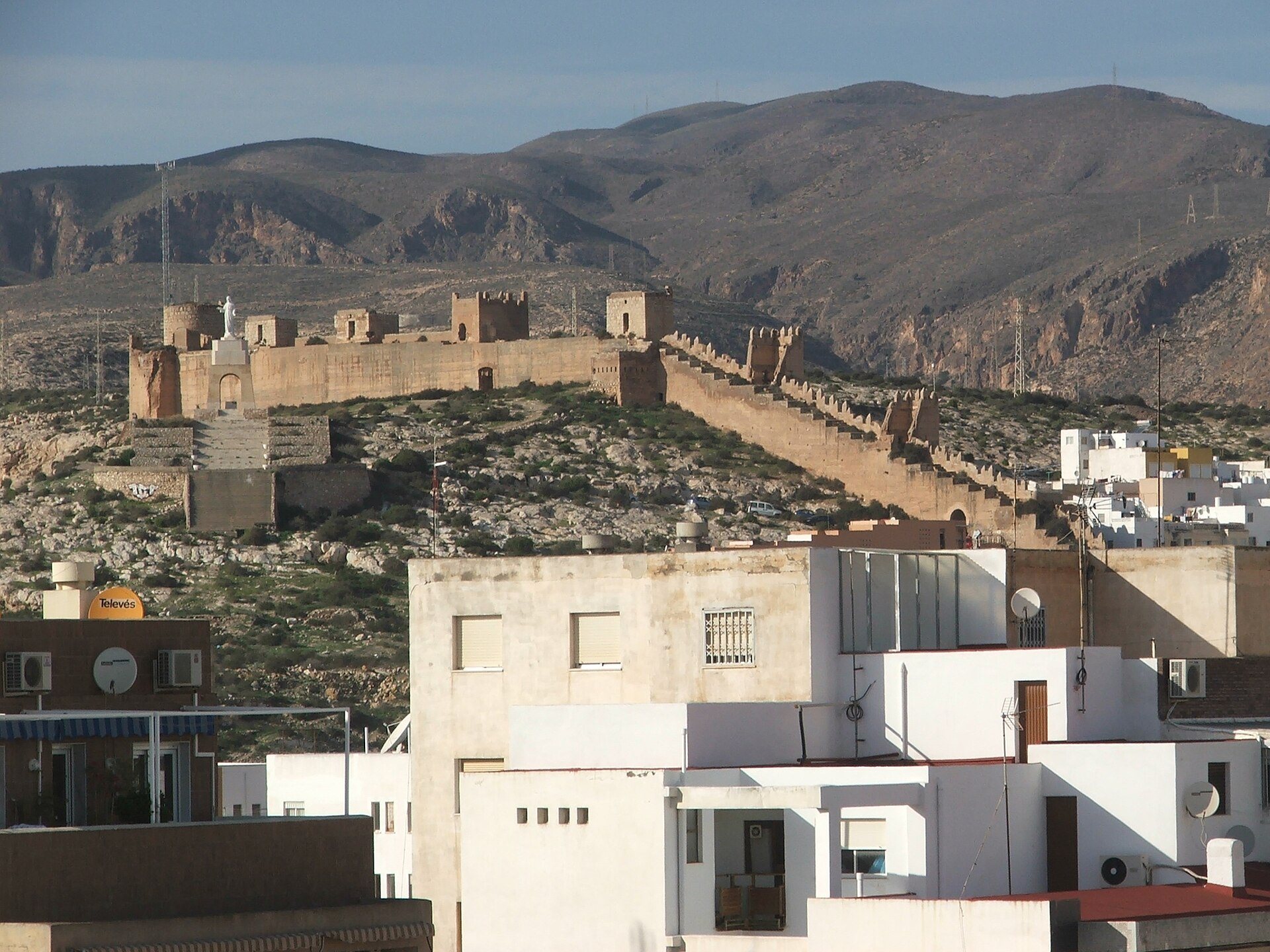
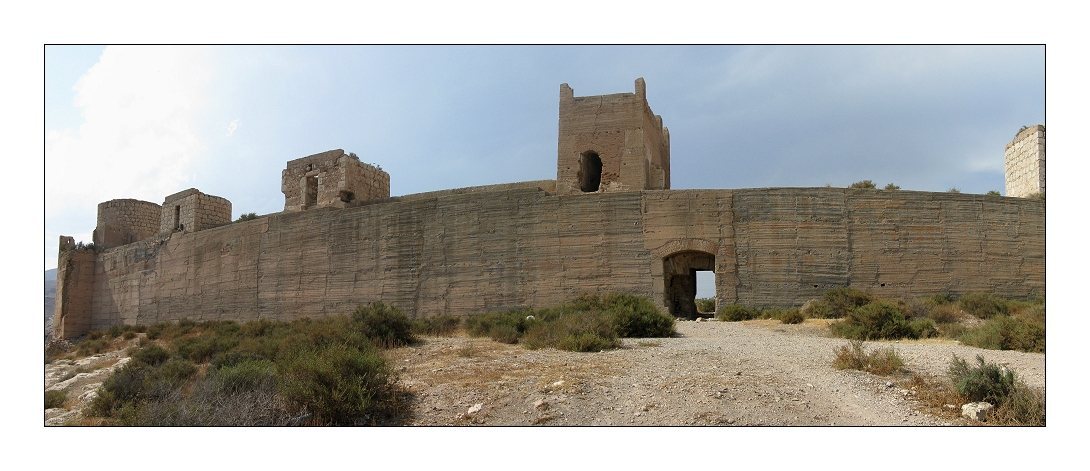
The surviving wall stands on Cerro de San Cristóbal, north of the Alcazaba, on a hill connected to the citadel by both its physical setting and direct visual relationship. It is approximately 3 metres thick and 5 metres high. The Barranco de la Hoya forms part of the fortified landscape between the hill and the Alcazaba, while the east-west axis of the surrounding area follows the barranco.
Arab and Christian towers
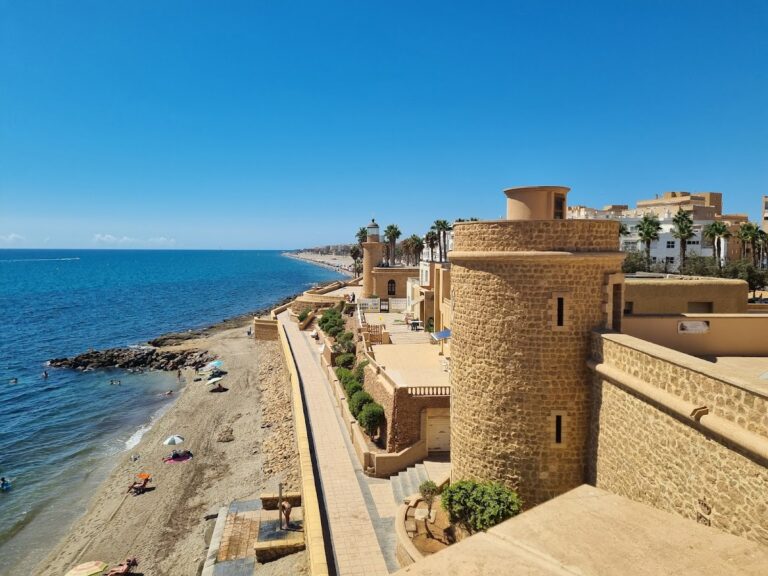
Seven towers remain along the surviving section. Three are square towers of Arab origin, while four are circular towers associated with the Christian phase ordered by Alfonso VII in 1147. Some of the circular towers were repaired after twelfth-century damage with stone balls, or bolaños, used in medieval siege warfare.
Entrances and hilltop fortifications
Puerta de la Almudaina
The Puerta de la Almudaina survives as an entrance through the wall and provides access toward the Experimental Station for Arid Zones, known as the EEZA. Its position preserves part of the connection between the wall and the area formerly defended by the wider urban fortification.
Castle of Saint Christopher
The hill also contains the ruins of a Muslim fortification and the remains of the castle dedicated to Saint Christopher, erected during Alfonso VII’s rule. The castle ruins gave the hill its Christian name and are now in progressive decay. The wider fortified complex has sometimes been assigned a perimeter of approximately 1,430 metres, but that measurement includes the medieval castle, the surviving Alcazaba, and the remaining exterior walls rather than the Cerro de San Cristóbal wall alone.
Summit monument and surrounding landscape
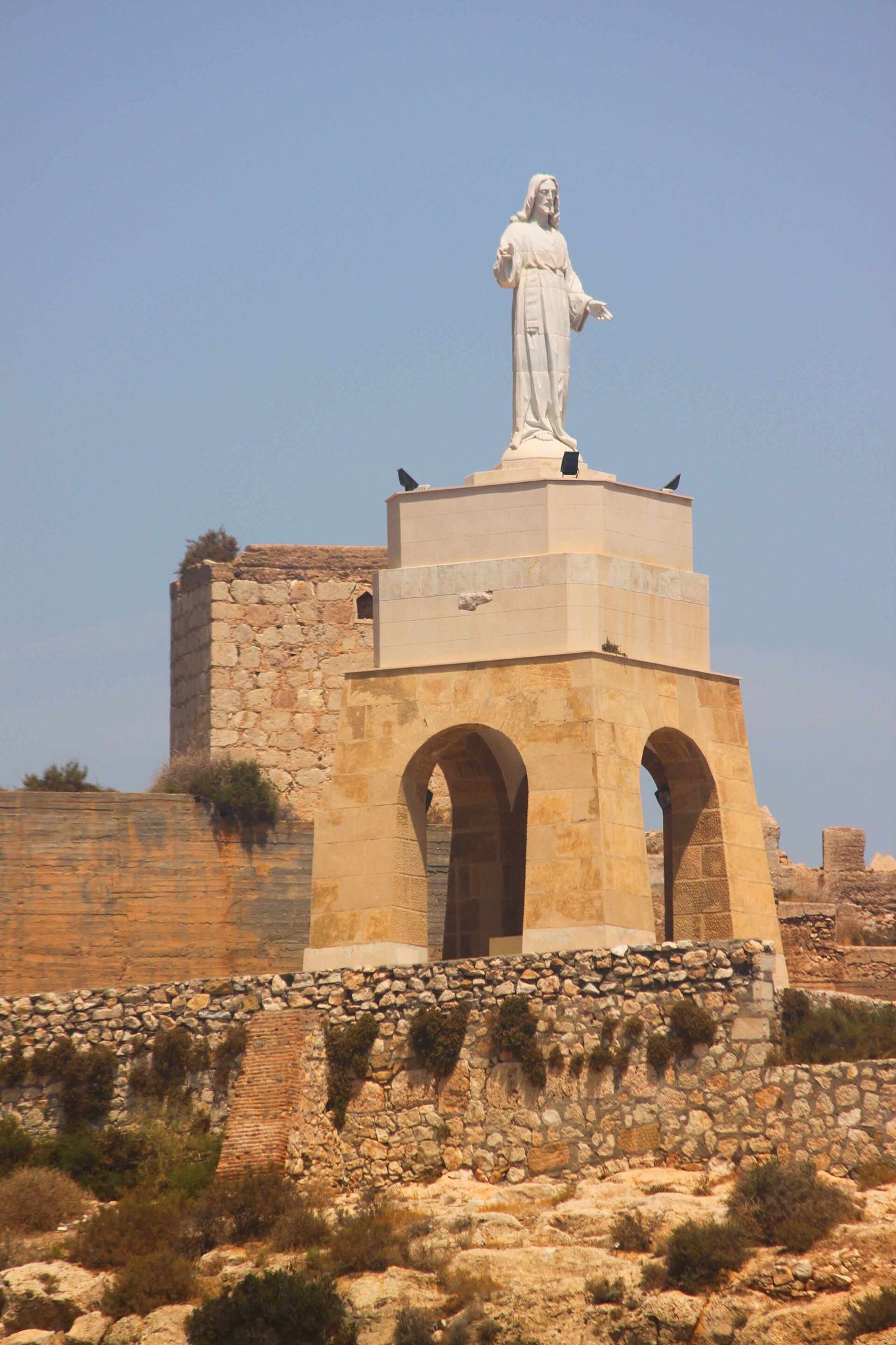
At the summit stands a statue of the Sacred Heart of Jesus made from Macael marble, a stone associated with the town of Macael in Almería province. Erected in 1928, the statue was dynamited at the outbreak of the Spanish Civil War, reconstructed in 1944, and restored in 2000.