Ribera de la Algaida: A Coastal Archaeological Settlement in Spain
Site at a Glance
- Popularity
- Medium
- Country
- Spain
- Primary era
- Classical
- Eras represented
- Stone Age, Bronze Age, Classical, Medieval
- Civilizations
- Roman
- Site type
- City
On this page11 sections
History
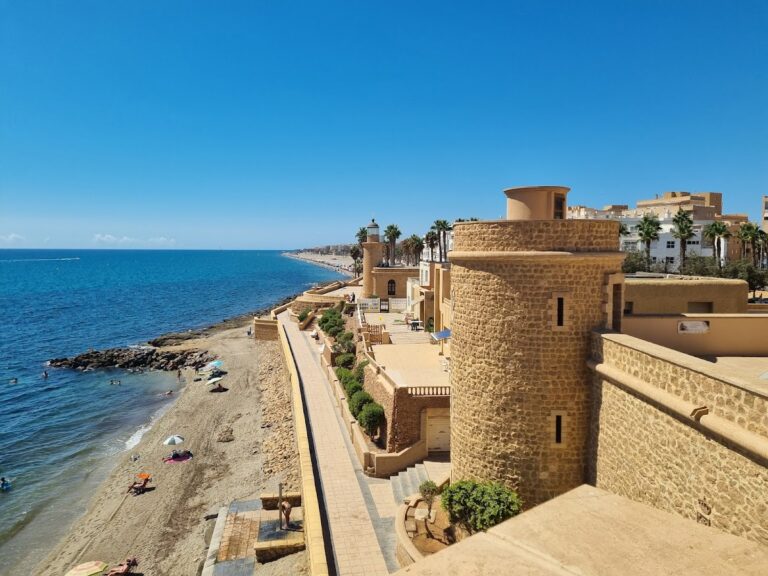
Ribera de la Algaida is a coastal archaeological settlement at Aguadulce, in Roquetas de Mar, Almería, Spain. Occupation continued for about 5,000 years, from the Copper Age, which preceded the Bronze Age, through the twelfth century. The settlement passed through prehistoric, Iberian, Roman, and medieval Muslim phases.
Prehistoric and Iron Age occupation
Communities of the Argaric culture, a Bronze Age society of southeastern Iberia, were followed by settlements of the middle and late Bronze Age. Early Iron Age communities and later Iberian settlements also occupied the area.
Roman settlement and prosperity
Roman occupation began during Rome’s republican period. Turaniana prospered most under the early Empire, from the first to the third centuries CE, as an important anchorage and commercial centre. It may have formed a district of Murgis, an ancient city in the present-day Almería region. Turaniana also appears in the Antonine Itinerary, an ancient list of Roman roads and the places along them, probably compiled in the third century.
Medieval fishing village
In the medieval period, the settlement became a fishing village known as Al-Binyans or Al-Pechiniz. Its occupied area contracted and became concentrated around the coastal tower. Occupation at Ribera de la Algaida continued into the twelfth century.
Rediscovery, research, and protection
Antiquities collector Miguel Ruiz de Villanueva brought the site to attention in 1859, and writers from La Crónica Meridional visited in 1891. Work by the Unión Salinera company in 1958 exposed prehistoric remains. On 17 September 1991, Ribera de la Algaida received Spain’s Asset of Cultural Interest designation as an archaeological zone, a protected category for archaeological remains. Excavations followed in 1996.
In 2004, a wastewater pipeline serving Aguadulce was laid through the archaeological site. A few months later, the pipeline route was used as a dumping ground, prompting a complaint from the regional Culture Delegation.
Remains
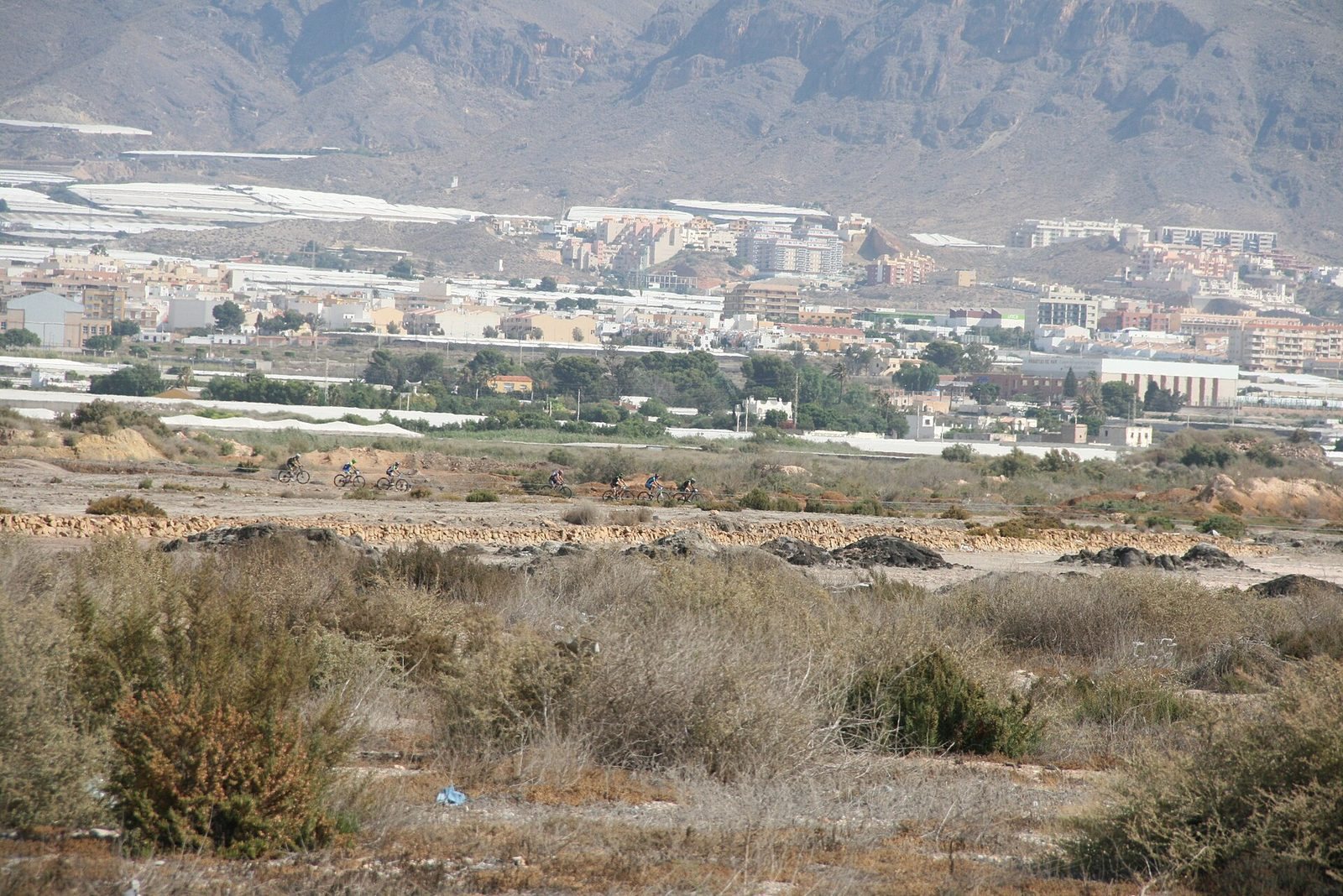
The archaeological area covers approximately 12 to 13 hectares along the coast, near the natural anchorage of Puertezuelo de Los Bajos. The Roman town followed a broad axis along the old road to Almería, with streets set at right angles to it. Its walls were built either from rubble stone bonded with mortar or from compacted earth.
Buildings
Surviving architectural material includes column shafts and capitals, dressed stone blocks, thresholds, and painted stucco from houses. These remains give evidence of the settlement’s built fabric.
Coastal and agricultural remains
Evidence of cereal and olive mills has been found along the coast and to the south of the settlement. Finds from these areas also indicate fishing activity.
Pottery and other finds
Prehistoric pottery includes a fragment of a bell-beaker vessel associated with the late Copper Age and the transition to the Middle Bronze Age, in connection with the Argaric culture. Finds from the western part of the site include Iberian pottery and large jars with multicoloured decoration; a small number of Iberian remains are also attributed to the Roman period. Roman pottery includes Campanian ware, associated with Italy’s Campania region, and terra sigillata, fine Roman pottery with a red surface. Bronze sculptures and glass vessels are associated with the settlement’s later Roman decline.
Burial grounds
Excavations in 1993 recovered medieval burials and pottery. A publication by Spain’s national historical research academy, the Royal Academy of History, placed a burial ground west of the settlement and gave the site’s extent as 1 by 2 kilometres. This western burial ground is distinct from a second burial ground, discovered in the northern part of the site in 2003 and later destroyed during urban development.
Torrequebrada tower
Torrequebrada, also known locally as Torre de los Bajos, was a coastal tower built around the fourteenth century during Nasrid rule. The Nasrids were a Muslim dynasty that ruled the Emirate of Granada in the later Middle Ages. Before the tower was demolished in 1962, it had a roughly square plan of about 6 by 6 metres, walls approximately one metre thick, and a height of about three metres. Its construction used rubble masonry, with compacted earth or brick in different areas.