Mozzanica Palace: A Fifteenth-Century Lombard Palace
Site at a Glance
- Country
- Italy
- Primary era
- Medieval
- Eras represented
- Medieval
- Civilizations
- Unclassified
- Site type
- Domestic
- Remains
- Elite Residence
On this page6 sections
History
Quattrocento construction
Mozzanica Palace, also known as Varesi Palace, is a palace in Italy built in the second half of the fifteenth century. It is regarded as one of the principal works of Lombard civil architecture of the Quattrocento, the Italian term for the fifteenth century. Count Lorenzo Mozzanica, a relative of the Vignati family, commissioned and financed the building over the foundations of a small fourteenth-century castle belonging to the Vignati of Lodi.
The palace follows a plan common to buildings of the Sforza period, the era of Sforza rule in Milan, especially palaces dating from 1480 to 1490. No precise record identifies its designer. Comparisons with other buildings have led to an attribution to Giovanni Battagio, an Italian Renaissance architect associated with Lodi, particularly for the ground floor.
Later history and use
Historian Giovanni Agnelli records that Francis I stayed at the palace in July 1509, before becoming king of France in 1515. The building is now used as offices.
Remains
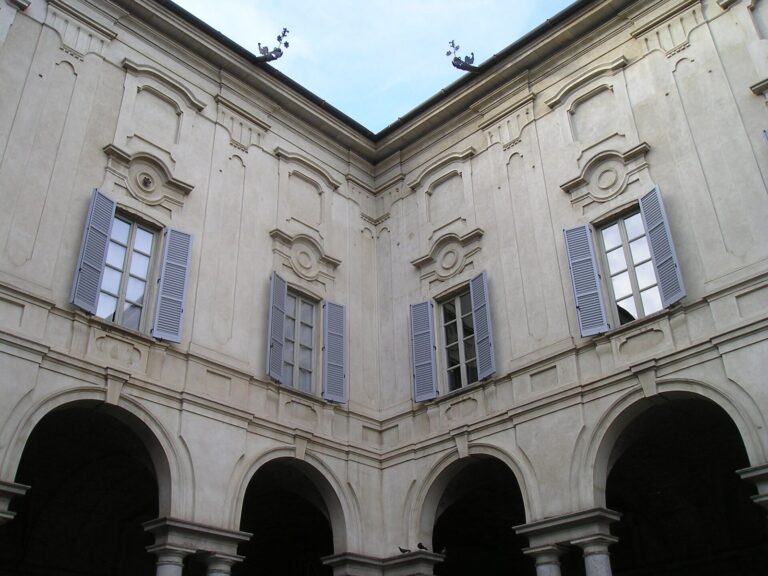
The palace combines a brick exterior with a rectangular courtyard and a portico running along two adjacent sides. Terracotta and carved stone provide much of its exterior decoration, while the courtyard and upper floor retain architectural and painted features.
Facade and portal
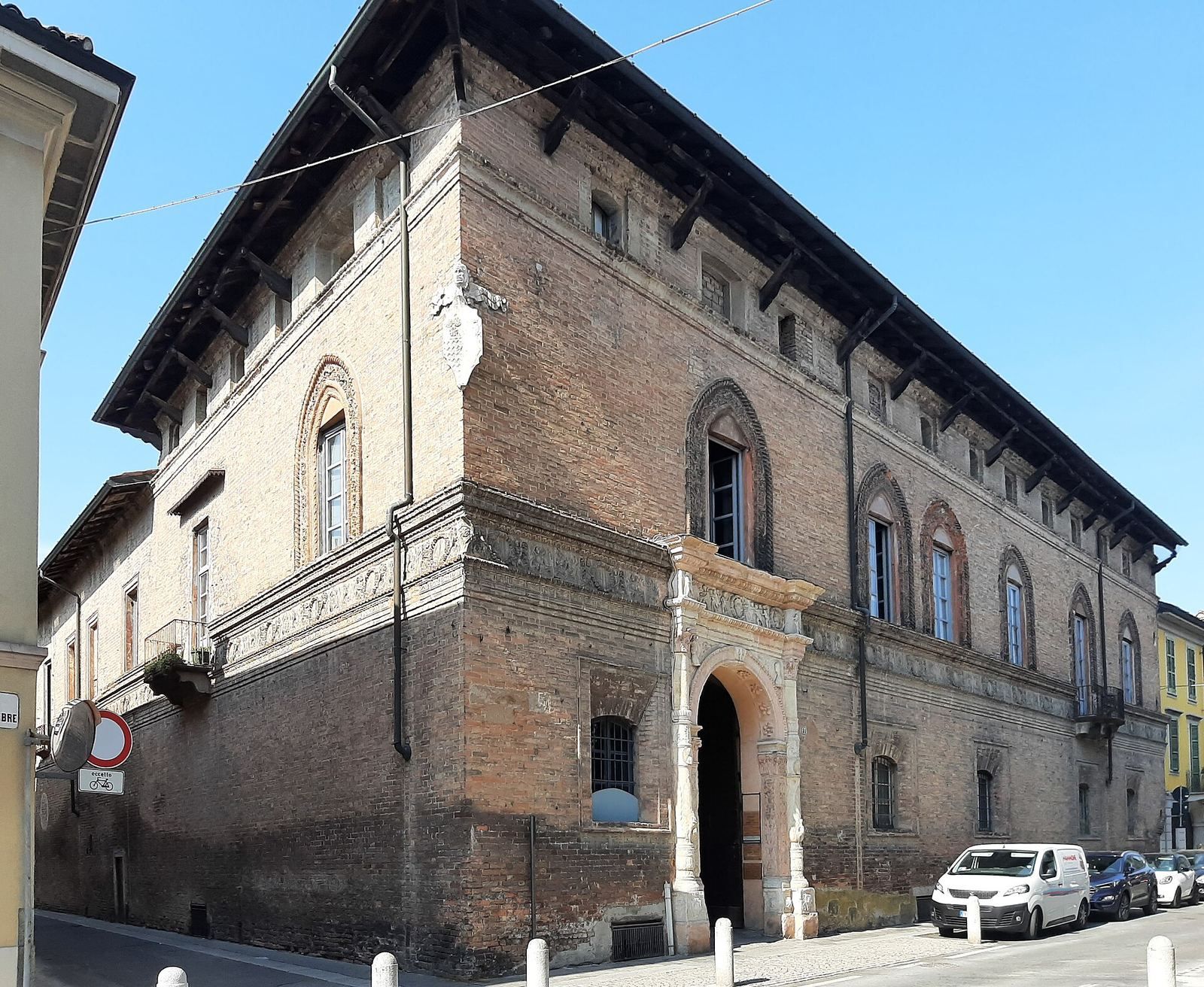
The imposing brick façade is divided horizontally by a terracotta band. Its molded ornament includes garlands, fighting tritons, or sea beings, and naiads, or water nymphs. Pointed-arch windows on the upper floor have terracotta decoration, and a large marble coat of arms is set at one corner of the building.
The stone portal has arches of white and pink marble and is flanked by columns shaped like candelabra. Floral carvings decorate the entrance, alongside four medallions. They portray Gian Galeazzo Visconti, a late-fourteenth-century ruler of Milan; Isabella of Aragon, a Neapolitan princess and duchess of Milan; Francesco Sforza, duke of Milan and founder of the Sforza dynasty; and Bianca Maria Sforza, a member of the ruling family who later became Holy Roman Empress.
Courtyard and interior
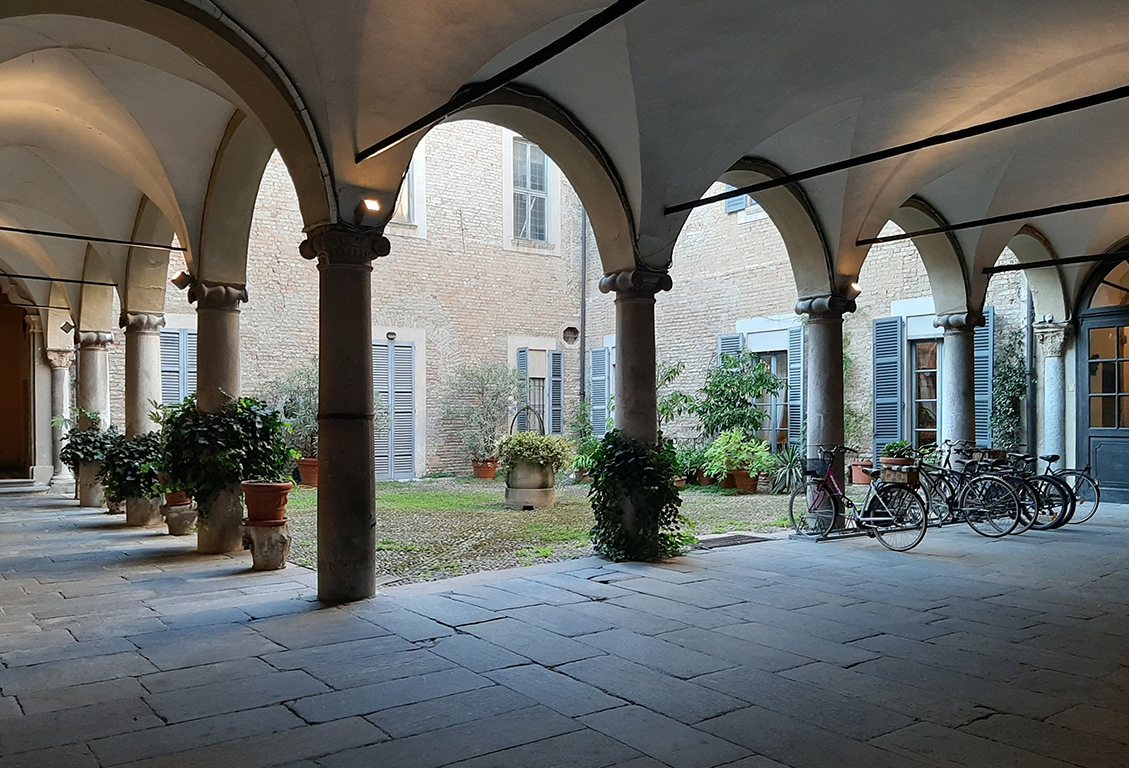
The rectangular courtyard has a portico along two consecutive sides. Its columns carry Ionic capitals, the scroll-decorated tops of columns in the Ionic order, and bear the Vignati family emblem. Numerous frescoes, or paintings made on plaster, decorate the interior of the upper floor.