Mouse Fort: A Fort in the Defenses of Muiden
Site at a Glance
- Country
- Netherlands
- Primary era
- Modern
- Eras represented
- Modern
- Civilizations
- Dutch
- Site type
- Military
- Remains
- Fort
On this page6 sections
History
Construction and military use
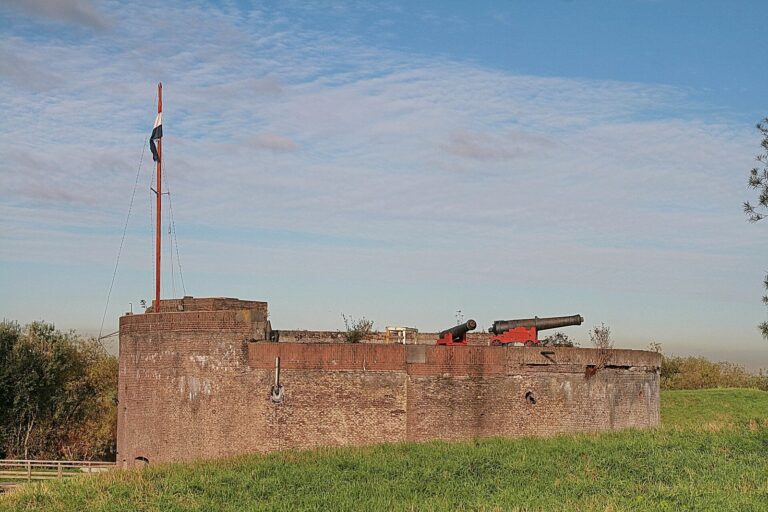
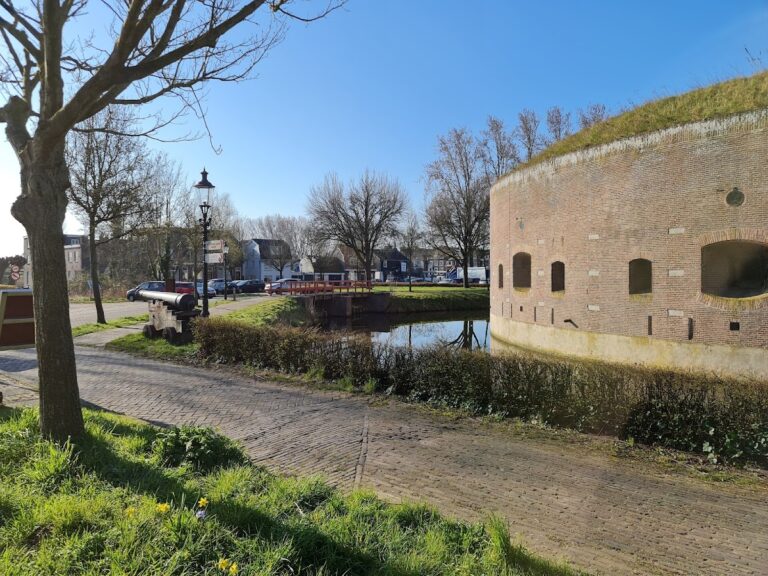
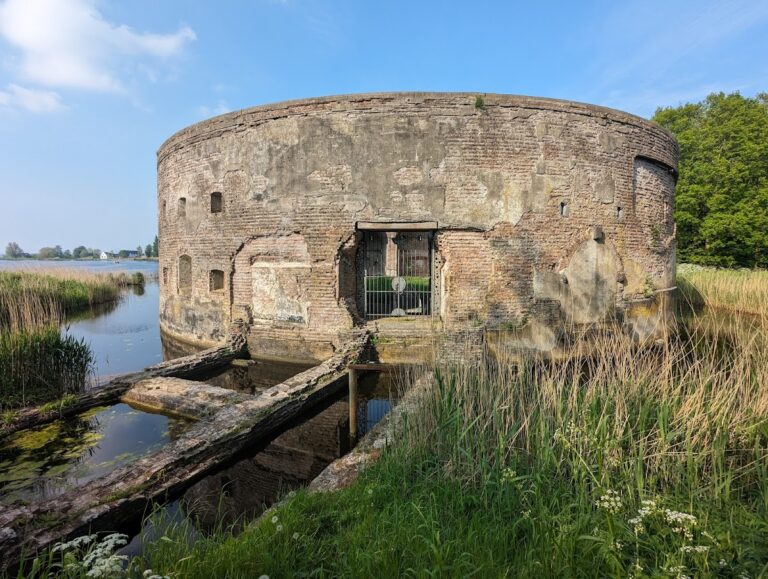
Mouse Fort is a fort at Muiden in the Netherlands, built between 1874 and 1877 as part of the town’s defenses and the Stelling van Amsterdam, a defensive ring of forts around Amsterdam. It guarded passages via the Zeedijk and the Naardertrekvaart.
About 100 military personnel occupied the fort during the 1914-1918 mobilization. A popular explanation connects its name to the mouse-gray uniforms worn by Dutch troops during the 1939-1940 mobilization, although the name is probably older. As the Second World War approached, the fort was reinforced and garrisoned.
Civilian use and heritage status
The Ministry of Defence released the fort in 1973. It became a youth center for about ten years, then stood empty after 1983. The local chapter of the Christian Democratic Appeal, a Dutch political party, proposed using it as Muiden’s town hall in 1987, and a similar proposal followed in 1990. The fort was restored that year and returned to use as a youth center.
From 1997, the local historical society Historische Kring Stad Muiden was based there, alongside offices for creative businesses. The Muider Muizenfort Museum operated in the fort from 2007 to 2015. Mouse Fort is a national monument and part of a UNESCO World Heritage property recognized for its importance to humanity.
Remains
Main fort and water system
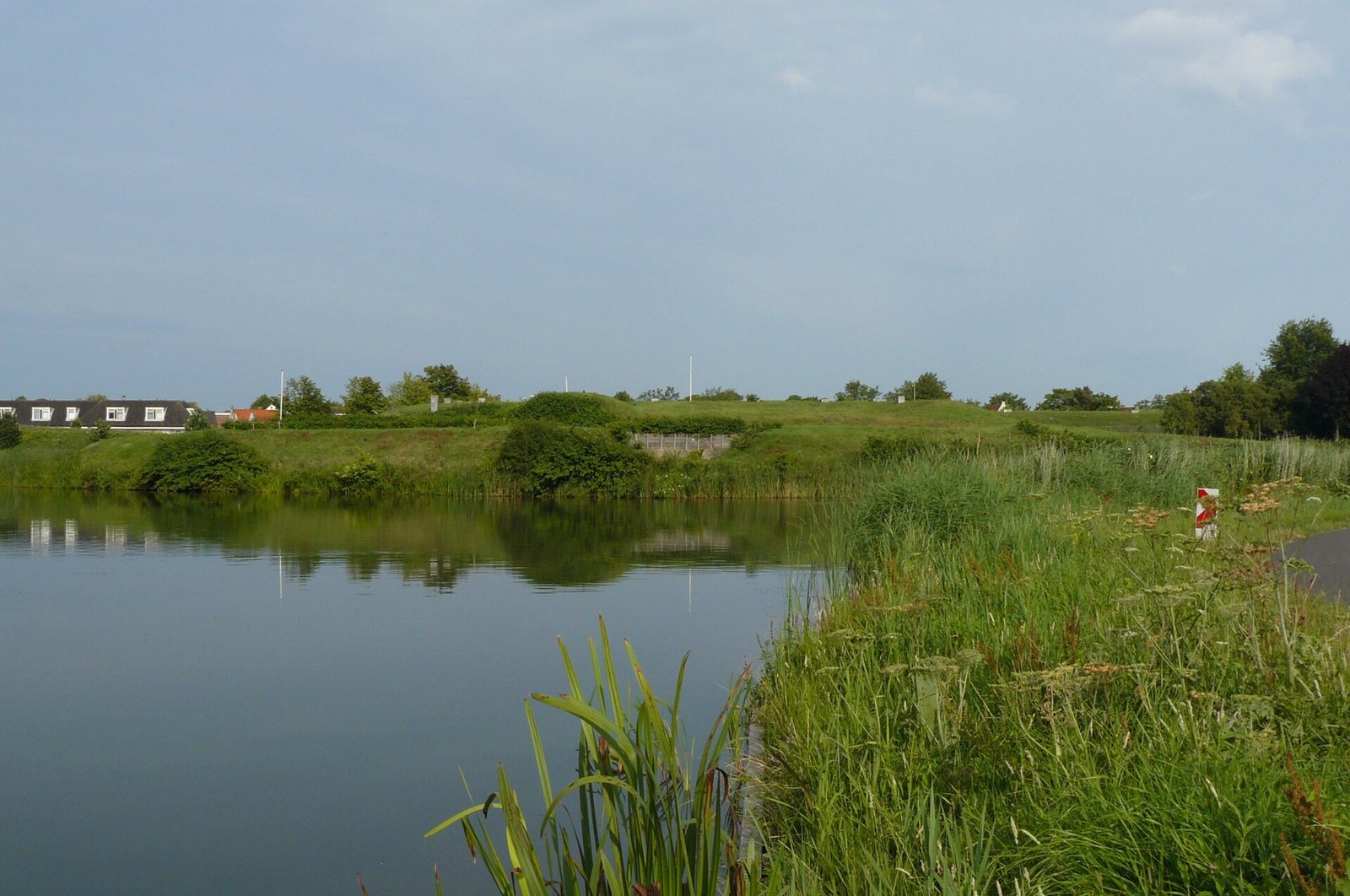
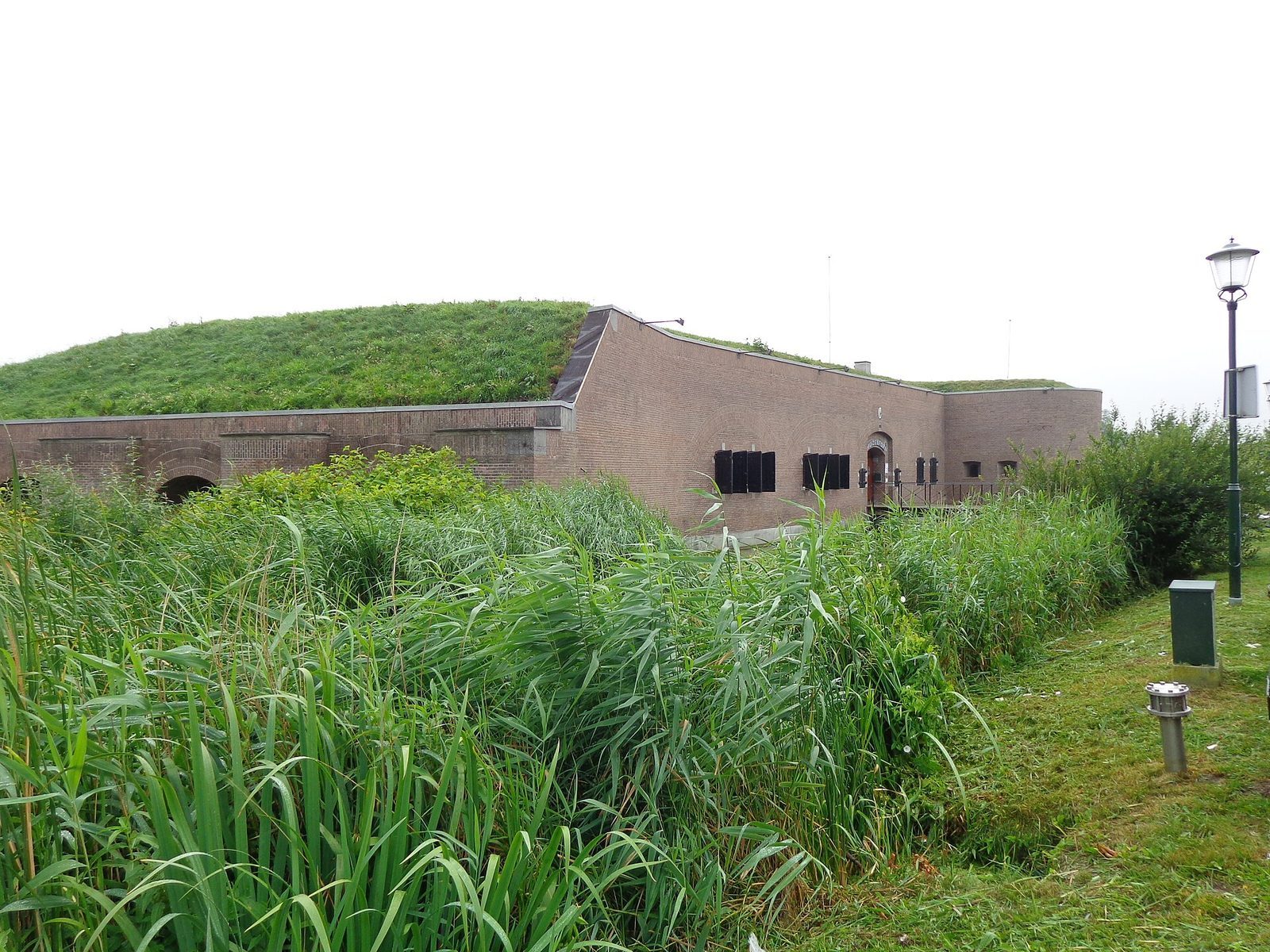
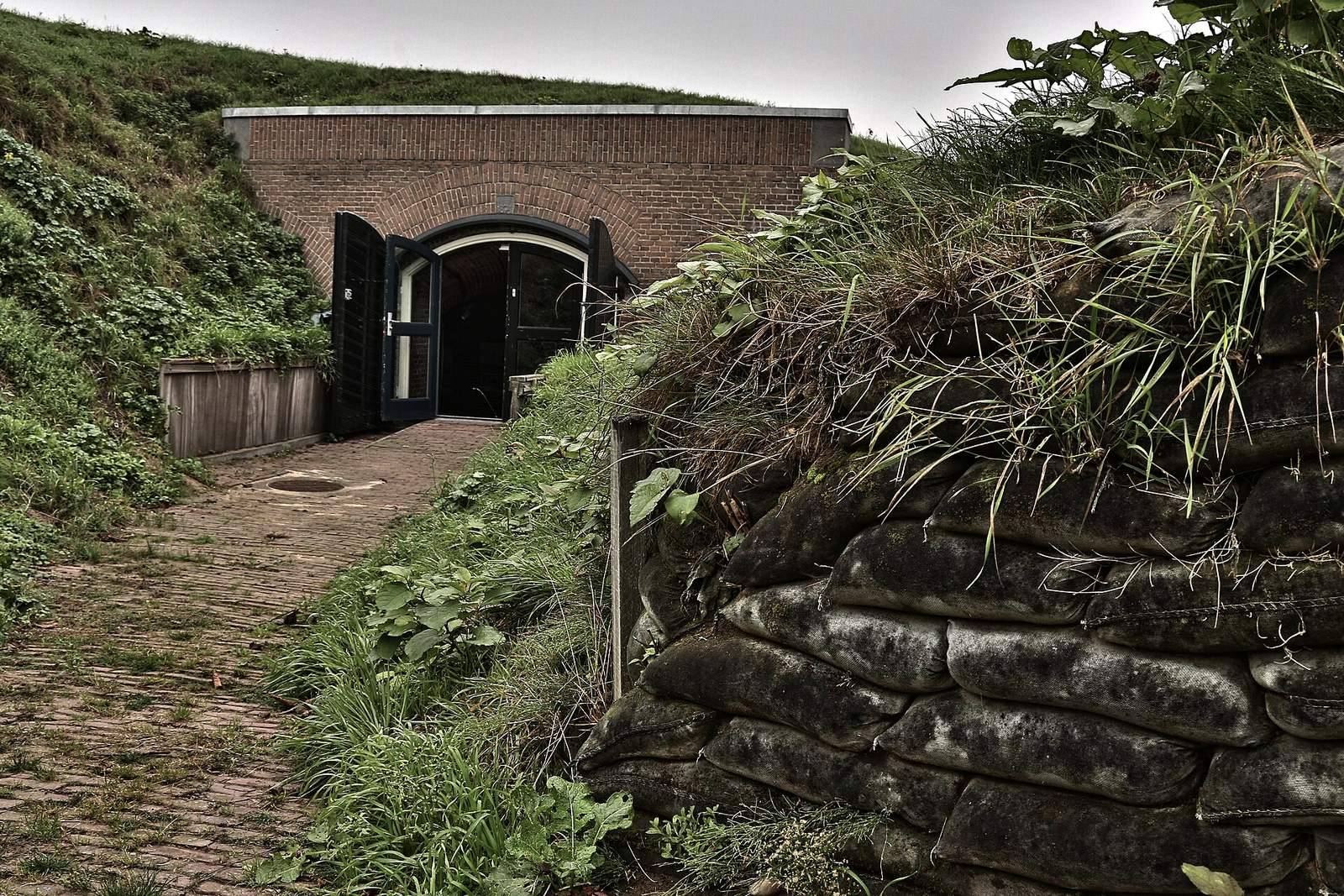
The brick fort is a caponniere, a protected position for firing along a fortification ditch, set on the ravelin, an outwork in front of a fortification, at Naarderpoort. It has nine large rooms, including two principal artillery casemates, protected gun chambers, each with three embrasures, or openings through which guns fire. The guns could cover bridges, the dike, and the canal. Other rooms served as crew quarters, a guardroom, a kitchen, an officers’ room, and storage for food and gunpowder. Sand covers the eastern side, reducing the effects of shell impacts and filtering rainwater. Downpipes carried the filtered water to a reservoir beneath the fort, intended to supply drinking water if an enemy poisoned the moat. From the Naardertrekvaart, the fort blends into the landscape and is difficult to see.
Front defensive structures
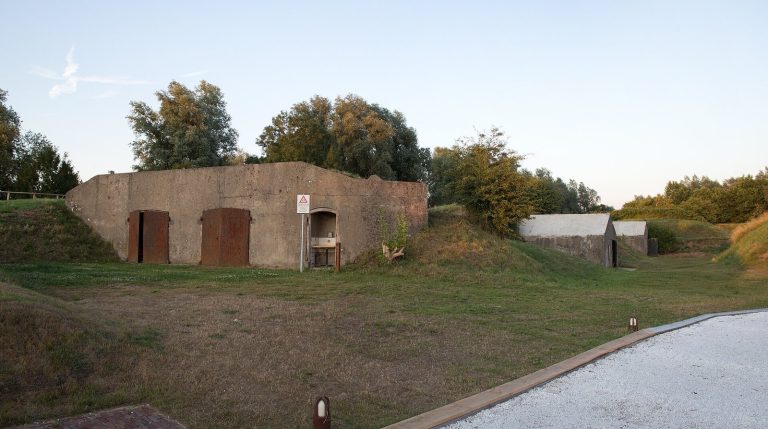
A heavy concrete Group Shelter Type P stands at the front of the fort. Beside it, the Type G cupola casemate, a protected gun chamber with a raised steel cover, housed a heavy machine gun aimed toward the Naardertrekvaart and adjoining road. The German army removed the cupola during the Second World War, leaving a large opening. During the museum’s operation, trenches in the forecourt provided access to both structures.