Mosynopolis: A Byzantine City and Episcopal See in Greece
Site at a Glance
- Popularity
- Medium
- Country
- Greece
- Primary era
- Medieval
- Eras represented
- Classical, Medieval
- Civilizations
- Byzantine, Roman
- Site type
- City
On this page10 sections
History
Mosynopolis is the archaeological site of a former city in Thrace, Greece. An earlier settlement occupied the area from about 30 BC to AD 300 and is associated with several recorded names, including Porsula and Pyrsoalis. In the Late Roman period, a city called Maximianopolis was founded and named for the Roman emperor Galerius Maximian. It appears in written records from the fourth century.
The city stood beside the Via Egnatia, a major Roman road across the Balkans, and its position later supported Byzantine military operations against the Bulgarians. Emperor Justinian I renewed its fortifications. Emperor Basil II also used the city as a base for his campaigns against the Bulgarians.
The episcopal see and Byzantine administration
Bishops representing the city took part in church councils held in 431, 449, 451, 459, and 553. The see was initially subordinate to the metropolitan of Traianopolis. As Traianopolis weakened, it became an independent archbishopric between 451 and 459, and it is described as archiepiscopal from the seventh through the ninth centuries. From the eighth century, the episcopal see appears under the name Mosynopolis, although Maximianopolis remained in use for the city into the ninth century. Misinopolis and Misinoupolis were other recorded forms.
From the tenth to the twelfth centuries, the see was a suffragan diocese under the metropolitan of Traianopolis. It became a Latin bishopric in the thirteenth century. In the eleventh century, Mosynopolis was the center of a bandon, or smaller district, within the Byzantine thema of Boleron, a provincial military-administrative region. The Byzantine historian Anna Komnene wrote that many Manichaeans, followers of a religion founded by Mani with teachings distinct from orthodox Christianity, lived there in the late eleventh and early twelfth centuries.
Conquests and decline
The fourth army of the First Crusade passed through Mosynopolis in 1096. Norman forces briefly captured the city in 1185. The monk Ephrem recorded that Frederick I, Holy Roman Emperor, captured it in 1190; the following year, the Byzantine general Alexios Branas was stationed in the area.
Latin forces took Mosynopolis in 1204 and granted it to the Frankish leader Geoffrey of Villehardouin. In 1207, the Bulgarians defeated Boniface I, Marquess of Montferrat and a leading figure of the Fourth Crusade, in a nearby battle. Tsar Kaloyan of Bulgaria then destroyed the city. Theodore Laskaris, emperor of Nicaea, a Byzantine successor state formed after the Fourth Crusade captured Constantinople, recaptured it in 1225. Mosynopolis declined during the thirteenth century, although by 1294 it was the capital of the Byzantine administrative district of Boleron. The bishopric was still active in 1317. A later interpretation holds that the city remained in ruins after Kaloyan’s destruction. In 1343, Emperor John VI Kantakouzenos found the city destroyed, and its inhabitants had moved to the area of modern Komotini.
Later history and excavation
In August 1347, the Patriarchate of Constantinople authorized the metropolitan of Traianopolis to exercise jurisdiction over the former see of Maximianopolis or Mosynopolis. Under Ottoman rule, the site was called Mesine Kale, meaning fortress of Mesine. In 1933, the see was nominally restored as a Latin Catholic titular archbishopric, a title for a former see without ordinary jurisdiction over its former territory. Excavations took place in 1968 and 1978, followed by further work from 1999 to 2008.
Remains
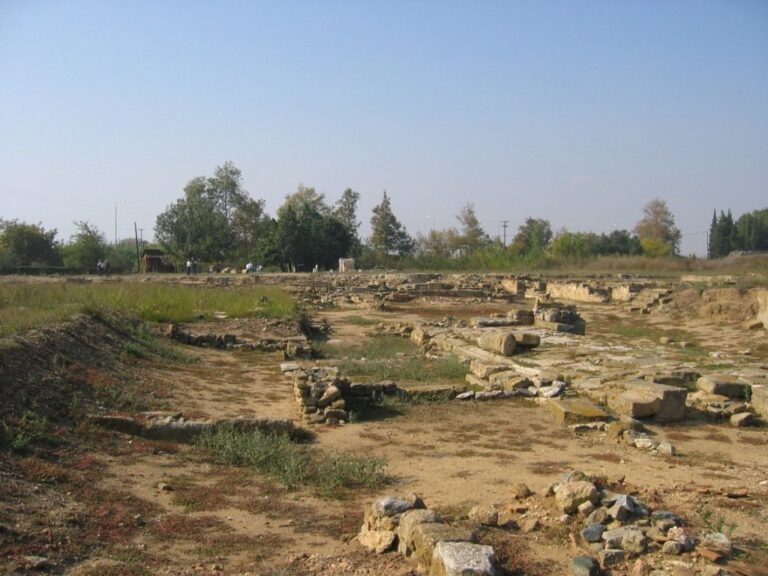
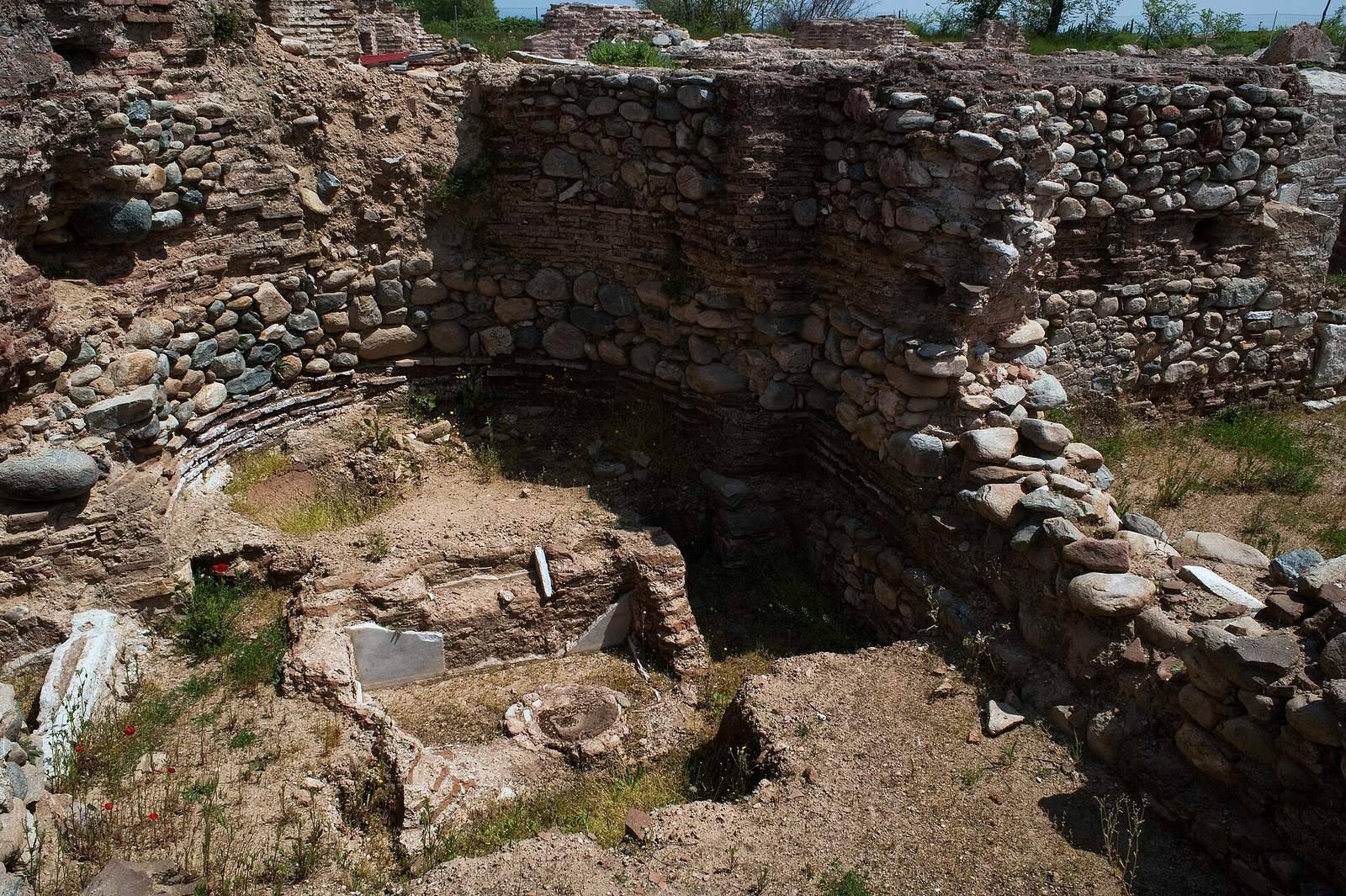
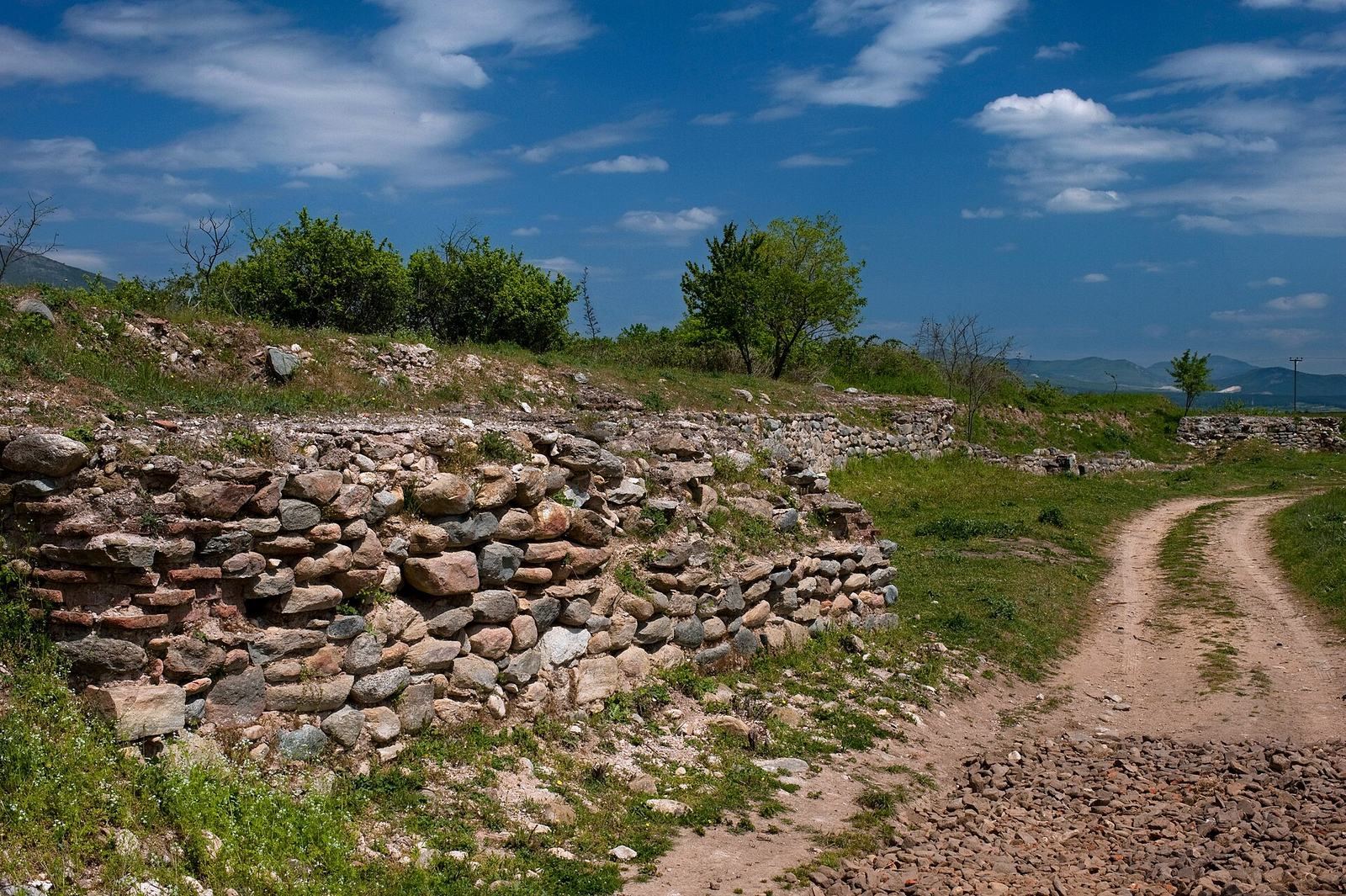
The site lies about 7 km west of Komotini and south of the village of Mishos. Its remains include a central-plan church, sections of the city walls, a fortress slightly south of the church, and burials.
Surviving structures and excavated remains
Central-plan church
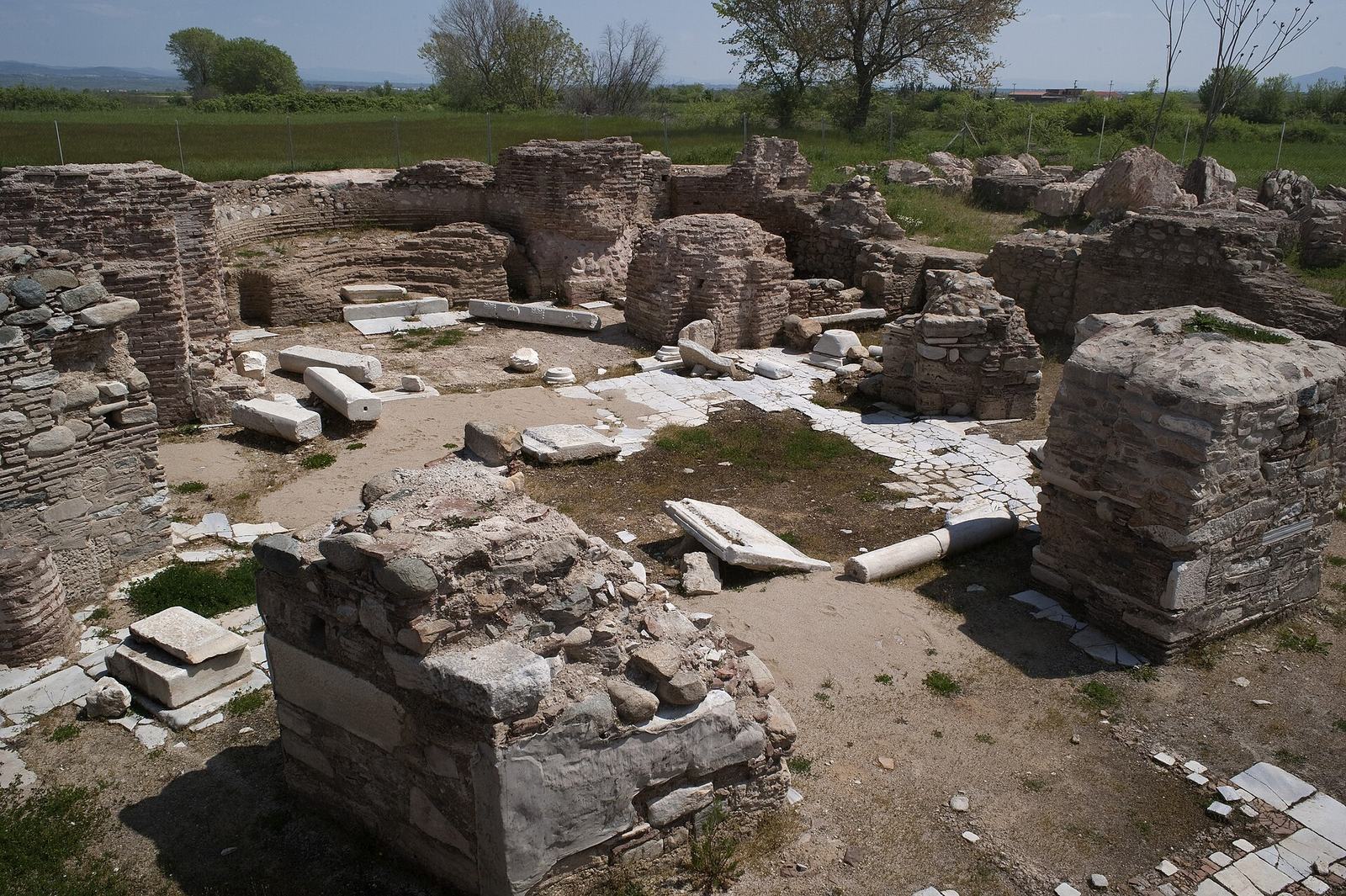
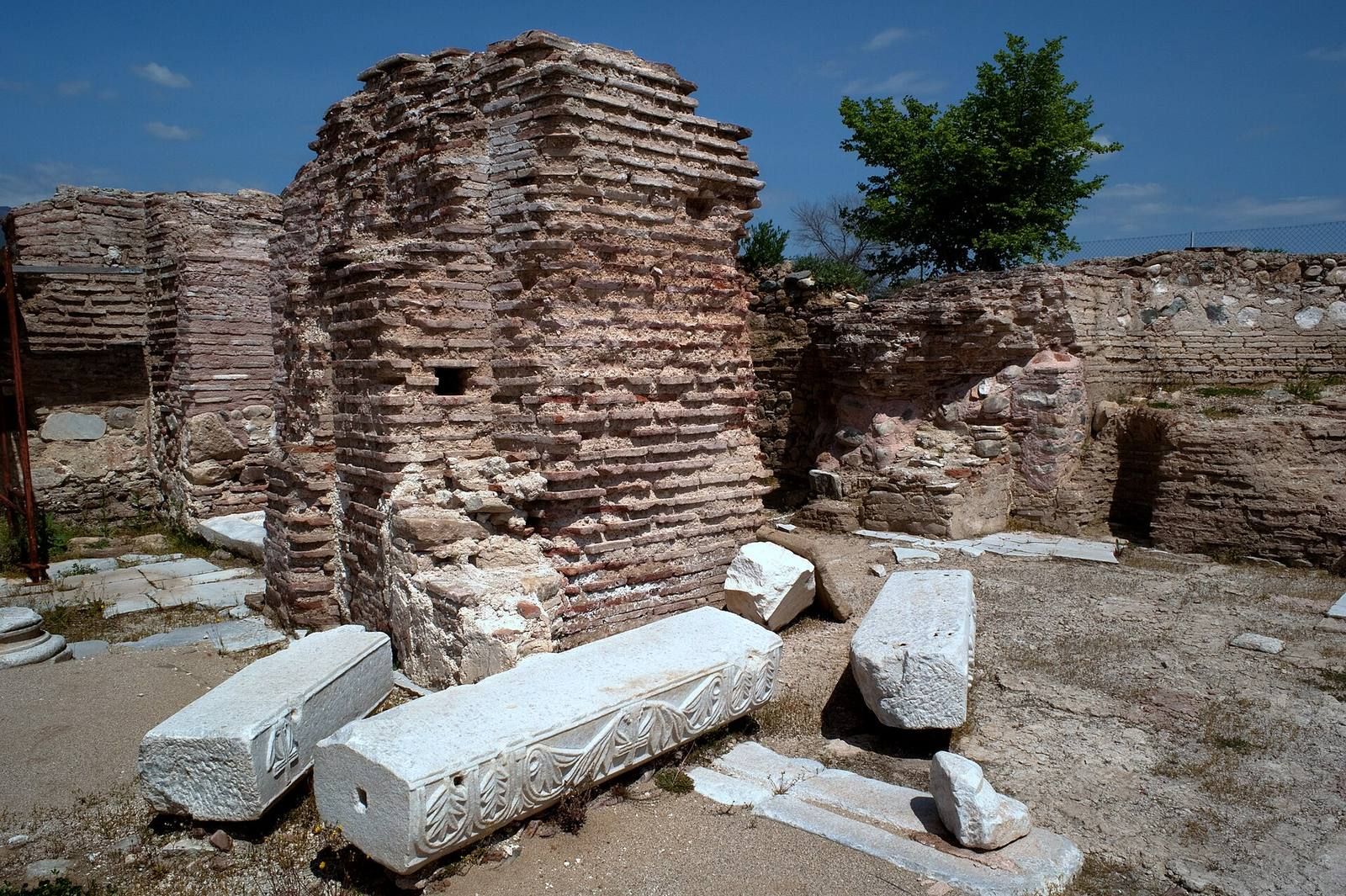
Excavations from 1999 to 2008 uncovered a Byzantine church dating from the eleventh to thirteenth centuries. Organized around a central space, it has an irregular hexagonal plan and measures approximately 20 by 35 m. It has been proposed as the city’s episcopal church. Brick was used extensively in its construction, including at the corners where structural forces were concentrated.
City walls and fortress
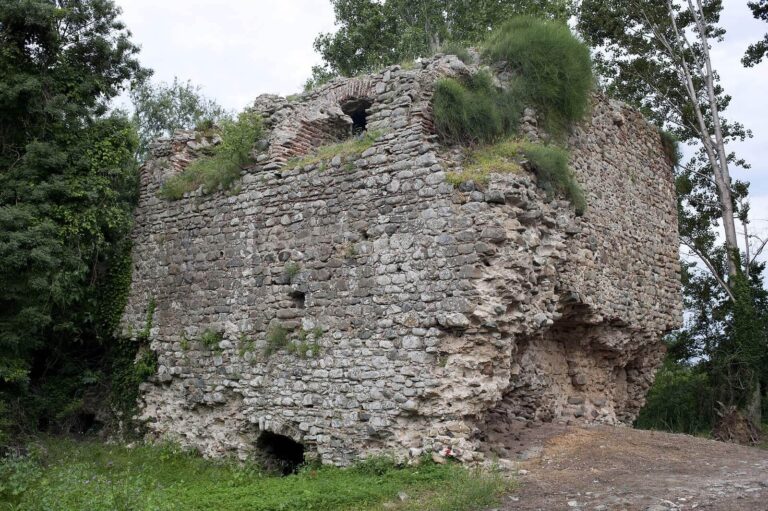
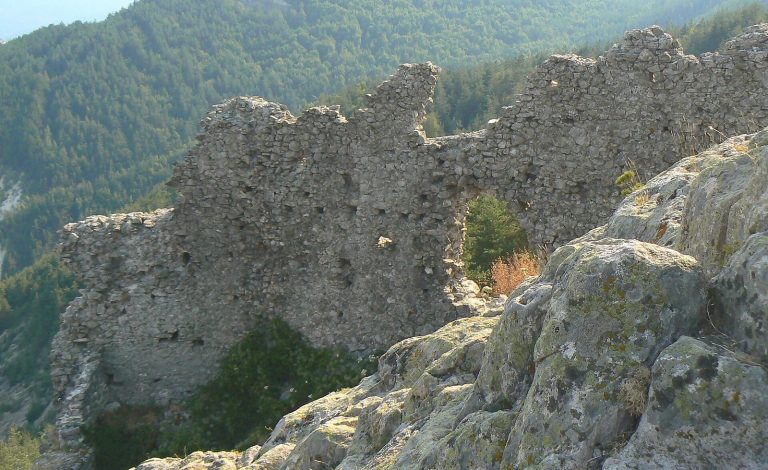
Sections of the city walls survive, along with a fortress positioned slightly south of the church.
Burials
A stone-lined cist tomb is associated with Maximianopolis, while early Christian tombs are associated with Mosynopolis. Excavations in 1968 uncovered 20 built cist-type tombs and one hut-shaped tomb. In 1978, excavators found 14 children’s burials: seven hut-shaped tombs, one pit grave, and six large burial jars.
Coins and vessels
Excavations around the church recovered 150 coins and Byzantine glazed vessels, all dated to the eleventh through thirteenth centuries. Archaeological finds from the site are kept at the Archaeological Museum of Komotini.