Kozel Kurgan: A Scythian Royal Burial Mound
Site at a Glance
- Popularity
- Low
- Country
- Ukraine
- Primary era
- Classical
- Eras represented
- Classical
- Civilizations
- Scythian
- Site type
- Burial
- Remains
- Burial Mound
On this page8 sections
History
Kozel Kurgan is a Scythian royal burial mound near Novooleksandrivka in Ukraine, with a burial complex dating to the second half of the fourth century BCE and associated with a member of a Scythian king’s family. The Scythians were an ancient people whose societies occupied parts of the Eurasian steppe. The mound’s design and finds place it in the same period as Chortomlyk, another major Scythian burial mound.
Royal burial and funerary practices
The burial complex reflects the burial customs of Scythian elites. The horse burials are understood in light of Scythian beliefs that horses would accompany their owners into the afterlife. The human burials beside the horses were probably those of grooms.
Excavation and interpretation
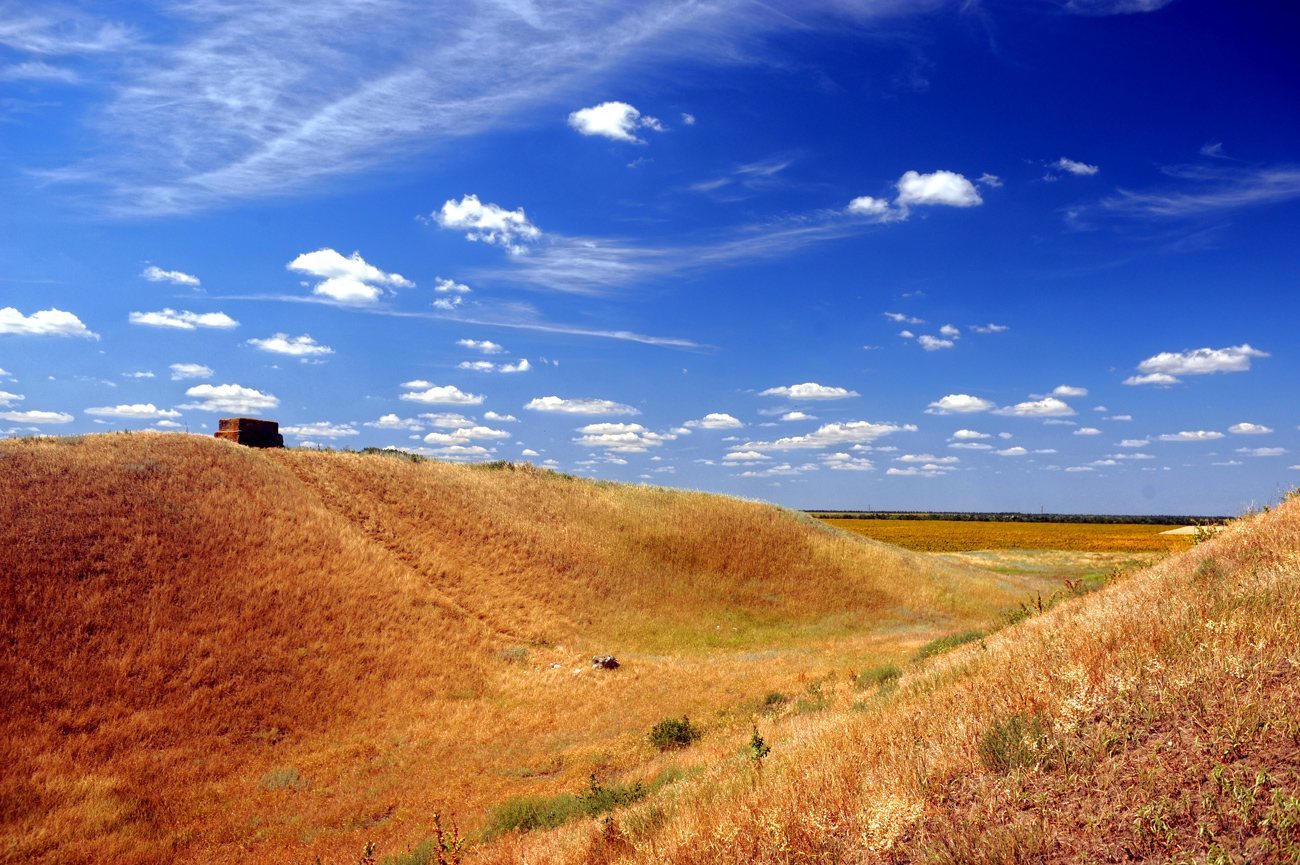
I. E. Zabelin, a nineteenth-century Russian historian and archaeologist, began excavating Kozel in 1865. His trench exposed the central burial complex, which he compared with the arrangement at Chortomlyk. The mound was only partly excavated, and the central burial had already been looted.
The excavation could not establish the full funerary rites. Valuable objects may have been placed around the burial or elsewhere within the mound, as at Chortomlyk. Side tombs were also considered a promising possibility: archaeological experience suggested that a mound of this height was unlikely to contain only one human burial, and that rich, undisturbed burials often lay in lateral tombs.
Remains
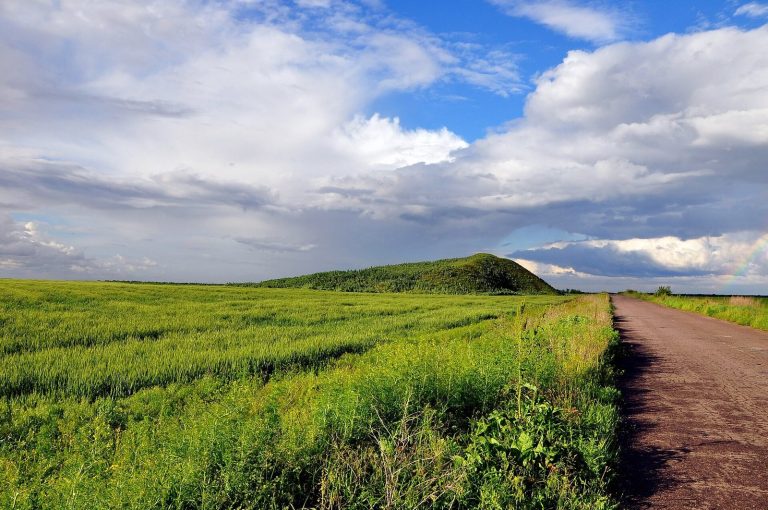
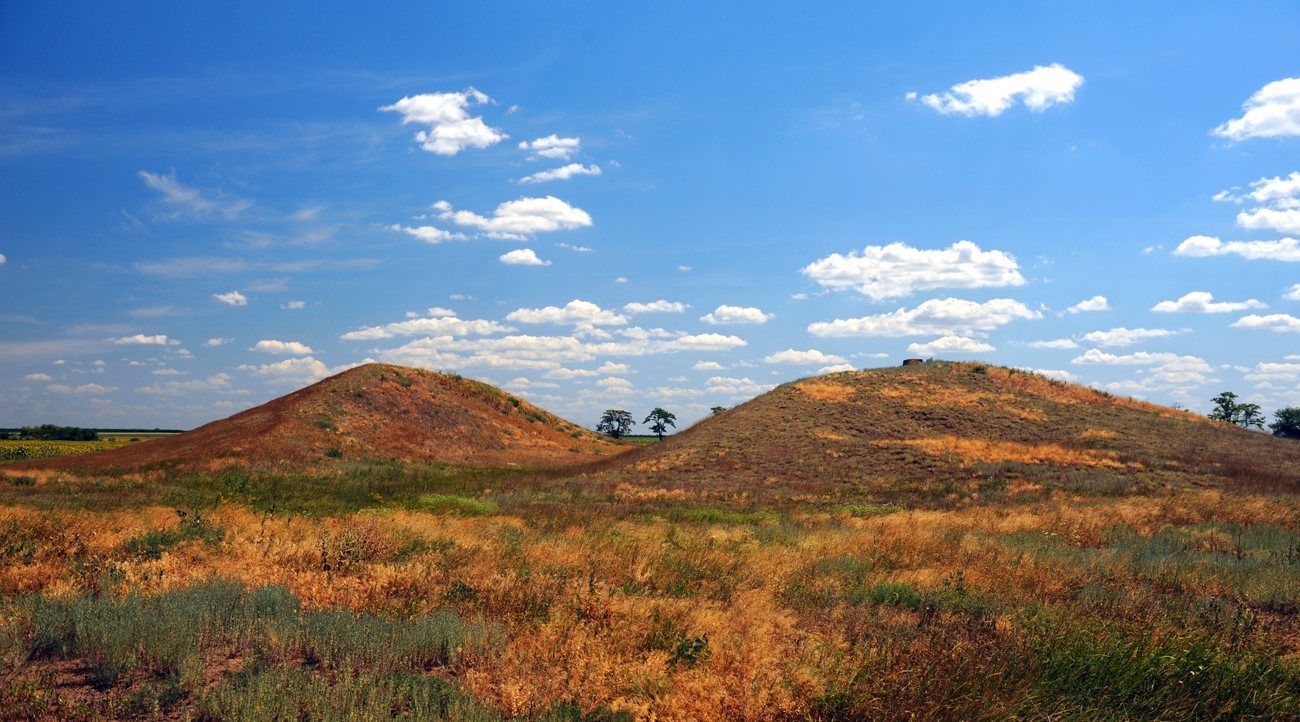
The site is organized around a large burial mound and its central tomb, with separate horse and human graves nearby. The mound, about 1 km south of Novooleksandrivka in Ukraine’s Kherson region, originally stood 14 m high, measured about 320 m in circumference, and had an estimated volume of 36,000–40,000 cubic metres.
Central burial complex
A shaft 9.6 m deep led down to four burial chambers positioned at its corners. A passage cut into the mound’s northern side also led into the central burial. Finds from the looted tomb included human bones, corroded iron fragments, pottery, several gold buttons, and a round gold plaque. The plaque depicts the profile of Athena, an ancient Greek goddess, wearing a helmet, with a lion mask behind her.
Graves beside the central complex
Horse grave
West of the central complex, a pit covered with timber was divided into three compartments and held the remains of 11 horses. Five had bronze bridles and six had silver ones. Three horses also had saddle remains, including gold plates that decorated the front and rear saddle bows. Most of the bridle sets shared a design: engraved browbands with sculpted animal heads, decorated cheekpieces bearing bird designs, round plaques with loops on their backs, and spacers shaped like cut-off cones. Other pieces included silver plaques arranged as four animal heads around a raised centre, a bronze browband with a horse’s head, and neck and chest ornaments on two horses. Those ornaments combined flat circular and crescent-shaped plaques with bells linked by iron chains.
Human burials
Two human burials lay on opposite sides of the horse grave. Their wooden-board covers were painted red and blue. Associated finds included iron knives with bone handles, bronze arrowheads, and an iron buckle.