Ancient Abdera: A Greek Colonial City in Thrace
Site at a Glance
- Popularity
- Very High
- Country
- Greece
- Primary era
- Classical
- Eras represented
- Iron Age, Classical, Medieval
- Civilizations
- Ancient Greek, Byzantine, Roman
- Site type
- City
On this page14 sections
History
Ancient Abdera was a Greek colonial city on Cape Balastra in Greece, first established in the seventh century BC. Its strategic position between coastal shipping routes and inland Thrace supported centuries of trade and political importance.
Greek foundations and prosperity
Local legend attributed Abdera’s founding to Heracles, who was said to have named it for his companion Abderus, killed by the horses of Diomedes. A Phoenician settlement may have preceded the Greek city, and Abdera’s early coinage followed Phoenician monetary standards. The first Greek colony came from Klazomenai under Timesios. Tradition dates it to 654 BC, while pottery places its foundation in the seventh century BC; its exact date remains uncertain. Thracians drove out the colonists within a generation, and that settlement failed.
Around 545 BC, settlers from Teos, including the lyric poet Anacreon, founded a new colony as they fled Persian power. They issued coins with designs associated with their former city. Abdera later became associated with the philosophers Democritus, Protagoras, Leucippus, and Anaxarchus, the historian and philosopher Hecataeus, and the astronomer and mathematician Bion. Its port served Persian forces campaigning in Thrace. In 480 BC, Xerxes I and his army stayed in the city. As he withdrew from Greece, the Persian king rewarded Abdera’s hospitality with a gold sword and an ornate tiara.
Abdera prospered after the Persian Wars. Its broad territory and position supported grain exports and commerce with inland Thrace and the Odrysian kingdom. The city controlled a crossing of the Nestos River and a mountain pass north of present-day Xanthi. Its ports also served ships traveling from the Troad by way of Thasos toward Macedonian harbors. Abdera joined the Delian League, an alliance led by Athens after the Persian Wars, and paid a high tribute.
Athenian influence and Macedonian rule
During the Peloponnesian War, Abdera’s ties to Athens shifted amid internal unrest and changing alliances. By 452 BC, the city had been forced into the Athenian alliance. When that alliance dissolved in 411 BC, Abdera regained independence, but in 408 BC the Athenian general Thrasybulus brought it back under Athenian power.
In 376 BC, an invading force of 30,000 Triballi, a Thracian people, sharply reduced Abdera’s population. The Athenian general Chabrias intervened to save the city. Weakened by the attack, Abdera joined the Second Athenian League the following year and remained within Athens’ sphere of influence until Philip II of Macedon captured it in the mid-fourth century BC. The city lost its independence and stopped minting coins.
After Alexander the Great’s death, control passed among the Macedonians, Lysimachus, the Seleucids, and the Ptolemies before returning to Macedonian rule. In 170 BC, during the Third Macedonian War, Rome’s conflict with Macedon, Roman forces and the army of Eumenes II of Pergamum captured and sacked Abdera. A local defender betrayed a key section of the city walls. Many inhabitants were killed or enslaved, though the Roman Senate later vindicated the Abderans.
Roman decline and Byzantine Polystylon
Under Roman rule, Abdera remained a free city, but its earlier prosperity faded. The Via Egnatia, a major Roman road across the Balkans, bypassed it. Flooding from the Nestos and undrained marshes added to the city’s difficulties. Abdera dwindled to a small Roman town and, late in antiquity, contracted to its acropolis. Archaeological evidence places its destruction and abandonment in the early fourth century AD, during the reign of Constantine I.
By the sixth century, the settlement was known as Polystylon, apparently a reference to ancient columns visible among the ruins. It had become an episcopal see by the ninth century, under the metropolitan bishop of Philippi. During the Byzantine civil war, Emperor and claimant John VI Kantakouzenos visited in 1342 and left a garrison. That year, the fleet of his opponent Alexios Apokaukos anchored in the Gulf of Vistonias. Umur Bey’s fleet came to Kantakouzenos’ aid in 1343, and the regional leader Momchil controlled the town in 1344-45. Ottoman rule began in 1373, when Polystylon was destroyed and abandoned.
Shortly before the eighteenth century, a later settlement moved north, where a locally altered form of the name Polystylon became established. Archaeological study of Abdera began in the nineteenth century. D. Lazaridis opened excavations in the southern enclosure in 1950, including work on the ancient cemeteries. Systematic excavation of the archaic northern enclosure and its cemeteries began in 1981. A conservation program launched in 1985 has continued to maintain structures uncovered by earlier work.
Remains
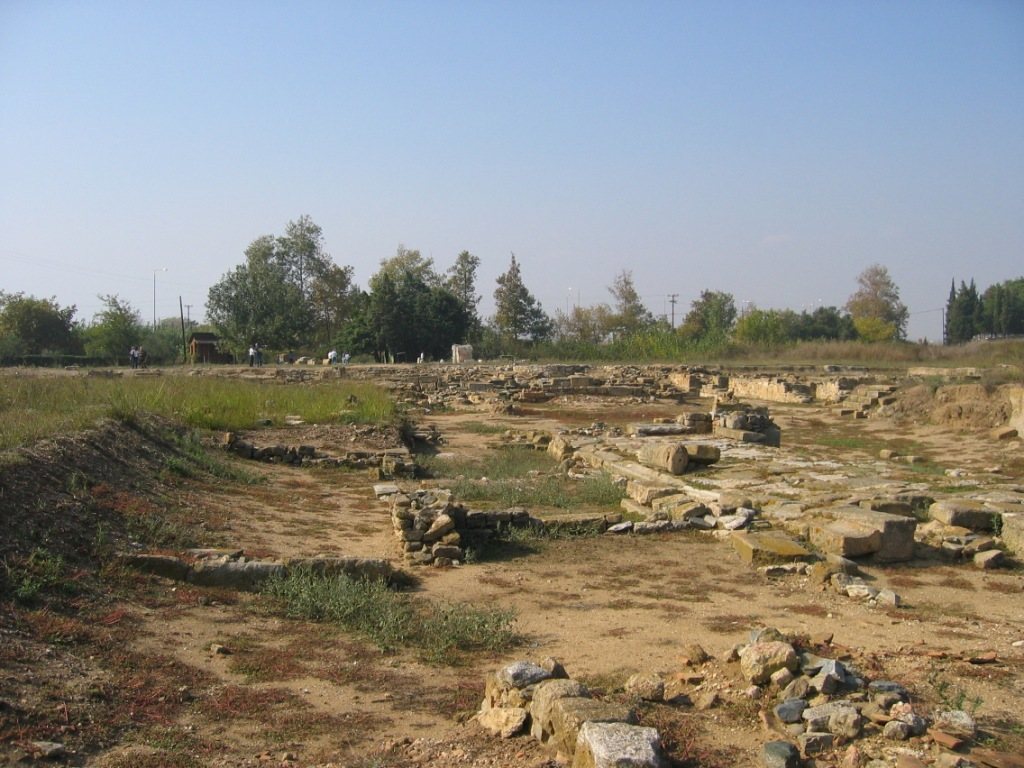
The remains extend across seven low hills on Cape Balastra, east of the Nestos mouth and near the Aegean coast, almost opposite Thasos. The ancient city lay between eastern and western harbors, while remains of medieval Polystylon occupy hills to the southwest. Excavated areas include northern and southern enclosures. A city complex built in the mid-fourth century BC followed the Hippodamian system, a planned urban layout, and included walls, an acropolis, and two harbors.
Enclosures, walls, and harbors
Enclosures and defenses
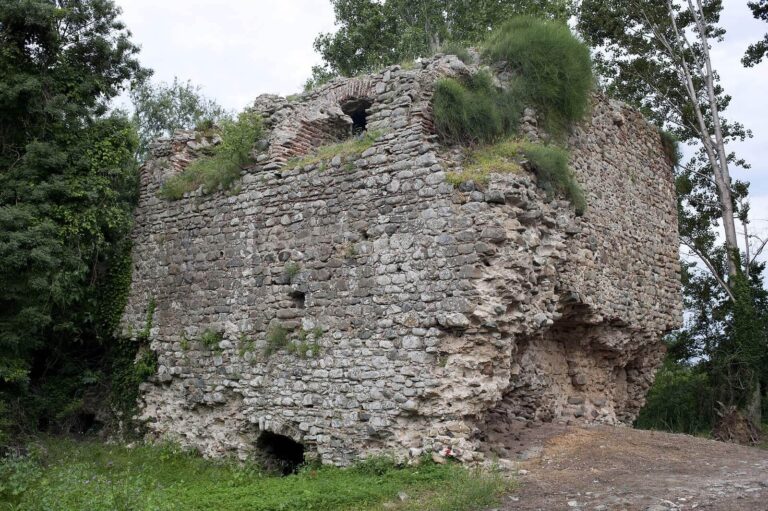
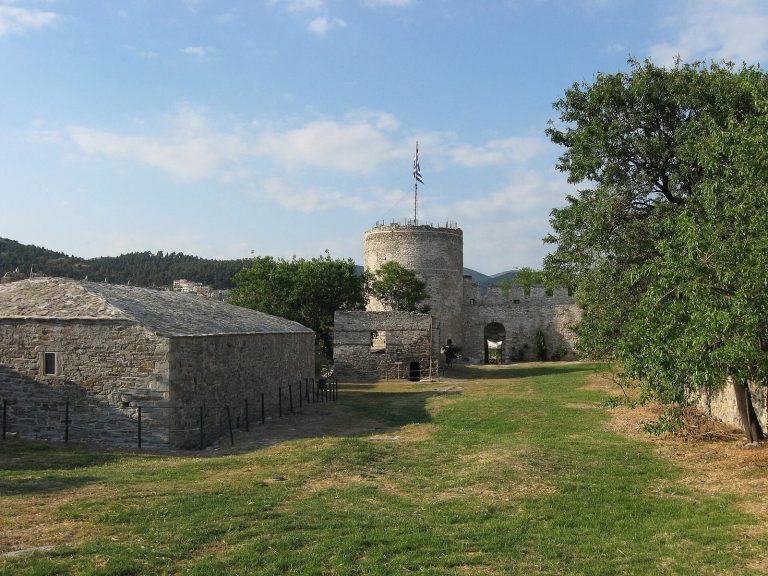
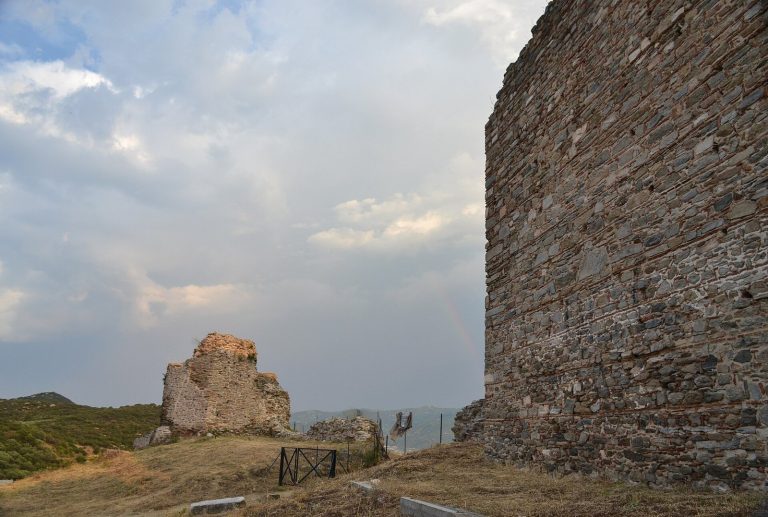
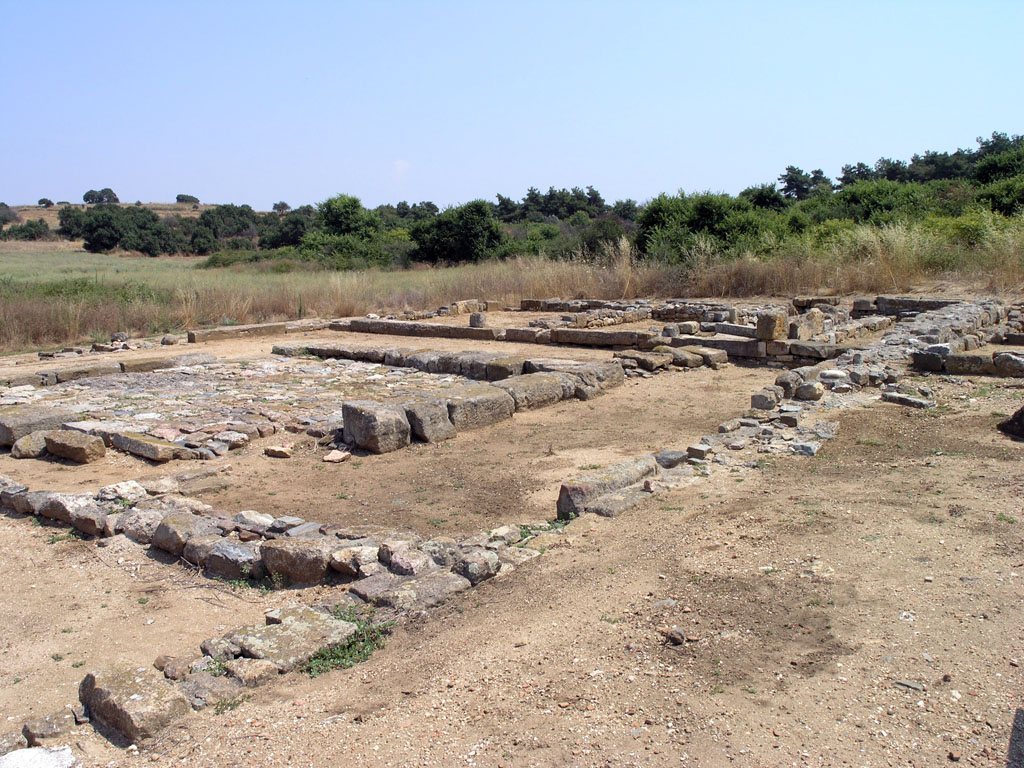
Buildings and stretches of city wall have been exposed in both the northern and southern enclosures. Surviving defensive remains include towers and gates. The western gate and the adjoining wall date to the fourth century BC.
Harbors and ship sheds
Five harbor areas have been identified. Three now lie inland, while two are on the present shoreline. The remains also include ship sheds and sanctuaries, features of the ancient city’s waterfront and religious landscape.
Homes, production, and public buildings
Early houses and cemeteries
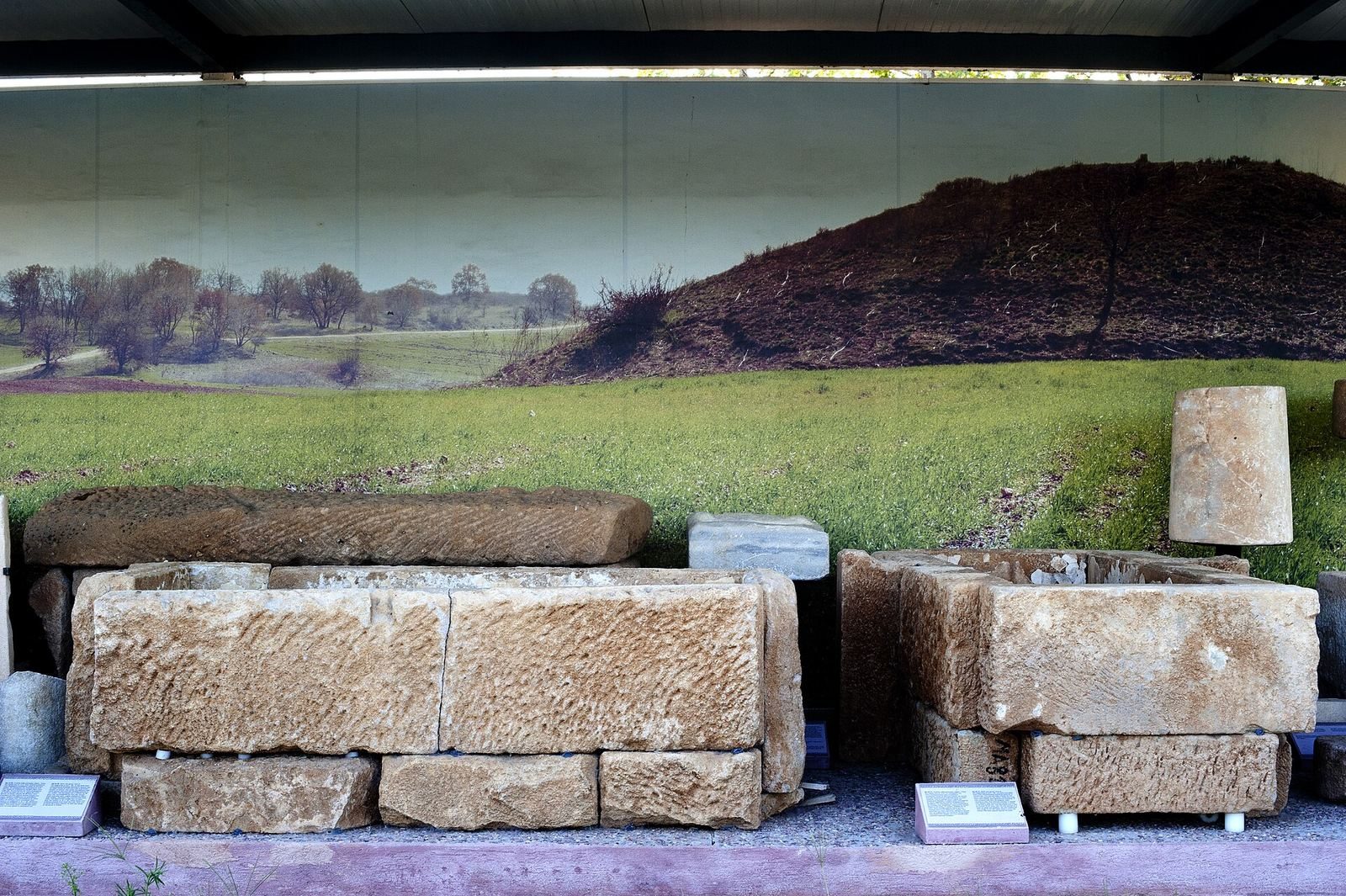
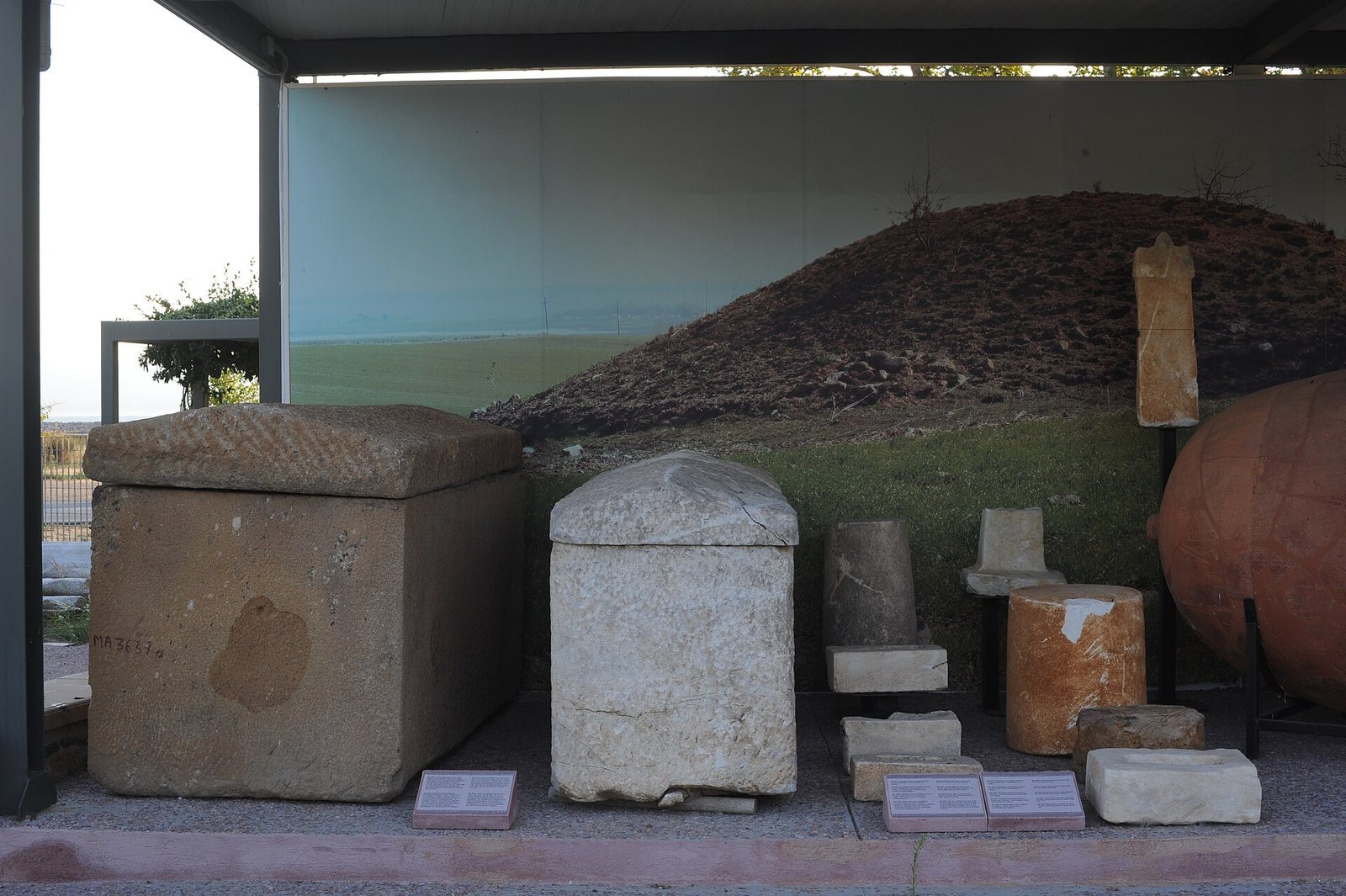
Archaic-period remains include houses and a sanctuary. Cemeteries from the Archaic and Classical periods have also been excavated.
Roman residences
One Roman-period house is arranged around a paved courtyard ringed by columns, with rooms opening around it. A separate residential complex of the same period stands on St Panteleimon Hill.
Workshop and Dolphin House
The terracotta-figure workshop was a residential complex also used for craft production. The Classical-period Dolphin House has a mosaic floor decorated with dolphins.
Theater and baths
Other identified public structures include a theater and Roman baths.
Excavated finds
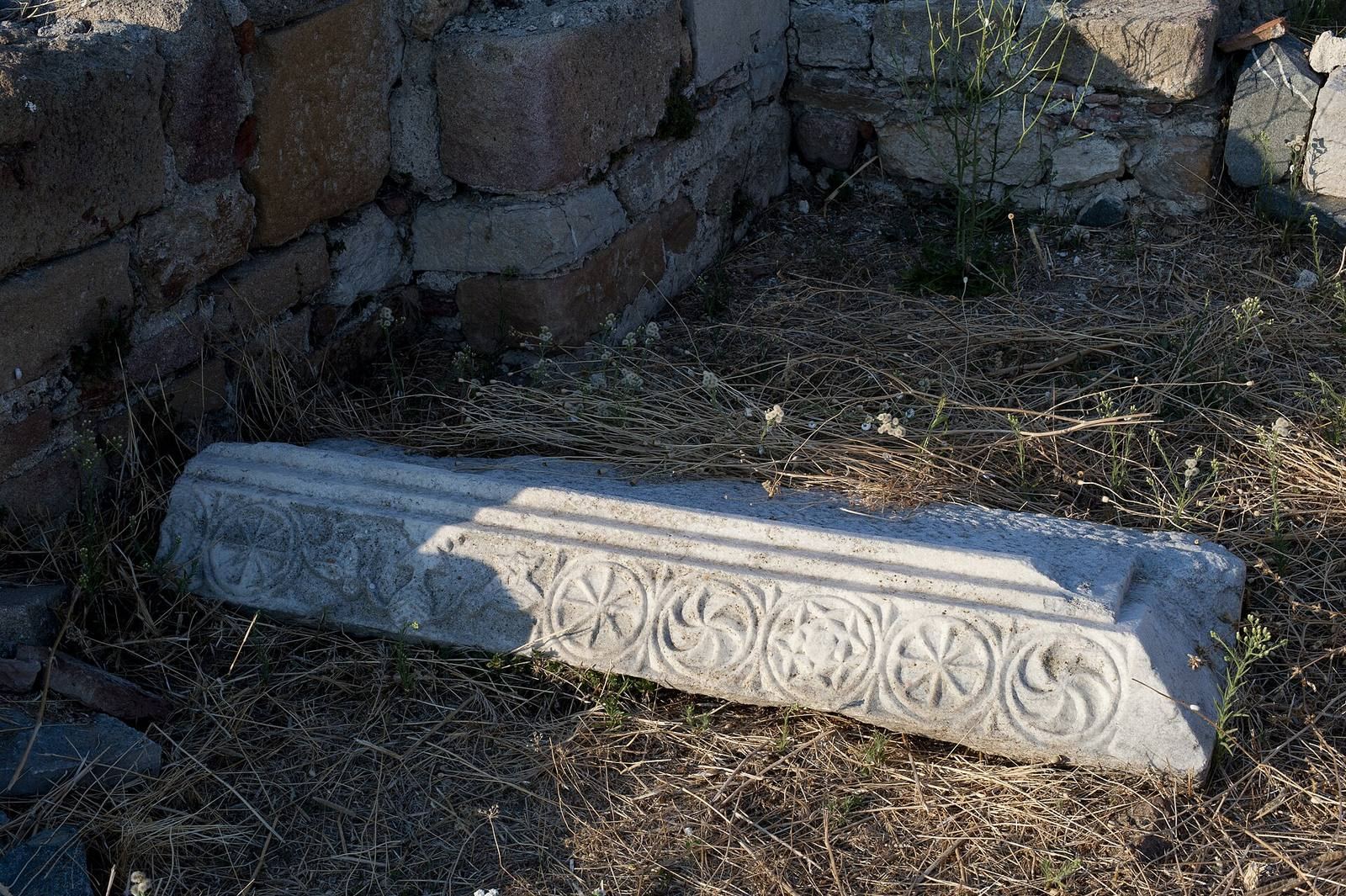
Excavations have yielded large quantities of locally made terracotta figurines, as well as sculptures and mosaics.