Monte Cildá: An Ancient Fortified Settlement in Spain
Site at a Glance
- Rating
- 4.6
- Popularity
- Very Low
- Country
- Spain
- Primary era
- Classical
- Eras represented
- Classical
- Civilizations
- Roman
- Site type
- Settlement
On this page8 sections
History
Monte Cildá is an ancient fortified settlement near Olleros de Pisuerga in Spain, occupied by Cantabrians from the first century BC and later by Romans and Visigoths. Its archaeological sequence extends into the eighth century AD, and its identity may be linked to a city involved in Rome’s campaigns in northern Iberia.
Cantabrian settlement and Roman campaigns
The Cantabrians, an ancient people of northern Iberia, lived at Monte Cildá from the first century BC. Some researchers identify the site with Vellica, called Vellika by the Greco-Roman writer and geographer Ptolemy. Other interpretations place Vellica at Bergida or on the plain near Mave, with Monte Cildá serving as a defensive outpost. An inscription bearing the name of the Vellicum clan has been used to support the identification with Vellica.
Roman campaigns against the Cantabrians and Astures culminated in a major battle dated to 25–26 BC. Ancient accounts place it on the plain below Vellica, while another interpretation locates the fighting near Mave. The Roman victory brought the city’s destruction, though its identity and precise location remain uncertain. Augustus, Rome’s first emperor, is said to have taken part in the campaign. The Legio IIII Macedonica, a large Roman military formation stationed at Pisoraca, modern Herrera de Pisuerga, participated in the conquest and was positioned for the advance on Monte Bernorio. The Legio IX Hispana may also have fought in the battle.
Roman settlement and Visigothic occupation
After the Cantabrians were driven from the hill, the Romans fortified it for its strategic position. Some interpretations describe the site as an acropolis, a fortified high point associated with a settlement. Its defenses were strengthened on three occasions, with the final reinforcement in the fifth century, when they were adapted to resist invasions. In Roman times, the settlement was known as Villegia in the Itinerary of Barro, an ancient route document preserved on inscribed clay tablets. The road called Via Legione VII Gemina ad Portum Blendium passed through Villegia, linking León with Portus Blendium at modern Suances.
Visigothic occupation began after King Leovigild’s conquest of Roman Cantabria in 574. The settlement was abandoned following the collapse of Visigothic rule. Muslim forces took the area in 754, prompting the population to flee; the newcomers did not use the settlement. It was recovered during the Reconquista, the long expansion of Christian kingdoms into territories ruled by Muslim powers in Iberia, but remained uninhabited. Stones from its defenses were later reused in nearby buildings.
An initial archaeological survey took place in 1891. Studies resumed in 1963 under archaeologist Miguel Ángel García Guinea, revealing walls and numerous objects. Excavations began again in 2002 to clarify the site’s construction phases and prepare it for public display. Monte Cildá was declared an Asset of Cultural Interest, Spain’s formal heritage-protection designation, in 1993. It is also included on the Heritage at Risk Red List because its preservation is at risk.
Remains
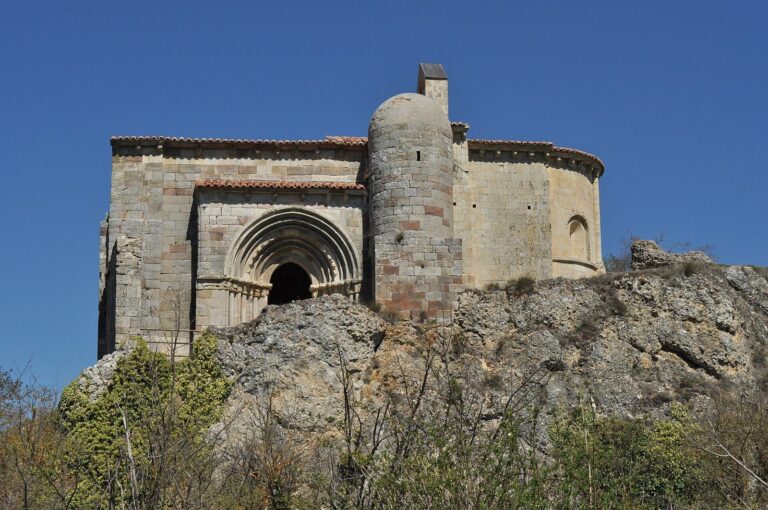
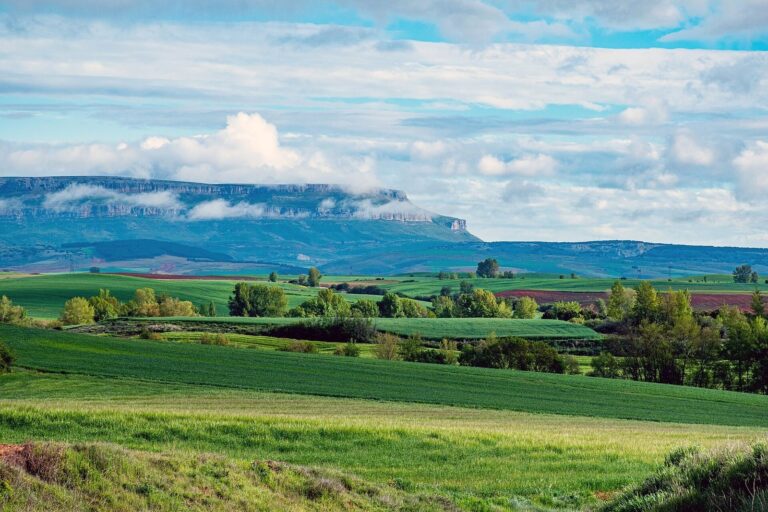
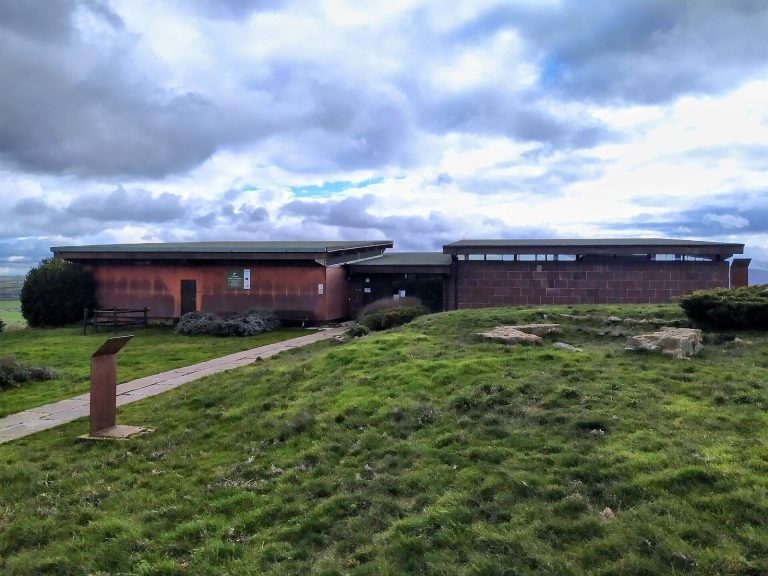
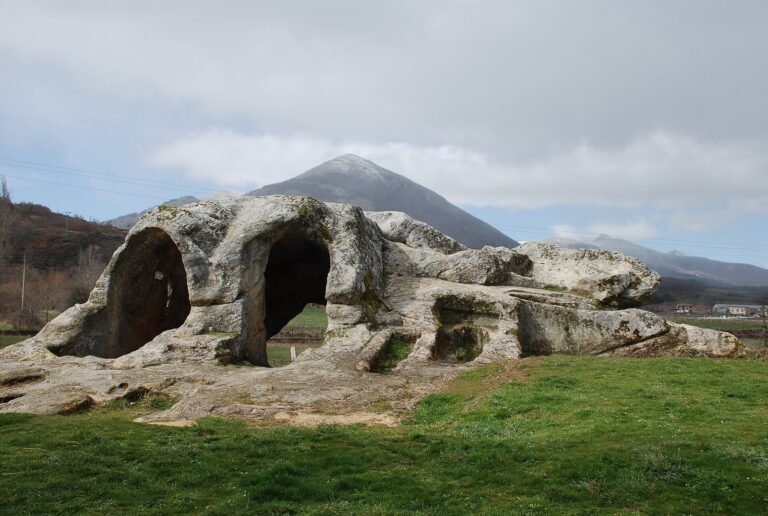
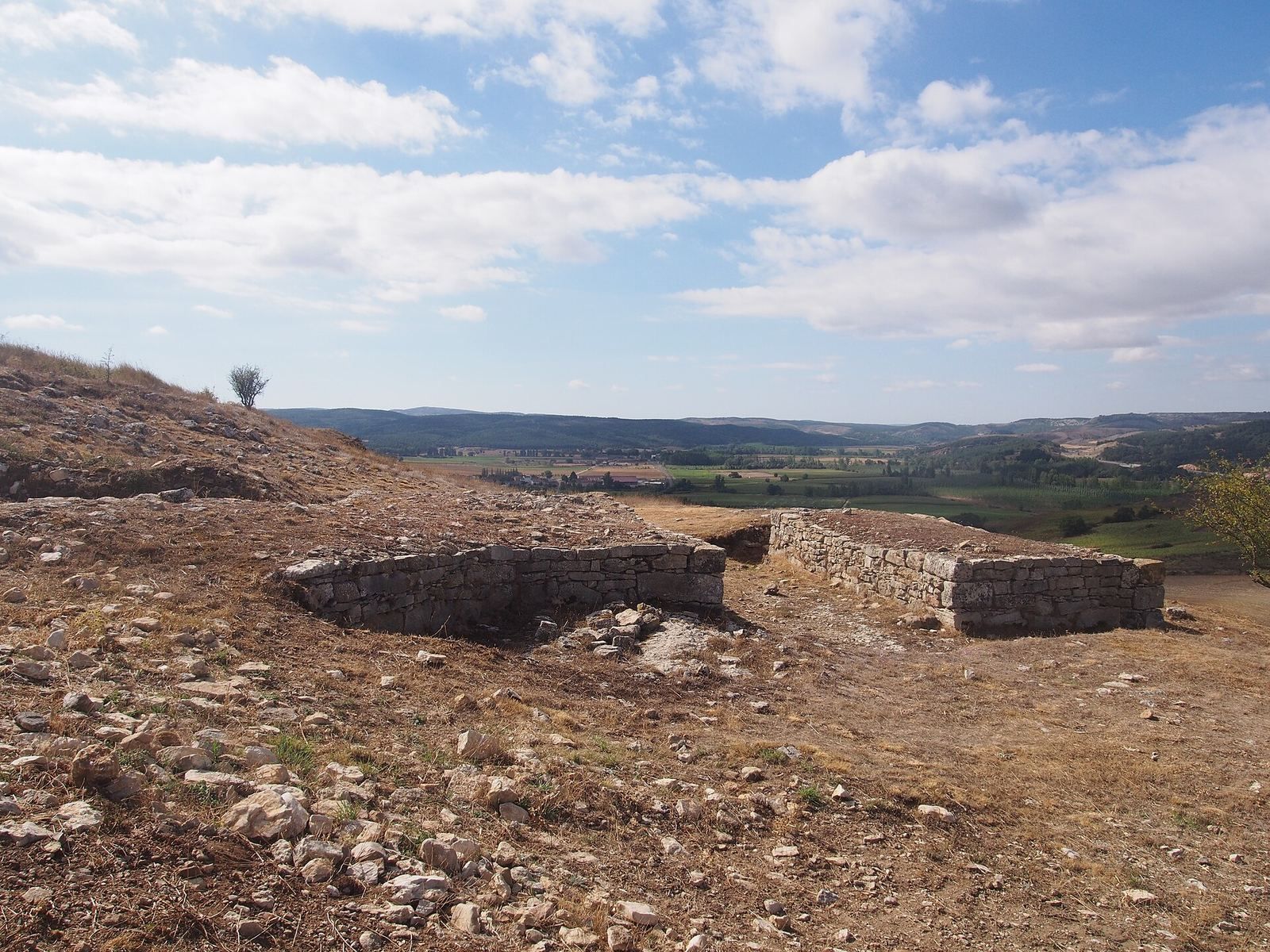
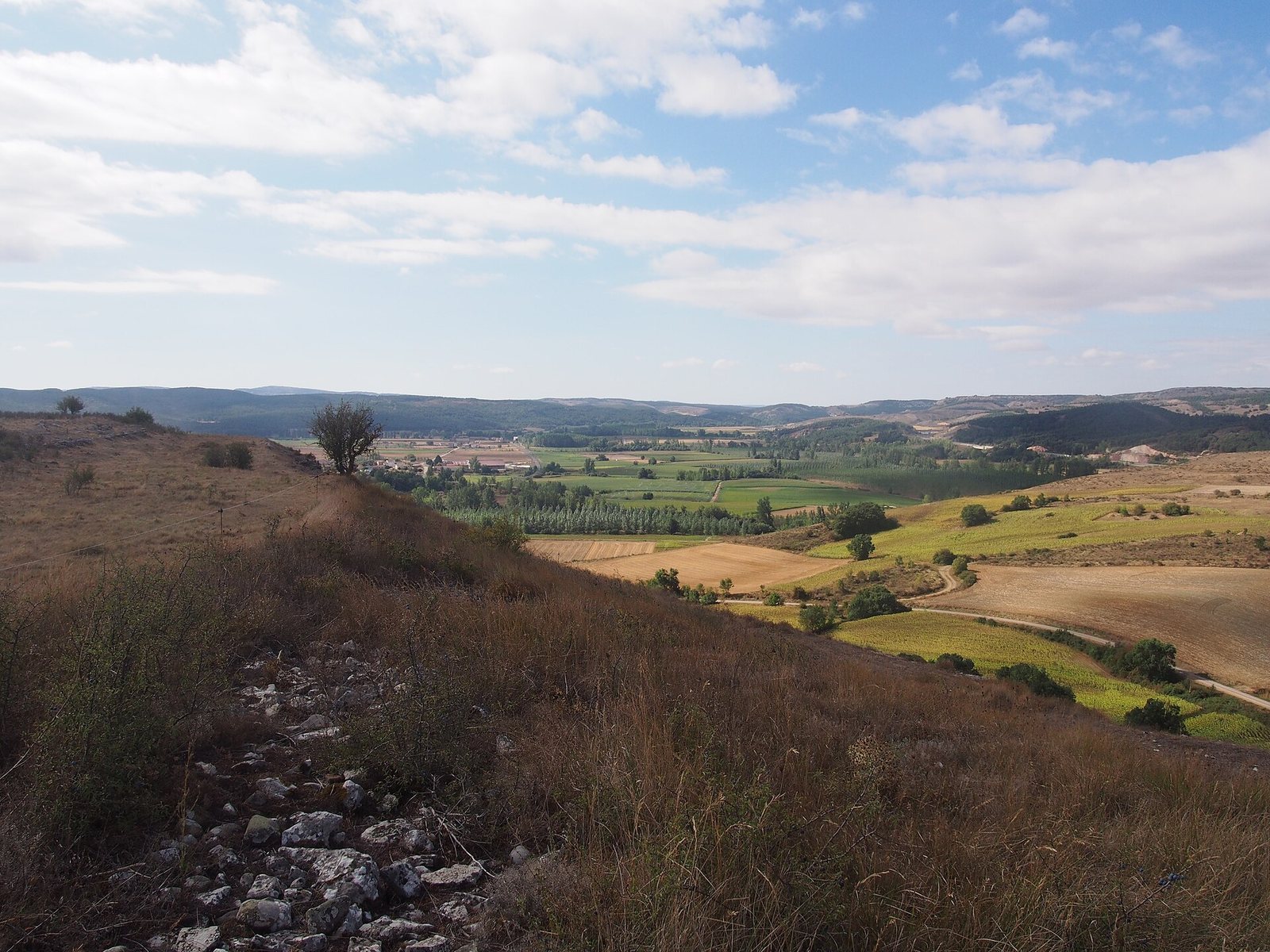
The site occupies two plateaus on a mountain rising to about 980 metres, with the plateaus at approximately 920 and 950 metres. Its elevated position overlooks a broad plain. On the eastern side, the Pisuerga River runs through the Horadada Canyon, separating the mountain from the Las Tuerces Natural Area. The rock-cut church of Olleros de Pisuerga lies on the western face of the lower plateau.
Defensive walls
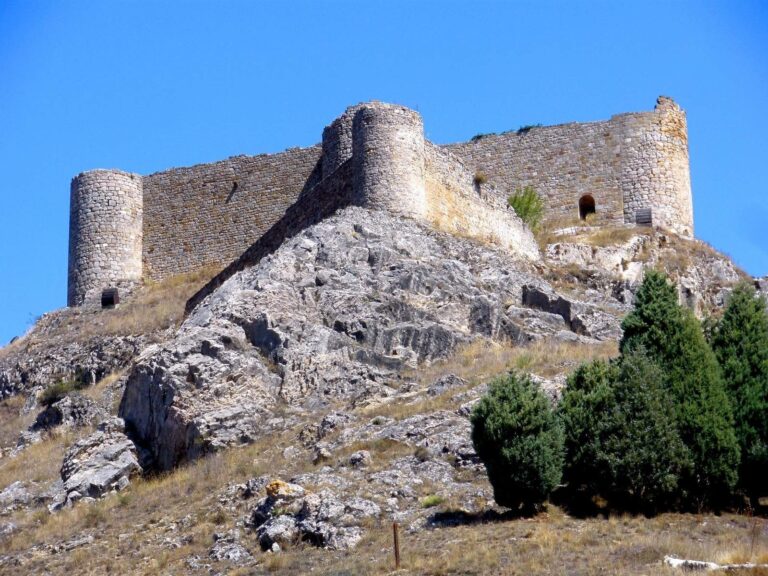
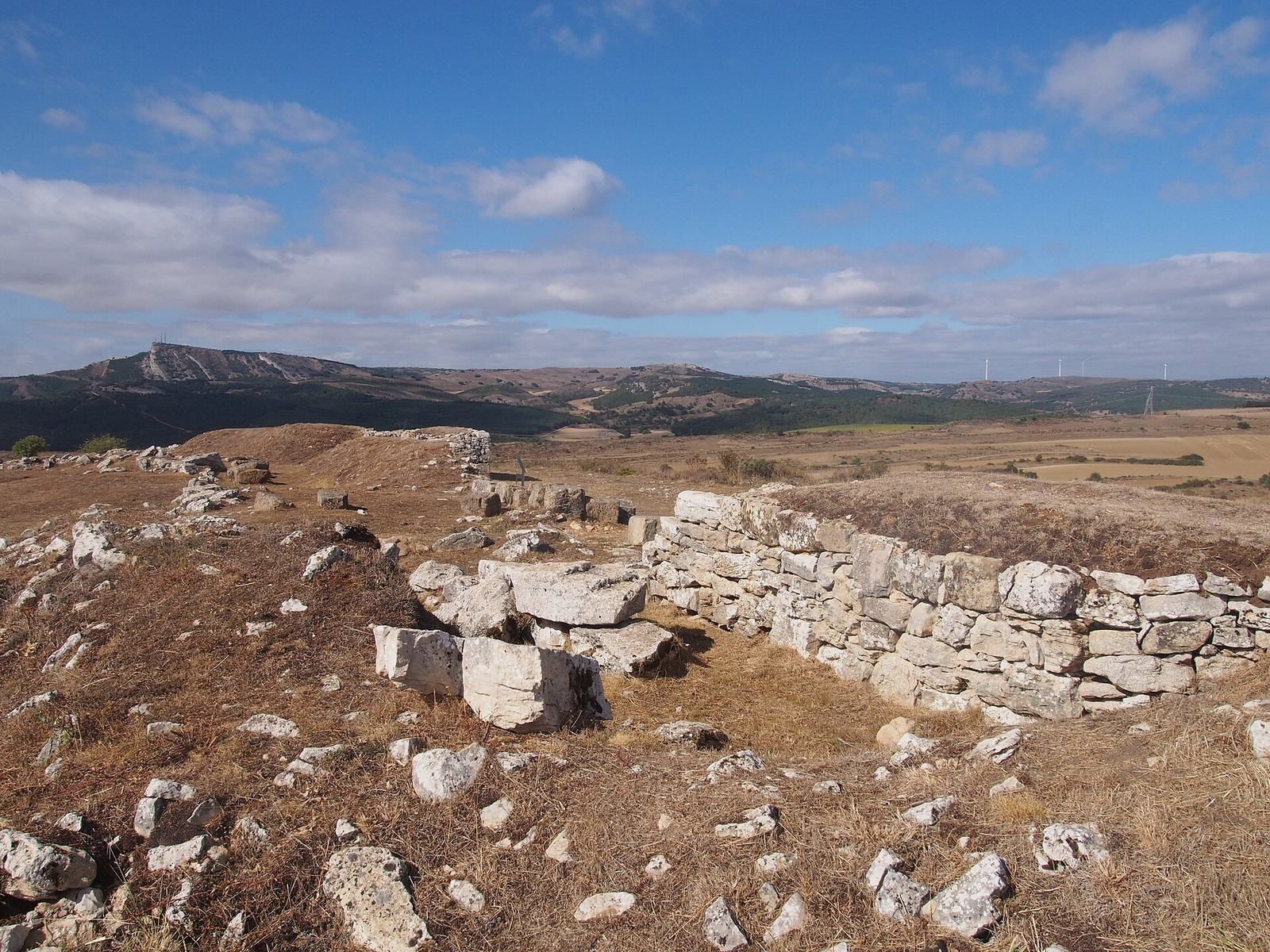
Parts of the defensive walls survive. The fortifications incorporated stones taken from earlier buildings, including funerary slabs. The final reinforcement used carefully cut stone blocks, and the surviving remains preserve evidence of the settlement’s defensive construction.
Inscribed finds
Funerary stelae
About thirty funerary stelae, upright inscribed stone monuments, date to the third century. Some carry a distinctive design resembling a six-winged propeller. Finds from excavations are held at the Museum of Prehistory and Archaeology of Cantabria and the Archaeological Museum of Palencia.
Other inscriptions and the hospitality token
Monte Cildá has yielded inscriptions on funerary stones, altars, and honorary monuments; the inscriptions from the site are the most numerous in the surrounding region. One bears the name of the Vellicum clan. Another find is a Cantabrian hospitality tessera, an inscribed token recording a formal bond of hospitality. It is the first known example from Cantabria. Found by a private individual, the well-preserved token was later studied by archaeologist Eduardo Peralta Labrador and bears a Celtic inscription.