Amaya: An Ancient Hilltop Settlement in Spain
Site at a Glance
- Popularity
- High
- Country
- Spain
- Primary era
- Iron Age
- Eras represented
- Bronze Age, Iron Age, Medieval
- Civilizations
- Kingdom of Asturias, Kingdom of León
- Site type
- Settlement
- Remains
- City
On this page10 sections
History
Amaya was an ancient settlement on Peña Amaya in Spain, occupied from the Late Bronze Age and later inhabited under Roman, Visigothic, and medieval rule. Its history is closely connected with Visigothic control of Cantabria and the emergence of early Castile.
Pre-Roman settlement and Roman rule
The name Amaya, also written Amaia, has more than one proposed origin. One explanation combines Indo-European elements meaning “mother” with a place-name suffix, giving a sense of “mother city” or “capital.” Another connects it to a Basque word meaning “the end.” The name’s persistence into Visigothic times supports the view that the settlement was called Amaya in the Iron Age and Roman period.
Archaeological evidence indicates occasional activity during the Bell Beaker period, followed by the first stable occupation in the Late Bronze Age. The early settlement belonged to Cogotas I, a Bronze Age culture of Iberia. In Late Bronze Age III, weapons were placed on the hilltop as offerings. Continuity into the First Iron Age is uncertain, while finds and museum collections support occupation during the Second Iron Age, when the region was associated with the Cantabri. Whether Amaya was one of their leading centers remains unclear; the nearby hillfort of La Ulaña complicates that interpretation.
An ancient route list known as the Itinerary of Barro, preserved on a clay tablet, includes a place called Amaya. Thermoluminescence, a method that estimates the age of fired material by measuring energy released when heated, places the tablet around the middle of the third century. The identification remains uncertain: the listed place may have been farther west, and locating it at Peña Amaya would require substantial errors in the itinerary’s transcription.
During the Cantabrian Wars of 29–16 BCE, Rome’s campaigns to subdue communities in the region, Augustus maintained a military camp at nearby Sasamón. Amaya probably came under Roman control early in the campaigns. After the conquest, a military detachment was stationed there, likely connected with Legio IV Macedonica, a Roman legion based at Herrera de Pisuerga. The detachment probably departed when the legion was sent to the Rhine frontier in AD 39. Amaya remained occupied in the first and second centuries, while its status in the third century is less certain. Settlement revived in the fourth and fifth centuries amid instability in the late Roman world.
Visigothic rule
In 574, the Visigothic king Leovigild captured Amaya during his campaign to bring Cantabria under Visigothic control. The campaign concluded in 581 with the establishment of the Duchy of Cantabria, a territory governed by a duke within the Kingdom of Toledo.
A life of Saint Emiliano, also known as Millán, tells how the Christian ascetic healed a paralyzed woman from Amaya and foretold Cantabria’s destruction. The noble Abundancio dismissed the warning at an assembly; Emiliano then predicted that Abundancio himself would suffer destruction, said to have come during Leovigild’s campaign. Amaya is the only Cantabrian city named in both this account and the Chronicle of John of Biclaro, a sixth-century bishop and chronicler. This has supported the possibility that Amaya was a provincial capital. The assembly has also been linked to the city, though its location and sphere of authority remain uncertain.
Amaya’s role as a ducal seat is inferred from the Thirteenth Council of Toledo, an ecclesiastical assembly held under the Visigothic kingdom in 683. Eight provincial dukes signed, two more than at the council of 653. Cantabria and Asturias are thought to have been among the additional duchies, with Amaya serving as the Cantabrian seat. A bishopric may also have been established there in the seventh or eighth century. The evidence cited for it is a late seventh- or eighth-century list of episcopal sees.
Conquest and the return of Christian rule
Muslim troops led by Tariq ibn Ziyad conquered Amaya in 712. The campaign sought to break Visigothic power in the north, capture nobles who had taken refuge there, seize wealth, and secure the route from Lugo through Astorga to Zaragoza, which ran parallel to the Cantabrian Mountains. Amaya was sacked again in 714, reportedly by Musa ibn Nusayr, an Umayyad governor and military commander.
Duke Pedro left the city and took refuge beyond the mountains, where he began organizing resistance in cooperation with Pelayo, an early Asturian ruler. Pedro’s son, the future Alfonso I, married Pelayo’s daughter Hermesinda. In the mid-eighth century, Alfonso and his brother Fruela took Amaya during campaigns that benefited from the Berber withdrawal from the northern plateau. They did not resettle the town, instead taking its Christian inhabitants north. Although Amaya was probably largely deserted for a time, it sent troops to the Ebro Valley in 802 alongside other emerging Christian powers. This points to an unofficial return of inhabitants south of the mountains before formal repopulation.
Repopulation and the rise of Castile
In 860, Rodrigo, a powerful early Castilian lord, formally repopulated Amaya. The initiative appears to have been his, although the action is also attributed to King Ordoño I of Asturias. Rodrigo was identified as a count in Christian records from 855 and recognized as a ruler in Castile by 865. The Rotense Chronicle, an early medieval chronicle associated with the Asturian kingdom, gave Amaya the epithet “Patricia.”
Rodrigo used Amaya as a base for expanding Castilian power onto the plains. His son Diego Rodríguez, known as Porcelos, founded Burgos in 884. After Diego’s death in 885, Amaya and its county passed to Nuño Fernández, who established the County of Muñó. During the reign of Ramiro II, the town was repopulated again, but as the frontier moved south, inhabitants settled in the valleys. Shortly before 935, a bishopric associated with Amaya’s former Visigothic diocese was transferred to Muñó; when the bishopric was restored at Amaya is unknown.
Medieval administration and later study
As political power shifted to the plains, Amaya’s influence declined. It became the center of an alfoz, a medieval district organized around a principal settlement, first mentioned in records in the second half of the tenth century. The final battle beneath Amaya’s walls is dated to 989. From 1073, records name successive holders of the tenente, an office administering a territory or stronghold. During the twelfth century the office changed hands and, by that century’s end, belonged to the powerful Lara family. The hilltop settlement remained inhabited into the fourteenth century.
Romualdo Moro carried out the first archaeological excavation at Amaya in 1891, commissioned by the Marquis of Comillas. Excavations in 2000–2002, alongside reviews of historical records and museum collections, substantially expanded knowledge of the site. The Catholic Church recognizes Amaya as a titular see, a diocese retained as a title rather than an active local diocese.
Remains
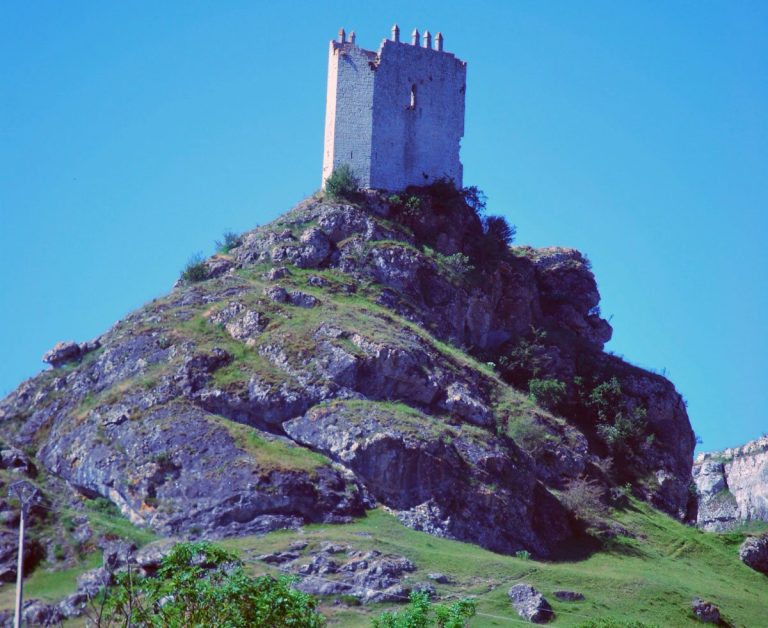
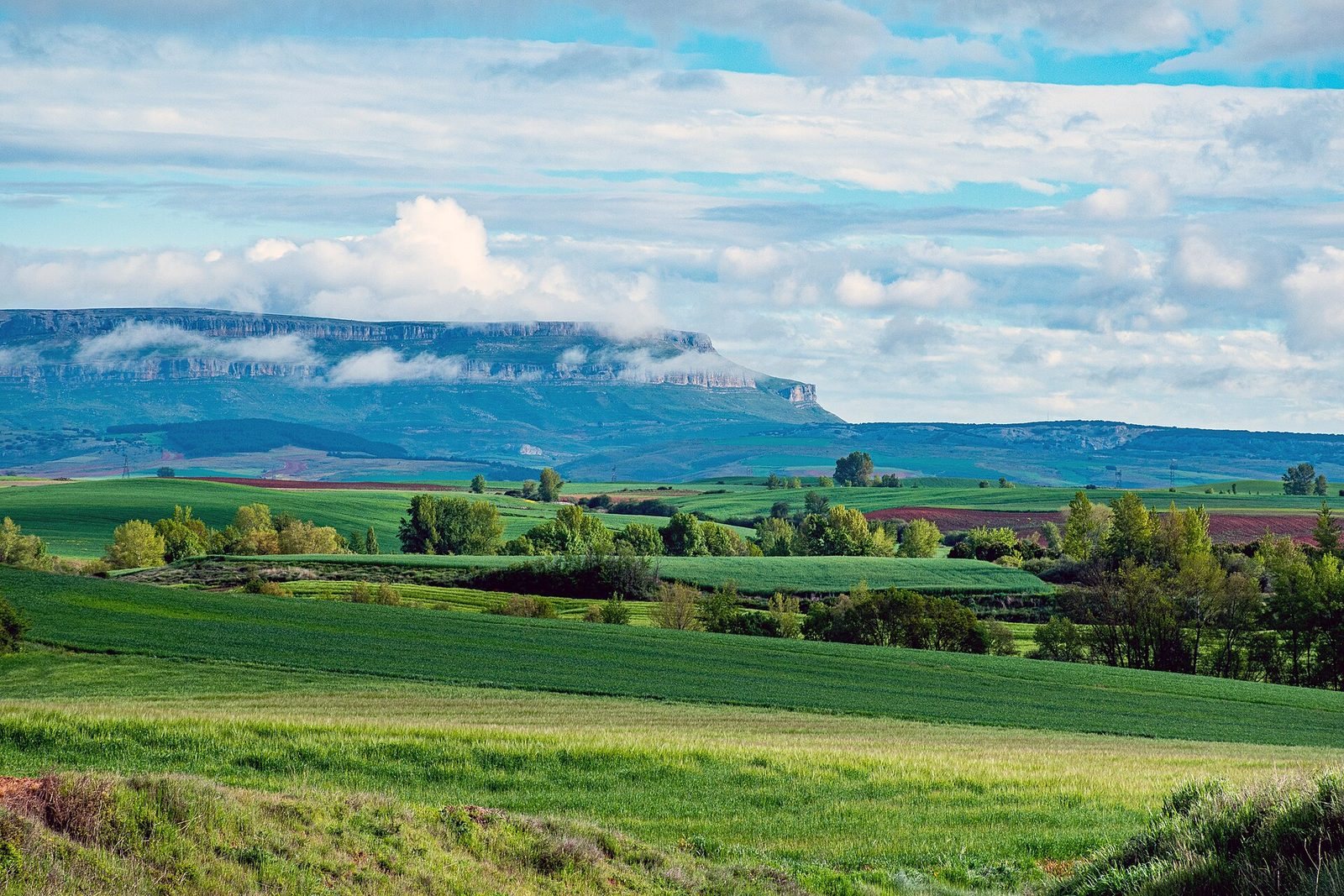
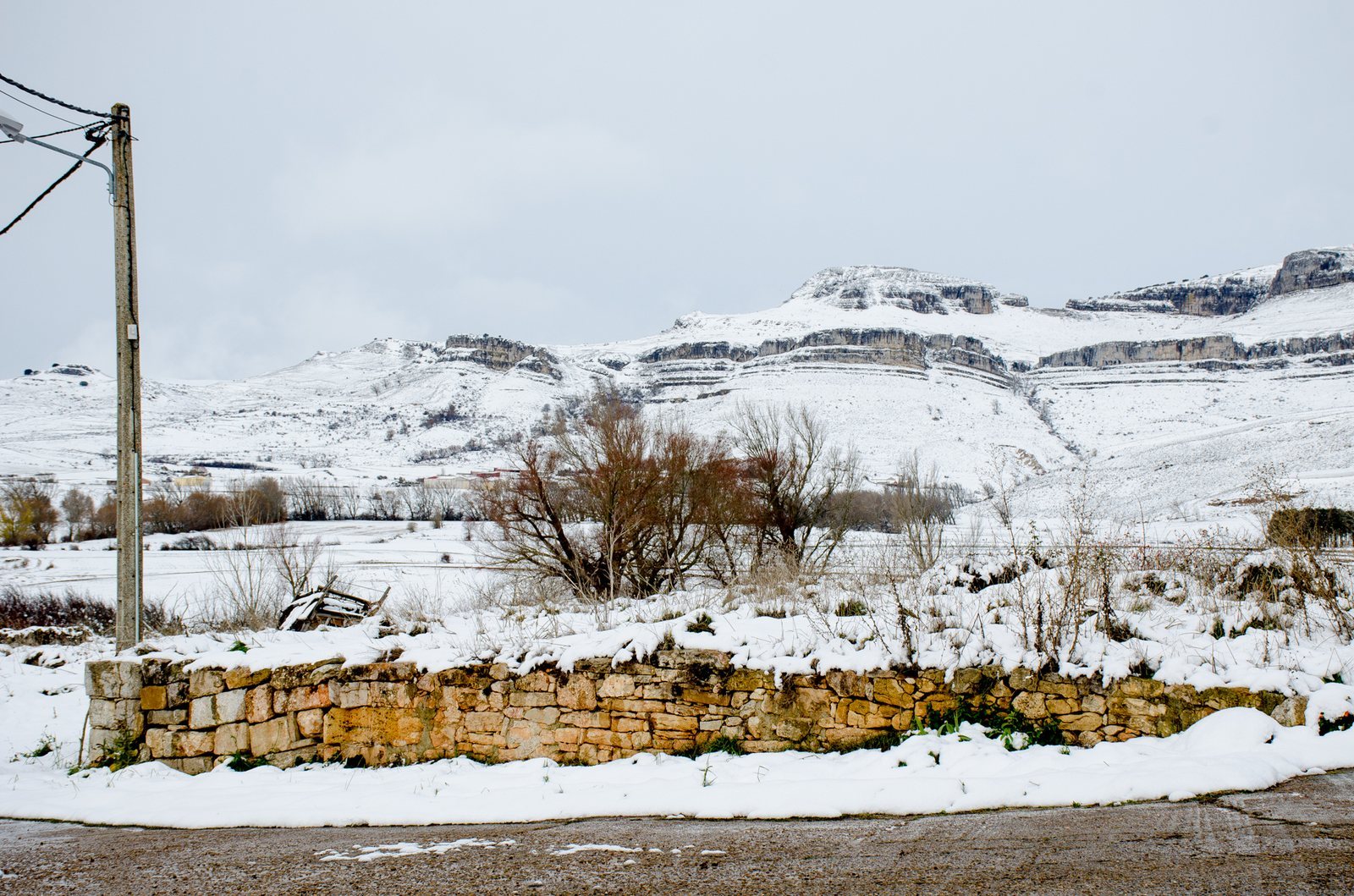
The remains occupy the summit of Peña Amaya, a mountain rising to 1,377 metres. Its position gave the settlement a strategic lookout and a gateway between the Central Plateau and the Cantabrian Mountains. The surviving features represent several periods of occupation and defense.
Hilltop settlement and defenses
On the summit are the approach to the pre-Roman hillfort, defensive walls, and ruins of the medieval settlement. The defenses of the castle have also been identified. These remains establish the presence of successive fortified and settled areas, although their construction materials and detailed forms are not specified here.
Offerings and burial remains
Late Bronze Age III offerings from the hilltop include a sword and a ringed axe. Funerary stone markers recovered by Moro date to the first and second centuries. He also recorded three cemeteries distributed across the hillfort, one of which is among the recognized remains.
Ivory casket
An ivory casket from the eleventh century, preserved at the Monastery of San Millán de la Cogolla, depicts Leovigild’s capture of Amaya. Its inscription reads, “Where King Leovigild punished the Cantabrians.”