Monastery of the Presentation of the Virgin in Jašunja: A Serbian Orthodox Women’s Monastery
Site at a Glance
- Rating
- 3.8
- Popularity
- Medium
- Country
- Serbia
- Primary era
- Early Modern
- Eras represented
- Medieval, Early Modern, Modern
- Civilizations
- Ottoman
- Site type
- Religious
- Remains
- Monastery
On this page17 sections
History
Foundation and early history
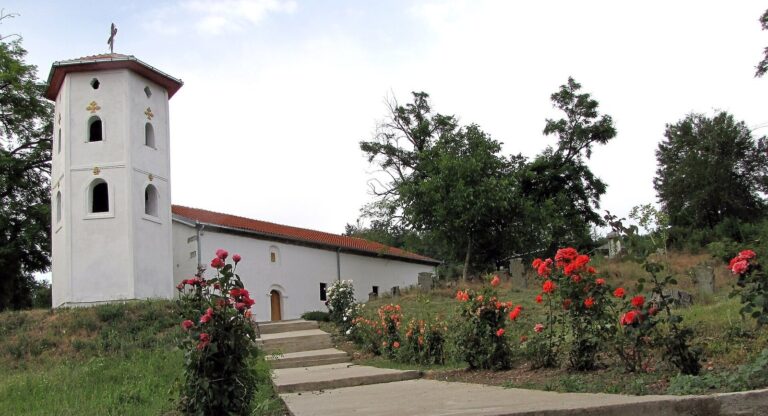
The Monastery of the Presentation of the Virgin in Jašunja is a Serbian Orthodox women’s monastery in Jašunja, Serbia, within the Diocese of Niš. Nun Ksenija and her sisters Teofa, Marta, and Marija founded the church for a women’s monastic community. A founder’s inscription dates the start of construction to October 11, 1499, and the church was completed in 1500. Its design is associated with the Raška school, a tradition of medieval Serbian church architecture.
The church was probably built over the foundations of an earlier church or monastic complex. This possibility is linked to a tradition of a restriction introduced around 1453, after the Ottoman conquest of Constantinople, which allowed new churches to be built only where a church had stood before.
Ottoman rule and disruption
Under Ottoman rule, the monastery was repeatedly burned and plundered, particularly during the First and Second Serbian Uprisings, revolts against Ottoman authority. It was abandoned for periods. In 1788 it burned during a revolt led by Nikola Prčić in Veterničko Porečje. Another fire followed in 1835 amid unrest associated with the burning of Vlasotince, an episode remembered locally as the Vlasotince plunder.
Nineteenth-century changes
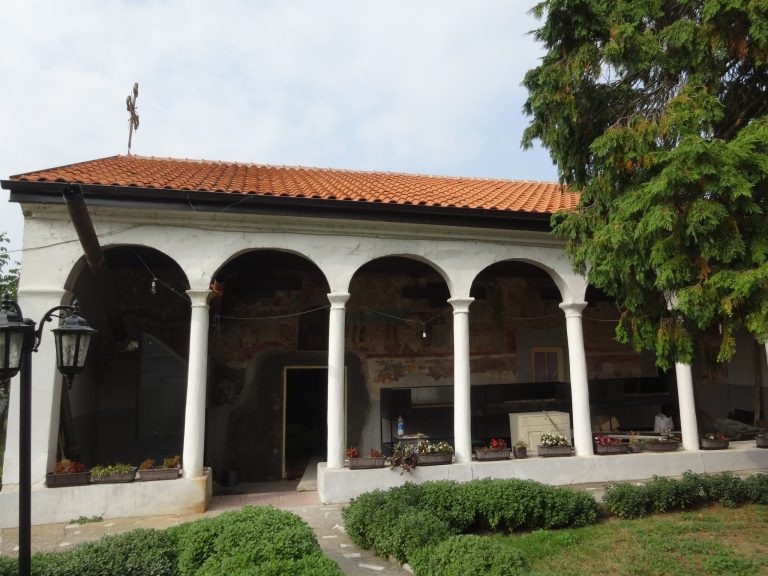
The church received a new iconostasis in 1834. An iconostasis is a screen separating the sanctuary from the main worship space. In 1863, the church was restored with support from Jovan Iljković of Galičnik. During the 1860s, a chapel and an outer narthex were added; a narthex is an entrance space adjoining a church, while an outer narthex provides an additional entrance area. The new additions were painted in 1868.
Parish and monastic life
The church served as a parish church until April 12, 1932, when it became a women’s monastery. After further periods of abandonment, the monastic sisterhood resumed its activity there. Protective work has included reroofing, and the monastery is designated a Cultural Monument of Great Importance in Serbia.
Remains
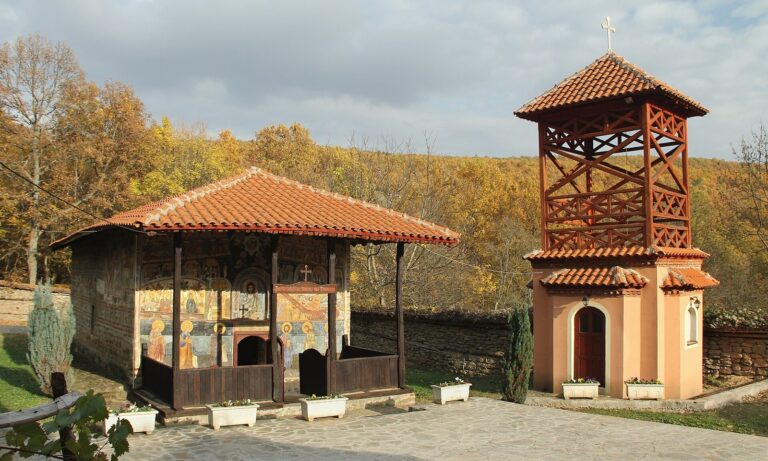
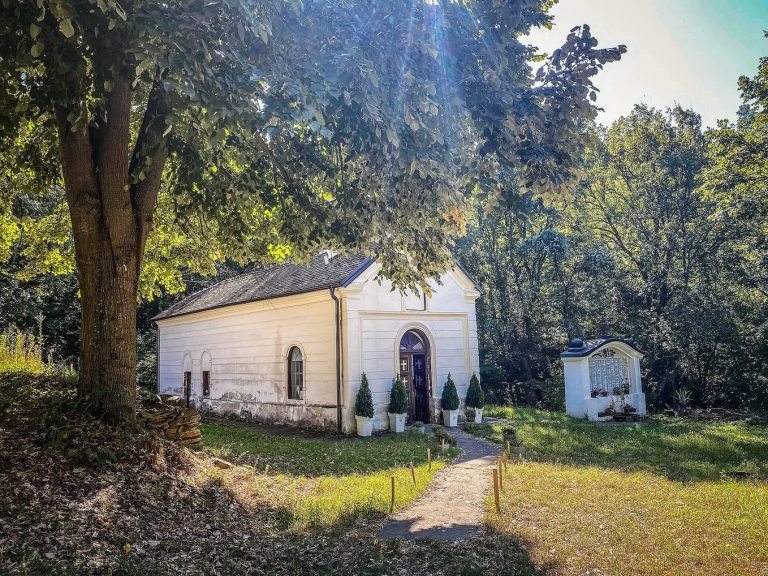
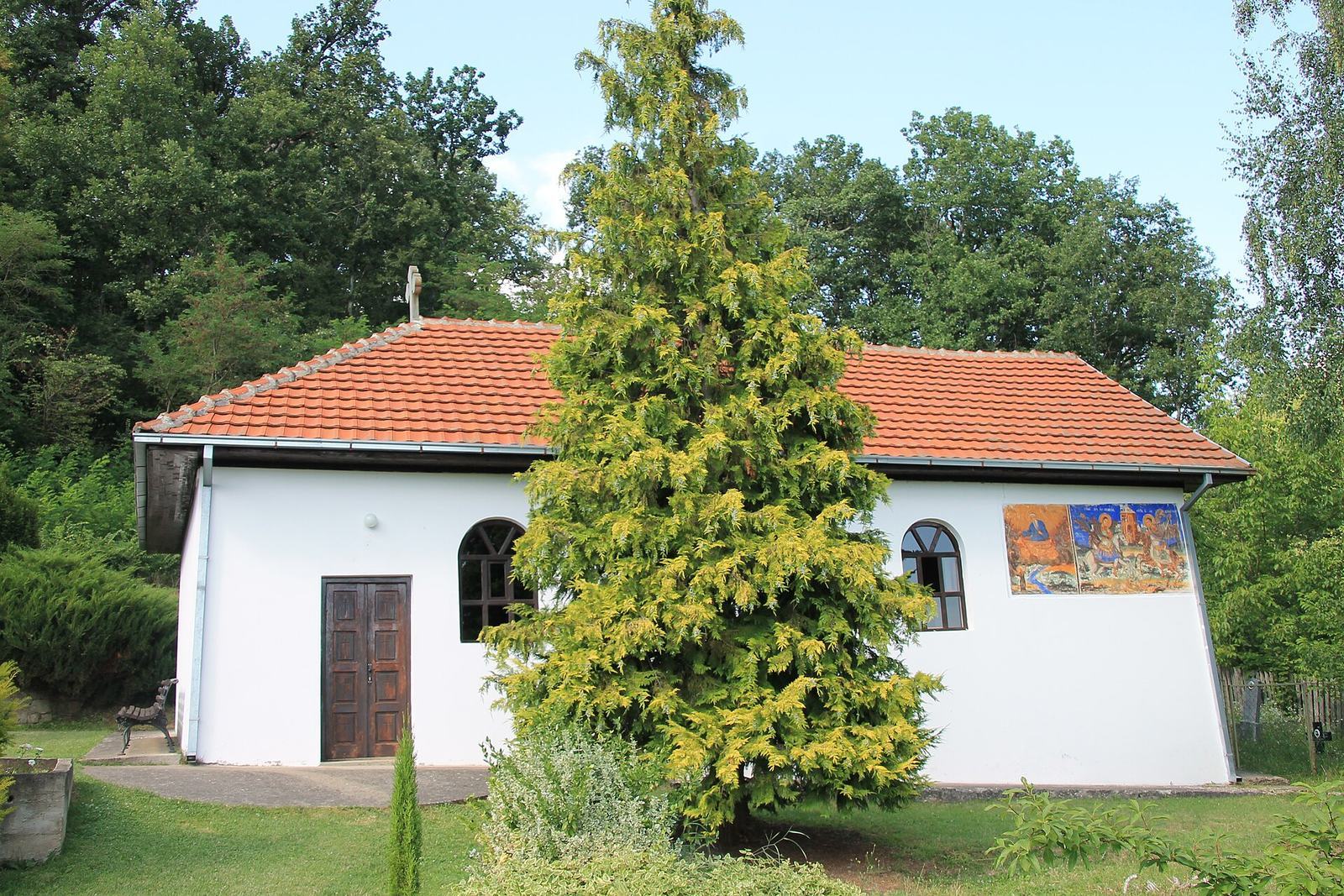
The small church stands on a slope in the valley of the Bela Voda–Bela Reka stream, also known as Jašunjka. Its single-nave plan, entrance spaces, chapel, and painted surfaces reflect successive phases of construction and use.
Landscape and nearby remains
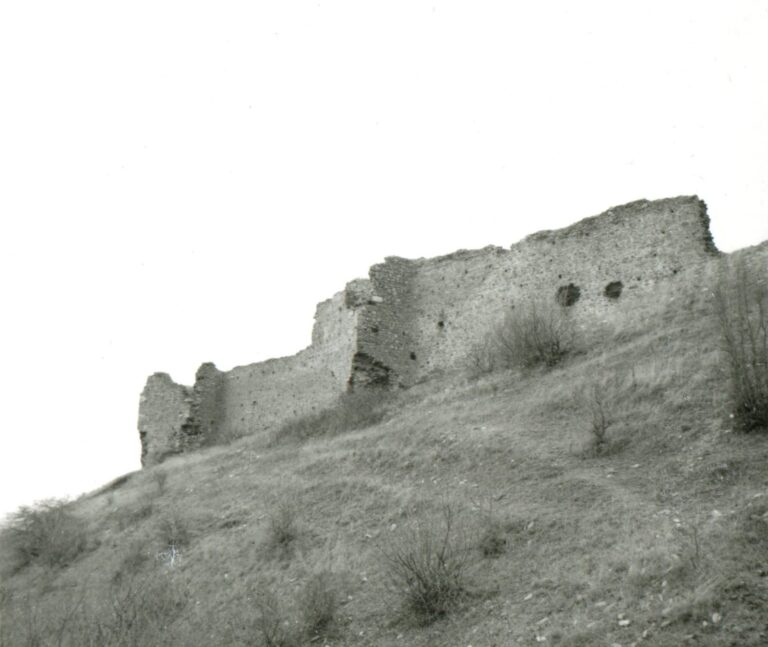
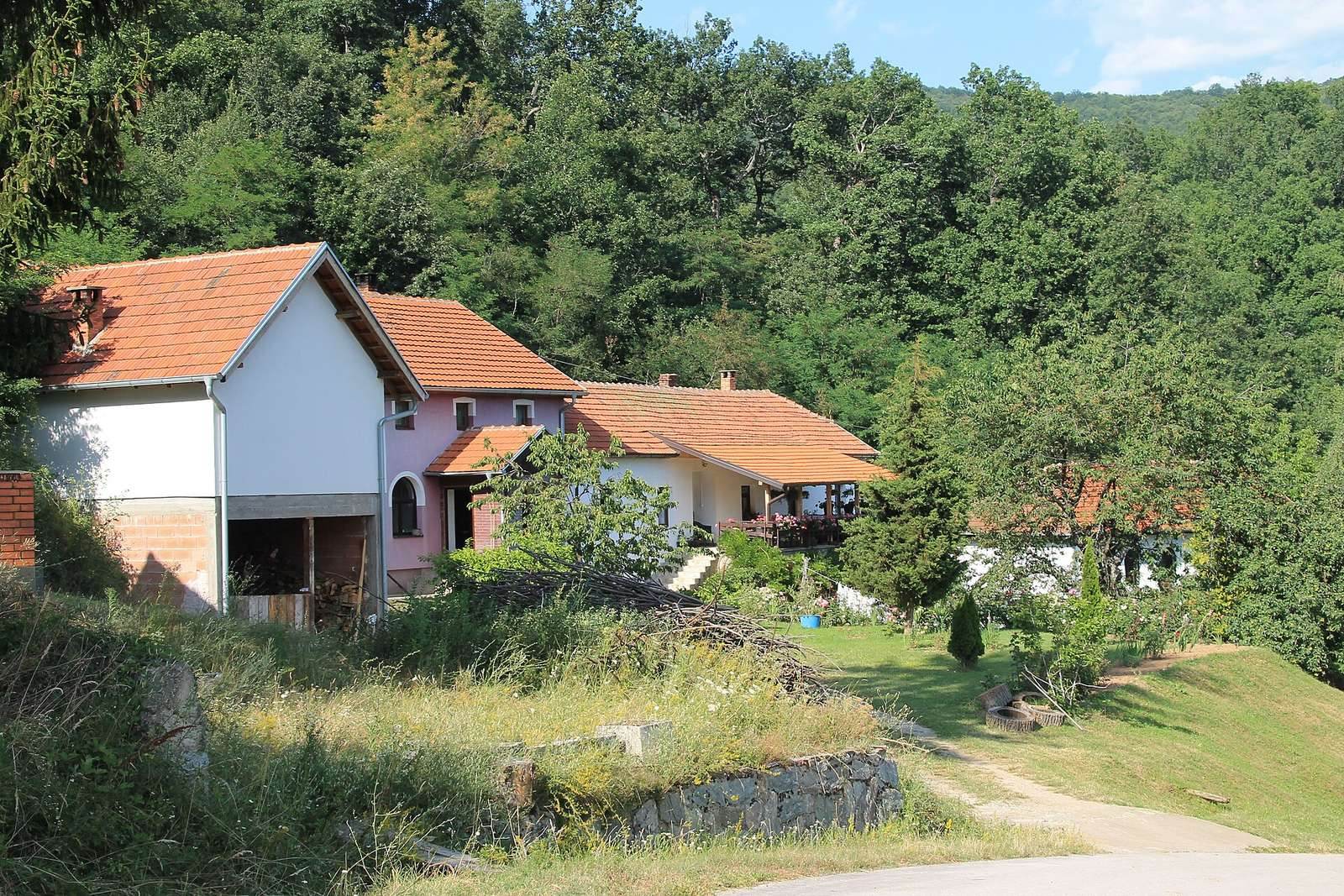
The monastery occupies the slopes of Babička Gora, about 13 kilometres northeast of Leskovac, near the left bank of the stream in a place called Gradište. The valley is also known as Monastery Valley; greenery and old beech trees surround the site, and a watercourse emerges from rock upstream. Three older monasteries lie along the route from Babičko village through Golema Njiva to Jašunja: Babičko, the Presentation monastery, and the Monastery of Saint John the Baptist. The Presentation monastery and the male monastery of Saint John the Baptist are collectively known as the Jašunja monasteries. About 50 metres away, on the stream’s left side, are ruins of a town and foundations of a Christian place of worship.
Church and entrance spaces
Main church
The church is a single-nave building with a barrel-shaped vaulted ceiling and a semicircular apse, the rounded end of the church, curved both inside and outside. Its plan is associated with the Raška school and with forms used in Serbian churches of the fourteenth and fifteenth centuries. This type is also described as characteristic of village churches and smaller aristocratic court churches in periods before the thirteenth century and after the fourteenth. The original narthex adjoins the main church.
Chapel and outer narthex
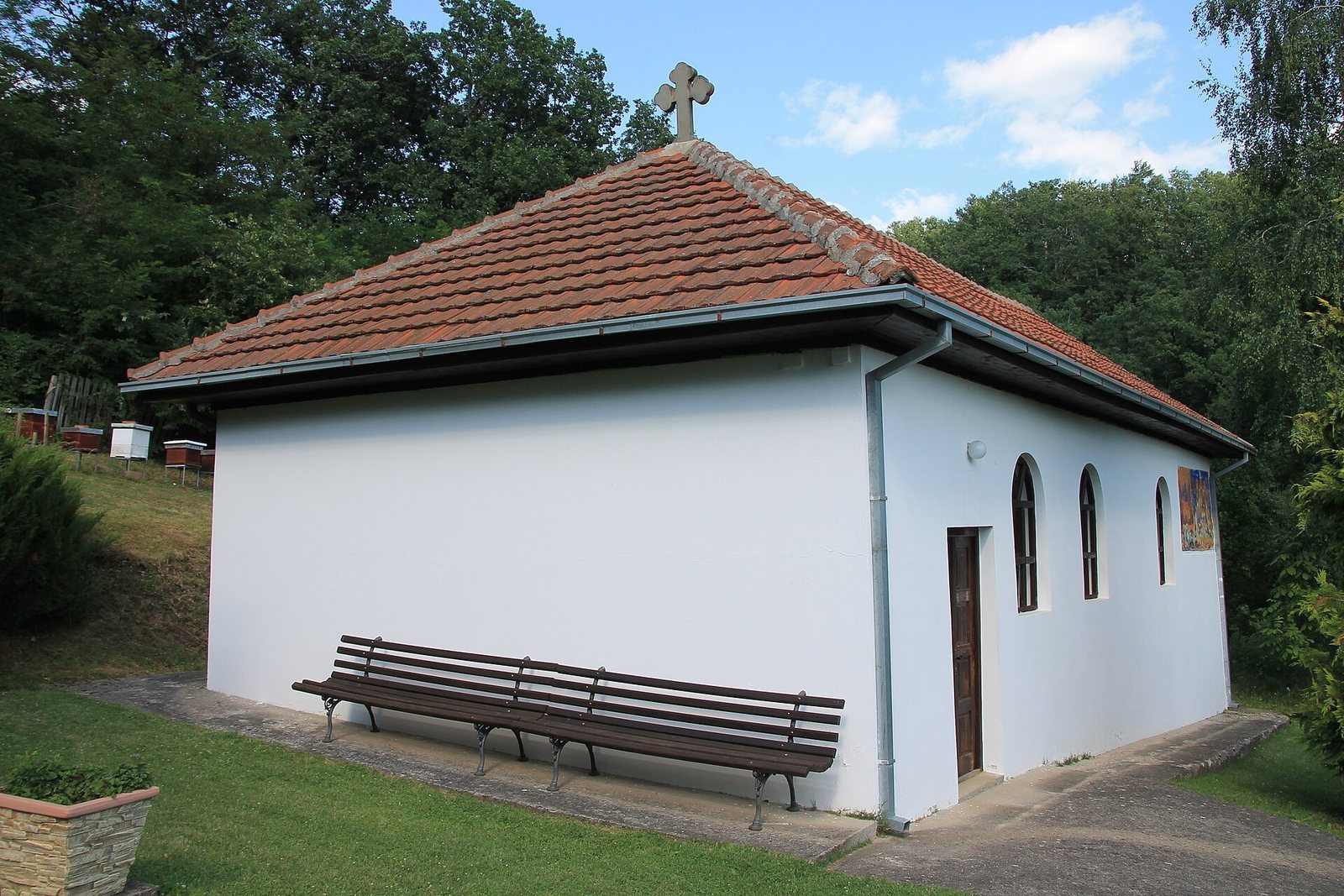
A chapel measuring 6.5 by 2 metres runs along the south wall. It is dedicated to the Life-Giving Spring and, after the nuns arrived, was walled up for use as a choir. The spacious outer narthex stands in front of the original entrance space and chapel.
Painted decoration
Church and narthex paintings
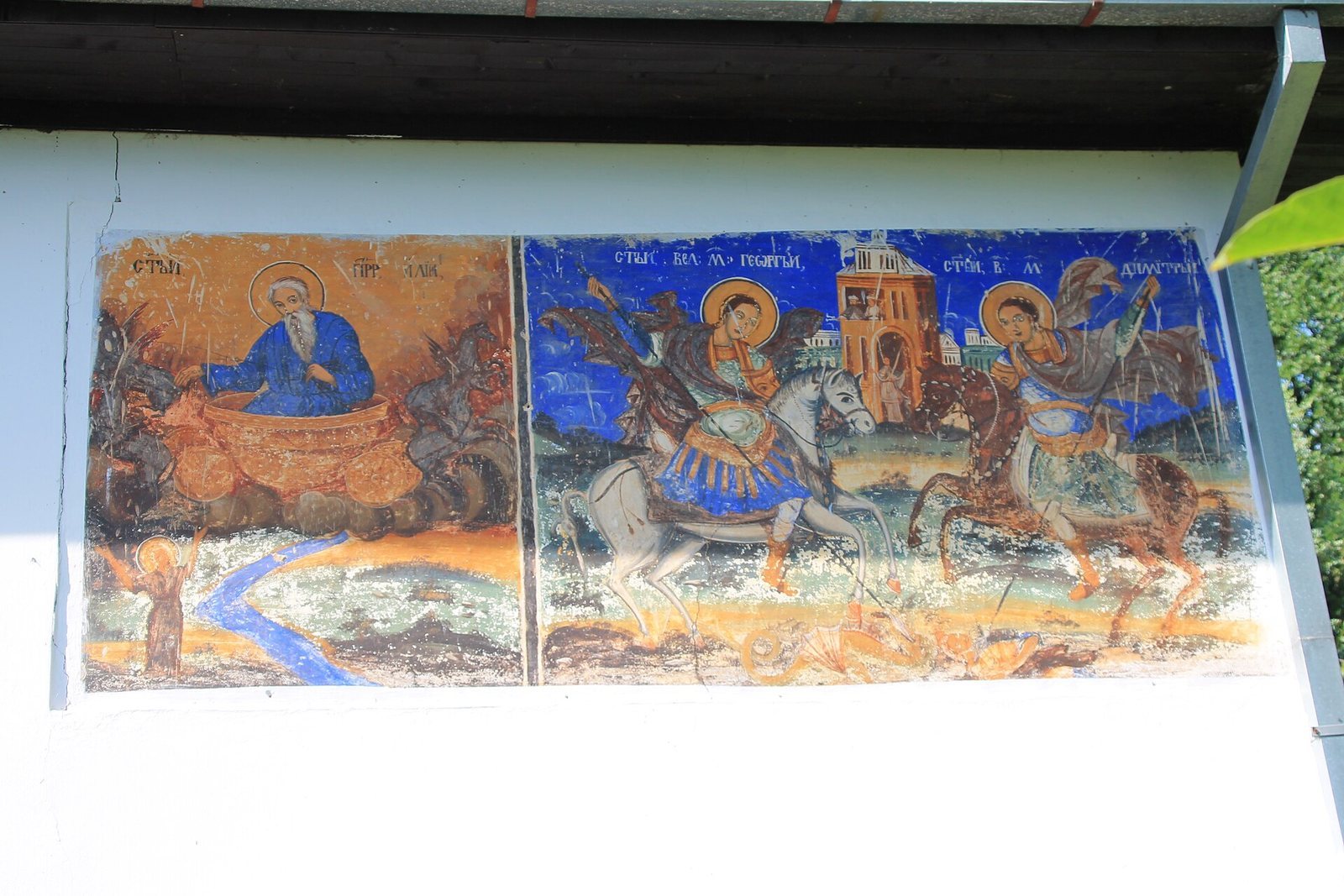
A painting campaign in the church is dated to 1499, and traces of the original work survive on the eastern exterior wall of the narthex. Narthex frescoes, paintings made directly on a wall, are dated to 1686, while the outer narthex also contains paintings from later periods. Many paintings in the narthex are whitewashed or spattered with lime. Notable scenes include the Presentation of the Virgin and the 24 prophets.
Founders’ fresco
A signed fresco depicts Ksenija nearly life-size, holding a model of the church with both hands. Her sisters Marta, Teofa, and Marija stand with her, shown smaller and with individually rendered features. Their dark cloaks and veils may indicate that they were widows. Ksenija’s clothing reflects dress worn by women in the surrounding region.
Chapel paintings
On the chapel’s eastern wall, the crowned Virgin Mary holds the infant Jesus and sits in a basin from which flowing water enters a square vessel. Saints, patriarchs, righteous figures, and kings are shown thirsting for the water. Above the chapel’s small altar is a scene of the Nativity of the Virgin, and the altar contains a fragmentary relic of Saint Panteleimon, a Christian martyr and healer. Paintings on the north side include the Flood and Noah, the Second Coming, Saint Anne, and the meeting of Elizabeth and Mary, with ethnographic details in the scenes.
Furnishings and icon
Brass candlesticks
Massive brass candlesticks at the monastery date to 1894.
Hodegetria icon
A valuable Hodegetria icon, showing the Virgin Mary holding the child Jesus and directing attention to him, may have served as the principal icon of the original iconostasis. It is a copy of a fifteenth-century icon from Mount Athos. In the 1930s it stood on the north wall of the nave, slightly raised in a dimly lit area. It was transferred to Niš in 1962 for a temporary exhibition and later became associated with the development of a Museum of Church Antiquities. The conserved icon is now kept at the episcopal residence in Niš.