Monastery of Agios Nikolaos Sintza: A Greek Orthodox Monastery near Leonidio
Site at a Glance
- Popularity
- Low
- Country
- Greece
- Primary era
- Early Modern
- Eras represented
- Medieval, Early Modern
- Civilizations
- Byzantine, Ottoman
- Site type
- Religious
- Remains
- Monastery
On this page9 sections
History
Origins and patriarchal authority
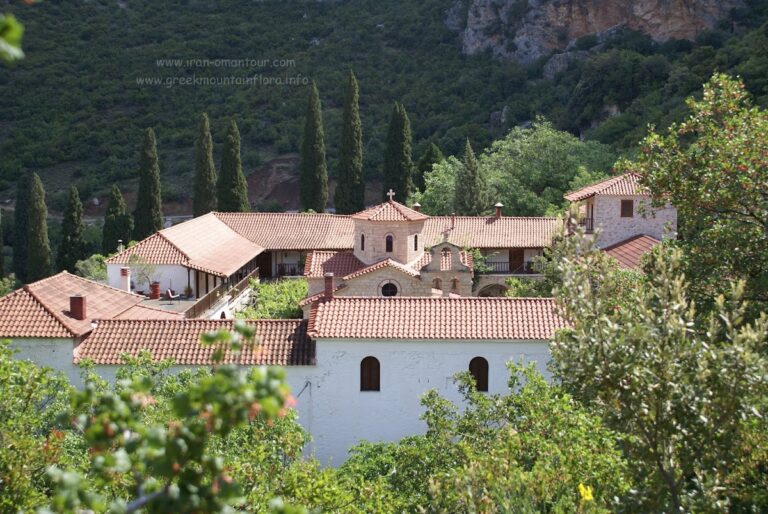
The Monastery of Agios Nikolaos Sintza is a Greek Orthodox monastery near Leonidio, Greece, established in the seventeenth century. Local tradition says the sea brought Semele and her son Dionysus, the Greek god associated with wine and ecstatic rites, ashore here. An ancient sanctuary was then built and later became a Christian church. This is a myth about the site’s origins, not a historical account. The name Sintza comes from the Tsakonian word syntza, meaning “fig tree.”
A formal patriarchal decree of 1622 marks the monastery’s first known written mention. Cyril I Lucaris, the senior bishop leading the Eastern Orthodox Church in Constantinople, granted it a privilege that placed it directly under patriarchal authority rather than the ordinary authority of its local bishop. The decree was also signed by Theophanes III, Patriarch of Jerusalem. Gregory V, another Ecumenical Patriarch of Constantinople, renewed the privilege in 1798.
Ottoman rule and nineteenth-century change
During Ottoman rule, the monastery fell under the Diocese of Reontos and Prastos. It is now under the jurisdiction of the Holy Metropolis of Mantineia and Kynouria, an Eastern Orthodox diocese. Its dependencies included a religious establishment dedicated to Saint Charalambos near Leonidio; the Church of Saint Leonidas, also near Leonidio, had earlier belonged to it.
In 1810, the monastery became a community of nuns. Its calendar included Saint Nicholas’s feast on 6 December and the commemoration of the transfer of his relics on 9 May. Saint Nicholas was an early Christian bishop of Myra who became widely venerated. The community also marked Saint Dionysius the Areopagite’s feast on 3 October. He is traditionally identified as an Athenian convert to Christianity associated with the apostle Paul.
After Ibrahim Pasha of Egypt’s devastating advance during the Greek War of Independence, the struggle to establish an independent Greek state, the monastery began to decline in 1828. It nevertheless contributed to the state’s reconstruction, donating 250 two-column thalers, a silver coin type bearing two pillars, toward school construction in 1830. In 1831, it gave 1,500 phoenixes, the currency adopted by the early Greek state in 1828, to a fundraising campaign in Leonidio. In May 1834, the Prefecture of Arcadia asked the Royal Secretariat for a final ruling on a proposal to dissolve Sintza and Reontino monasteries and transfer both estates to Artokostas.
Remains
Cave setting
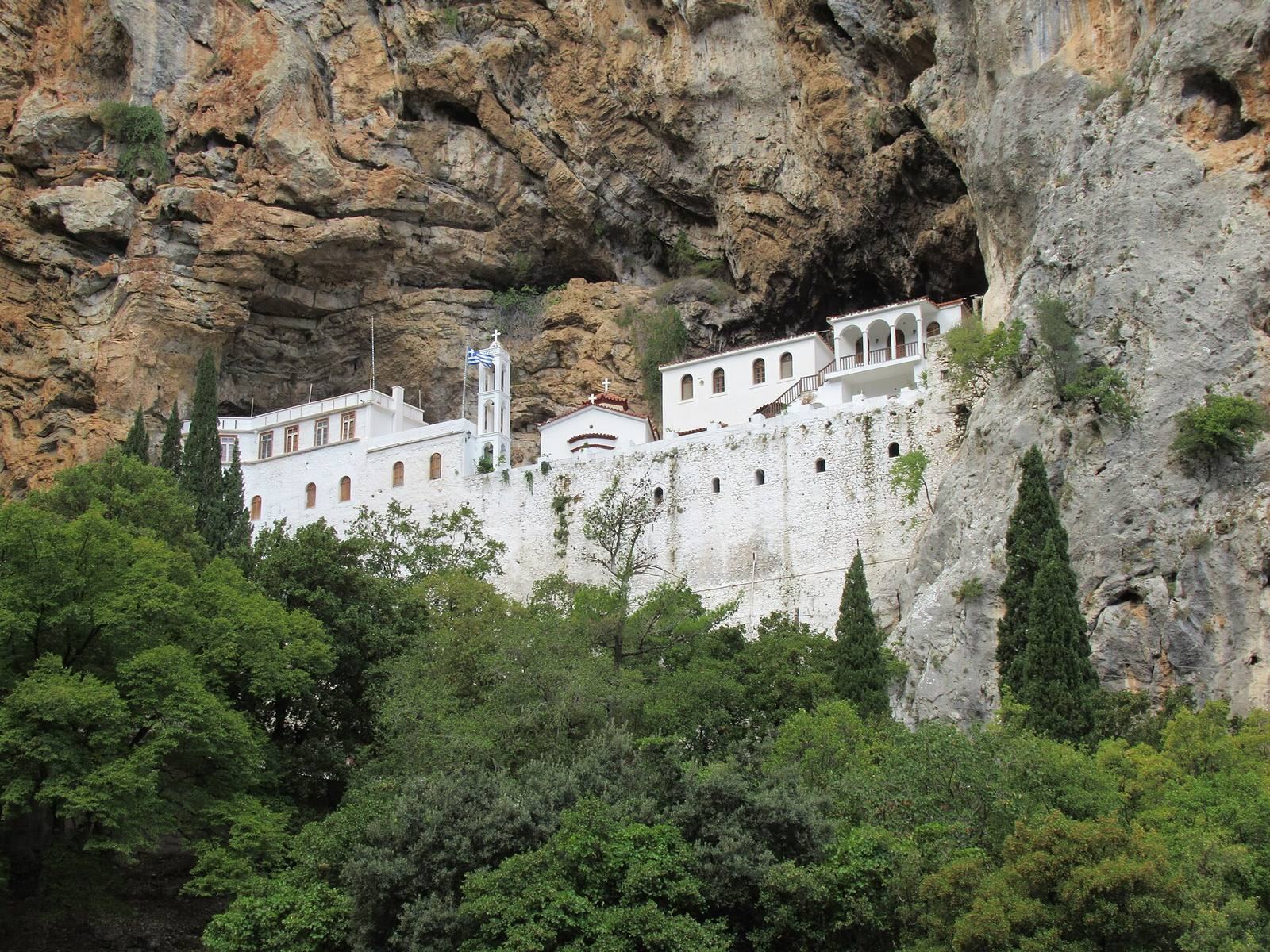
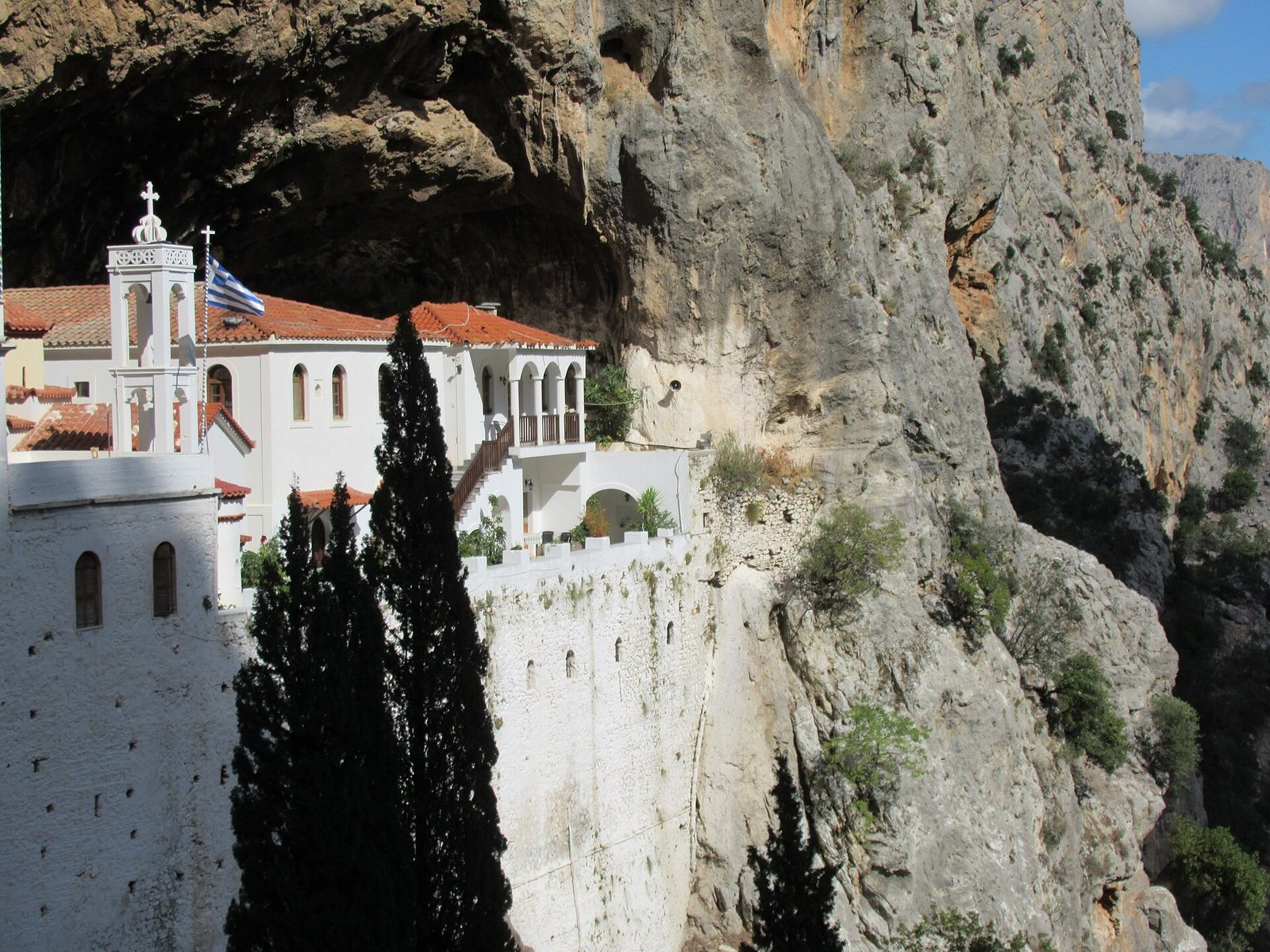
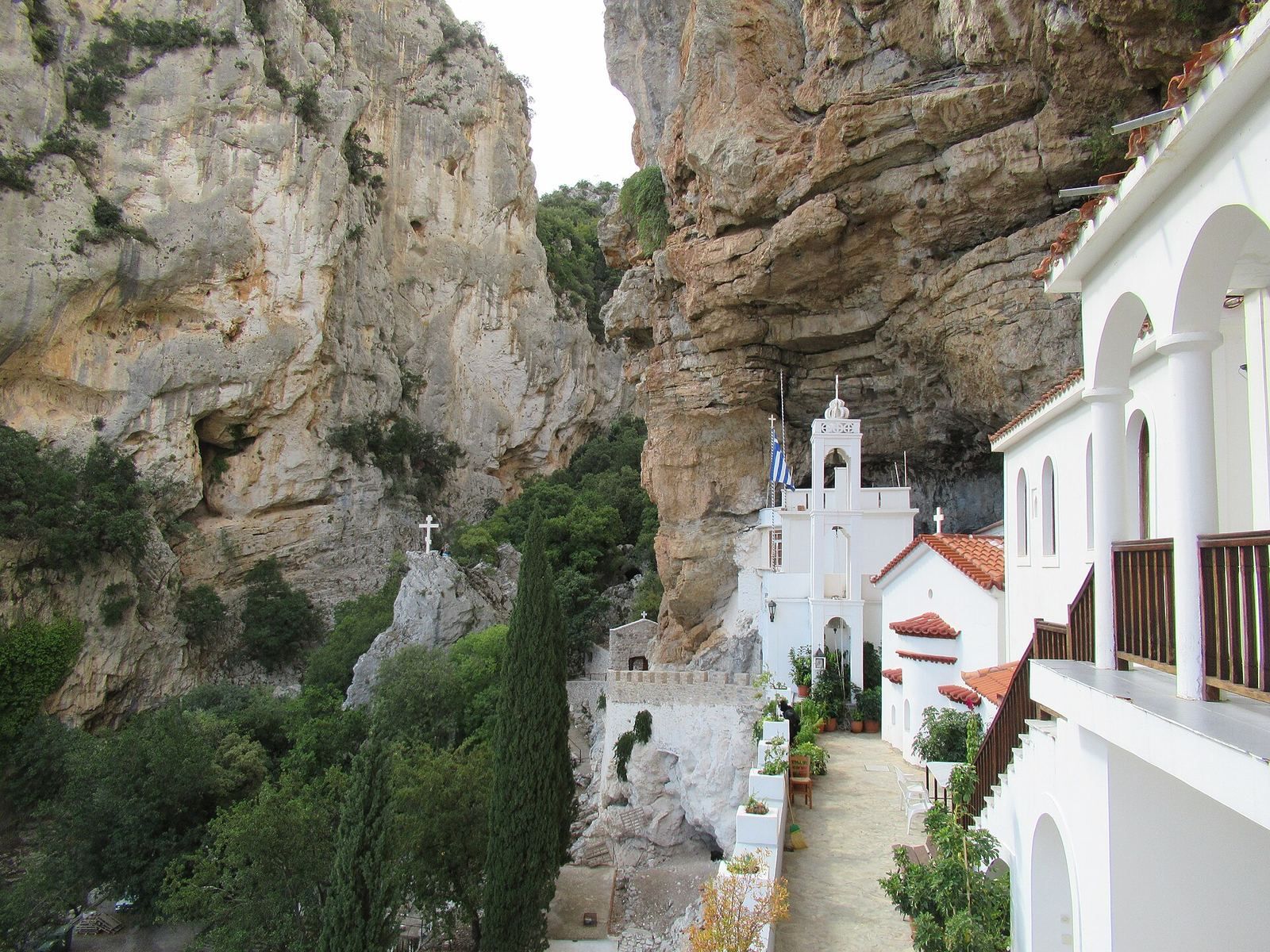
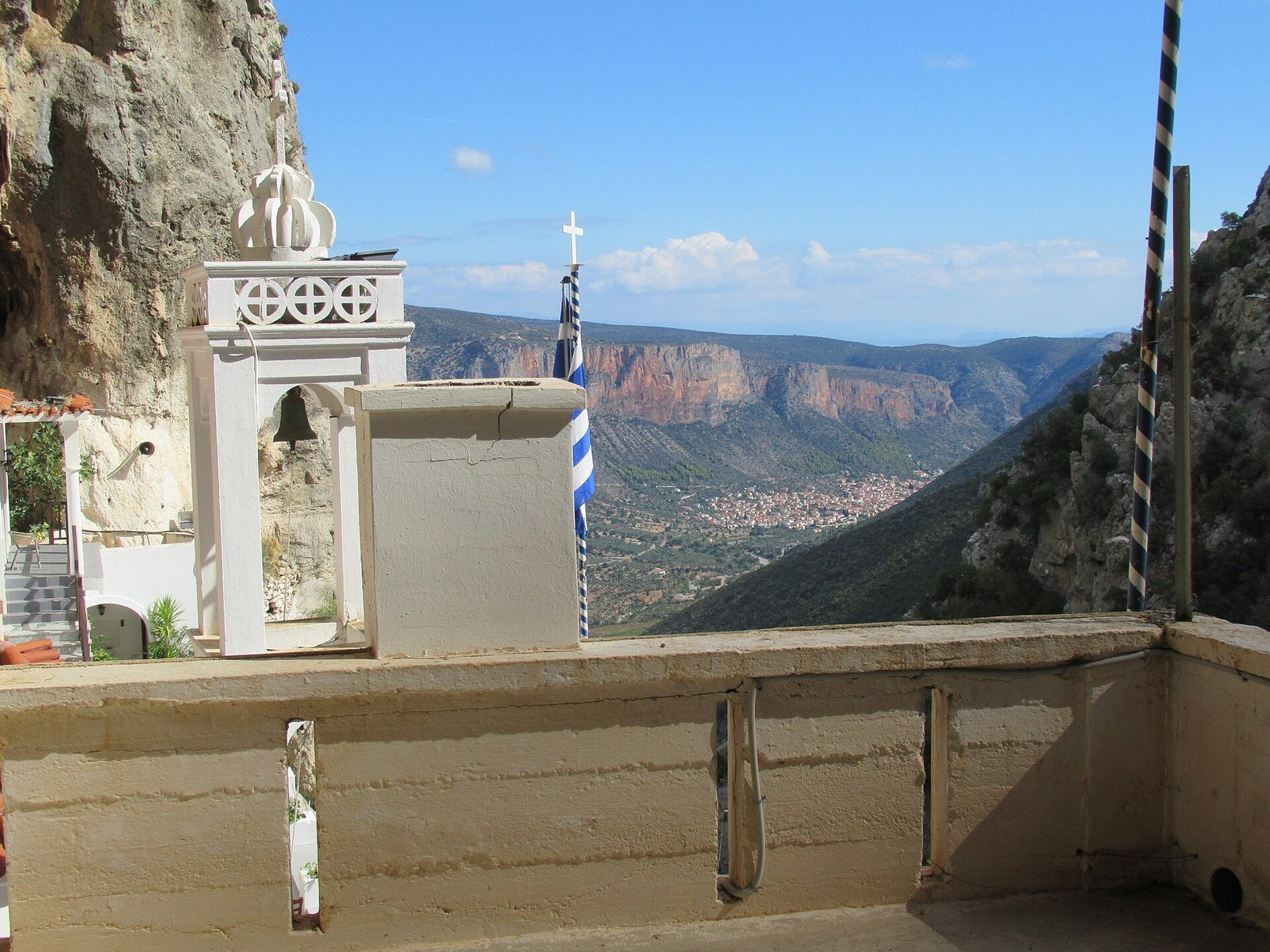
The monastery occupies a cave in a steep rock face above the Leonidio plain, about 6 km northwest of Leonidio. It lies at an elevation of about 500 m on a mountain that rises to 764 m. A large fig tree once stood above the cave.
Old footpath
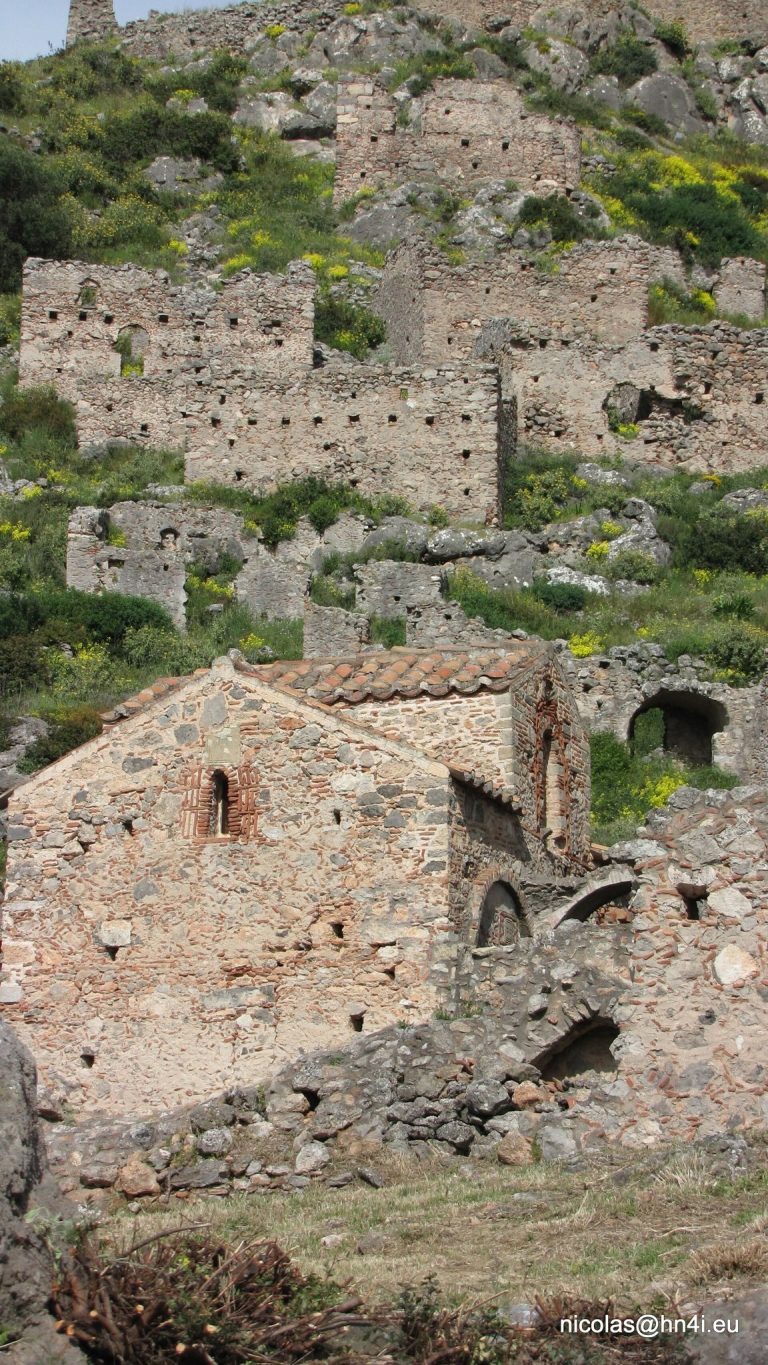
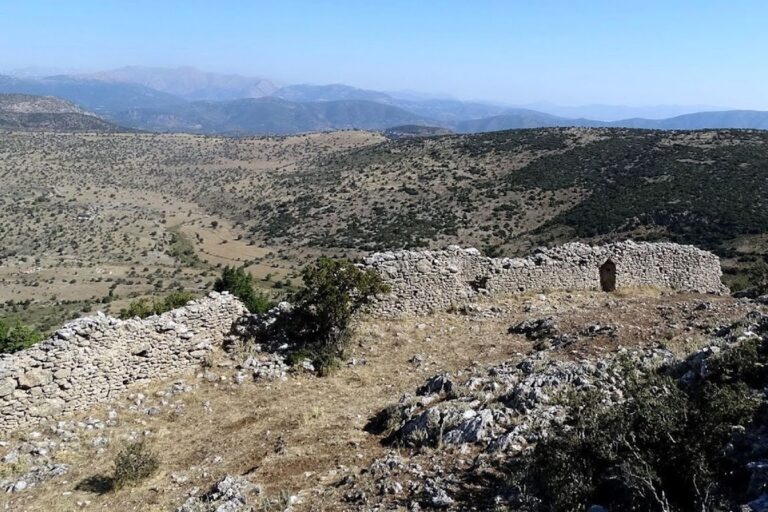
An old footpath passes the monastery and winds toward a gorge and the mountain heights. Rough stones pave the path, while dry walls built from large stones help prevent slipping. It is thought to predate the monastery and may date to the Byzantine period, the medieval era of the Eastern Roman Empire. The path once linked mountain villages and, below Mount Spartolaka, joins a road leading to Tsitalia.
Main church
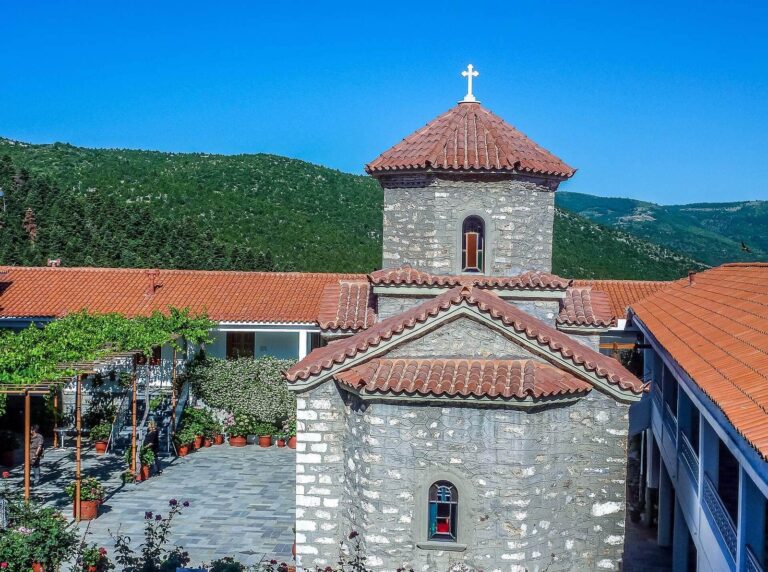
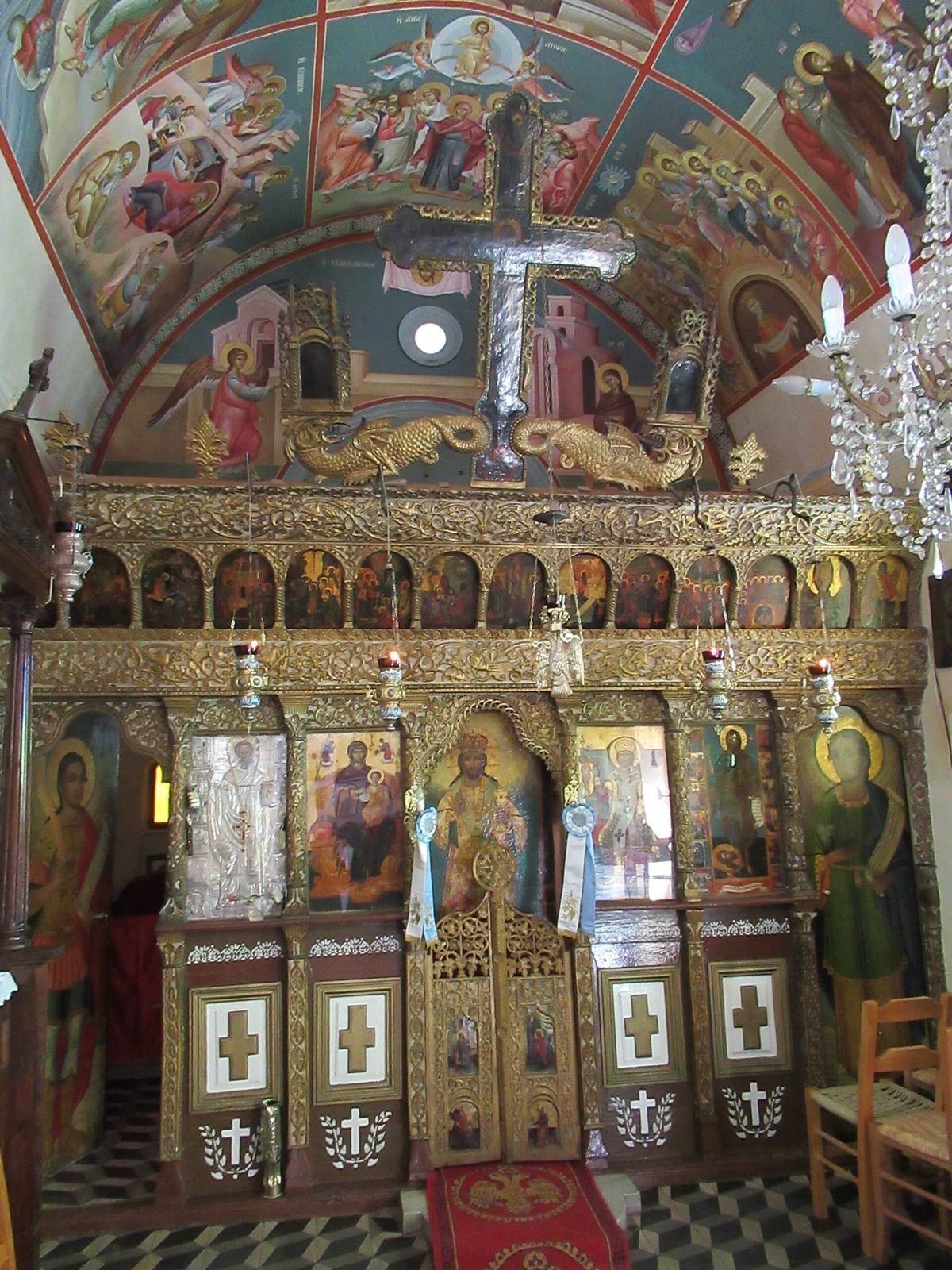
The main church dates to the early seventeenth century and has a central dome with arms arranged in the form of a cross. Two painters from Agios Ioannis in Arcadia decorated its interior with wall paintings. An elaborately carved wooden screen separates the sanctuary from the main worship space, and it bears icons dating to the seventeenth century. A separate icon at the veneration stand depicts the Dormition, or death, of Saint Nicholas. Kyriakos Koulidas painted it in 1767.
Rock-cut chapel and relics
Nuns built a chapel dedicated to Saint Dionysius the Areopagite into the rock. A reliquary, a container for holy relics, holds relics of several saints, including Dionysius. A plaque set into the wall above the monastery entrance bears the date 1783, the year of a renovation.
Tombs
One nearby tomb is Roman and cut into the rock; part of its inscription remains. Another may be the tomb of a Frankish monk. A French inscription associated with Christopher from Madagascar reads, "One always returns … to one’s first love."