Karlík Castle: A Vanished Gothic Fortress in Czechia
Site at a Glance
- Rating
- 4.1
- Popularity
- Low
- Country
- Czechia
- Primary era
- Medieval
- Eras represented
- Medieval
- Civilizations
- Holy Roman Empire, Kingdom of Bohemia
- Site type
- Military
- Remains
- Castle
On this page7 sections
History
Karlík Castle is a vanished Gothic castle in Czechia, traditionally associated with Charles IV, the fourteenth-century king of Bohemia and Holy Roman Emperor. Its construction is generally placed in the fourteenth century, although surviving historical sources do not record its foundation or original function. The castle stood above the Karlické Valley and is now protected as a cultural monument of the Czech Republic.
Foundation and medieval record
Karlík is traditionally said to have been founded by Charles IV in 1358, during a period of extensive royal building in the Bohemian lands. That date remains uncertain. The castle may have been connected with a long-distance road running from Prague toward Dobříš, but this interpretation is also unconfirmed.
The only reliable medieval reference to Karlík dates from 1400. In that year, Wenceslas IV, Charles IV’s son and successor as king of Bohemia, pawned the property. A sum of 200 kop of groschen was allocated for alterations to the castle. A kop was a historical monetary unit equal to a group of groschen. By 1544, a written reference mentioned only a nearby pond and mill site, with no mention of the castle itself.
Later tradition and protection
A later tradition, recorded by the sixteenth-century Bohemian chronicler Václav Hájek of Libočany, claimed that Charles IV founded Karlík as a residence for the queen and her court. The story explained the supposed purpose by alleging that women were not permitted to stay at Karlštejn, the medieval castle associated with Charles IV. In the nineteenth century, the Czech poet and playwright Jaroslav Vrchlický incorporated this tradition into his play A Night at Karlštejn. The surrounding Karlické Valley is protected as a nature reserve.
Remains
Fortifications and inner core
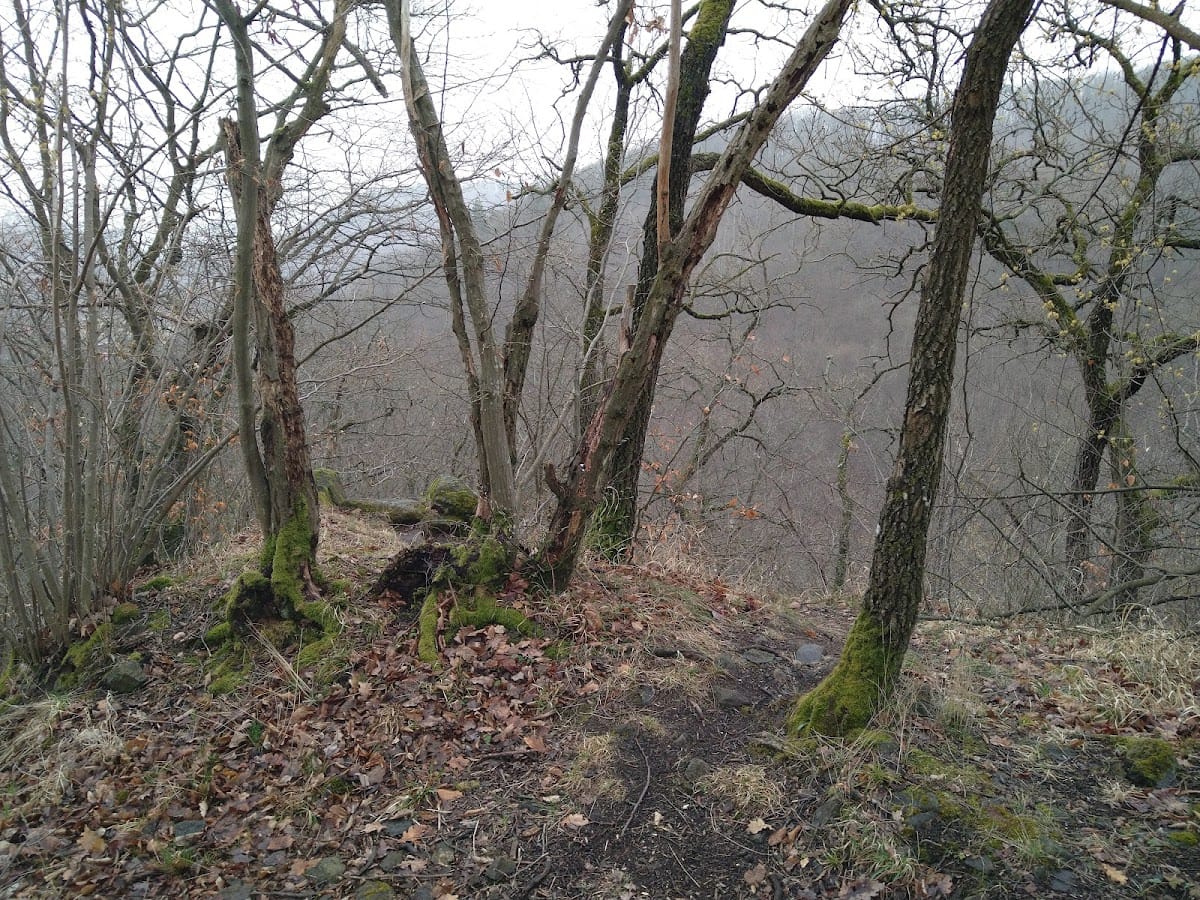
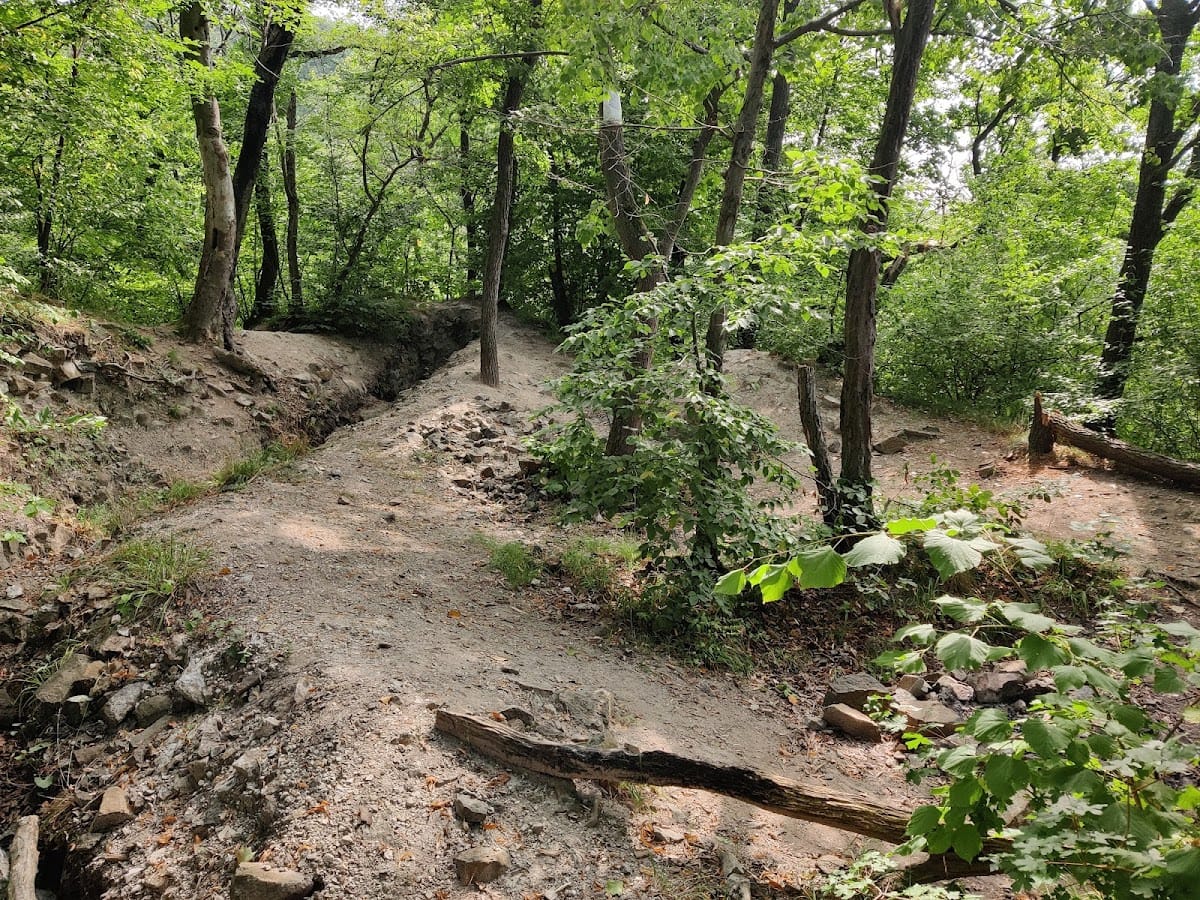
The castle occupied the promontory called Hrádek above the Karlické Valley, in the cadastral territory of Mořinka in the Beroun District, approximately two kilometres northwest of Dobřichovice. Built in the Gothic style, it had a small inner core and defensive works adapted to the shape of the promontory. Its remains consist of sections of rampart and masonry.
North approach
The only approach came from the north, where a neck ditch cut across the narrow connection between the fortified promontory and the surrounding terrain. A rampart, an earthwork defensive bank often reinforced or accompanied by masonry, strengthened this line of protection.
Inner core buildings
At the front of the small inner core stood a polygonal building that may have served as a tower. Another building was placed against the wall on the southwestern side of the core. Its interior was divided by a partition, of which only fragmentary remains survive.