Zámek Dobřichovice: A Historic Castle of the Knights of the Cross with the Red Star
Site at a Glance
- Rating
- 4.5
- Popularity
- Low
- Country
- Czechia
- Primary era
- Early Modern
- External website
- Open
- Eras represented
- Medieval, Early Modern
- Civilizations
- Holy Roman Empire, Kingdom of Bohemia
- Site type
- Domestic
- Remains
- Castle
On this page12 sections
History
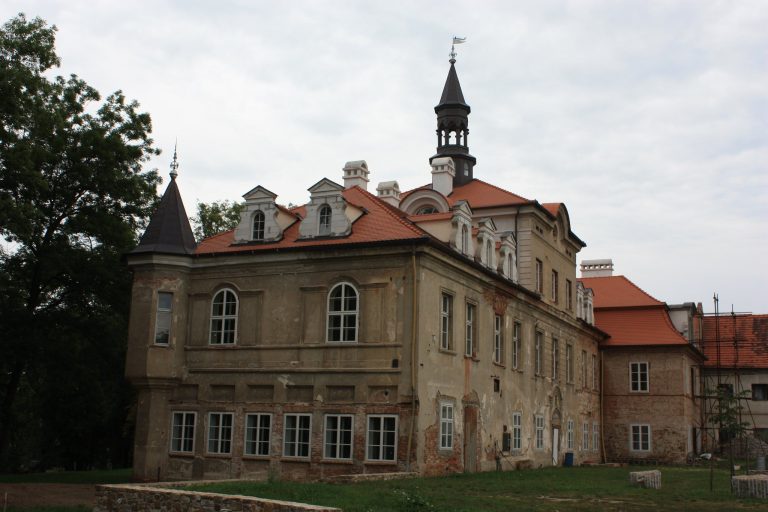
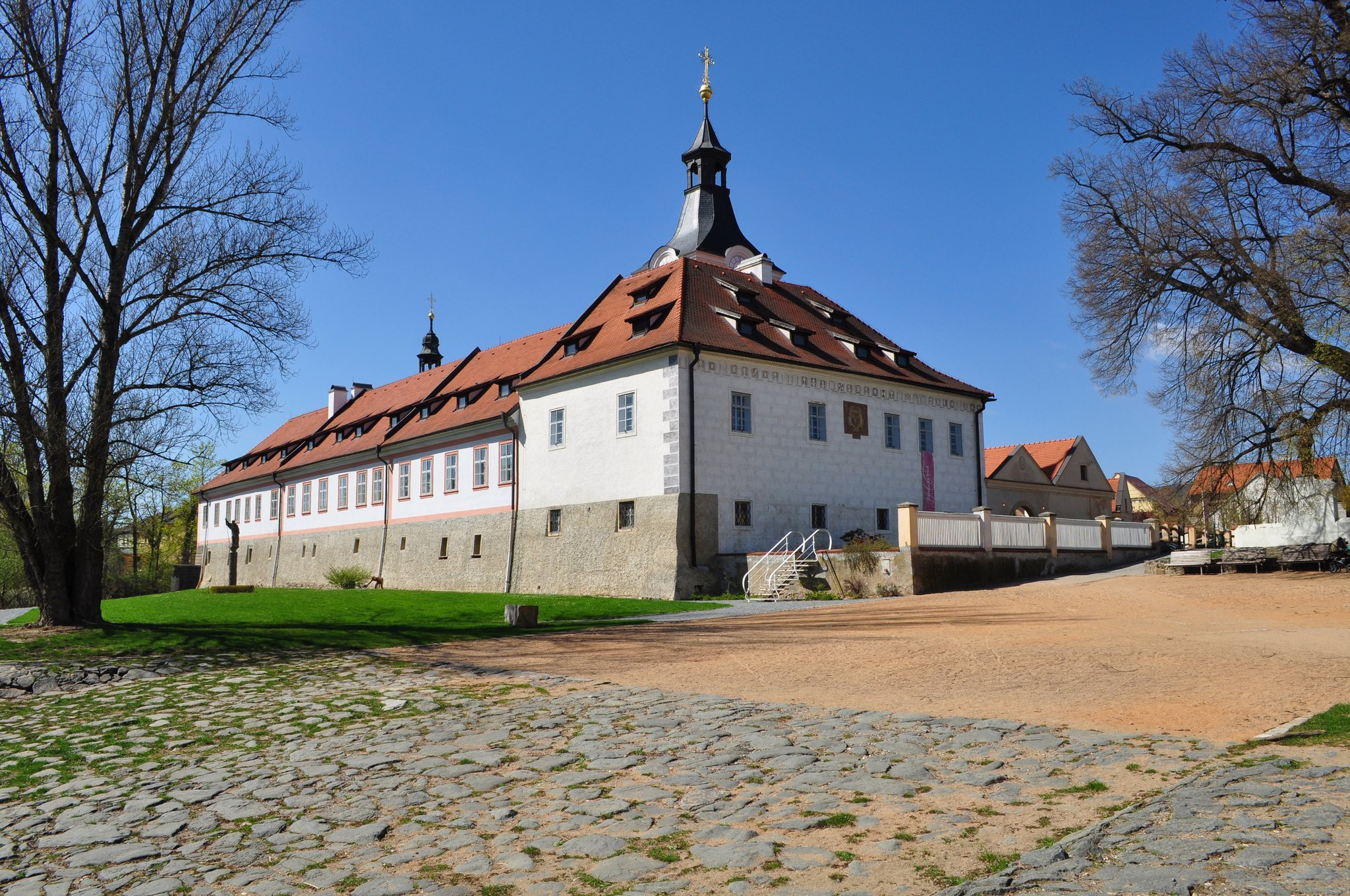
Zámek Dobřichovice is a historic castle in Czechia, associated since the thirteenth century with the Order of the Knights of the Cross with the Red Star. The order acquired Dobřichovice from King Wenceslaus I in 1253, and the complex later developed through Renaissance and Late Baroque rebuilding.
Medieval origins and Renaissance rebuilding
The order lost Dobřichovice during the Hussite Wars, fifteenth-century religious and political conflicts centered in Bohemia. A fortress on the site of the present castle is first recorded in 1420, when King Sigismund of Luxembourg granted Dobřichovice to Sigismund Bolechovec of Pušperk. The order’s grand master, Matěj of Třebska, later bought the estate back.
During the sixteenth century, Grand Master Antonín Brus of Mohelnice had the fortress rebuilt as a summer residence for the order. It was known as the “priests’ house.” Further Renaissance alterations followed under Grand Master Zbyněk Berka of Dubá.
War, fire, and Late Baroque transformation
In 1618, the Estates Directorate, the governing body created by the Bohemian estates during their revolt against Habsburg rule, installed the Bohemian nobleman and military commander Jindřich Matyáš of Thurn at Dobřichovice. His tenure ended with the defeat of the revolt at the Battle of White Mountain in 1620.
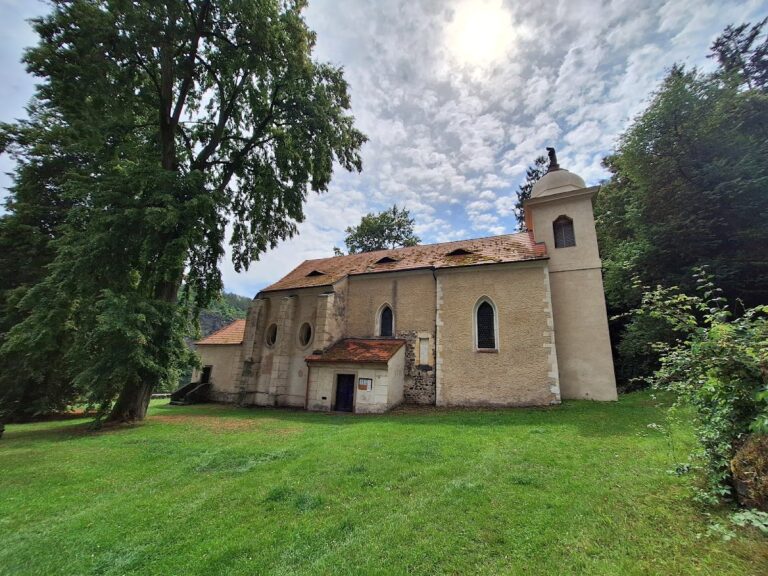
Swedish forces burned the castle during the Thirty Years’ War, the European conflict fought from 1618 to 1648 amid religious, dynastic, and political struggles. Repairs followed, but almost all of Dobřichovice was destroyed by fire in 1659. The residence had been restored by 1665. Under Grand Master Jiří Ignác Pospíchal, the Chapel of Saint Jude Thaddeus was added in 1676.
Another major fire in 1779 led to a rebuilding campaign that lasted three years. The castle was reconstructed in the Late Baroque style and received its tower, reaching approximately its present form. During the wars with France in 1799, a detachment of Russian Cossacks commanded by Colonel Semernikov was quartered there. General Colloredo-Mansfeld stayed at the castle before the Battle of Leipzig in 1813.
Twentieth-century changes and restoration
The castle remained the property of the Order of the Knights of the Cross with the Red Star until 1948. It was then used for housing and storage and passed through the administration or ownership of a state farm, the Dobřichovice Agricultural Cooperative, the Czechoslovak Scientific and Technical Society, the Memorial of National Literature, the Mír Agricultural Cooperative of Velké Bílovice, and, from 1988, Vakam, Ltd.
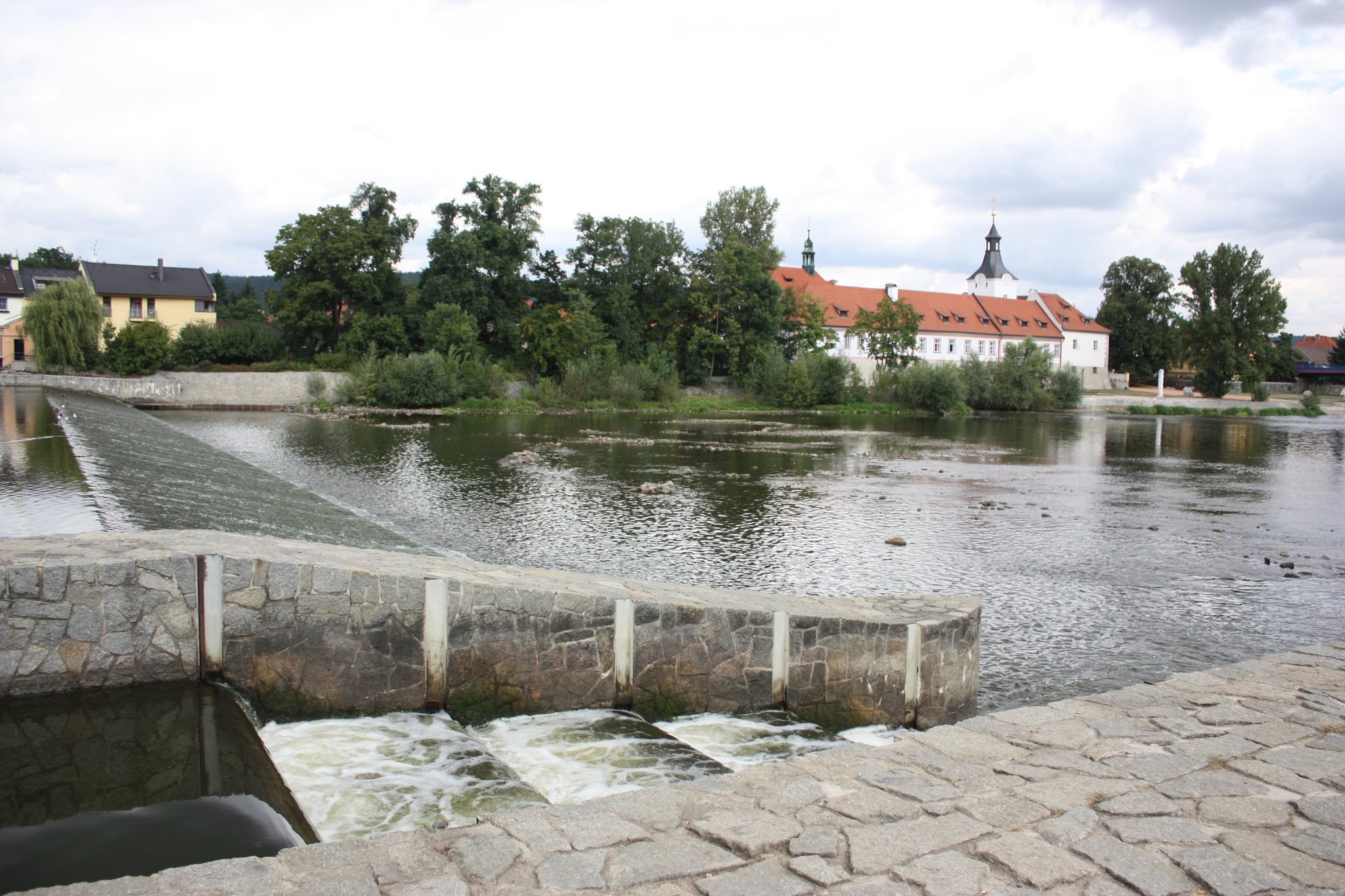
Repeated flooding also damaged the complex. More than twenty floods have been recorded since the beginning of the eighteenth century, with the most destructive occurring in 1872 and 2002. The seriously deteriorated castle was returned to the order in 1994. Reconstruction continued for ten years and included repairs required after the 2002 flood. Since 2004, the town of Dobřichovice has held the castle on a long-term lease. The complex serves as a cultural and social center, while religious services continue in the chapel and part of the building houses a restaurant. The castle is protected as a cultural monument of the Czech Republic.
Remains
The surviving complex is a three-winged building with a prismatic tower, Renaissance sgraffito decoration, a courtyard, and a surrounding perimeter wall. Renaissance sgraffito is made by scratching through contrasting plaster layers to form patterns or images. The main block and east wing are single-storey, while the west wing consists of the Chapel of Saint Jude Thaddeus.
Castle buildings and enclosure
Wings and tower
The three wings form the principal castle building. The tower contains a two-flight staircase leading to the first floor. Its addition belongs to the Late Baroque rebuilding after the fire of 1779, when the castle acquired approximately its present appearance.
Courtyard and gateways
The complex includes a guardhouse and courtyard. A perimeter wall encloses the castle and has two gateways, defining the surviving relationship between the main residence and its outer enclosure.
Chapel, painted interiors, and associated features
Chapel and painted rooms
The west wing contains the Chapel of Saint Jude Thaddeus, added in 1676. The Prague painter Václav Schlachter created painted decoration in some rooms between 1797 and 1800 and later repainted the chapel.
Statue of Saint John of Nepomuk
A Baroque statue of Saint John of Nepomuk stands near the castle. The fourteenth-century Bohemian priest and martyr became an important figure of Catholic devotion in Central Europe. The statue dates from 1729 and was originally surrounded by four lime trees, of which one survives.
Baroque paintings
In 1969, the local priest Šimeček found 56 valuable Baroque paintings while cleaning the castle cellar. The group includes ten portraits of grand masters of the Order of the Knights of the Cross with the Red Star. Among them is a portrait of Grand Master Václav Horák by Václav Brožík. The paintings are now exhibited at the order’s monastery near Charles Bridge in Prague.