Lummelunda Church: A Medieval Church of Sweden
Site at a Glance
- Country
- Sweden
- Primary era
- Medieval
- Eras represented
- Medieval, Early Modern, Modern
- Civilizations
- Danish, Swedish
- Site type
- Religious
- Remains
- Church
On this page11 sections
History
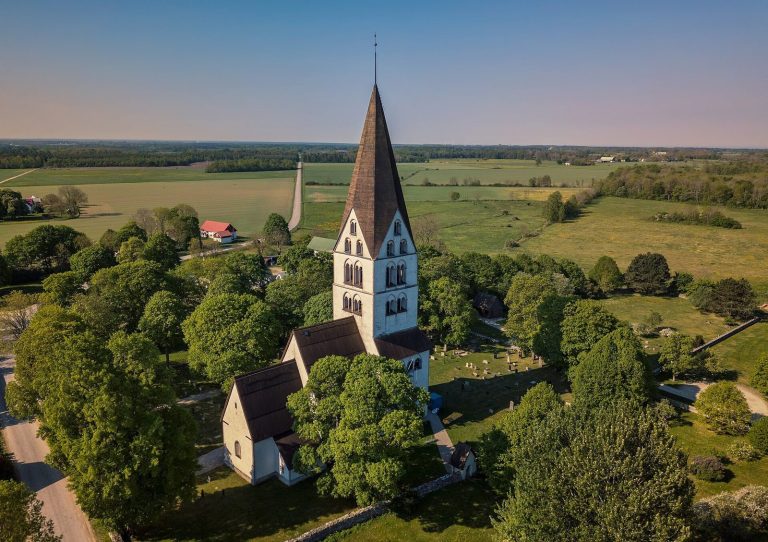
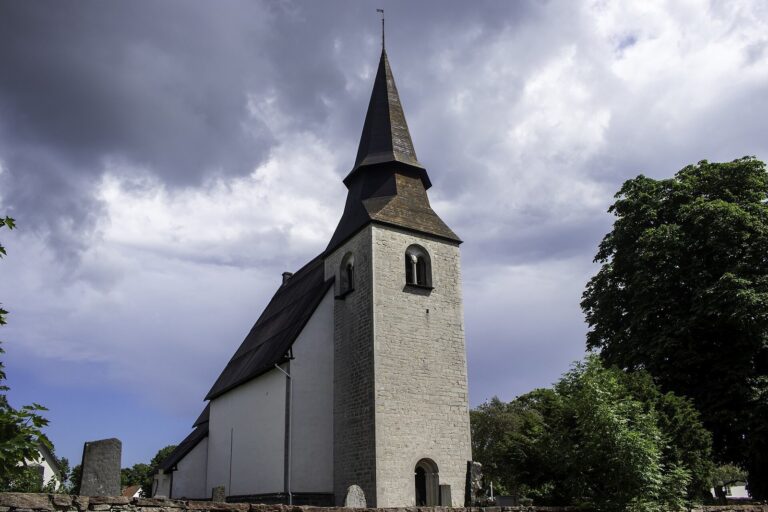
Lummelunda Church is a Church of Sweden church in Lummelunda, Sweden. It serves Stenkyrka parish within the Diocese of Visby, a regional church administration, and belongs to the Lutheran Church of Sweden. Consecrated in the 13th century, it has a Romanesque, or medieval, nave and tower alongside a Gothic, also medieval, choir.
Medieval construction and enlargement
The nave and tower were built around 1200. The church’s original choir was smaller and may have ended in an apse, a rounded sanctuary end. In the later 13th century, the tower arch was widened and given its present form.
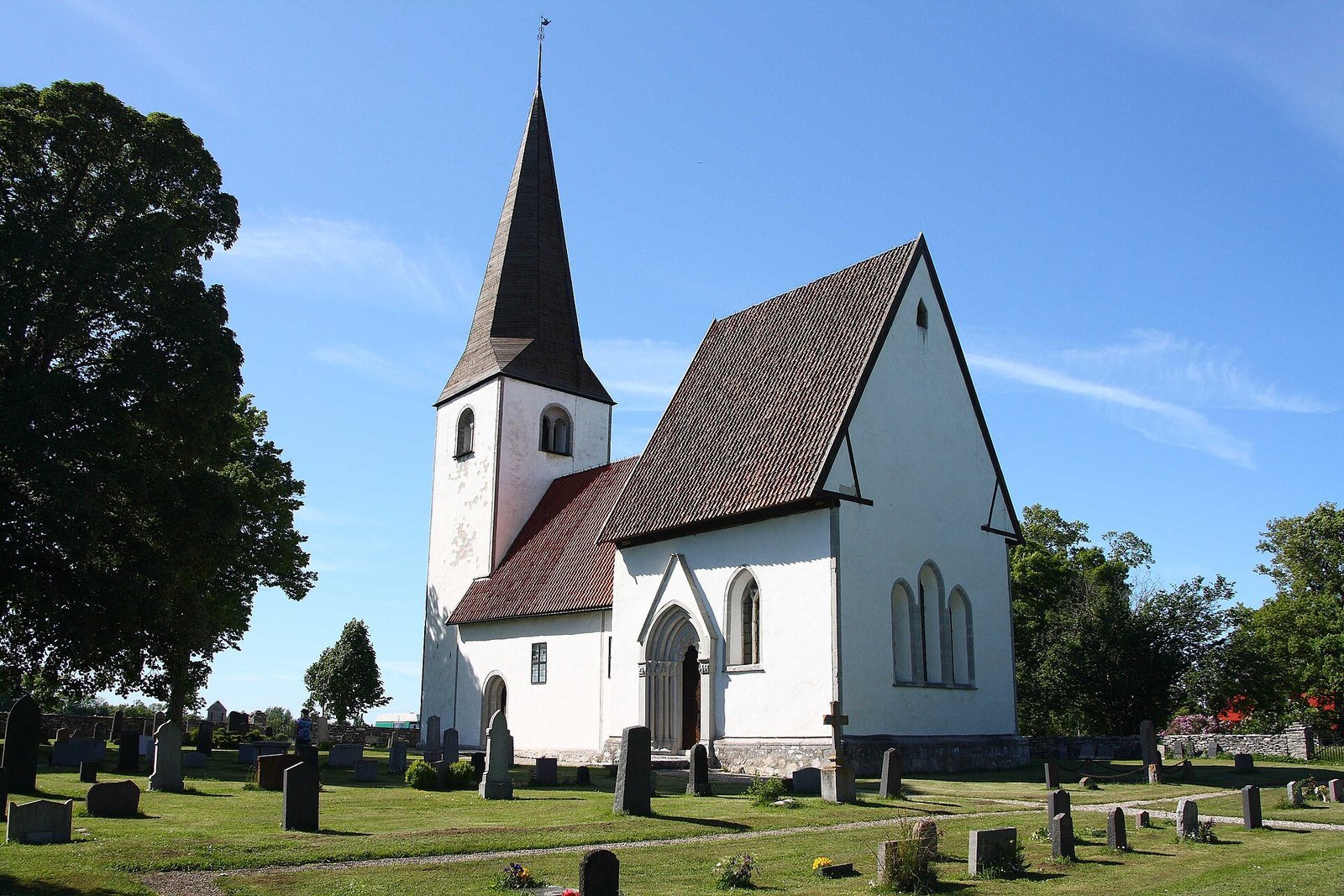
Around the middle of the 14th century, the original choir was demolished and replaced by a much larger one. The work was planned as the start of a complete rebuilding and enlargement, but the choir was the only part reconstructed. The church has otherwise remained largely unchanged since this medieval phase.
Later changes and restoration
The tower spire dates to 1636. During the 17th century, new windows were added to the nave, and the interior was redecorated and refurnished. The nave windows were altered again in the 19th century. The sacristy is first mentioned in 1739.
A restoration in 1960 and 1961 removed a west gallery and replaced a temporary flat wooden ceiling in the nave. It also revealed paintings on the tower arch and moved the baptismal font beneath it. A five-stop organ brought to the church in 1961 was transferred to Hallshuk Fishing Chapel in Hall parish in 1988. The present organ was built in 1989.
Remains
Plan and exterior
Main building and sacristy
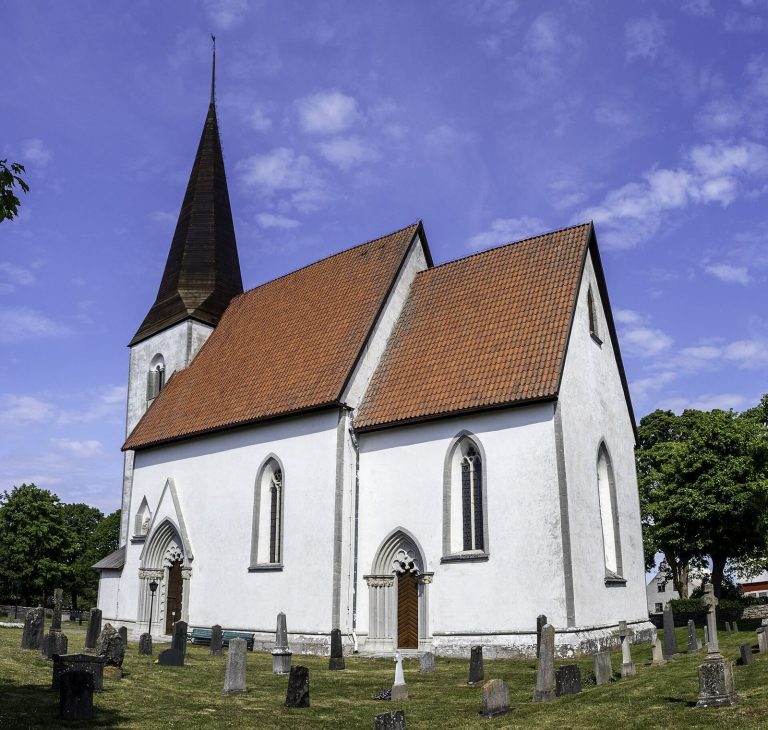
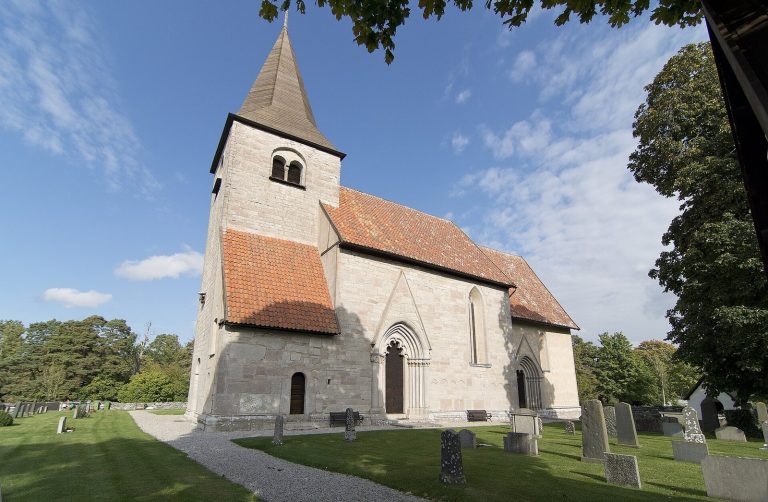
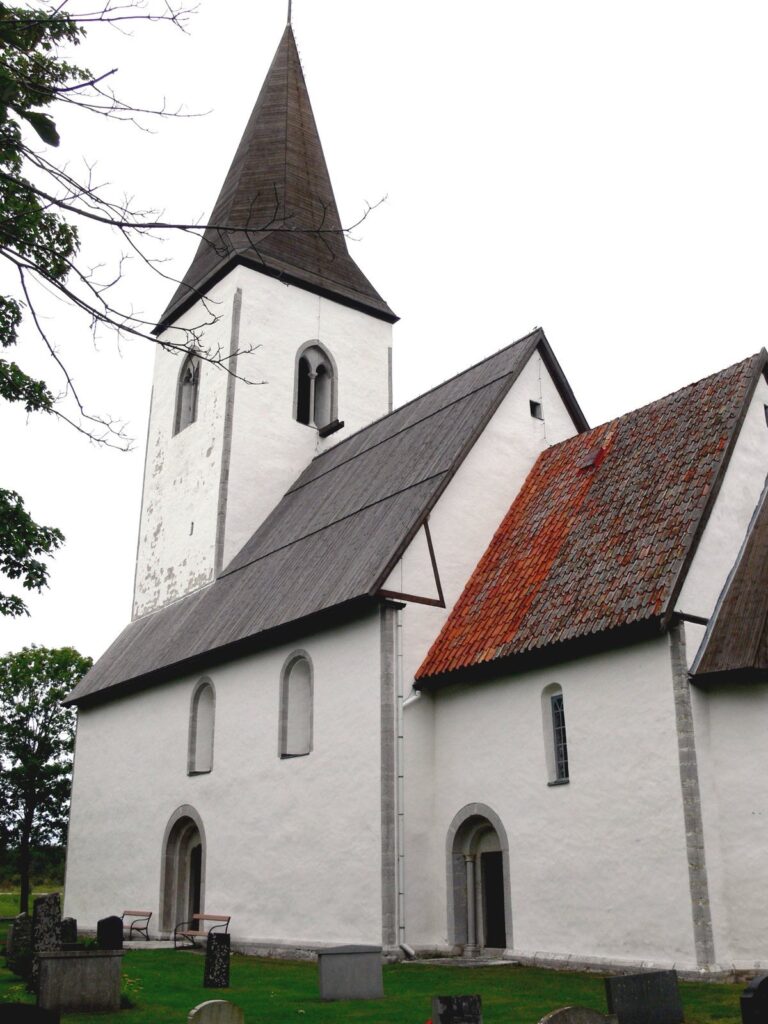
The limestone church is arranged with a Romanesque nave and western tower, a substantially larger Gothic choir at the eastern end, and a sacristy attached on the north side. Together, these parts preserve the contrast between the church’s earlier and later medieval architectural forms.
South portals
The south side has a portal in each of the church’s principal architectural styles. The nave entrance has a Romanesque rounded arch, while the choir entrance is pointed and framed by receding layers. The latter has carved ornamental bands around the tops of its supports and a decorative pointed gable. Stone sculptures decorate the main southern portal; their comparatively rough execution has been likened to sculpture at Martebo Church.
Interior and furnishings
Vaults and ceiling
The choir has a tent vault, whose sloping surfaces meet in a tent-like shape and form eight curved sides. The nave has an angled concrete ceiling decorated with clouds by artist Harald Norrby in 1989.
Paintings, font, and sculpture
Ornamental paintings cover the tower arch. The oldest mural there dates to 1250, while other paintings belong to the church’s construction period and to the 15th and 17th centuries. Fifteenth-century paintings appear in both the nave and choir; the choir’s include a Last Judgment attributed to the Passion Master, a conventional name for an unidentified medieval painter. A 13th-century baptismal font stands beneath the tower arch.
A considerably worn wooden sculpture dating to about 1500 depicts Saint Anthony, a name shared by several Christian saints venerated in medieval Europe.
Altar, pulpit, and organ
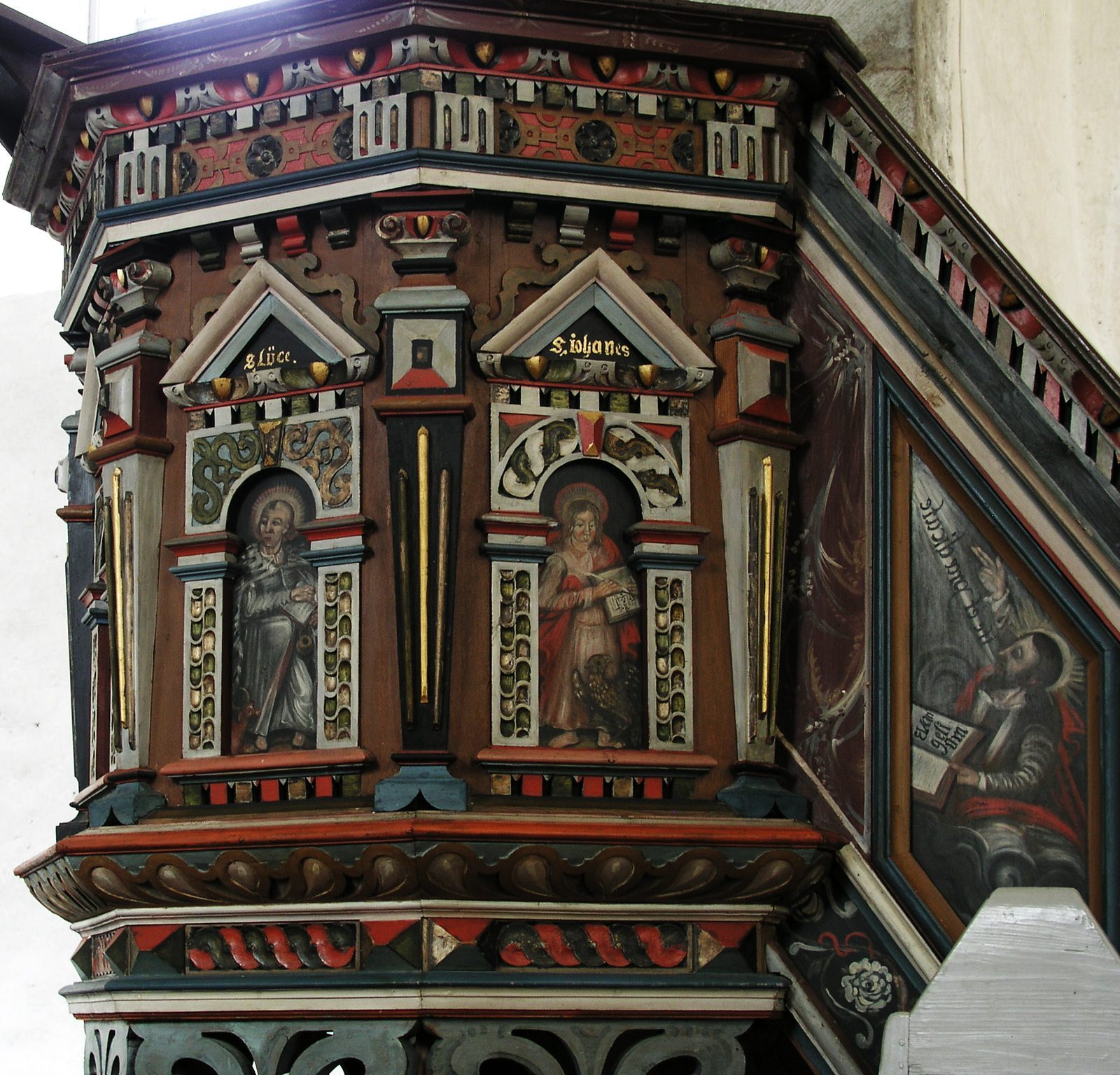
The 1663 altarpiece centers on the institution of the Lord’s Supper. The pulpit, made in 1664, is painted with the Evangelists, the four figures traditionally credited with writing the canonical Gospels. The present electric organ has two manuals, or hand-played keyboards, and a pedal played by the feet. Its stops, controls for sets of sounds, can be assigned freely to the keyboards and pedal.