Mielżyński Palace in Poznań: A Neoclassical Residence
Site at a Glance
- Popularity
- Medium
- Country
- Poland
- Primary era
- Early Modern
- Eras represented
- Early Modern
- Civilizations
- Kingdom of Prussia
- Site type
- Domestic
- Remains
- Elite Residence
On this page4 sections
History
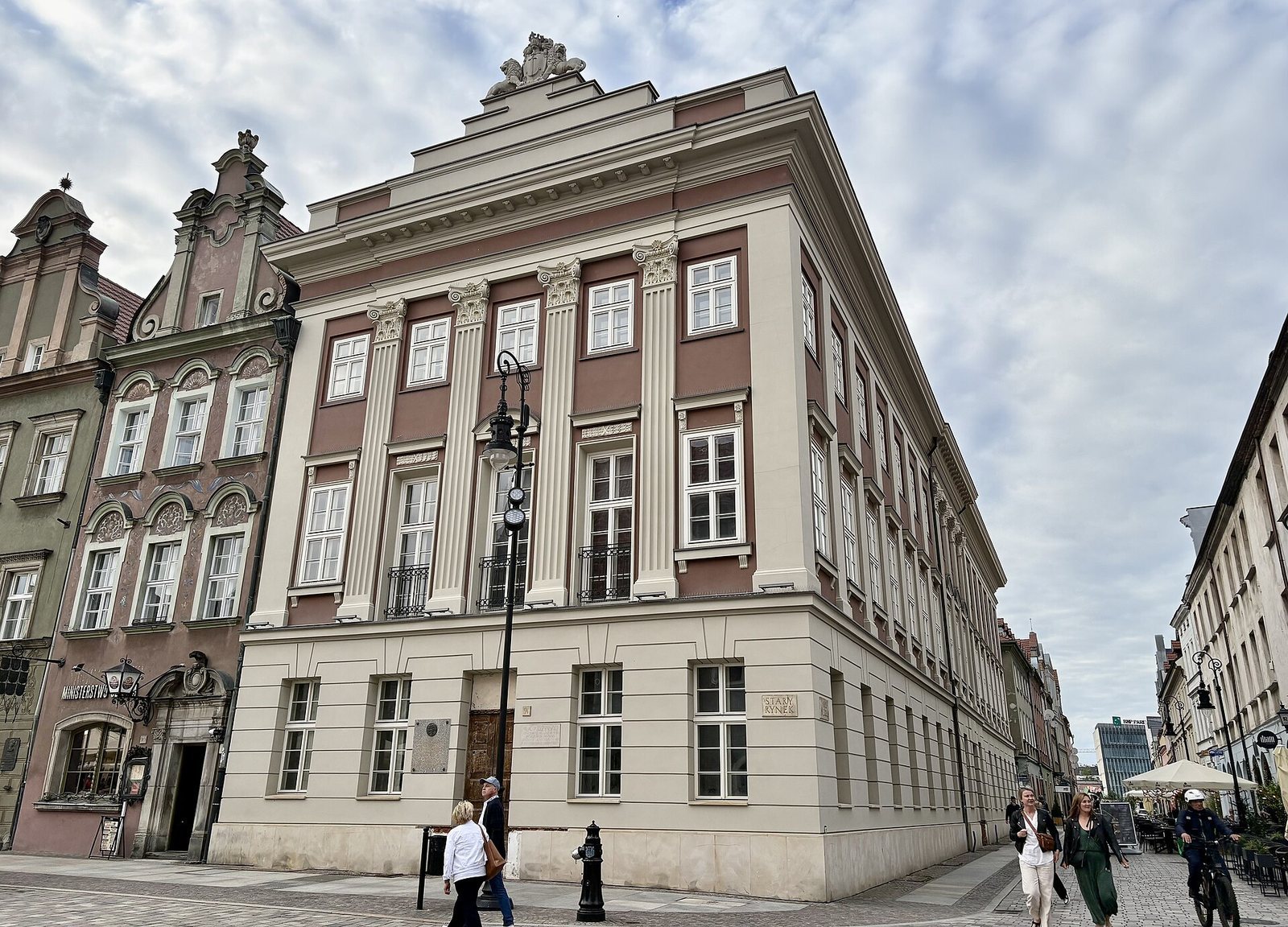
Mielżyński Palace is a Neoclassical residence on Old Market Square in Poznań, Poland, formed by converting a tenement house between 1795 and 1798. Neoclassicism draws on forms and principles associated with classical Greek and Roman architecture; the palace was described as the first building in Poznań to fully embody the style.
From tenement to palace
Maksymilian Mielżyński, a Polish nobleman and landowner, bought the tenement house in 1772. After its conversion into a palace, the property returned to use as a rental tenement in 1800. In 1806, Polish general Jan Henryk Dąbrowski and statesman and writer Józef Wybicki lodged there.
Destruction, rebuilding, and ownership
Fighting in 1945 completely destroyed the palace. It was rebuilt between 1954 and 1957 and transferred to the regional board of the Polish Tourist and Sightseeing Society (PTTK), which established its headquarters there. A Tourist House also operated in the rebuilt palace.
The company Mielżyński Palace bought the property from the Mielżyński family’s heirs in 2006 and pursued its rights in court. It formally became the owner in January 2011.
Remains
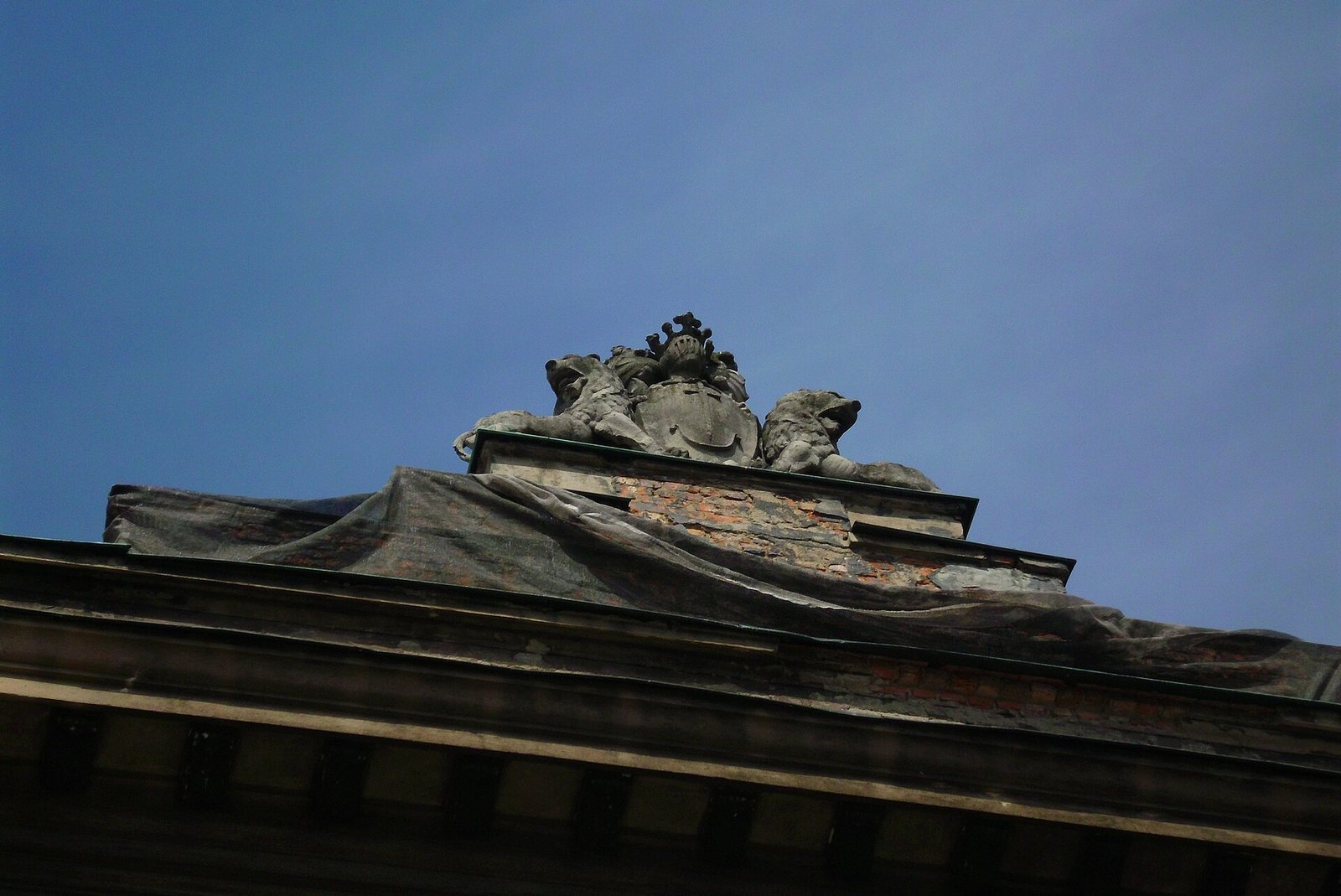
The rebuilt palace is a Neoclassical building with a restrained facade. Its simple pilasters, shallow column-like forms attached to the wall, rise beneath a projecting cornice. Above the main facade, a raised wall section, or attic, is crowned by a coat of arms supported by two lions.