Mehrauli Archaeological Park: An Archaeological Area of Historic Delhi
Site at a Glance
- Rating
- 4.4
- Popularity
- Medium
- Country
- India
- Primary era
- Medieval
- External website
- Open
- Eras represented
- Medieval, Early Modern, Modern
- Civilizations
- British, Delhi Sultanate, Mughal, Rajput
- Site type
- City
On this page21 sections
History
Mehrauli Archaeological Park is an archaeological area in Mehrauli, South Delhi, India, beside the Qutb complex and the Qutub Minar World Heritage Site. Covering about 81 hectares, it preserves remains from successive periods of Delhi’s history, beginning with the Tomar Rajputs and extending through the Delhi Sultanate, Mughal Empire, and British Raj. Lal Kot, the Tomar fort built in 1060 CE, gives the area its place among Delhi’s earliest surviving historic landscapes.
Tomar and Sultanate Delhi
The area is regarded as the only part of Delhi known to have remained continuously occupied for approximately 1,000 years. Its monuments reflect the changing political history of the city. The Tomar Rajputs, an early medieval Rajput ruling dynasty associated with Delhi, established Lal Kot. Later remains belong to the Khalji, Tughlaq, and Lodhi dynasties, which successively ruled parts of the Delhi Sultanate.
The thirteenth-century Sultan Balban is associated with one of the park’s principal monuments. His tomb, dated approximately to 1287 CE, preserves early surviving examples of the true arch and true dome in the Indian subcontinent. A true arch carries structural weight through wedge-shaped stones arranged along its curve, while a true dome is built as a structurally vaulted form rather than by projecting layers inward.
Mughal and later periods
The Mughal period added further religious, funerary, residential, and landscaped features. The Jamali Kamali Mosque and the tomb of Maulana Jamali Kamali, also known as Jamali Kamboh, were constructed between 1526 and 1535 CE. Jamali was a Sufi poet and religious figure, and the complex represents early pre-Mughal mosque architecture.
Later Mughal remains include Zafar Mahal, also called Lal Mahal, built by Bahadur Shah II, the last Mughal emperor. The park also contains structures associated with the late Mughal landscape, including Jharna, which resembles a pleasure garden. During the British period, Sir Thomas Metcalfe, a British East India Company official and agent in Delhi, had a guest house built at Dilkusha near Quli Khan’s Tomb.
Conservation and archaeological park
Redevelopment as an archaeological park and the conservation of important structures began in 1997 through cooperation among the Delhi Tourism and Transportation Development Corporation, the state archaeology department, the Delhi Development Authority, and the Indian National Trust for Art and Cultural Heritage. The Archaeological Survey of India, the Delhi Development Authority, and INTACH have also been principal bodies involved in managing and conserving the area.
From 2000, INTACH undertook systematic documentation of the monuments and began heritage walks. It later restored approximately 40 monuments and introduced signs, heritage trails, and sandstone trail markers, helping establish a clearer framework for interpreting the park’s many periods and structures.
Remains
The park is a broad archaeological landscape containing fortifications, tombs, mosques, stepwells, domestic ruins, garden features, temple fragments, and scattered architectural remains. These elements occupy an area associated with the historic settlement of Mehrauli and preserve relationships between defensive, religious, funerary, residential, and water-management structures.
Fort and medieval tombs
Lal Kot
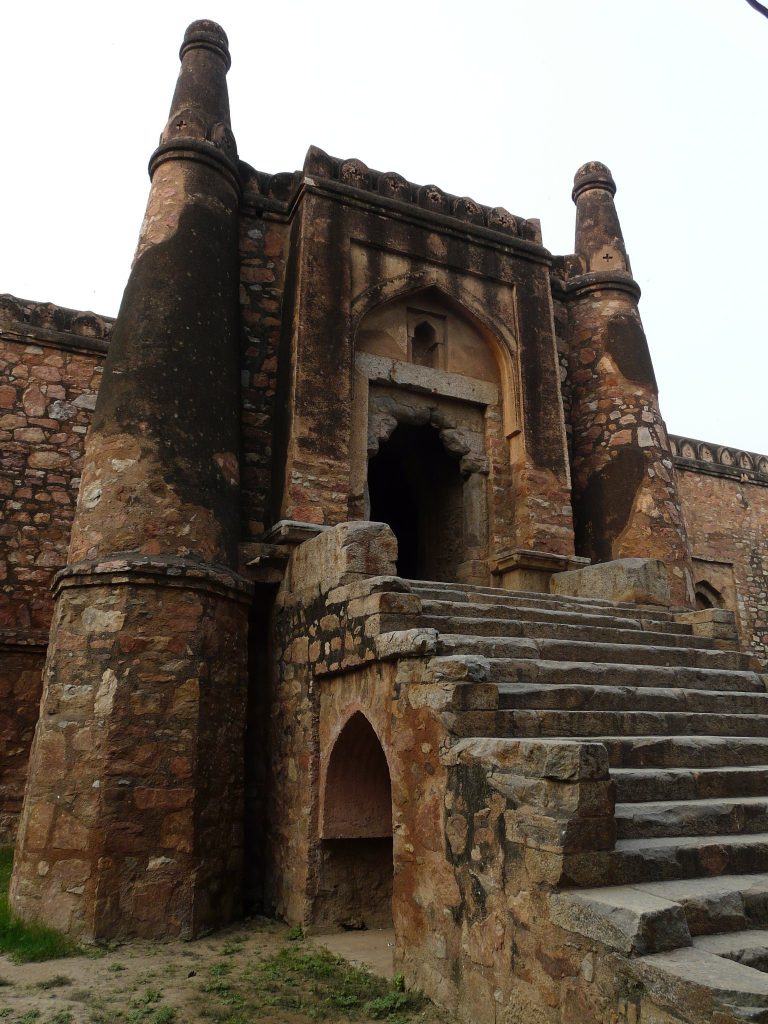
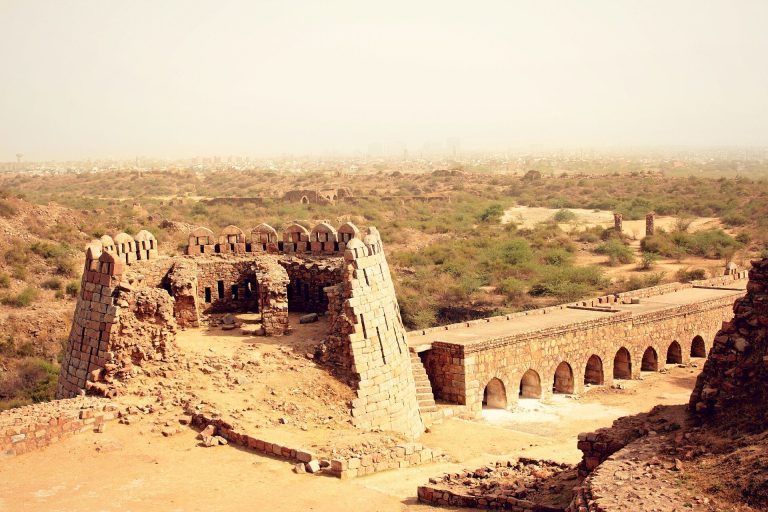
Lal Kot survives in a ruined condition, including a fort bastion built by the Tomar Rajputs in 1060 CE. A Mughal-period horse stable associated with the fort is also among the park’s structures. Together, the surviving fort remains and later additions reflect the continued use of the area after the Tomar period.
Balban’s tomb
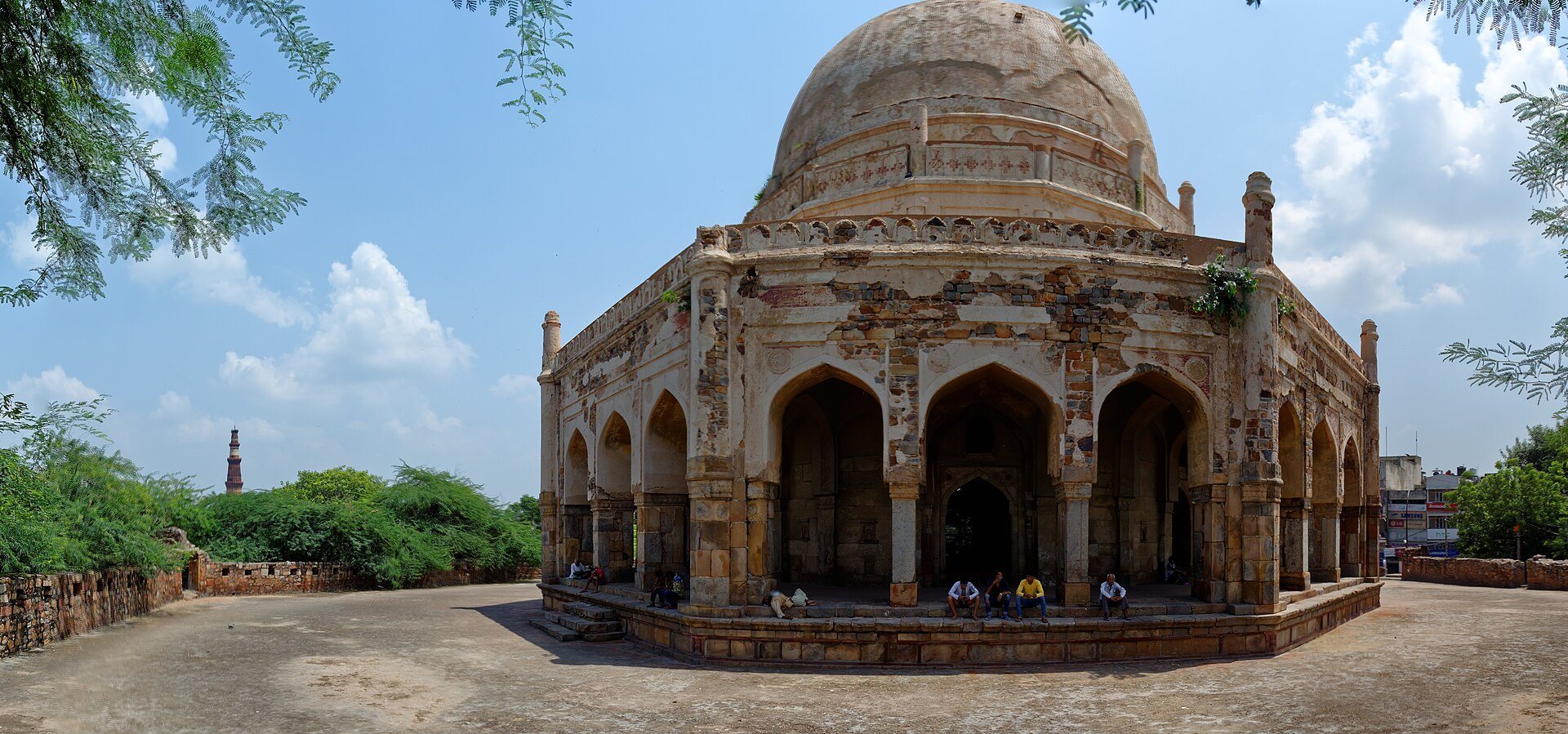
Balban’s tomb dates approximately to 1287 CE and contains a true arch and a true dome. These structural forms are important features of the building and represent early surviving examples of their kind in the Indian subcontinent. The monument is one of the principal surviving structures within the park.
Khan Shahid’s tomb
The tomb of Khan Shahid, Balban’s son, stands within the park with its entrance. Ruined houses also survive near Balban’s tomb, adding domestic remains to the group of medieval funerary structures.
Adham Khan’s tomb
The tomb of Adham Khan is included among the park’s monuments. It forms part of the wider collection of tombs and other funerary buildings scattered through the archaeological area.
Religious buildings and waterworks
Jamali Kamali complex
The Jamali Kamali complex comprises the Jamali Kamali Mosque and the tomb of Maulana Jamali Kamali. The surviving remains include the mosque and the interior of the tomb, whose construction between 1526 and 1535 CE places the complex in the early pre-Mughal architectural period.
Rajon Ki Baoli
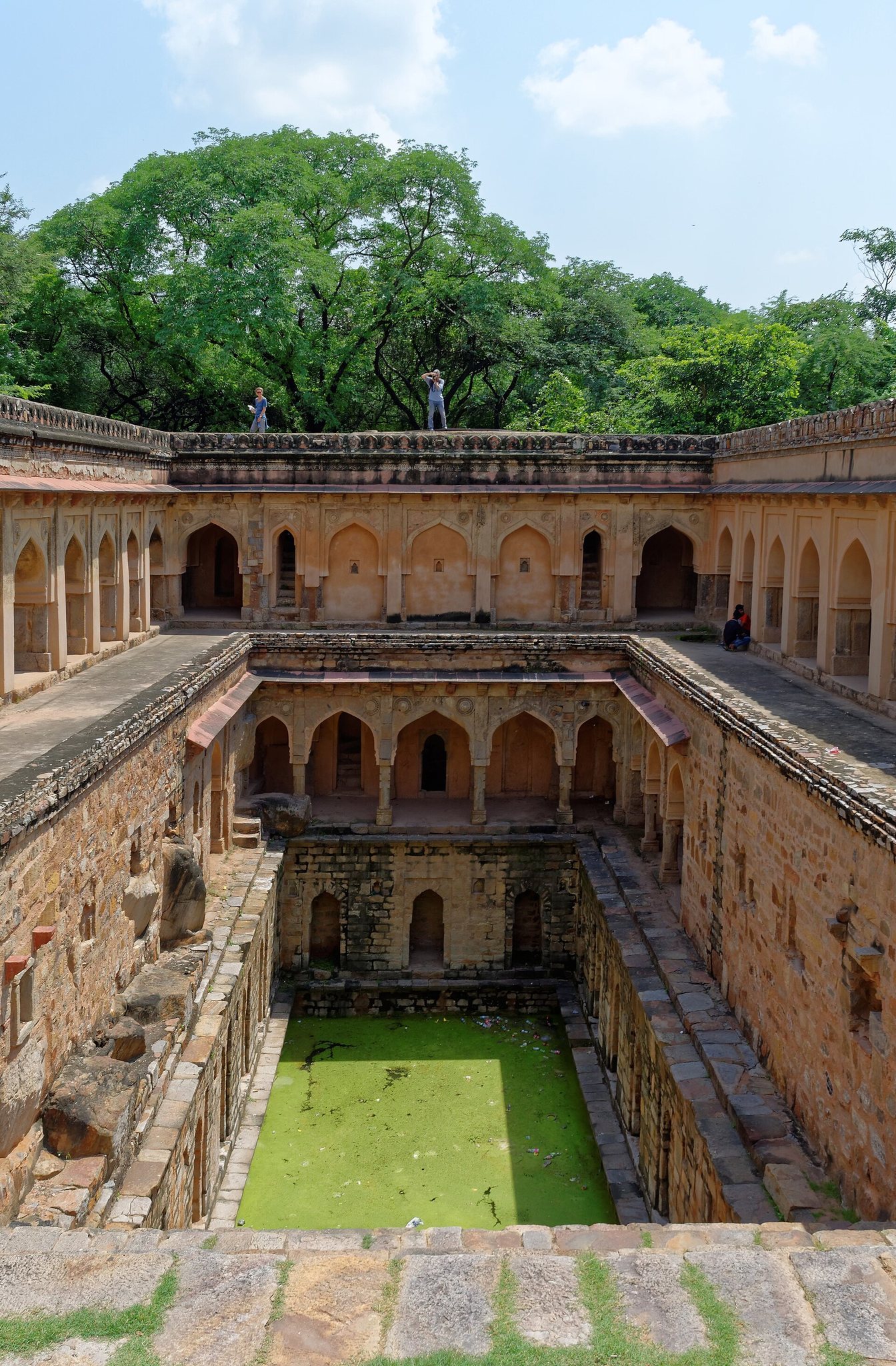
Rajon Ki Baoli is an elaborate underground stepwell, or baoli, with surviving stairs leading down into the water structure. A walled mosque stands beside it, while a tomb and mosque wall are also recorded within the park. The group brings together water management, religious architecture, and funerary remains in one part of the site.
Gandhak Ki Baoli
Gandhak Ki Baoli is another stepwell located beyond or near Rajon Ki Baoli. It forms part of the park’s surviving network of underground water structures.
Qutbuddin Bakhtiar Kaki’s dargah
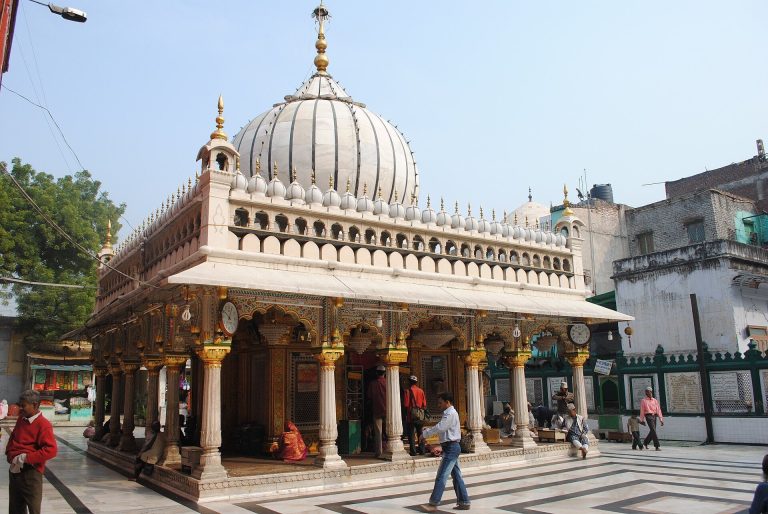
The dargah, or shrine associated with the tomb of a Muslim saint, of Qutbuddin Bakhtiar Kaki lies beyond or near Rajon Ki Baoli. Qutbuddin Bakhtiar Kaki was a prominent Sufi saint, and the shrine remains an important religious feature within the wider archaeological landscape.
Other mosque remains
Madhi Masjid and Bagichi Ki Masjid are among the other mosques represented in the park. Mosque walls and additional religious remains are distributed among the tombs, stepwells, and other structures.
Mughal, British, and landscape features
Quli Khan’s Tomb and Dilkusha
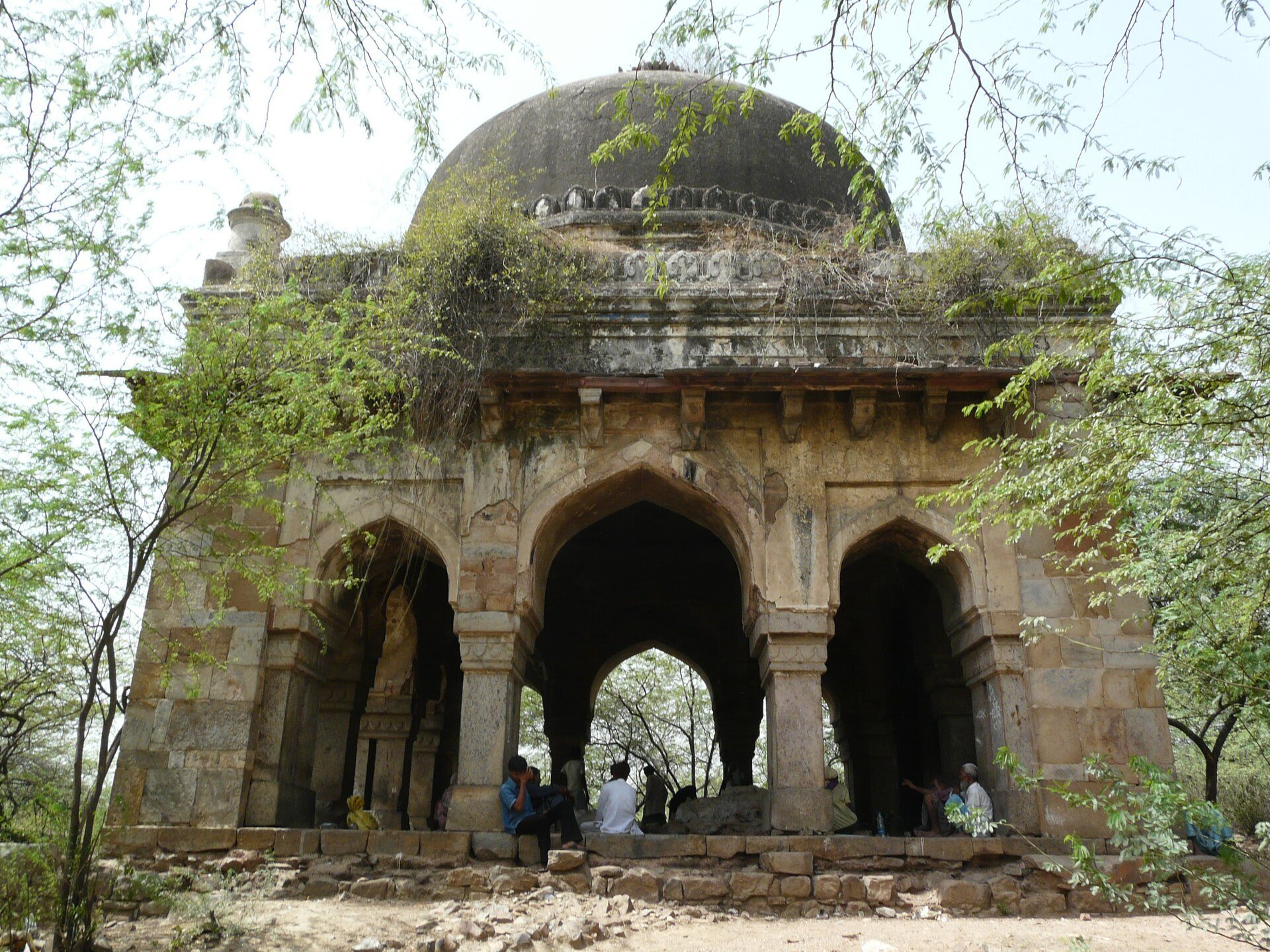
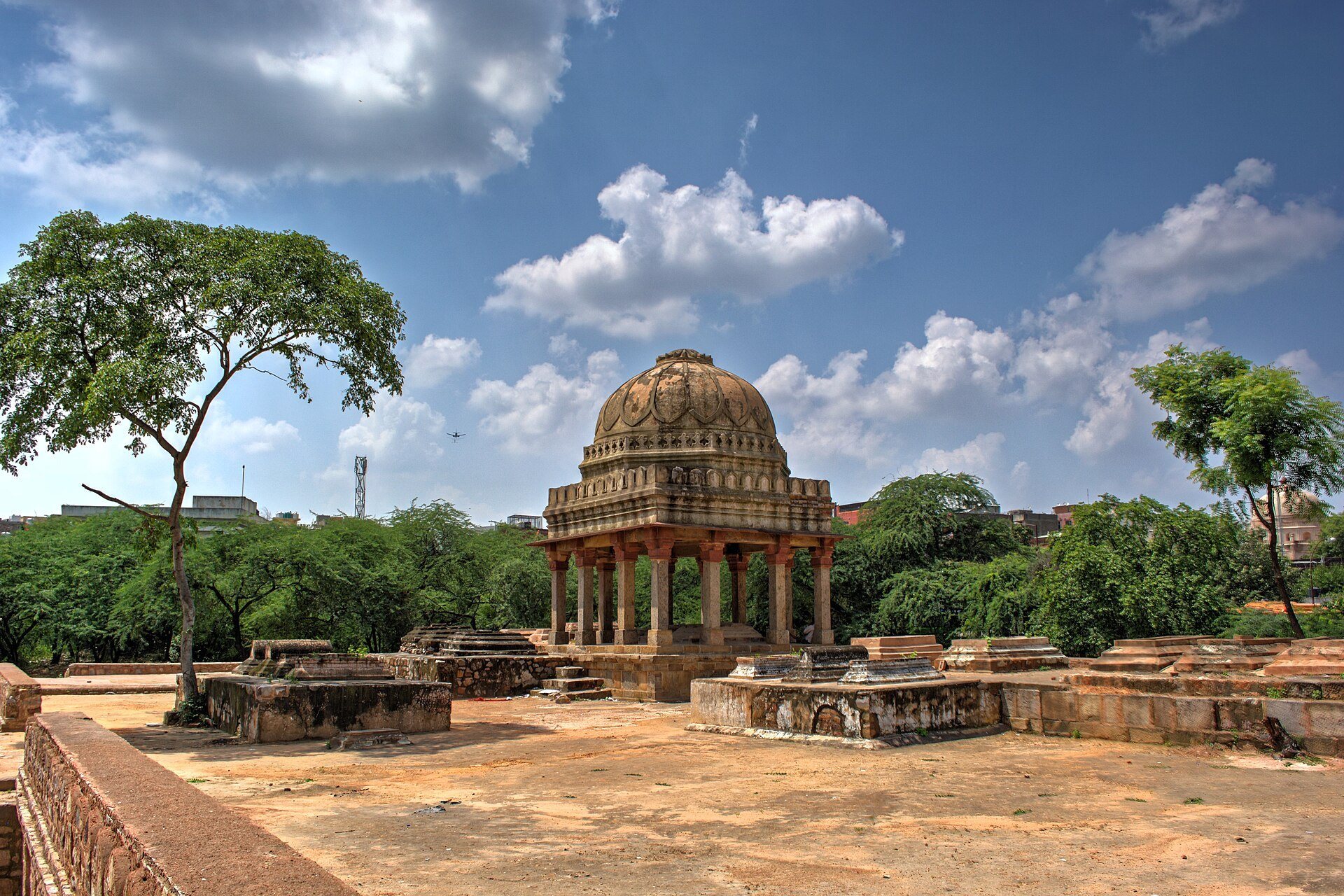
Quli Khan’s Tomb lies near the Boat House. Nearby stands Dilkusha, where a guest house was built for Sir Thomas Metcalfe during the British period. The park also contains a pavilion tomb, a grave platform, and additional tomb structures associated with its funerary landscape.
Jahaz Mahal and Zafar Mahal
Jahaz Mahal and Zafar Mahal, also called Lal Mahal, are among the other associated monuments in the park. Zafar Mahal was built by Bahadur Shah II. Their remains belong to the later Mughal history represented across the site.
Jharna and older architectural fragments
Jharna resembles a pleasure garden of the late Mughal period. Elsewhere, pillars and remains of several older temples are scattered through the park, alongside ruined domestic structures, grave platforms, mosque walls, and other architectural fragments.
Ahinsa Sthal
Ahinsa Sthal is associated with Mahavir, the 24th Tirthankara, or spiritual teacher, of Jainism. It forms part of the park’s range of religious and cultural features.