Qila Rai Pithora: An Early Fortified City of Delhi
Site at a Glance
- Country
- India
- Primary era
- Medieval
- Eras represented
- Medieval
- Civilizations
- Delhi Sultanate, Ghurid, Rajput
- Site type
- Military
- Remains
- Wall
On this page9 sections
History
Qila Rai Pithora is a fortified complex in Delhi, India, whose earliest construction is dated to about 1052–1060 under Anangpal II of the Tomar Rajput dynasty. Often described as Delhi’s first city, it is associated with Lal Kot, though the names and the fort’s phases have been interpreted in different ways.
Tomar foundation and Chahamana expansion
Inscriptions and coins attest to Tomar rule in the region. Archaeologist B. R. Mani proposed that Anangpal resettled the ruined area of Indraprastha and named the settlement Delhi. Mani also connected the Tomars’ ancestry to the Pandavas, the five brothers at the heart of the Mahabharata epic.
In the late twelfth century, the Chahamanas, another Rajput dynasty also known as the Chauhans, took Lal Kot from the Tomars and enlarged the fort. The expanded stronghold became associated with the name Qila Rai Pithora. Whether this describes a distinct Chahamana fort or an enlargement of the Tomar enclosure remains disputed.
Archaeologist Alexander Cunningham distinguished an older Tomar Lal Kot from a newer Chahamana Qila Rai Pithora, but later excavations cast doubt on this division. Writing in 1876, Carr Stephen treated Lal Kot as a royal palace and used Qila Rai Pithora for the earlier fortification. In 1997, Mani used Lal Kot for the site and Qila Rai Pithora for a wall that might have been built by the Chahamanas. Catherine B. Asher proposed in 2000 that Qila Rai Pithora was Lal Kot expanded into a city, with the older fort as its central citadel.
Delhi Sultanate and later memory
After the Ghurids, whose conquests reached northern India, defeated the Chahamana kingdom in 1192, their governor Qutb al-Din Aibak occupied the fort. Aibak later became the first ruler of the Delhi Sultanate, a succession of dynasties that governed from Delhi. Asher interpreted his use of the name Dilhi as a revival of an older name for the site. The fort’s walls were not extended or altered by Aibak and his successors.
Aibak began the Qutb Minar and built the Quwwat-ul-Islam Mosque. Hindu temples and other buildings were appropriated or demolished for new construction. Alauddin Khalji later began the Alai Minar, which remained unfinished. Historian Hasan Nizami praised Lal Kot after the conquest of Ajmer, portraying its height and strength as unmatched.
Early Delhi Sultanate texts refer to coins called Dehliwalas, some issued by Tomar rulers. One ruler named Prithipala has been identified as Prithvipal Tomar, supposedly the third-last Tomar ruler of Delhi, but his name has sometimes been confused with that of the Chahamana ruler Prithviraj Chauhan. Historian Cynthia Talbot has noted that Qila Rai Pithora first appears in the sixteenth-century Ain-i-Akbari, while older texts call the site Dehli. Lal Kot has also been described as Delhi’s original “Red Fort.” It is distinct from the later fort built by Mughal emperor Shah Jahan, first called Qila-e-Mubarak.
Remains
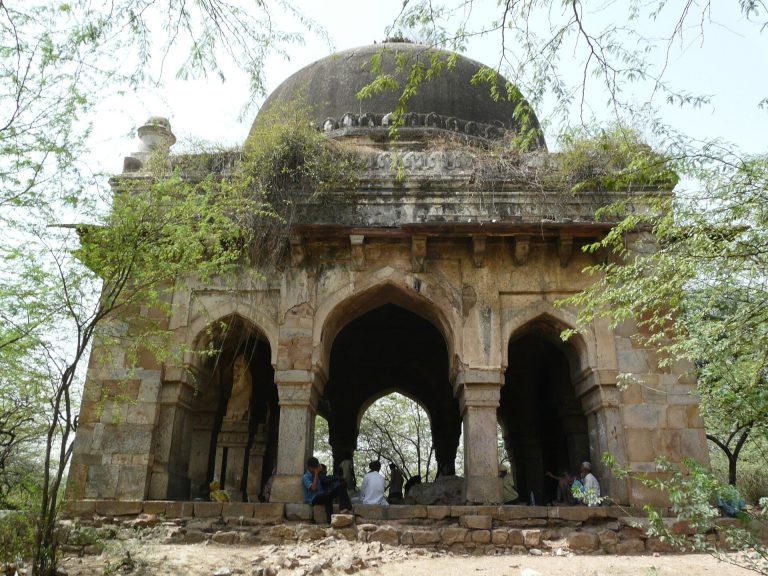
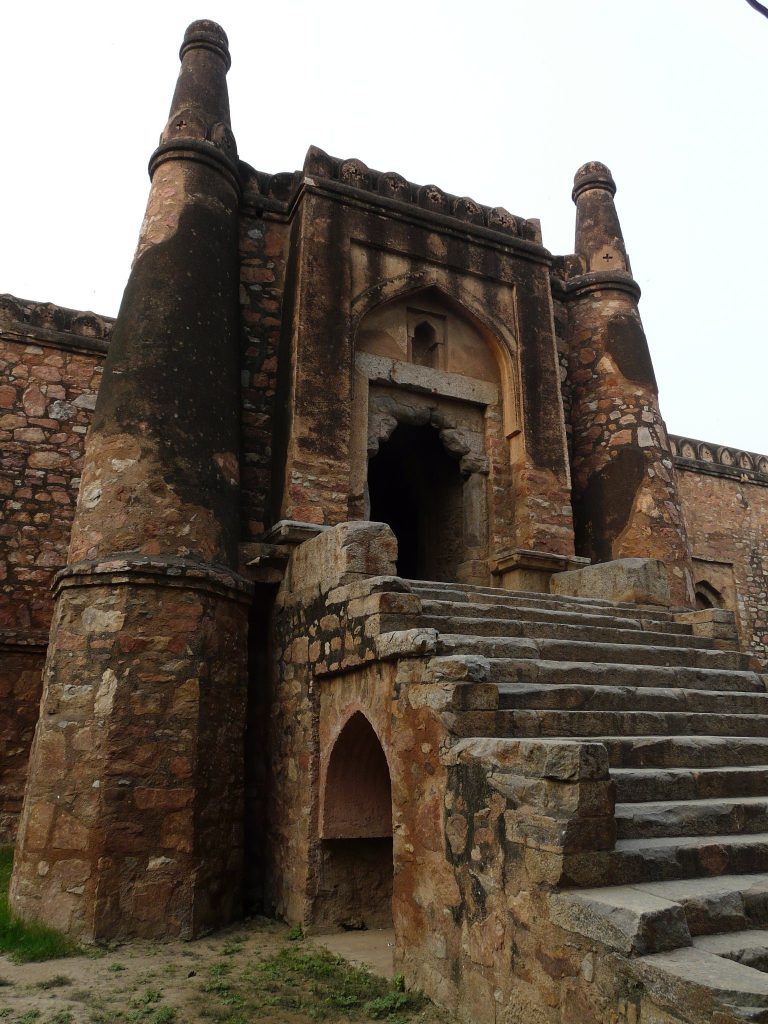
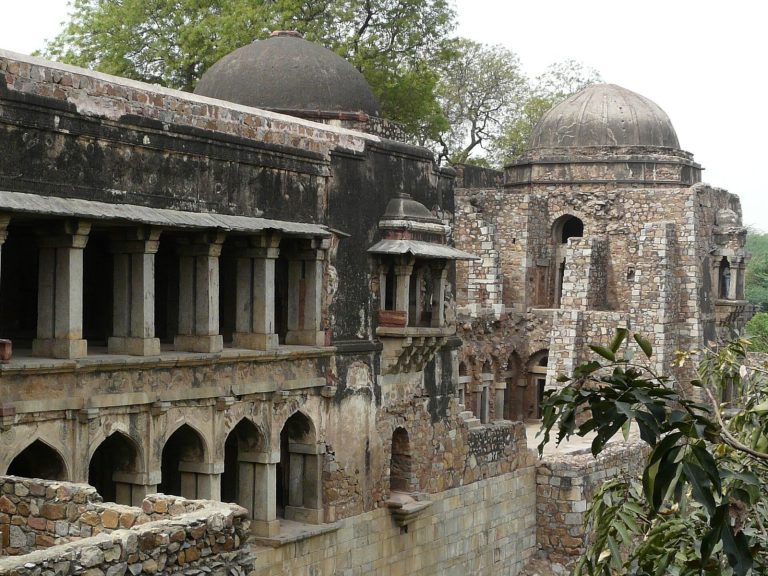
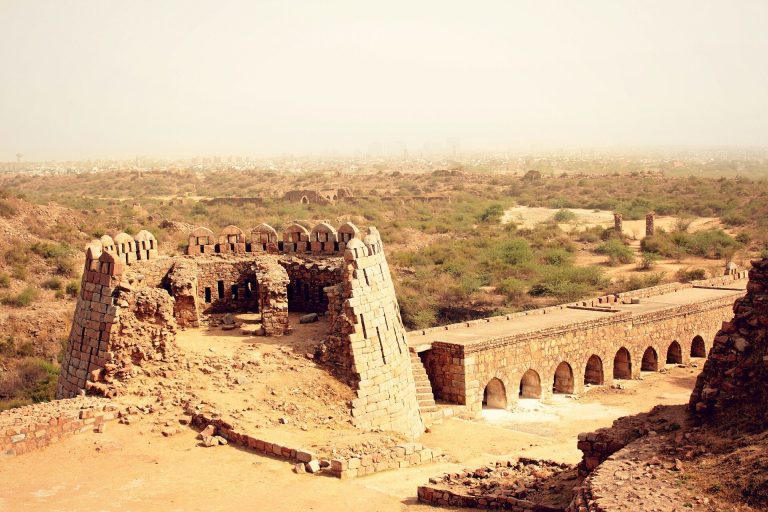
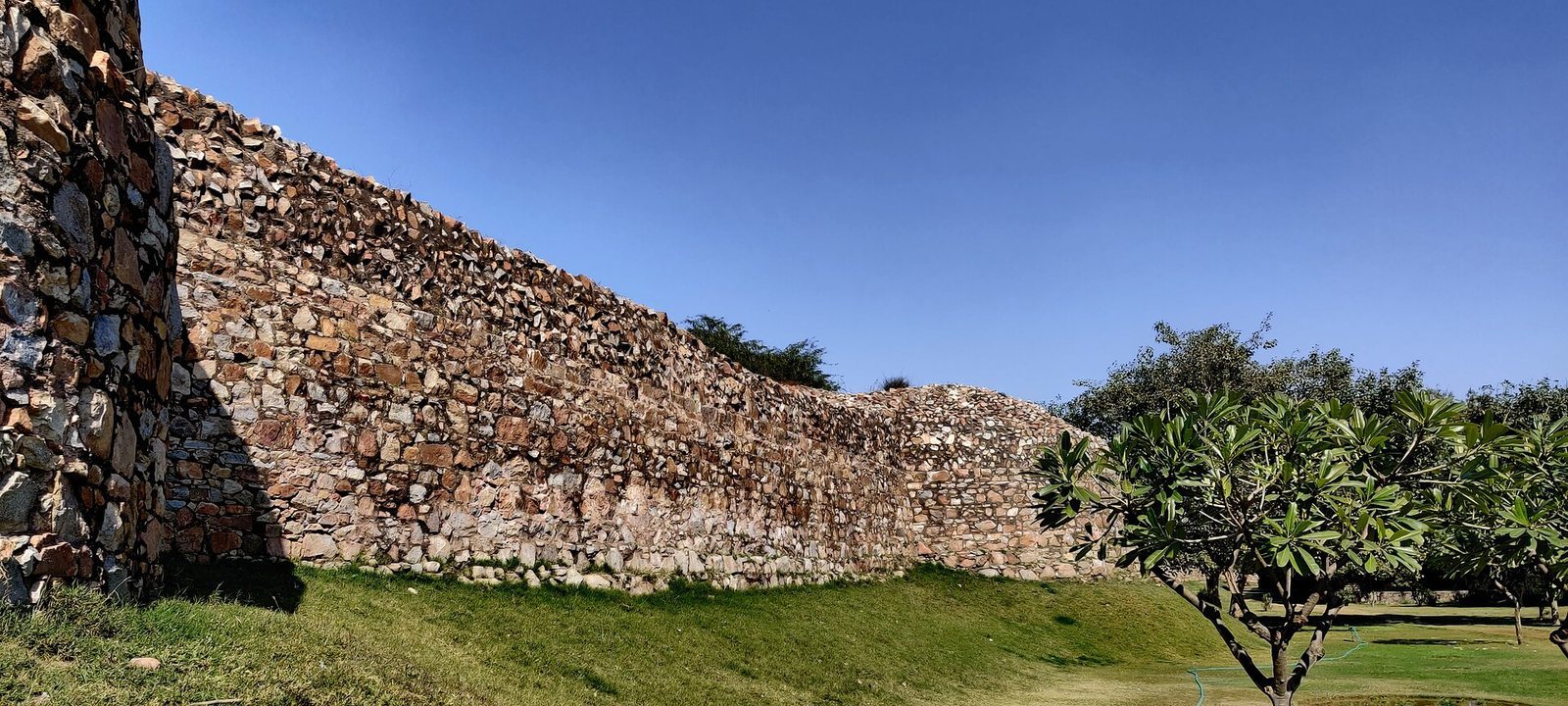
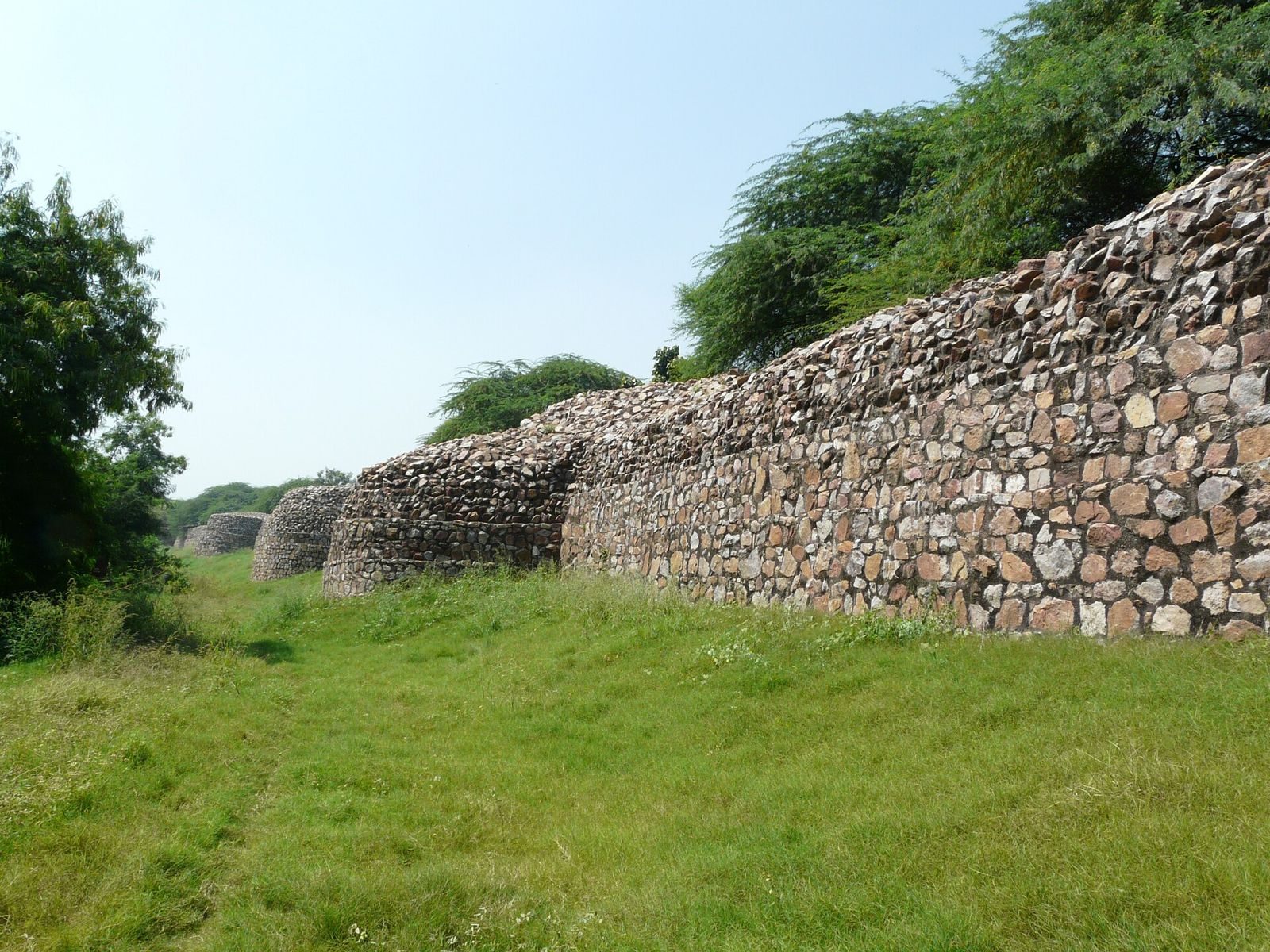
The surviving remains combine scattered stretches of fort wall with structures in the Qutb Minar complex, which lies within the former fortified area. Asher’s reconstruction describes rubble-built walls and ramparts enclosing the expanded complex.
Enclosure walls
The circuit of Lal Kot exceeded two miles, and its walls were described as 60 feet high and 30 feet thick. In Asher’s reconstruction, the enlarged fort was twice the size of the earlier citadel, and the combined enclosure extended about 6.5 kilometres. Wall remains are scattered across South Delhi, including Saket, Mehrauli around the Qutb complex, Sanjay Van, Kishangarh, and Vasant Kunj.
Structures within the enclosure
Iron pillar and early settlement
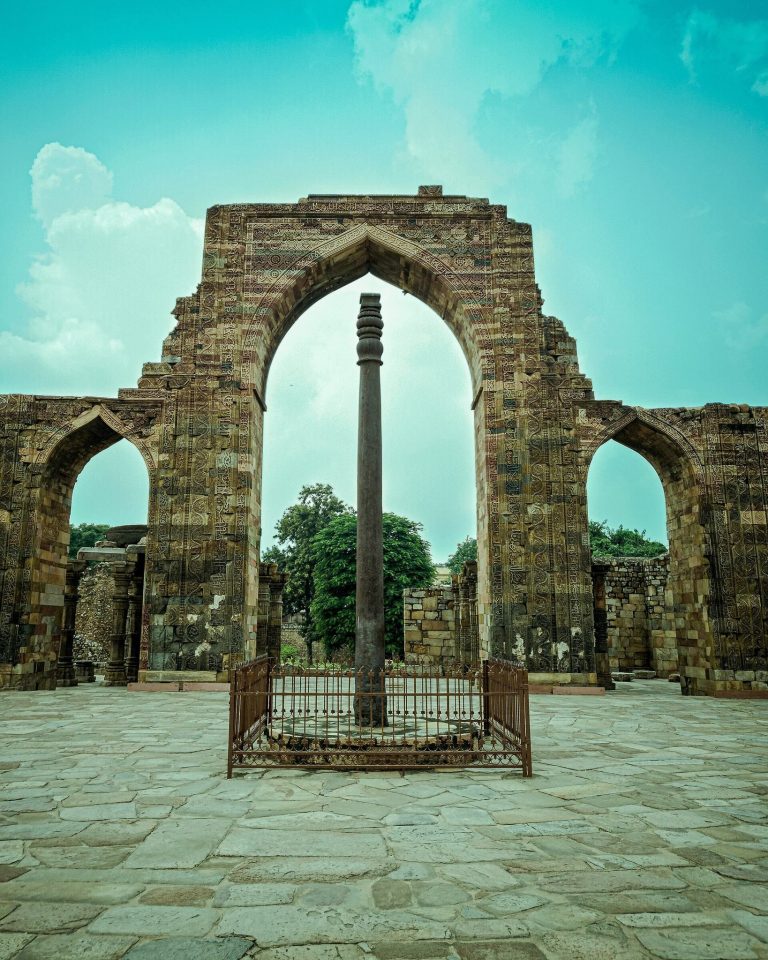
Anangpal brought the iron pillar from Saunkh, near Mathura, in 1052 and installed it in Delhi. Palaces and temples were built around the pillar, with Lal Kot subsequently enclosing this early cluster.
Anangtal stepwell
The Anangtal stepwell is associated with the site and credited to Anangpal.
Qutb Minar complex
The Qutb Minar and the Quwwat-ul-Islam Mosque are among the structures within the complex. A short inscription on the tower has been read by some as Pirathi Nirapa, interpreted as a vernacular form of “King Prithvi.” The unfinished Alai Minar was planned to reach twice the height of the Qutb Minar.