Dara: An East Roman Fortress City in Türkiye
Site at a Glance
- Rating
- 4.7
- Popularity
- Medium
- Country
- Turkey
- Primary era
- Medieval
- External website
- Open
- Eras represented
- Classical, Medieval
- Civilizations
- Byzantine, Roman
- Site type
- City
On this page13 sections
History
Dara is an East Roman fortress city in Türkiye, rebuilt in 505 under Emperor Anastasius I as a frontier settlement during the late Roman period. Located near the Sasanian Persian frontier in northern Mesopotamia, it became a military base, a weapons-preparation center, and an important focus of Roman-Persian conflict.
Early settlement and Roman foundation
The earliest foundation of Dara remains uncertain. The area was an important Mesopotamian settlement and trading center, and its archaeological remains and historical associations connect it with the conflict between Darius III, the last king of the Achaemenid Persian Empire, and Alexander the Great, the Macedonian ruler who conquered that empire.
After the Persian capture of Nisibis in 363, Dara became a Roman frontier settlement. Anastasius I, the East Roman emperor from 491 to 518, ordered the village rebuilt in 505, probably during the Anastasian War of 502 to 506. Workers and masons were brought from across Mesopotamia. The resulting city, named Anastasiopolis, stood about 18 kilometers west of Nisibis and about 5 kilometers from the contemporary Persian border.
Anastasiopolis served as the seat of the Roman military governor, or dux, of Mesopotamia. A dux was a commander responsible for a frontier region. Dara therefore combined military administration with the functions of a refuge and defensive base against Persian and Saracen incursions.
Justinian’s reconstruction
The first fortifications were constructed hastily and suffered damage from severe regional weather. Emperor Justinian I, Anastasius’s sixth-century successor, ordered extensive reconstruction. The work rebuilt the walls, strengthened the towers, added a moat and water-control systems, and provided barracks for the garrison. Two churches were also built, and the city was renamed Iustiniana Nova.
Dara’s position brought it repeatedly into the Roman-Persian wars. It was involved in conflicts in 530, 540, 544, 573, and 604. Persian forces under Khosrau I captured the city in 573 to 574. A treaty in 591 returned Dara to Roman control under Khosrau II, but Khosrau II recaptured it in 604 to 605 after a nine-month siege. Emperor Heraclius later recovered the city for the Roman Empire.
Christian and later history
Dara became an early Christian episcopal center and initially a metropolitan see, meaning a bishopric with authority over subordinate dioceses. Its three suffragan bishoprics were Rhesaina, also called Theodosiopolis; Rhandus in Tur Abdin; and Nasala. Eutychianus was the first known bishop, taking office in 506. Thomas was deposed in 519 for opposing the Council of Chalcedon, a major Christian council whose decisions affected ecclesiastical authority in the eastern Roman world, and he died in 540. Mamas was removed from office in 537, while Stephanus attended the Second Council of Constantinople in 553.
Following the Arab Muslim capture of Dara in 639, the city lost its military importance, declined, and was eventually abandoned. It later became a center of Jacobite, or Syriac Orthodox, bishops. John of Dara served as archbishop from 825 to 860. During the tenth century, the Syriac Orthodox Diocese of Dara lost its metropolitan rank to its former suffragan, Rhesaina.
The former archbishopric was nominally restored in the fifteenth century as a Latin Catholic titular bishopric. A titular see is an ecclesiastical title retained for a bishopric without a resident bishop governing an active local diocese. In 1925, Dara’s title was renamed and elevated to a metropolitan titular archbishopric. A titular bishopric under the name Anastasiopolis was later suppressed and restored in 1979 as the titular bishopric of Dara Syrorum. Dara remains listed as a titular see for the Latin Catholic Church and, particularly, the Syriac Catholic Church.
Violence and modern archaeology
Dara became a site of mass killing during the Armenian genocide. In spring and summer 1915, the cisterns were reportedly filled with the bodies of Armenians deported from Diyarbakır, Mardin, and Erzurum and killed during the genocide.
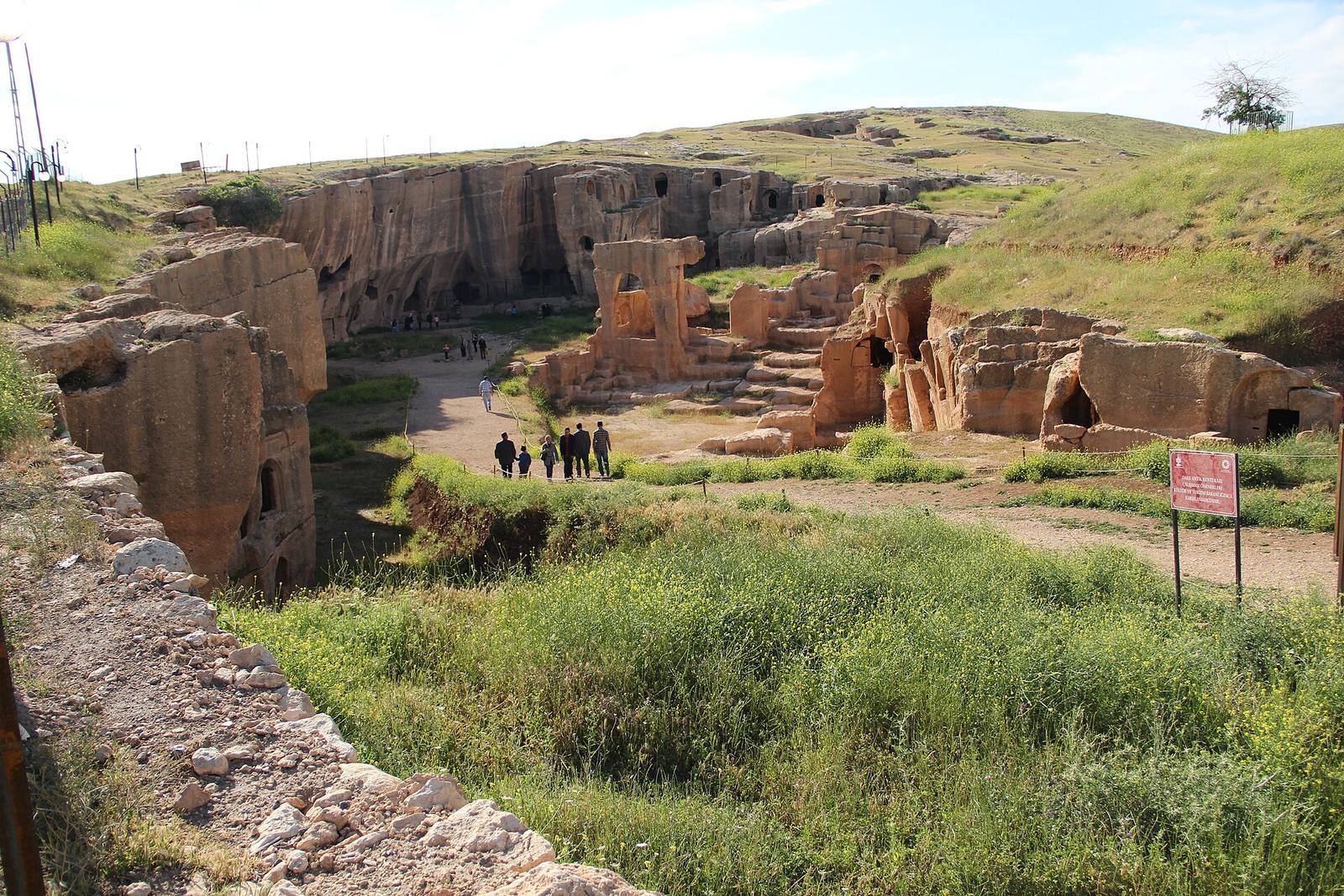
The ruins lie in the village of Dara, formerly called Oğuz, in Artuklu district of Mardin Province, about 30 kilometers southeast of Mardin. Archaeological work at the site is associated with Associate Professor Hüseyin Metin.
Remains
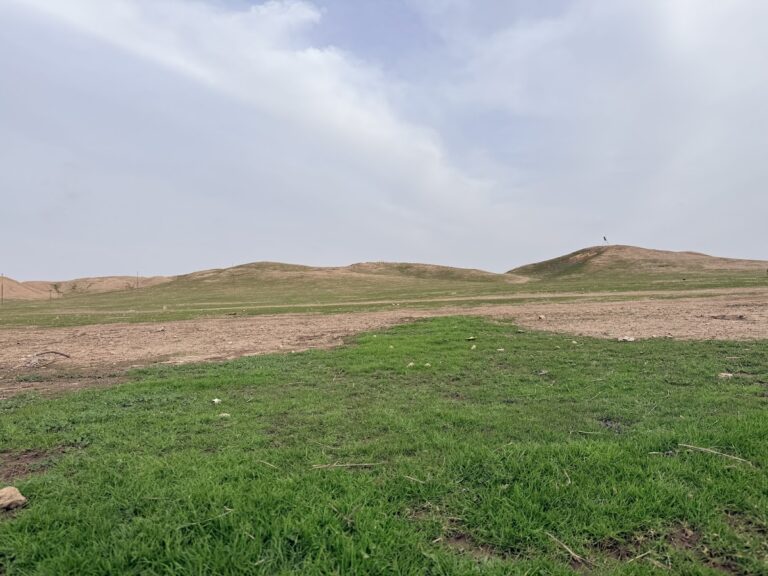
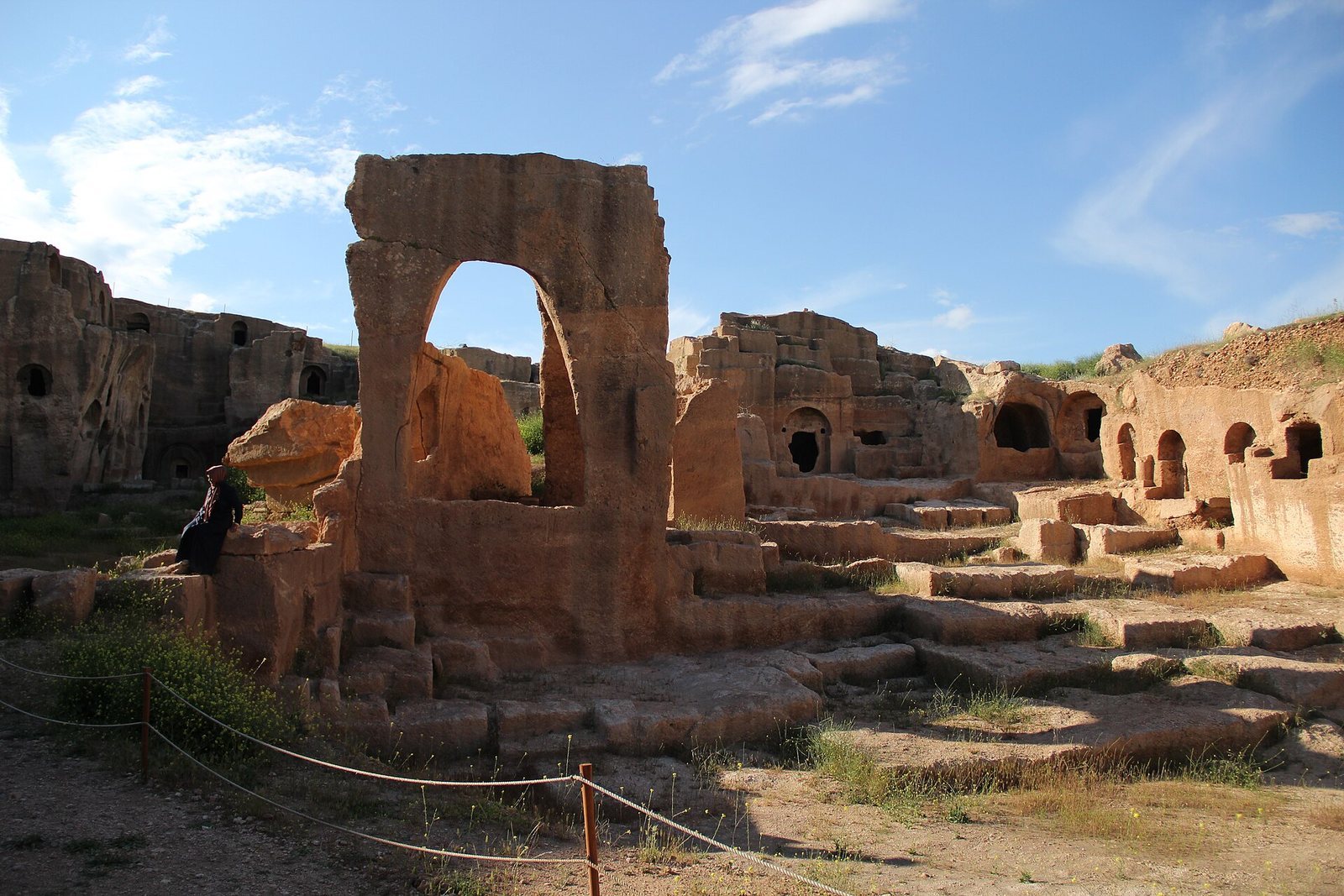
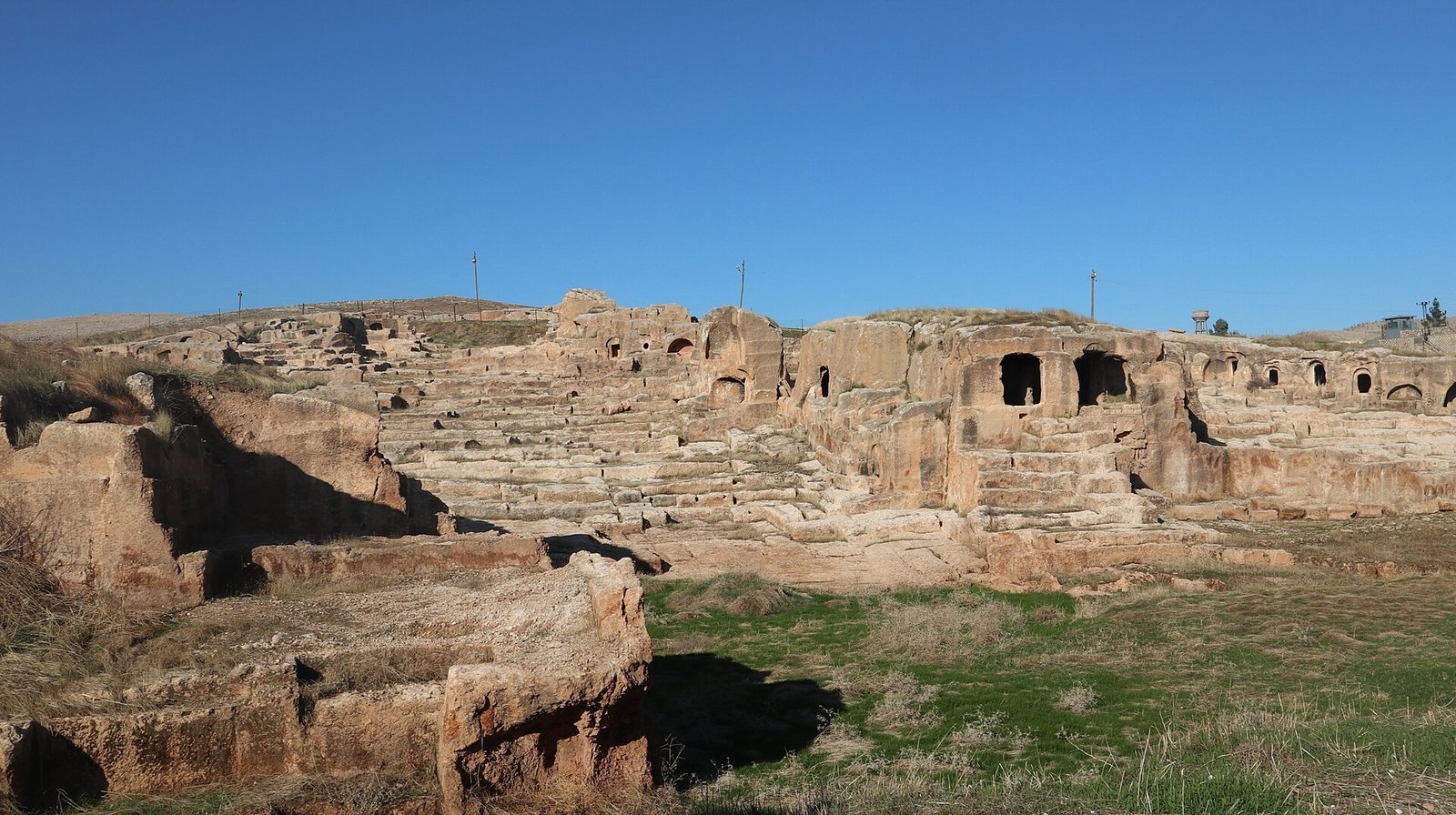
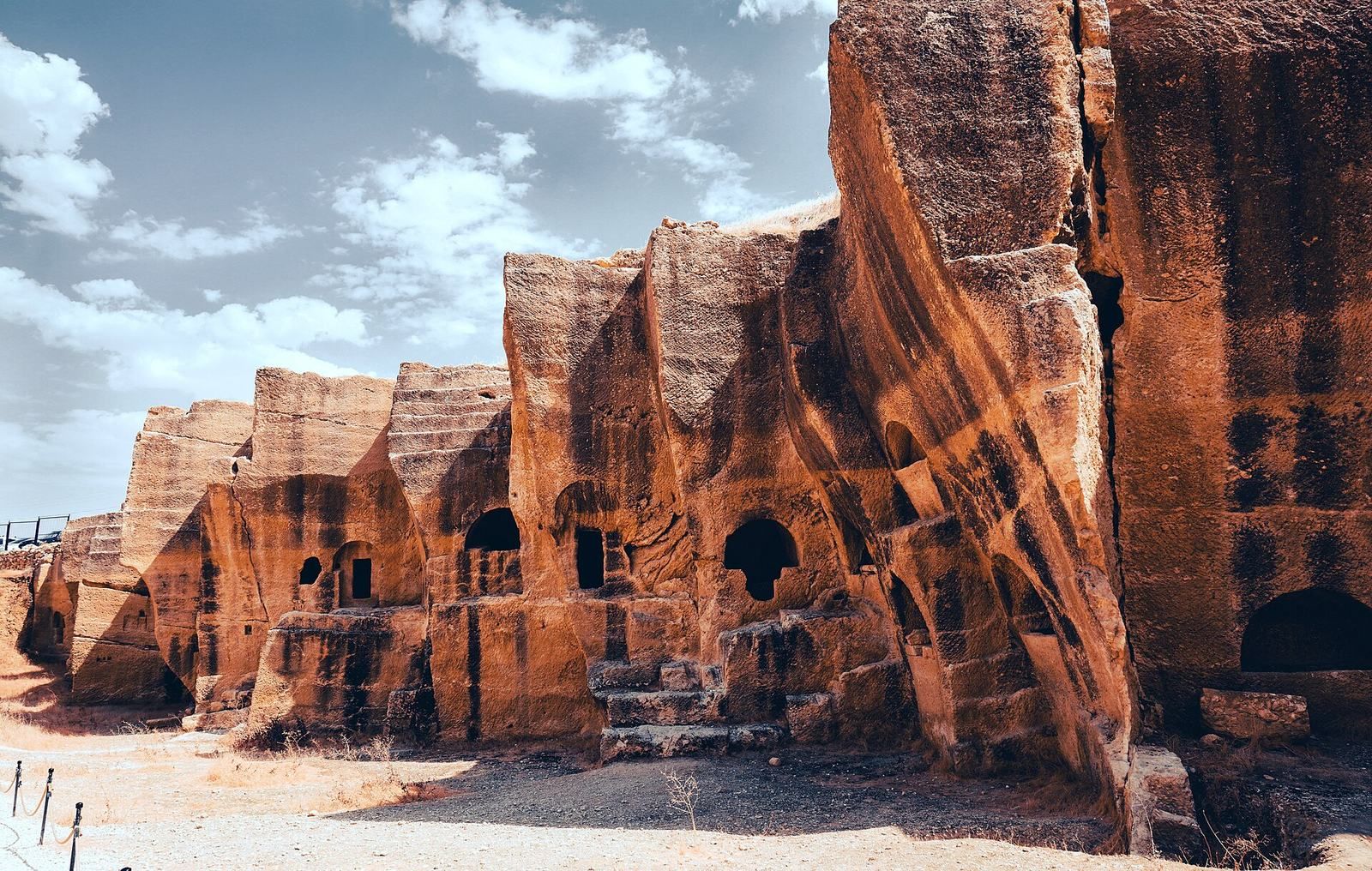
Dara occupies a broad area where the Mesopotamian plain meets the Tur Abdin Mountains. Built on limestone bedrock, the settlement extends across three hills, and many structures were cut directly into the rock. The citadel stood on the level summit of the highest hill, north of the city, which rises about 50 meters above its surroundings. Across the settlement, rock-cut structures, churches, fortifications, cisterns, storage facilities, and hydraulic installations preserve the physical organization of the former frontier city.
Fortifications and water systems
Citadel and defensive walls
The fortifications extended for about 4 kilometers. During Justinian’s rebuilding, a new storey raised the inner wall to approximately 20 meters, twice its earlier height. The strengthened towers rose to three storeys and reached about 35 meters. A water-filled moat surrounded the city, adding another defensive line around the settlement.
Canals, dam, and underground channel
Justinian’s engineers diverted the nearby Cordes River into the city through a canal, creating a substantial water supply. A second diversion carried the river into an underground channel that re-emerged about 65 kilometers to the north. This arrangement allowed the garrison to deny water to besieging forces and reportedly helped save the city several times.
An elaborate arch dam controlled flooding after earlier floods had destroyed large parts of Dara. The dam is regarded as one of the earliest known structures of its type. Together with the canal, underground channel, moat, and cisterns, it formed a hydraulic system closely tied to the city’s defense and survival.
Religious and civic buildings
Churches
The city’s surviving remains include a church, while its known churches included the Great Church and another dedicated to Saint Bartholomew. These buildings belonged to the Christian city that developed after Dara became an episcopal center.
Military and civic facilities
Dara contained large storehouses, a public bath, water cisterns, and barracks for its garrison. Other listed remains include a bazaar, a dungeon, an arsenal, storage areas, and water-dam structures. Their distribution across the wide settlement reflects the city’s combined military, administrative, commercial, and residential functions.
Rock-cut burial areas
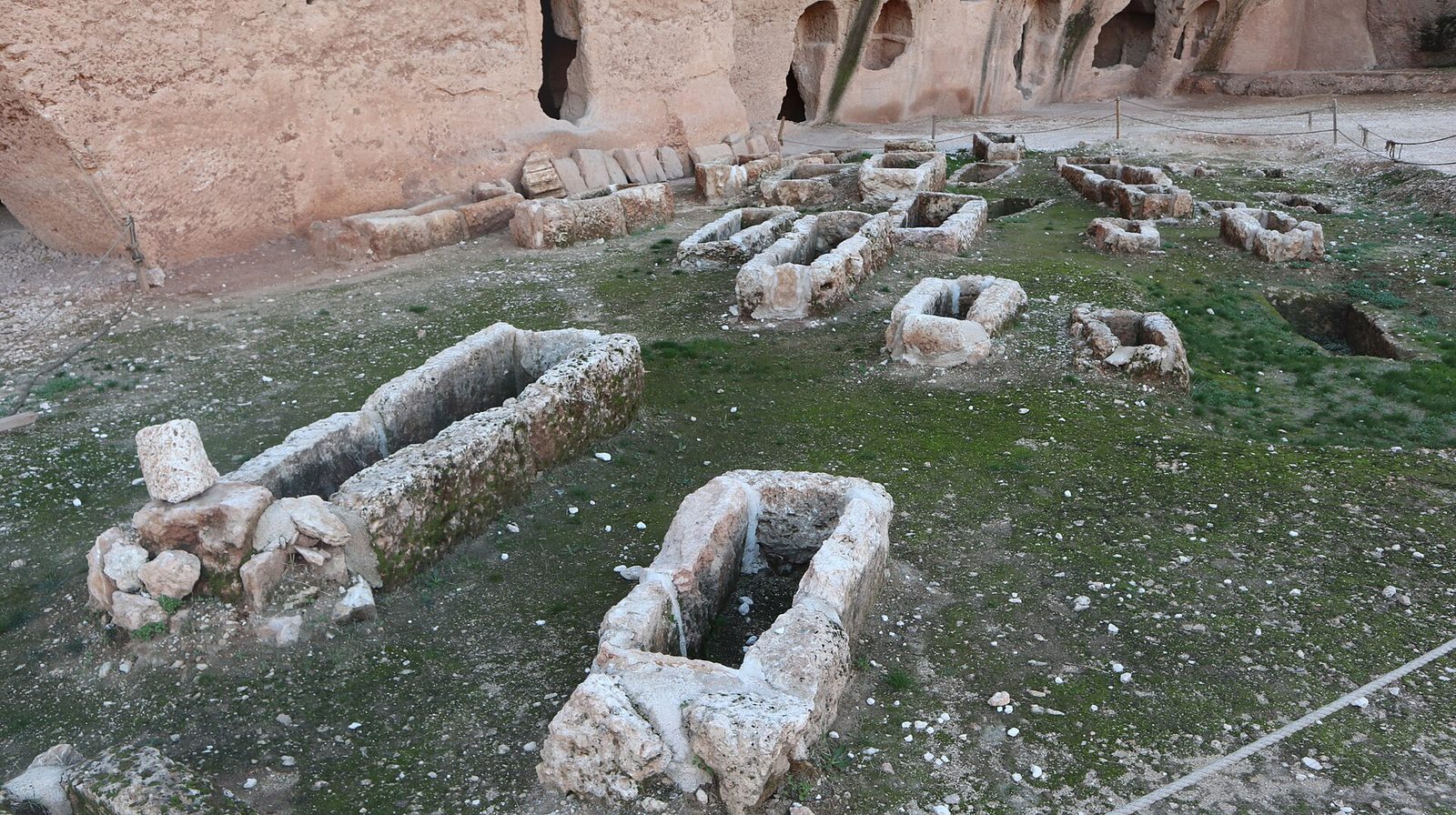
Rock-cut areas around the village date from the Late Roman period. They were used as burial places for a period and later developed a cave-like appearance. Cut into the limestone landscape, these spaces form part of the wider archaeological remains surrounding the fortified settlement.