Mor Gabriel Monastery: A Syriac Orthodox Monastic Centre in Turkey
Site at a Glance
- Rating
- 4.7
- Popularity
- Medium
- Country
- Turkey
- Primary era
- Medieval
- Eras represented
- Classical, Medieval, Modern
- Civilizations
- Byzantine, Roman
- Site type
- Religious
- Remains
- Monastery
On this page18 sections
History
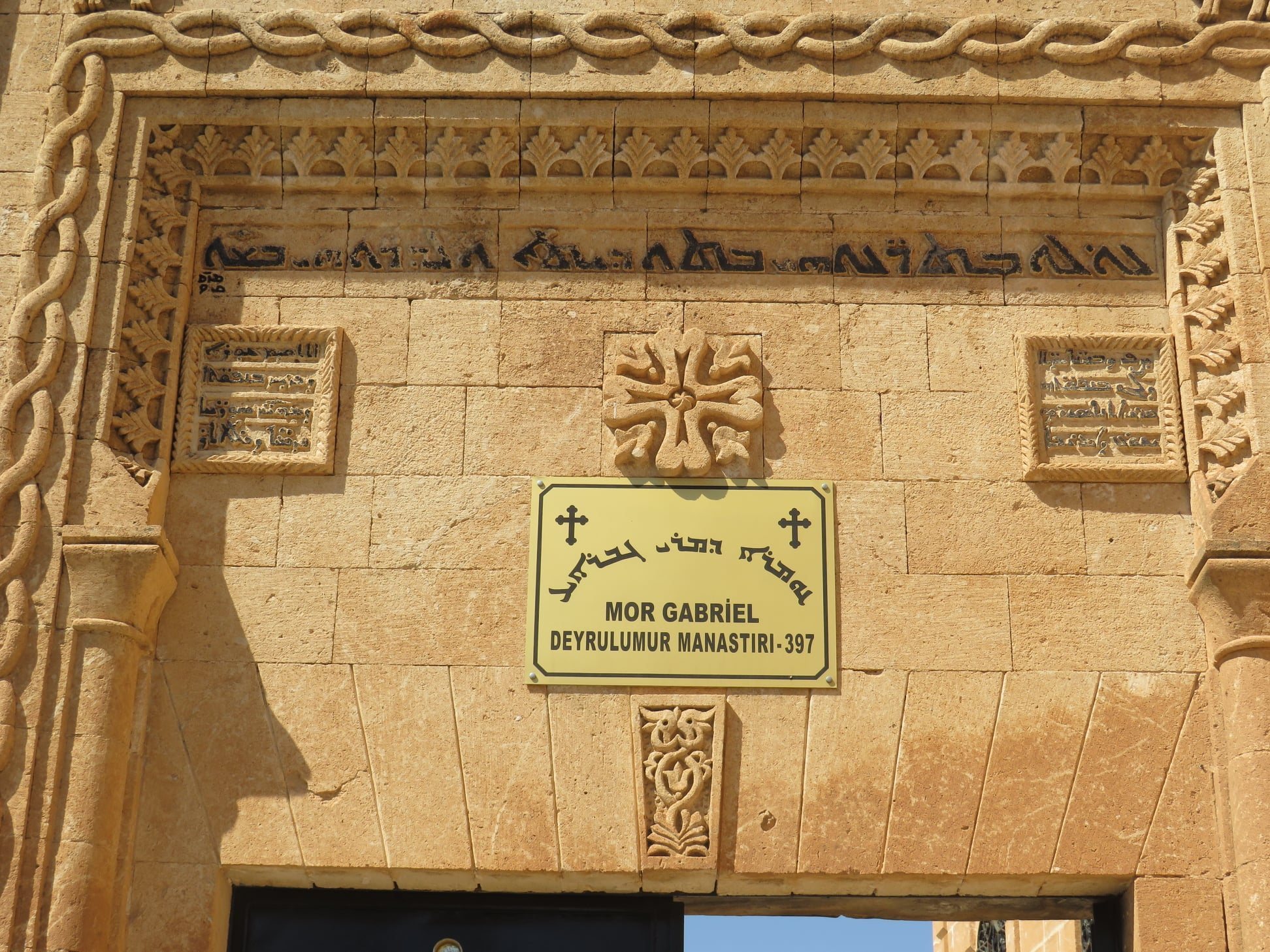
Mor Gabriel Monastery is a Syriac Orthodox monastery near Midyat in Turkey, in the Tur Abdin highlands of southeastern Anatolia. Founded in 397 by the ascetics Mor Samuel and Mor Simon of Qartmin, it is regarded as one of the oldest surviving and continuously active Christian monasteries. The Syriac Orthodox Church is an Oriental Orthodox church whose theology rejects the Council of Chalcedon’s definition of Christ’s human and divine natures. Tur Abdin, meaning “Mountain of the Servants,” became a historic centre of Syriac-speaking Christian monasticism.
Foundation and early development
Mor Gabriel is also known as the Monastery of Qartmin, Deir el-Umr, and Deyrulumur. Its foundation tradition relates that Mor Samuel, a disciple of the martyred Bishop Karpos, settled at Qartmin with Mor Simon. Simon later experienced a vision directing him to establish an open-air prayer enclosure farther west, where the two men began the monastery. About forty years later, the Eastern Roman emperor formally recognized and endowed the institution.
The monastery was established on or beside an earlier pre-Christian sanctuary traditionally identified as a Zoroastrian temple. Its first community belonged to the non-Chalcedonian Christian tradition that developed in Tur Abdin and later became part of the Syriac Orthodox Church. By the sixth century, as many as 1,000 monks lived there, including local Assyrians and Copts. Eastern Roman emperors Arcadius, Honorius, Theodosius II, and Anastasius provided benefactions, while Simeon of the Olives later renovated the monastery with funds found in buried treasure.
Imperial patronage and Syriac scholarship
The Council of Chalcedon, held in 451, defined a doctrine concerning Christ’s human and divine natures. Mor Gabriel and the wider Tur Abdin region rejected its decrees and lost the patronage of Emperor Marcian. Emperor Anastasius later restored imperial support, financing a new church and prayer hall and supplying workers and building materials for the monastery’s expansion. The main church, begun in the foundation period, was completed in 512 with his patronage.
Mor Gabriel became a major centre of Syriac monasticism, theology, education, and manuscript preservation. It trained high-ranking clerics and scholars, including four later Syriac Orthodox patriarchs, Theodosius Roman, Dionysius III, Basilius V, and Ignatius Behnam of Hidl. A maphrian, a senior Syriac bishop responsible for ecclesiastical administration beyond the patriarch’s immediate jurisdiction, and 84 bishops were also associated with the monastery. From 615 to 1049, Mor Gabriel served as the bishop’s seat of Tur Abdin.
Gabriel of Beth Qustan and the monastery’s changing name
During the Islamic conquests, Bishop Gabriel of Beth Qustan negotiated with Arab forces to protect Christian rights in Tur Abdin. In 774, a plague killed 94 monks at Qartmin. Gabriel’s body was placed upright in the church as an intercessor, while his right arm was carried to Hah in an attempt to end the outbreak there. The monastery subsequently became known by his name, a change dated to the seventh or eighth century.
By the thirteenth century, Eli of Qartmin was regarded as the monastery’s patron saint. He was remembered as a monastic author who wrote a metrical biography of Philoxenos of Mabbug. The monastery continued to function as a religious and intellectual centre even as warfare and political change repeatedly damaged its buildings and community.
Attacks, destruction, and rebuilding
Persian forces burned Mor Gabriel in 580. In 1100, Turkish raiders pillaged the monastery and the neighbouring village, killing inhabitants and destroying manuscripts and furnishings. Tatars caused further destruction in 1296, Mongol forces invaded during the fourteenth century, and the armies of Tamerlane besieged the complex in 1394. During that siege, many clergy took refuge in the Cave of Ibn Siqi. The cave was set on fire, and more than 500 people died from suffocation. The monastery was rebuilt in 1502 with assistance from the community of Basibrina.
Twentieth-century crisis and revival
During the 1915 genocide of Christians in the Ottoman Empire, Kurdish tribes killed the monastery’s monks and occupied the complex for four years. Mor Gabriel was returned to the Syriac Orthodox Church in 1919. A Kurdish family that had settled there was expelled after a siege in 1922, and a new bishop was appointed in 1925. The Republic of Turkey registered the institution as a religious foundation in 1936.
Renovation and expansion followed during the mid-twentieth century. Work between 1962 and 1971 included new buildings, a road, electricity generation, and a seminary for clergy. The Turkish government closed the seminary in 1980. Water and electricity systems were subsequently established, and a garden was developed for the resident community. Since the early 1970s, Mor Timotheos Samuel Aktas has served as abbot and overseen major building projects. After his consecration as archbishop in 1995, Mor Gabriel became the effective episcopal seat of Tur Abdin, replacing Midyat. It remains the residence and administrative centre of the metropolitan bishop and a religious, social, educational, and cultural centre for the Syriac Orthodox community.
Education, recognition, and property disputes
In 1997, the provincial governor ordered the closure of the monastery’s school and prohibited or restricted Syriac-language and religious education on the grounds that the Syriac Orthodox were not recognized as a protected minority under the Treaty of Lausanne. International protests led to the lifting of the prohibition on accommodating foreign guests, while mother-tongue instruction in Aramaic remained restricted.
Mor Gabriel also faced renewed attacks and harassment from the late 1960s. In 1978, the Turkish government attempted to close it over allegations that it sheltered members of the Armenian militant organization ASALA. Similar allegations concerning PKK militants arose in the 1980s. Later accusations included alleged illegal missionary activity, unauthorized education, and sheltering unidentified people.
From 2008, several lawsuits and cadastral disputes concerned the monastery’s land, boundaries, wall, and property rights. State surveyors redrew boundaries using older maps and aerial photographs, while nearby villages challenged land that the monastery had cultivated and occupied for centuries. Earlier records had confirmed the boundaries in 1938 and 1950. The monastery also presented a signed 1937 agreement and evidence of decades of property-tax payments. A 2011 decision assigned part of the land to the Turkish state, and the European Court of Human Rights rejected an application concerning the return of approximately 27 hectares in 2019. In 2013, however, the Assembly of Foundations approved the return of 240,000 square metres to the monastery, while approximately 270,000 square metres were reported to remain confiscated.
These disputes became an international minority-rights issue and prompted the Assyrian diaspora movement Action Mor Gabriel, advocacy by European political organizations, and monitoring by foreign governments and the European Union. Mor Gabriel consequently became a focus of continuing property, legal, and recognition problems affecting Assyrian and Syriac Orthodox communities in southeastern Turkey.
Continuing religious and cultural role
Mor Gabriel remains an important pilgrimage centre and the cultural and linguistic heart of Syriac heritage. Annual celebrations honour Saint Gabriel, and pilgrims venerate his relics and visit the tombs of saints. Muslims and Yazidis also visit the monastery in search of cures. The community continues to preserve Syriac language, culture, liturgy, and religious education. Within Syriac tradition, the monastery is described as the “second Jerusalem” and the “sun of eastern monasteries.”
Remains
Setting and overall complex
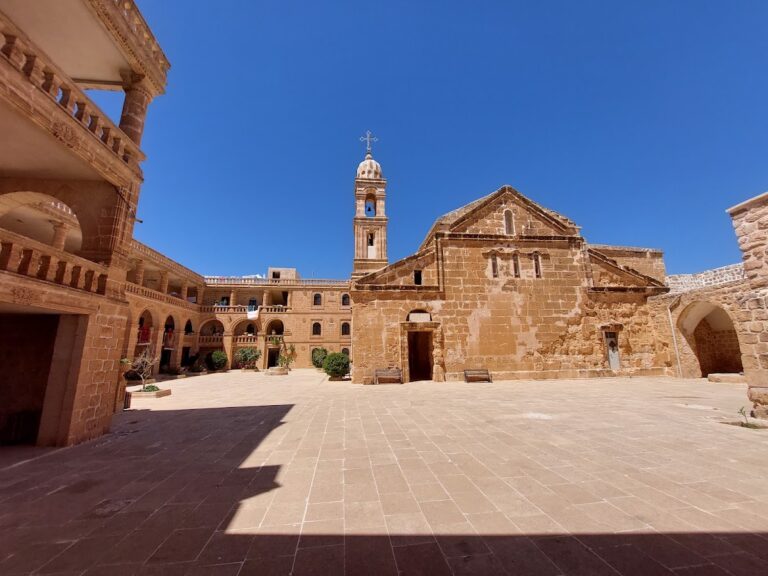
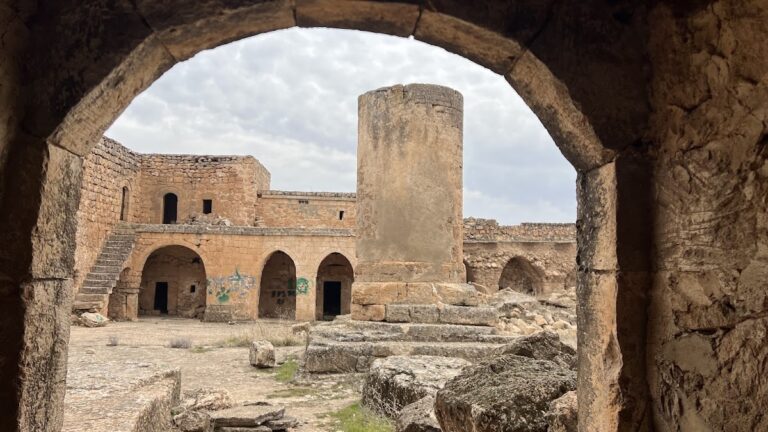
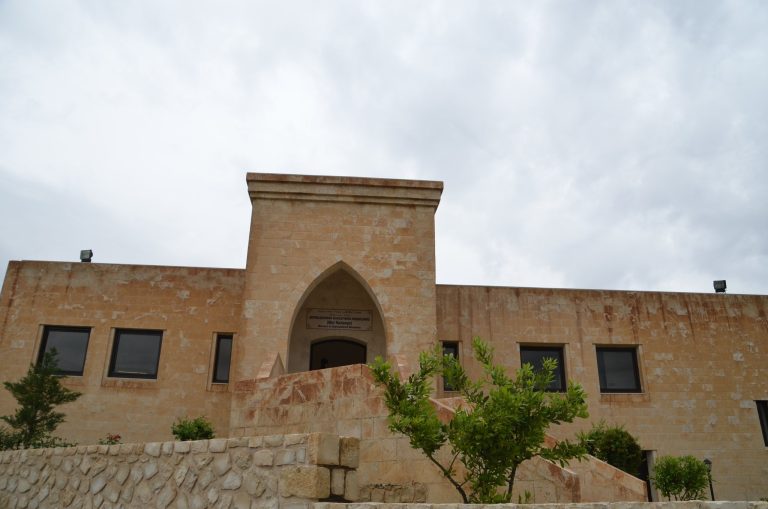
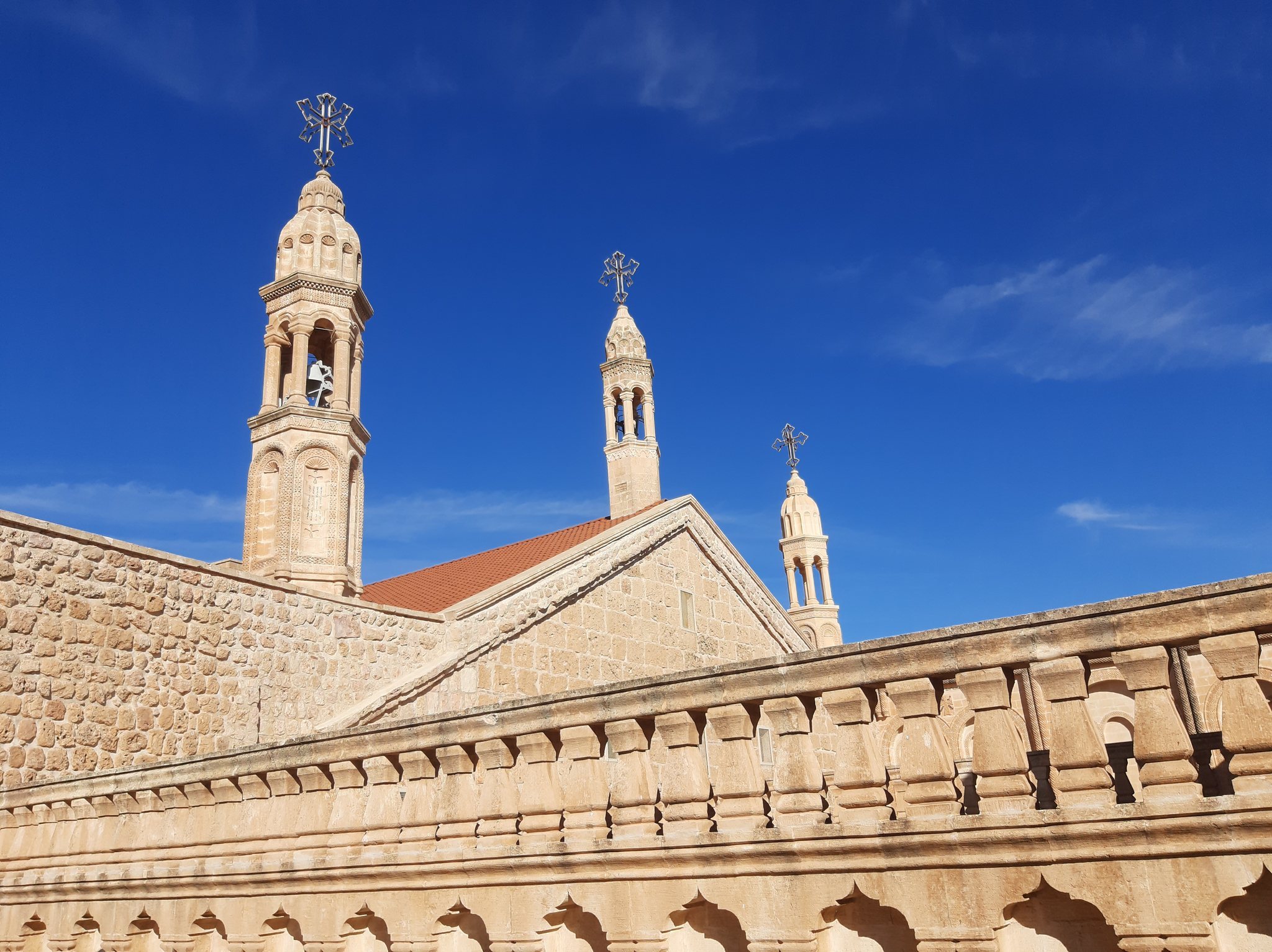
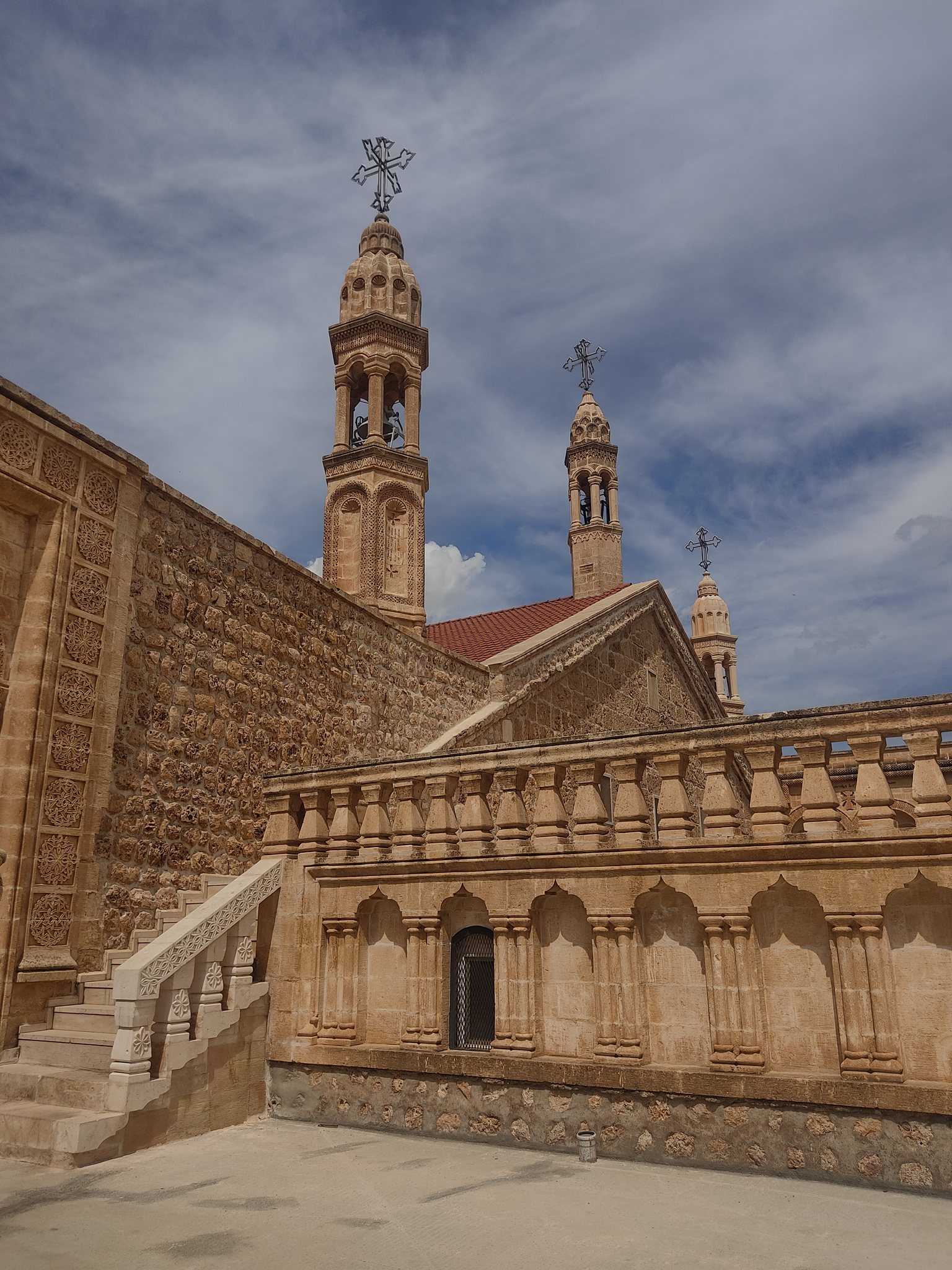
Mor Gabriel occupies a complex in the Tur Abdin highlands on a caldera formed by an ancient meteorite impact, where broken quartz fragments occur in the ground. The site has a lower historic section and upper annexes built during the last century. Its buildings include the main church, the Dome of Theodora, the Church of the Virgin Mary, the House of Saints, the House of Martyrs, the House of the Apostles, the Temple of the Forty Martyrs, a burial chamber, an underground church beneath the belfry, and service and residential buildings.
Stone blocks from the earlier pre-Christian sanctuary were reused in the monastery, and the eastern wall is described as surviving from the former Zoroastrian temple. The historic walls are about one metre thick. Slits in the walls align with the summer solstice and are interpreted as reflecting solar-cult practices associated with the earlier sanctuary. Fortress-like steel gates are locked at sunset and opened at dawn, while extensive gardens are enclosed by a wall that protects them from grazing livestock.
Historic church group
Main church
The main church, also called the Anastasius Church, began in 397 as a modest prayer house founded by Mor Samuel and Mor Simon. It was completed in 512 with the support of Emperor Anastasius I. The church has a barrel vault, a continuous curved roof formed by extending an arch along its length, and follows a north-south axis. Its transverse plan differs from the more usual longitudinal basilica arrangement.
The sanctuary contains sixth-century Byzantine mosaics with aniconic designs, meaning that they avoid human and animal figures. Where portions of the mosaics have been lost, white mortar covers the gaps. Together with the mosaics of Saint Catherine’s Monastery on Mount Sinai, they are described as the only surviving sixth-century Byzantine mosaics east of Constantinople.
Dome of Theodora
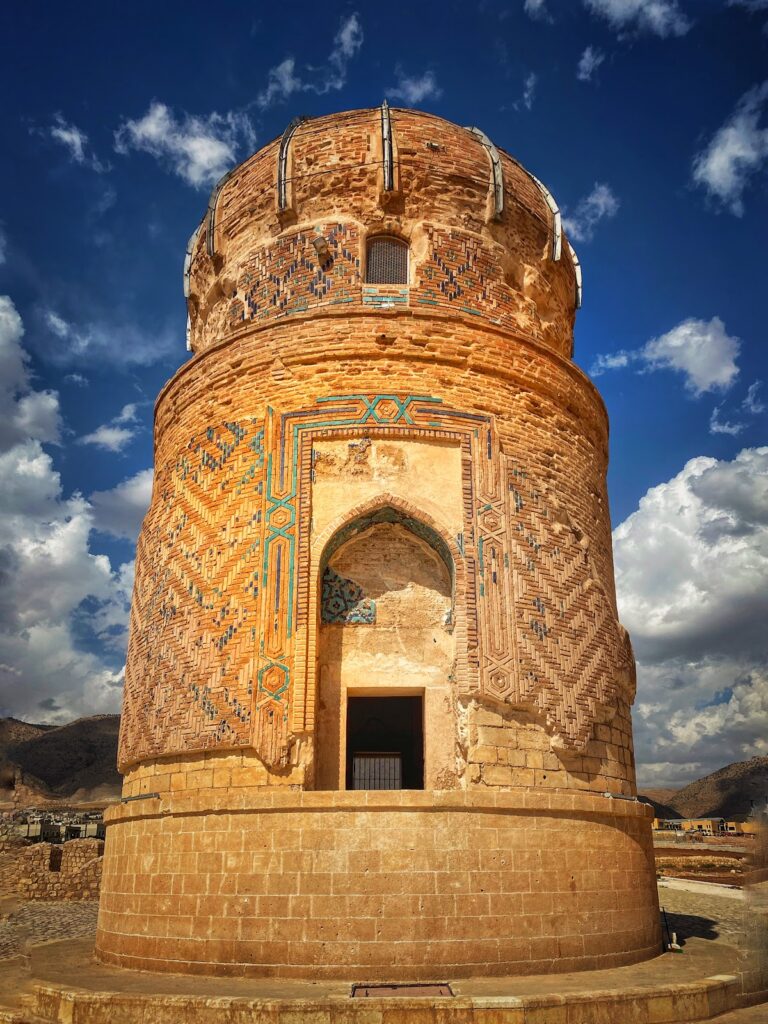
The Dome of Theodora was built in the early sixth century at the northwestern corner of the main church. It probably began as a baptistery and later served as a kitchen. Eight arches support the approximately 17-metre-high structure. Its dome uses bricks laid in radial layers, supported by ashlar masonry, which consists of regularly cut stone blocks, and a mortar core. The interior diameter is approximately 11.5 metres.
The dome is traditionally associated with Empress Theodora, the wife of Justinian I, and is said to have received funds from her after her visit to Qartmin. Its eightfold form was given Christian symbolism connected with rebirth, eternity, and the Resurrection.
Church of the Virgin Mary
The Church of the Virgin Mary was first built in the fifth century and was repeatedly destroyed and looted. A long vaulted passage in front of the Dome of Theodora leads to the church, which consists of three arches and three barrel-vaulted naves. Its present altar was rebuilt in 1991. An inscription above the entrance records the visit of Patriarch Ignatius Yaqub III in 1965. The church was used for services when the main church was closed.
Burial chambers and chapels
Beth Qadisheh, the House of Saints
Beth Qadisheh, meaning the House of Saints, is the monastery’s burial chamber. Originally called the House of Martyrs, it first received Christians martyred during the early centuries of Christianity in the region. It later became the burial place of metropolitans, abbots, and priests, and contains the tomb of Saint Gabriel.
Clergy buried in Beth Qadisheh were placed in a seated position facing east in anticipation of the Resurrection. The tombs have barrel roofs and are made of marble, with one side left open. Tradition attributes as many as 12,000 relics of saints and martyrs to the chamber.
House of Martyrs and House of the Apostles
The House of Martyrs occupies the lowest part of the burial chamber. The House of the Apostles serves as a prayer hall, while the Temple of the Forty Martyrs is a small chapel. Together with the underground church beneath the belfry, these spaces form part of the complex’s group of religious buildings and devotional areas.
Collections and living community
During recent renovation work, remains identified as those of the martyred Bishop Karpos were uncovered. A piece of the True Cross was also found embedded in an altar. The monastery’s manuscript collection was historically important, and nearly 450 ancient manuscripts had been digitized by the beginning of the twenty-first century. Other manuscripts from the former collection are preserved elsewhere.
The physical complex continues to support a residential community of bishops, monks, nuns, students, teachers, and workers. Modern totals vary, but the active monastic and educational community within the monastery walls is small. Its buildings therefore remain both architectural remains of a long historical development and the setting of continuing Syriac Orthodox religious life.