Martinuskerk: A Late-Gothic Church in Woudrichem
Site at a Glance
- Rating
- 4.4
- Popularity
- Medium
- Country
- Netherlands
- Primary era
- Medieval
- Eras represented
- Medieval, Early Modern, Modern
- Civilizations
- Dutch
- Site type
- Religious
- Remains
- Church
On this page11 sections
History
Origins and the medieval church
The Martinuskerk is a late-Gothic church in Woudrichem, Netherlands, whose present building dates to the fifteenth century. A local tradition traces the site to a seventh-century chapel founded by a companion of Willibrord, an Anglo-Saxon Christian missionary who worked in the Low Countries. Before the Reformation, the church was dedicated to Martin of Tours, a fourth-century bishop and Christian saint, and held ten altars: one high altar and nine side altars.
Reformation and rebuilding
The church became Reformed, and its first Protestant minister took office in 1585. In 1573, the Geuzen, rebels opposing Spanish Habsburg rule in the Dutch Revolt, burned much of Woudrichem to prevent Spanish forces from taking the town. The church was left with its walls standing. A shortage of funds delayed its rebuilding, which was completed in 1621 with help from Dutch cities.
Restoration and changing use
The church was restored and remodelled in 1841. Its historic organ case had originally been made for the Cloister Church in The Hague and formed part of an organ dated to 1680, reportedly a gift from William III of Orange-Nassau. William was a stadtholder, a senior provincial office-holder whose authority often included executive and military powers. The organ was bought for 800 guilders, reached Woudrichem in 1864, and entered use in the church the following year. A pneumatic organ replaced it in 1907, and the earlier pipework was lost. A new instrument by the Blank firm was built around 1979–80.
Restoration work in 1979 uncovered the base of a medieval baptismal font, which was then fitted with a new font. The church belongs to Woudrichem’s Reformed congregation, part of the united Protestant Church in the Netherlands, and is used for worship and exhibitions of contemporary art. It is designated a national monument in the Netherlands.
Remains
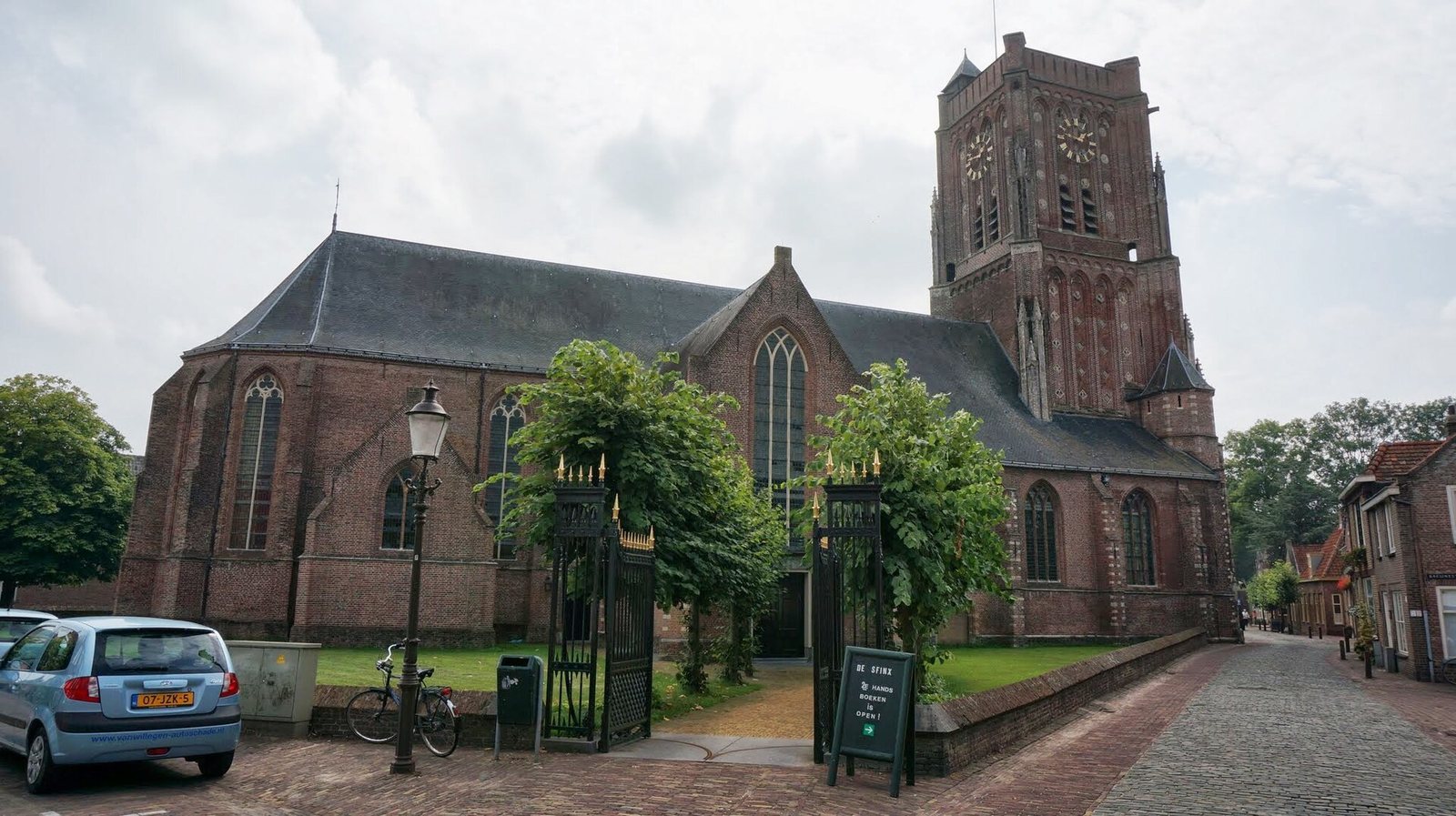
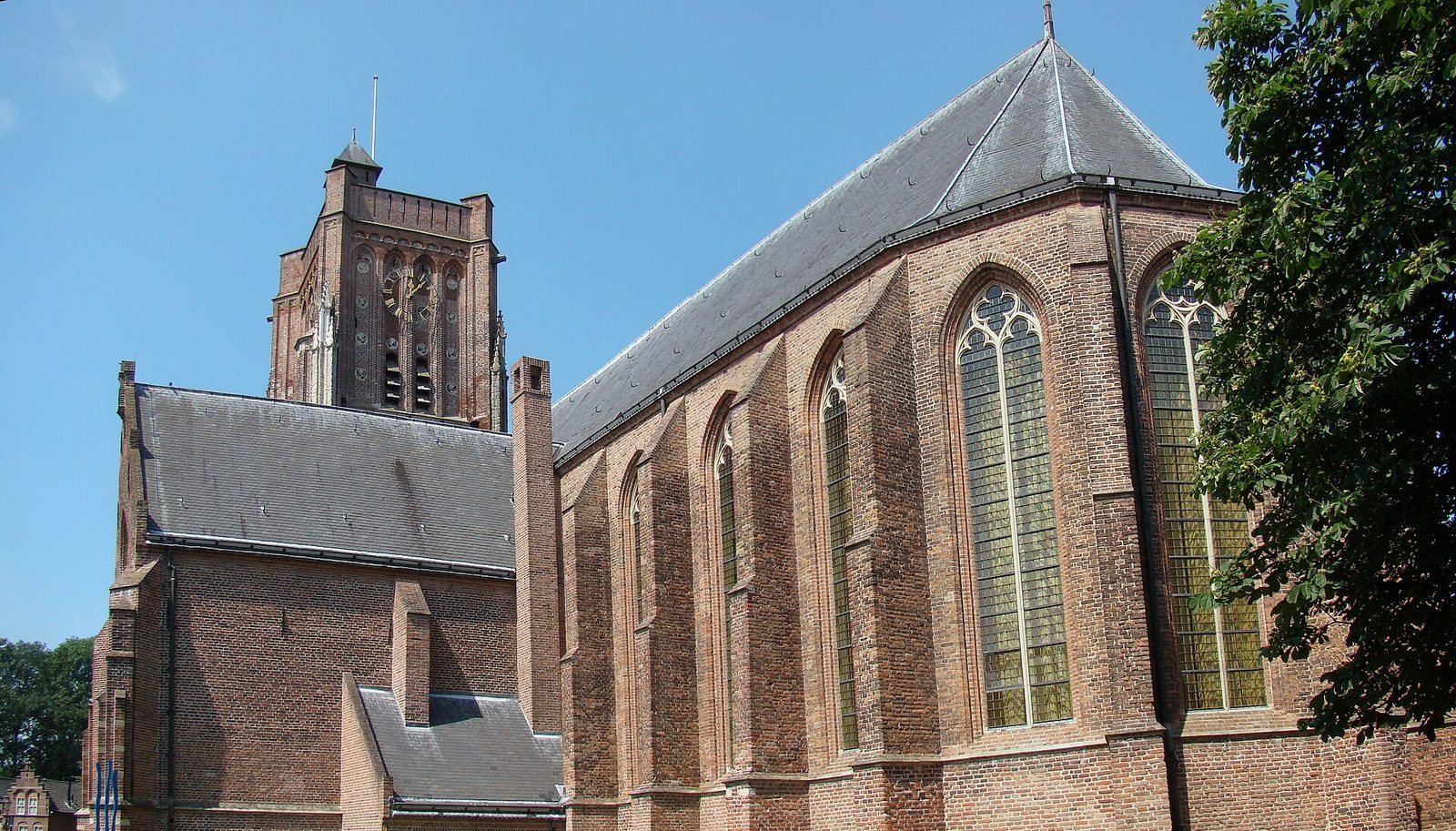
The church has a late-Gothic cross-shaped plan, with a raised central nave and lower side aisles. Its tower is partly incorporated into the building, and the aisles continue beyond it. The five-sided enclosed choir, the church’s altar area, is slightly older than the nave and divided from it by a wall.
Nave and choir
Wooden barrel vaults cover the nave. A narrow hagioscope, a small opening that allows a view into another part of a church, survives at the entrance to the choir.
Tower
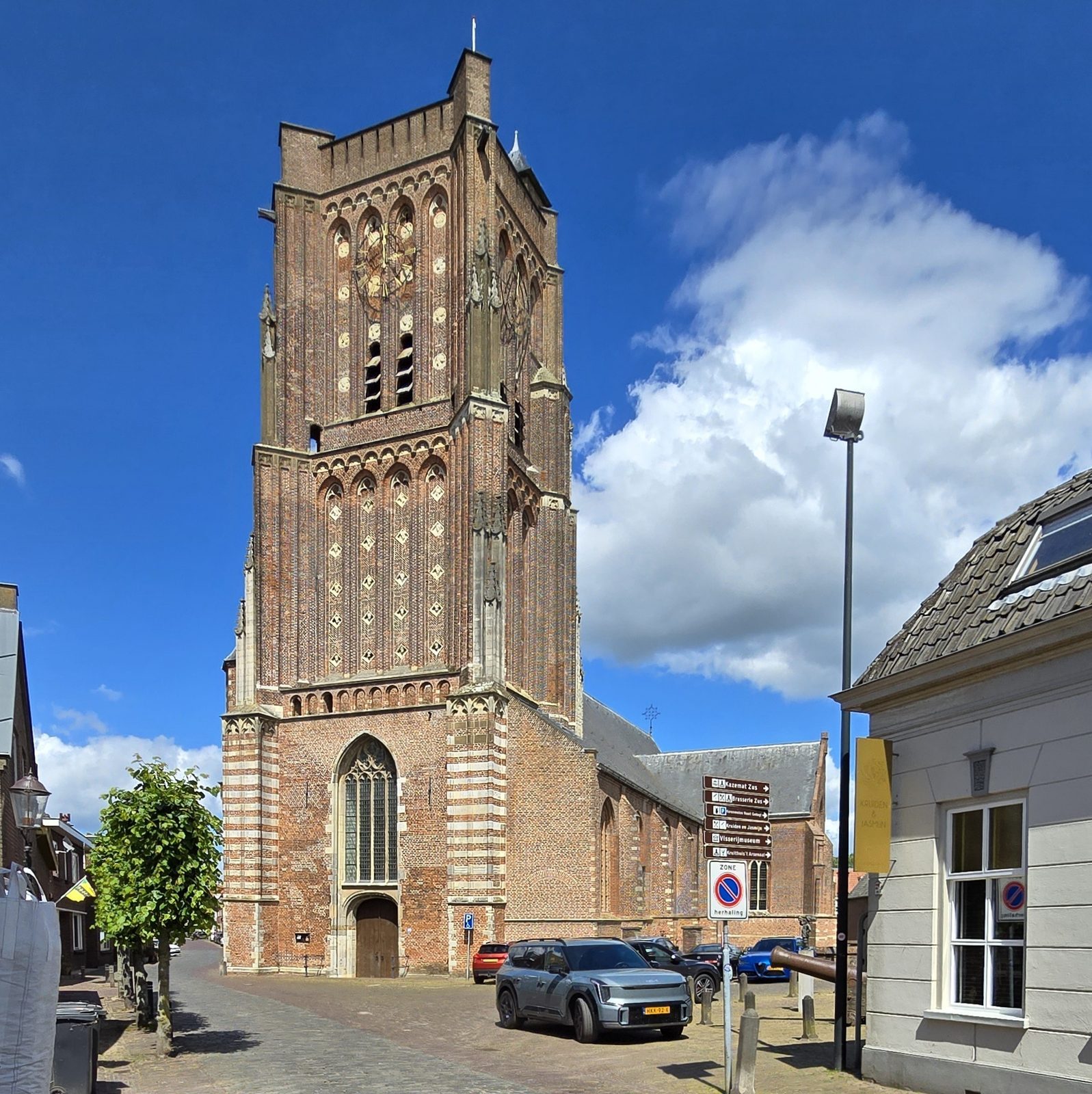
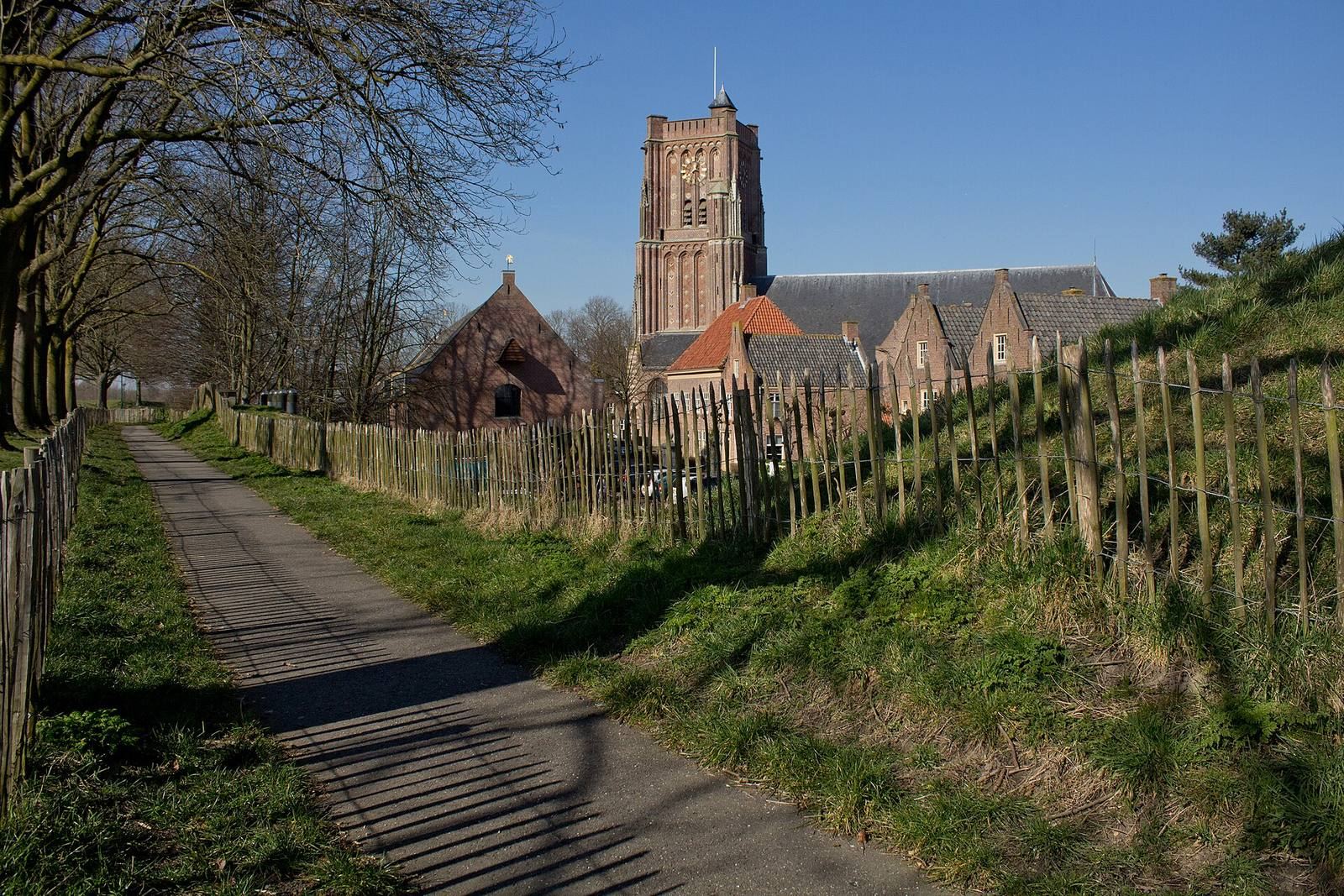
The 34-metre tower predates the church and has richer ornament than the nave. On its west face, angled buttresses are marked with bands. At the second level, the bands continue around the corners, perhaps reflecting a change in plans or an interruption during construction. Blind niches at this level contain diamond-shaped medallions. In the bell tier, round medallions bear carved heads representing counts, women, and soldiers. Shells decorate panels in an arched band, an early Renaissance feature dating no earlier than about 1530.
A storm in 1717 destroyed the tower’s spire, leaving it with a blunt top. The tower was partly restored in 1933, when a balustrade was added. It is popularly known as De Mosterdpot, or the Mustard Pot.
Interior furnishings and memorials
Organ
The richly decorated historic case is the surviving older component of the organ ensemble. During its restoration in the 1970s, workers found gilding beneath white paint and returned the case to its original colours. The present instrument has 21 stops, which control sets of pipes, two hand-played keyboards, and a foot-operated pedal. Its action is mechanical.
Grave marker and reserved pew
Below the organ lies a grave marker dated 1613 for Aernt van Eck and his wife, Cornelia van Sevender. The church also contains a seigneurial pew, a reserved seating enclosure associated with a lord or prominent household.
Baptismal font
A newer baptismal font stands on the excavated base of its medieval predecessor.