Markree Castle: A Cooper Family Stronghold and Observatory in Ireland
Site at a Glance
- Rating
- 4.8
- Popularity
- Low
- Country
- Ireland
- Primary era
- Modern
- External website
- Open
- Eras represented
- Medieval, Modern
- Civilizations
- British, Irish
- Site type
- Domestic
- Remains
- Castle
On this page8 sections
History
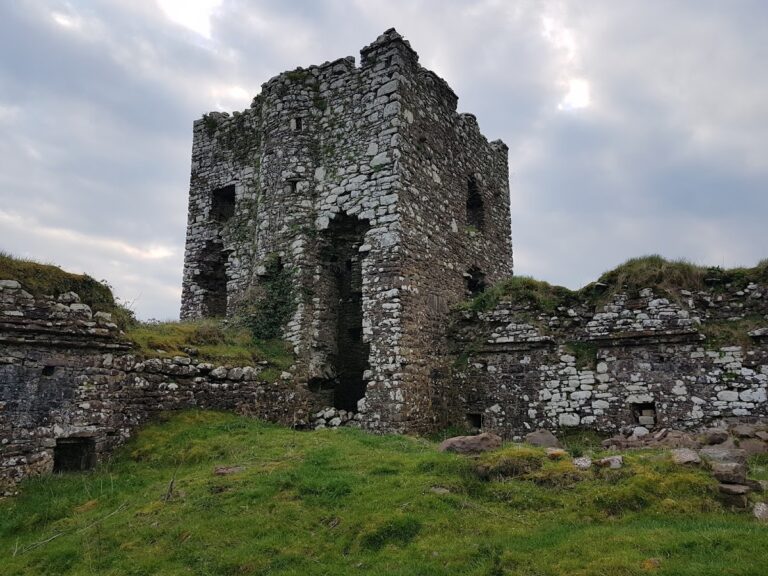
Markree Castle is a historic castle in Ireland, beside the River Unshin in County Sligo, whose earliest surviving history begins with the McDonagh clan in the fourteenth century. Built as a fortified outpost at a river ford, it protected the clan’s lands and later became the ancestral seat of the Cooper family.
From McDonagh Stronghold to Cooper Residence
During the Irish uprising of 1641, the McDonaghs supported the rebellion, and English forces seized Markree. In 1663, Cornet Edward Cooper received the castle and its surrounding lands after serving under Oliver Cromwell, the English parliamentarian and military commander whose forces conquered much of Ireland during the campaigns of the 1640s and 1650s. Cooper partly restored Markree and made it his residence.
Conor O’Brien died fighting the English forces, after which Edward Cooper married his widow, Marie Rua, known as Red Mary. Edward and Marie later moved with their two sons to Dromoland Castle. Donough remained at Dromoland, while the other son inherited Markree. Charles Cooper, the last Cooper owner of the castle, descended directly from this branch.
During the late-seventeenth-century wars connected with James II’s attempt to recover the English, Scottish, and Irish thrones, the Catholic royal army occupied Markree and the Protestant Coopers fled. After the Battle of the Boyne and James II’s departure from Ireland, the family returned in 1690 and continued to live at the castle.
The Nineteenth-Century Estate and Observatory
Colonel Edward Joshua Cooper, an Irish landowner, astronomer, and politician who was a Member of Parliament for the United Kingdom, rebuilt and repaired Markree in 1830. He also established an observatory in the grounds. Cooper was the eldest son of Edward Synge Cooper, also a Member of Parliament, and Ann, the daughter of Henry Vansittart, Governor of Bengal.
For a period in the nineteenth century, Cooper’s telescope was the world’s largest refracting telescope. This type of instrument forms images by bending light through lenses. Observatory staff discovered the object now known as asteroid 9 Metis, a numbered minor planet in the Solar System, during the 1840s. In 1851, Edward Joshua Cooper and his assistant Andrew Graham worked at the observatory, which the Royal Astronomical Society regarded that year as one of the finest private observatories in the world. The observatory remained active until Edward Henry Cooper died in 1902.
The castle also has a literary association with Cecil Frances Alexander, who may have written the hymn All Things Bright and Beautiful while staying at Markree in 1848. On 16 January 1881, the estate recorded Ireland’s lowest officially recognized air temperature, −19.1 °C (−2.4 °F).
Twentieth-Century Disruption and Reuse
Bryan Cooper, a British Army officer, soldier, and politician, inherited Markree after his father’s death in 1902. He lived there with his family from 1903 until his own death in 1930, apart from periods during the First World War and times when political duties took him elsewhere.
During the early 1920s, amid the Irish Civil War, the Irish Free State army occupied the castle and the Coopers were temporarily displaced again. After the Second World War, Markree was neglected and progressively became ruinous. The Cooper family continued to live there until 1981. Edward Cooper then took over the estate, living in the converted stable yard rather than the main castle and concentrating on farming. The castle stood empty from 1982 to 1992, except for its use in the 1988 television miniseries Troubles.
Charles Cooper restored Markree in 1989 and opened it as a hotel in 1992, operating it with Mary Cooper. They represented the tenth generation of the Cooper family to live at the castle. The castle and estate were sold to the Corscadden family in 2015, after which the new owners carried out extensive renovations and continued the hotel and restaurant use.
Remains
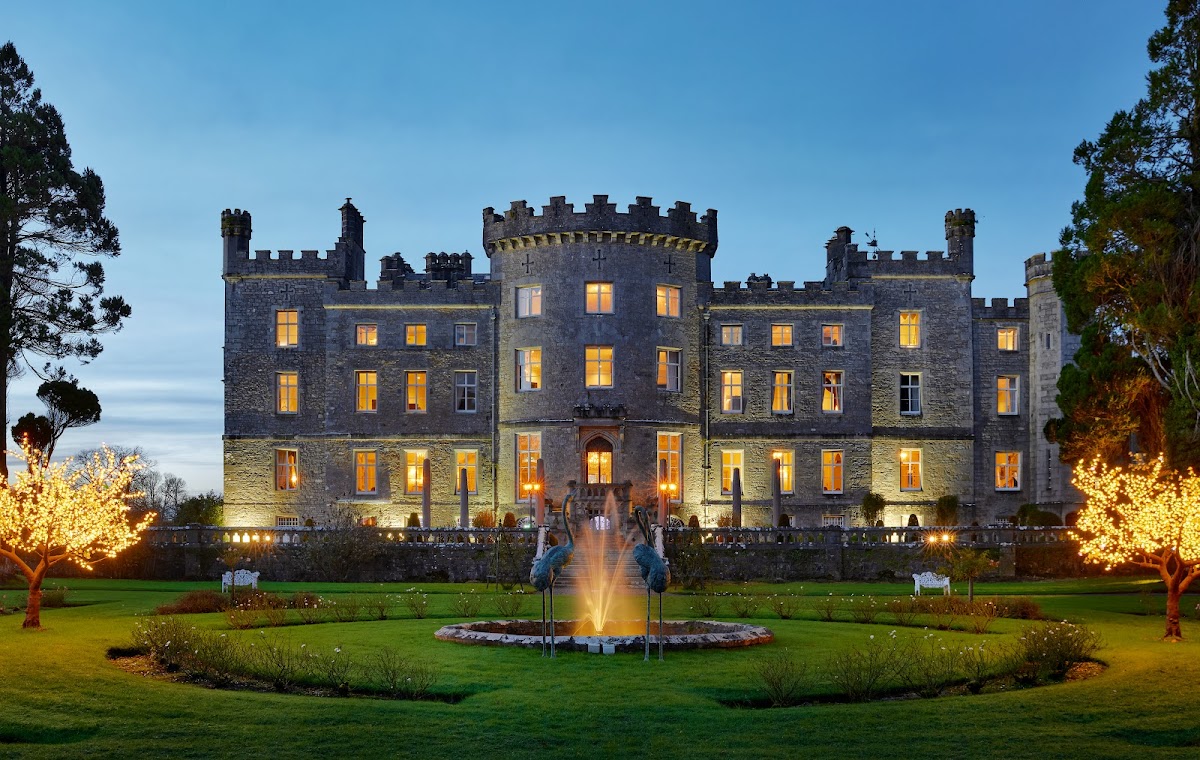
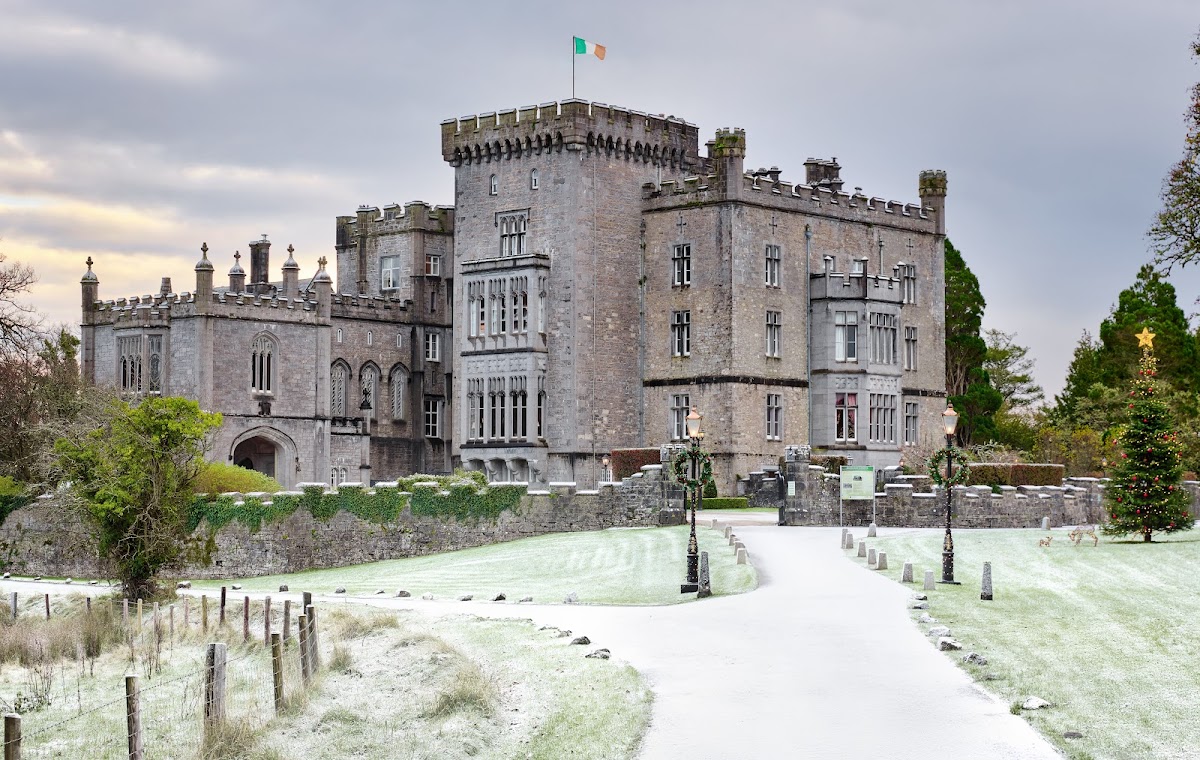
Markree Castle is partially moated by the River Unshin. The visible castle combines an earlier fortified setting with later nineteenth-century work. Much of the structure seen today dates from 1802. Exterior changes were carried out by the architect Francis Johnston, while further alterations, mainly to the interior, followed in 1896.
Castle Interior
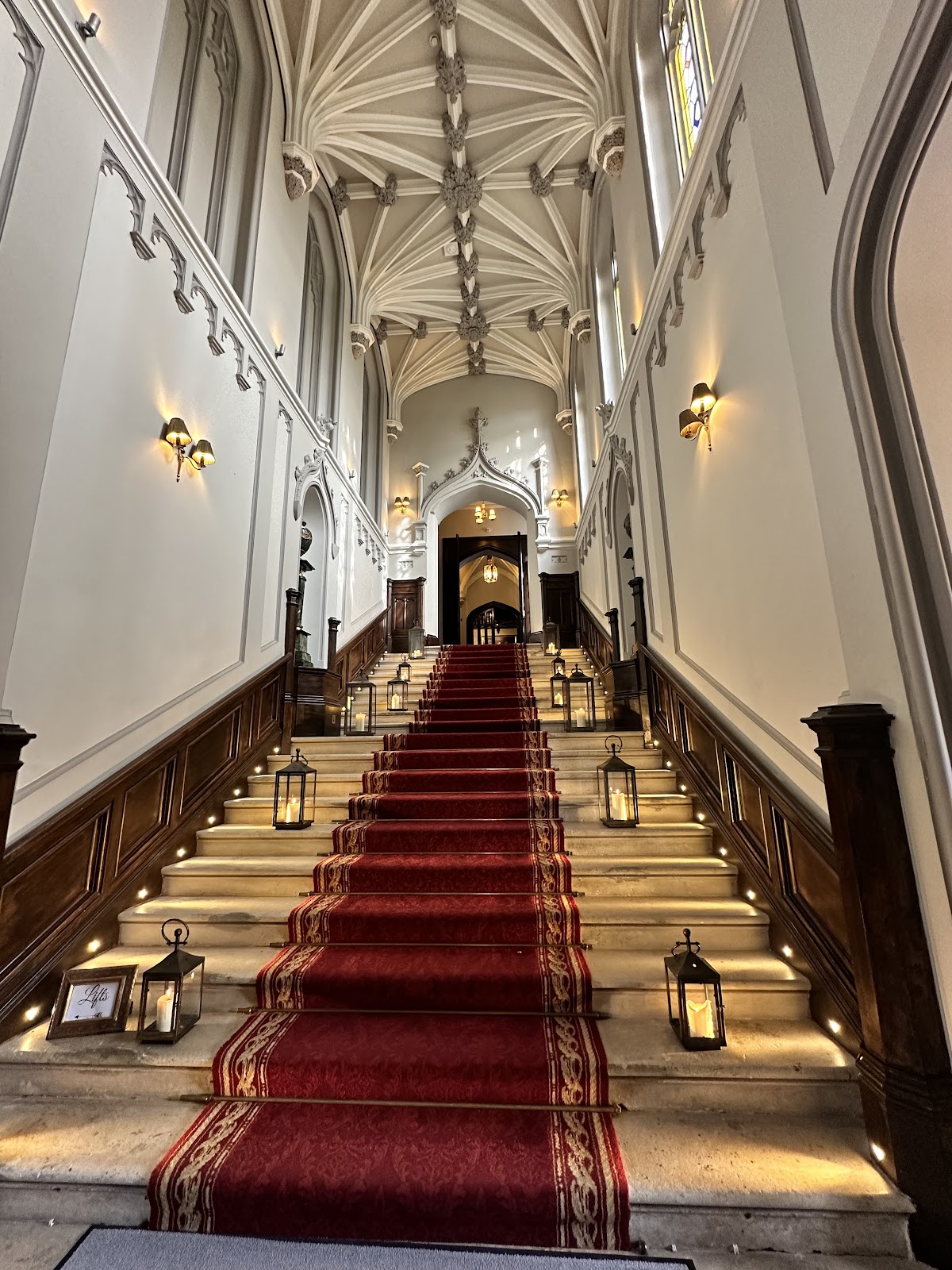
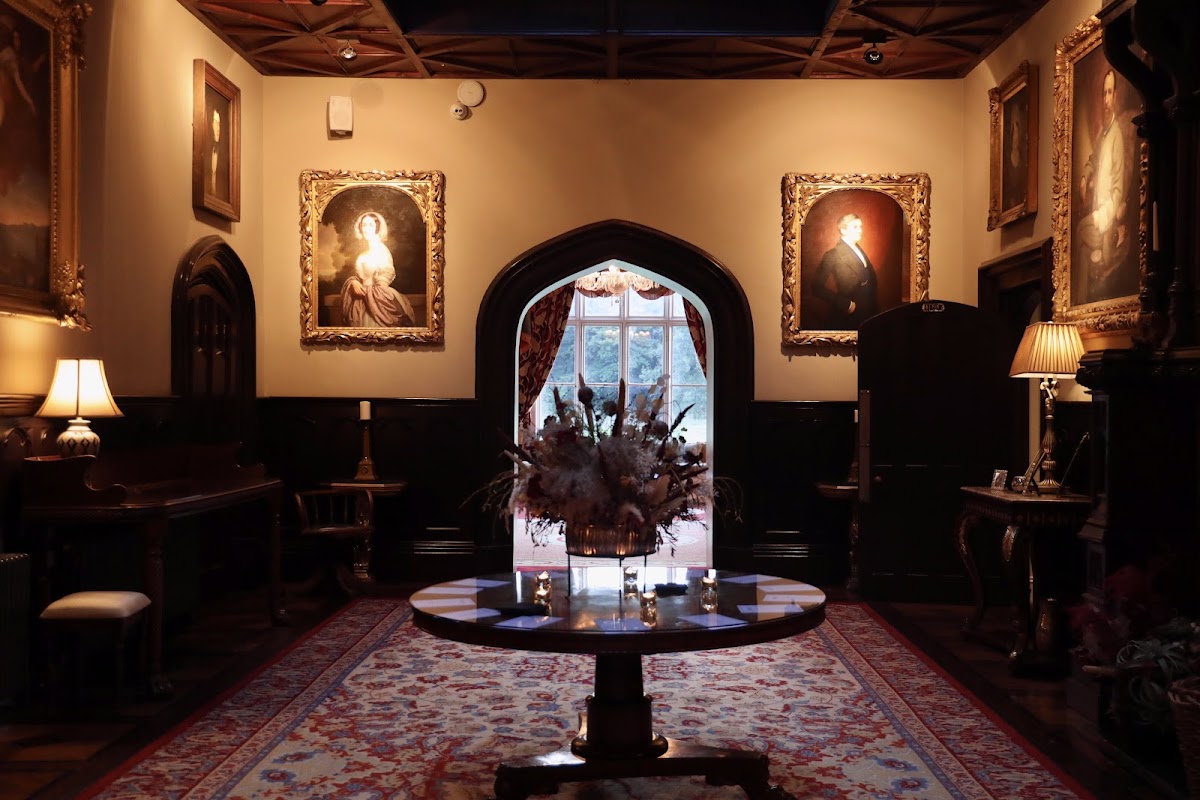
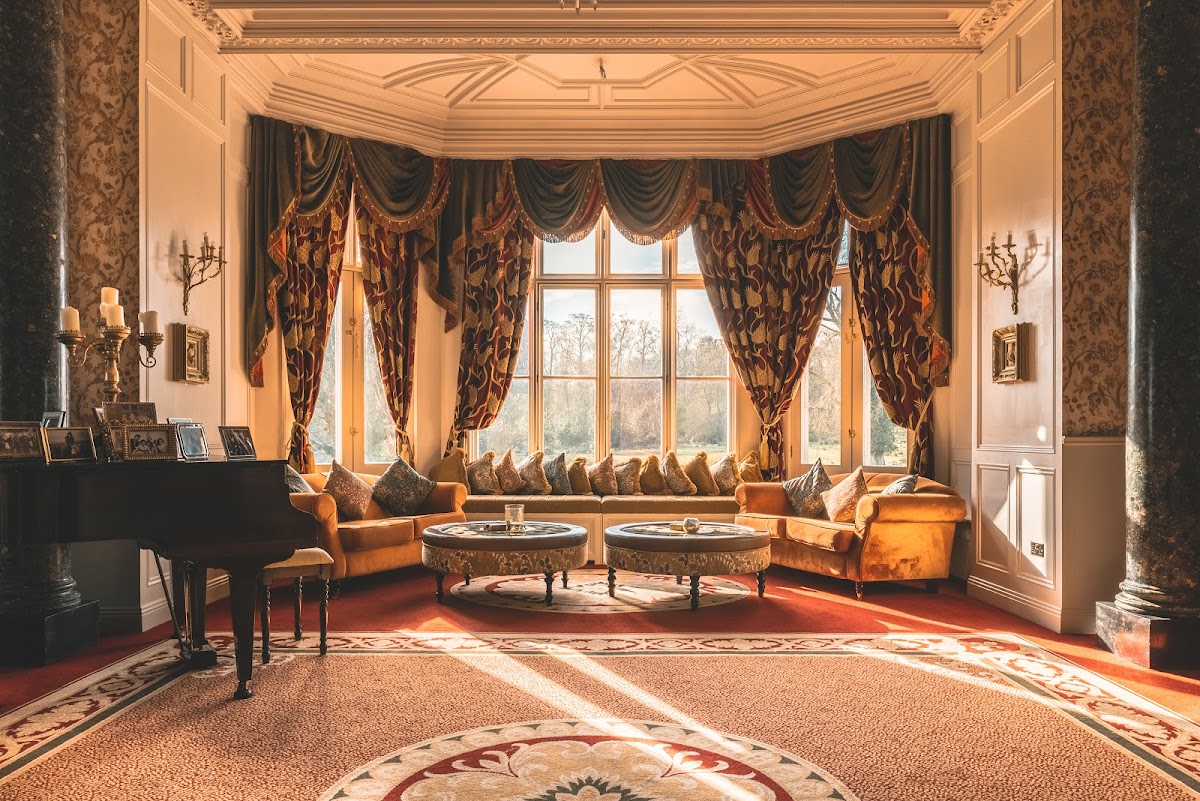
A monumental staircase rises to the entrance and continues towards a large hall. From the hall, a second staircase made of carved wood leads to 30 guest rooms. A large Victorian stained-glass window presents the genealogy of the Cooper family, tracing its line from the Victorian period back to the time of King John. The dining room contains Louis Philippe-style plasterwork, a nineteenth-century French decorative style associated with elaborate interior ornament during the reign of King Louis Philippe.
Observatory Grounds
The observatory stood in the castle grounds and included Cooper’s exceptionally large refracting telescope. The observatory site was also associated with the discovery of asteroid 9 Metis by its staff during the 1840s.
Estate Landscape
The grounds form a 300-acre estate containing protected land and wildlife. Red squirrels, otters, kingfishers, and other Irish fauna are found within the estate.