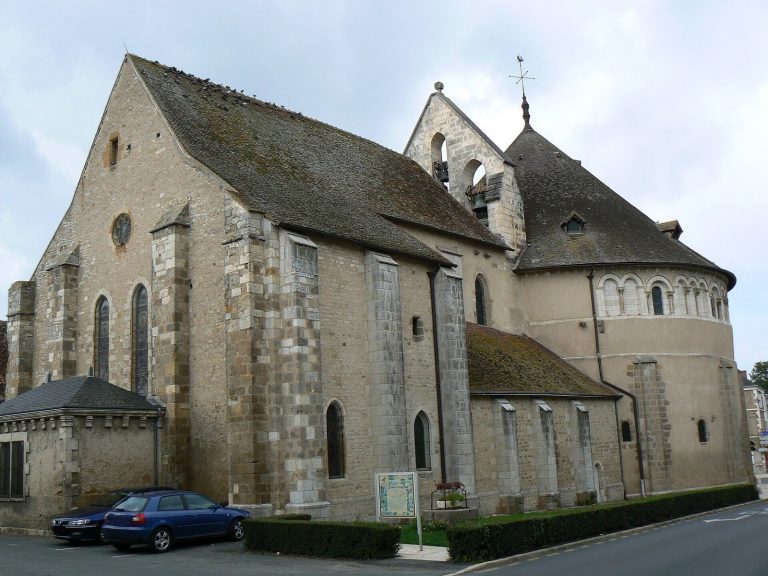
Fontenelle Abbey: A Cistercian Women’s Monastery in France
Site at a Glance
- Rating
- 3.9
- Popularity
- Very Low
- Country
- France
- Primary era
- Medieval
- Eras represented
- Medieval, Early Modern
- Civilizations
- Holy Roman Empire
- Site type
- Religious
- Remains
- Monastery
On this page9 sections
History
Fontenelle Abbey is a former Cistercian women’s monastery in France, located near Maing south of Valenciennes, close to the Scheldt. Founded in 1212 by Agnes and Jeanne, daughters of Hélin, lord of Aulnoy, it housed nuns within the Cistercian Order, a Catholic monastic movement that emphasized communal religious life, discipline, and an austere form of practice.
Foundation and Medieval Patronage
The abbey stood near Trith at an important crossing of the Scheldt and received the protection of the counts of Hainaut. Its position and connections brought it substantial lands and wealth. Noblewomen joined the community, while others retired there, giving Fontenelle a strong place within the religious and aristocratic networks of medieval Hainaut, a county in the Low Countries whose territory later divided between French and imperial spheres.
Tradition connected the site with an apparition of the Virgin Mary to the hermit Bertholin during an epidemic in Hainaut on 31 August 1008. He was said to have prayed beside a fountain, which gave the place the name Fontenelle. The apparition was associated with the preservation of Valenciennes through the Miracle of the Holy Cord.
Jeanne of Valois at Fontenelle
Fontenelle became especially prominent in the fourteenth century through Jeanne of Valois, a French royal woman and the widow of William, Count of Hainaut, Holland, and Zeeland. She entered the abbey in 1337. Her daughter Isabelle of Namur and granddaughter Anne of Bavaria later joined her there, making the convent a dynastic residence as well as a religious foundation.
Jeanne maintained a chancellery and personal staff at Fontenelle, received court guests, and used the abbey as a base for diplomatic efforts during the conflict between France and England. In 1339 she welcomed her son-in-law, Edward III of England. She later appealed in Paris to her brother, Philip VI of France, and travelled to Ghent to meet her daughter Philippa. These efforts sought to protect Hainaut and limit the destruction caused by the war. The Peace of Tournai, concluded on 20 September 1340, secured a truce.
The abbey suffered during this period. French forces burned it in June 1340 while Jeanne was resident there. She died at Fontenelle on 7 March 1352 and was buried in the centre of the nuns’ choir. Archaeological excavations later rediscovered her tomb. Her remains were reinterred in the right transept of Maing church on 7 September 2001.
Religious Wars and Reconstruction
On 25 August 1566, Calvinists from nearby Valenciennes attacked Fontenelle during the iconoclasm, a wave of religious violence directed against sacred images. They destroyed images and windows and severely damaged the complex. The nuns withdrew to other convents and to Valenciennes. Insurgents occupied the abbey in January 1567, but government forces recovered it in March.
The convent was rebuilt, and the nuns returned in 1672. After large parts of Flanders and Hainaut were annexed to France in 1678, the French king appointed the abbesses, beginning with Anne Dufrêne. A longer period of rebuilding and stability followed the warfare of the preceding century.
Revolution, Demolition, and Rediscovery
During the French Revolution, the abbey was sold as national property to private buyers in 1791. It was dissolved in 1793 and demolished. During the First Coalition War, after Valenciennes was taken by a Dutch-Austrian army, local inhabitants and passing troops plundered and damaged the entire complex.
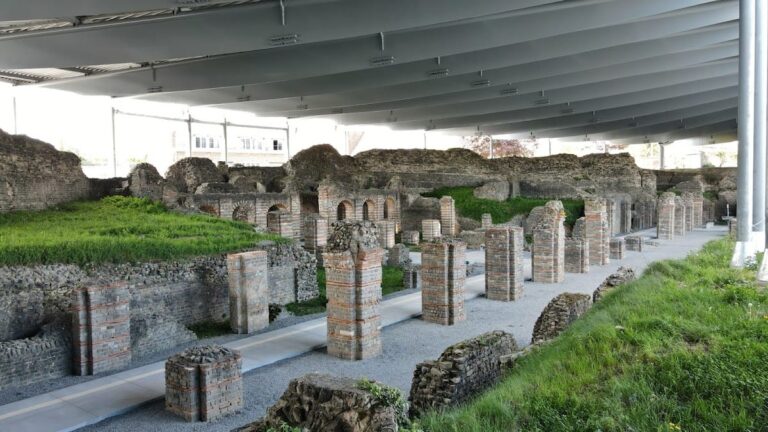
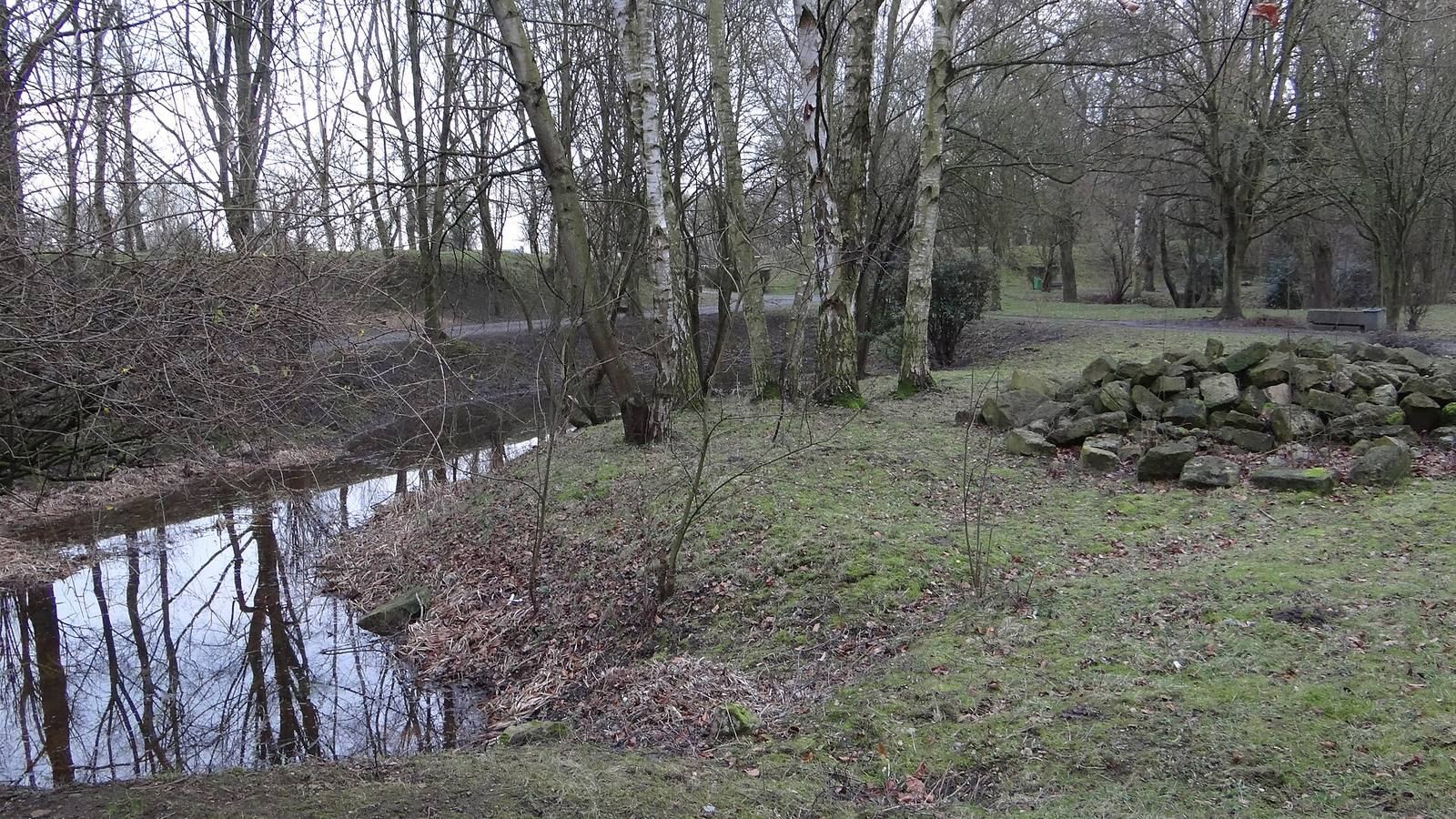
The demolished abbey then became a stone quarry, and its materials were used for road construction until 1835. The site was largely forgotten until remains were exposed during building work on the Scheldt canal in 1977. Between 1977 and 1984, the Valenciennes archaeological service investigated the site under the direction of Vincent Maliet and Philippe Beaussart. Some finds were placed in the Valenciennes museum, while the former abbey site was developed as an archaeological park.
Remains
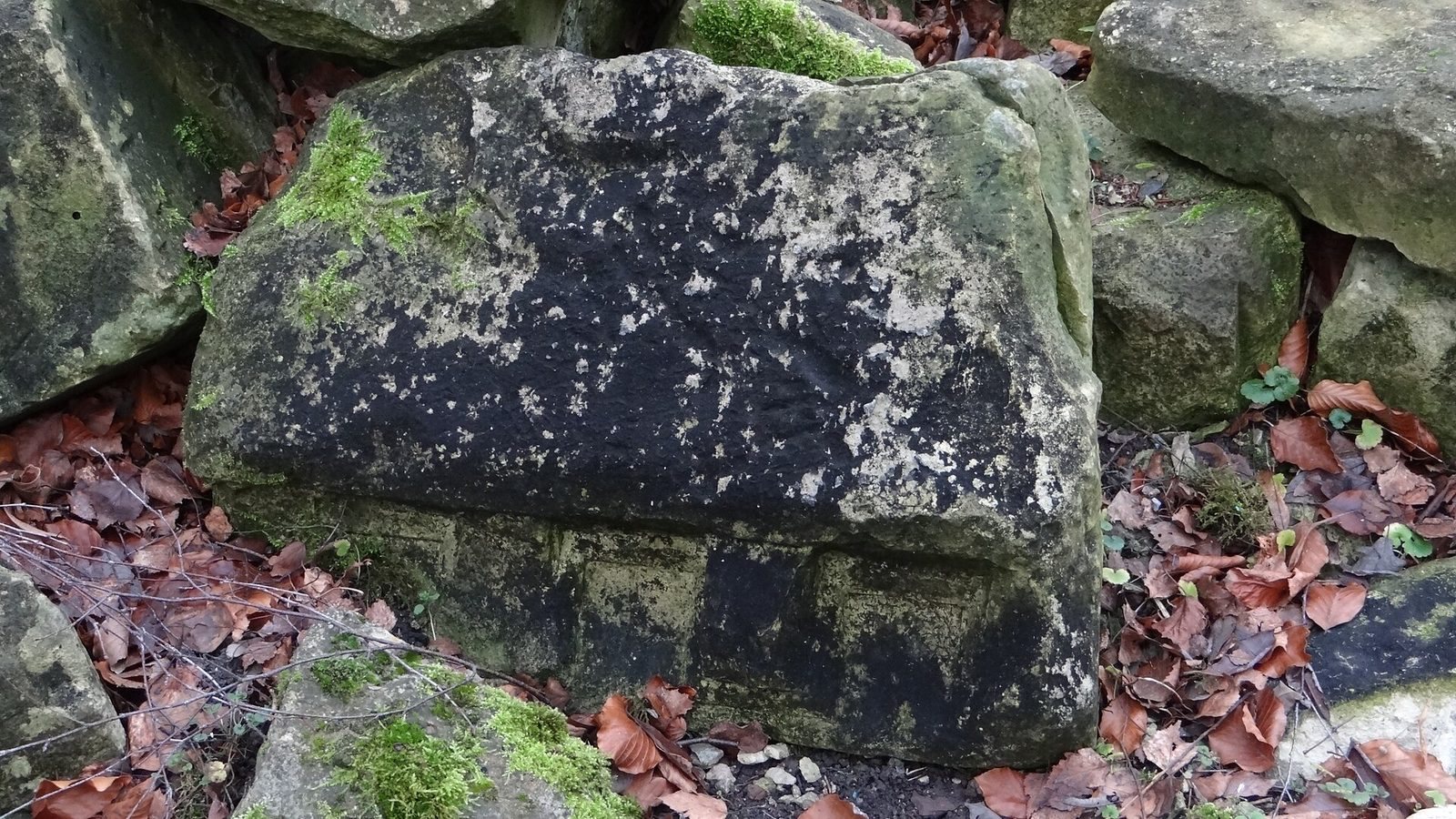
The surviving evidence at Fontenelle consists chiefly of excavated remains that establish the plan of the conventual church, its decorated floor pavements, burial areas, and recovered fragments. The former abbey stood on the right bank of the Scheldt in Maing. Archaeological work between 1977 and 1984 brought parts of this layout back to view and provided material for interpretation in the archaeological park and Valenciennes museum.
Conventual Church and Burials
Excavation established the ground plan of the conventual church. Its floor was divided into areas that included the nuns’ choir, the ante-choir, and the sanctuary. Small tiles formed geometric pavement patterns across these spaces. The oldest surviving tiles date from the fourteenth century, while the latest belong to the sixteenth century, preserving evidence of changes within the church over several centuries.
Several burial vaults were uncovered in the church, including the vault of Jeanne of Valois. Burials belonging to other princesses from her family were also excavated. The investigations additionally revealed a group of funerary slabs made from Tournai stone, together with a head of King David. These finds form part of the material evidence recovered from the former religious complex.
Views and Documentary Evidence
At the end of the sixteenth century, Adrien de Montigny produced a bird’s-eye perspective of Fontenelle for the Albums de Croÿ. These albums are an early-modern series of illustrated views of towns, estates, and buildings. The elevated oblique drawing represents the abbey from above while retaining recognizable architectural features, providing a visual record from the period after the sixteenth-century damage.
Former Abbey Farm at Marly
The nuns’ former abbey farm survives in the La Briquette district of Marly. Also known as the Ledieu or Baron farm, it stands at 48 Rue Camélinat and retains a monumental entrance porch dated 1781. The porch bears the arms of the abbey and the motto “Fontenelle cum virtute nomem,” preserving a later architectural remnant of the institution outside the demolished conventual site.