Manyov Dol Thracian Temple: An Iron Age Tomb Sanctuary
Site at a Glance
- Popularity
- Very Low
- Country
- Bulgaria
- Primary era
- Iron Age
- Eras represented
- Iron Age
- Civilizations
- Thracian
- Site type
- Religious
- Remains
- Temple
On this page5 sections
History
A Thracian sanctuary in the Starosel landscape
The Manyov Dol Thracian Temple is a Thracian tomb sanctuary near Starosel, Bulgaria, generally dated to the 4th–3rd centuries BCE. It belongs to the Iron Age, a period associated with the use of iron tools and weapons, and is considered contemporary with other archaeological sites in the Starosel area.
Archaeologists Ivan Hristov and Georgi Kitov considered the area around Starosel a possible large religious complex. Hristov proposed that Manyov Dol, Chetinyova Mound, Roshavata Mound, Eleshnishka Mound (also called Nedkova Mound), and Valchiya Zub followed the outline of the constellation Ursa Major. He further hypothesized that thousands of pilgrims travelled to the sanctuaries by a sacred road, marked by temples aligned with the stars. In his proposed route, Manyov Dol was the westernmost cult building, leading toward temples, megalithic sanctuaries, and a residence on Kozi Gramadi.
After a sanctuary was found at Kozi Gramadi, about 20 km from Manyov Dol, Hristov proposed that the sites were connected with Amadok II of the Odrysian kingdom, a major ancient Thracian state.
Excavation and later condition
Kostadin Kisyov and Mitko Madzharov investigated Manyov Dol during unregulated excavations in 1999. Kisyov’s permit placed the mound in Mutenitsa, east of Starosel, and authorized a field survey rather than excavation. Georgi Kitov’s mound-research team later found numerous indiscriminate pits at Manyov Dol and Chetinyova Mound, attributing them to Kisyov’s group. Kisyov’s work was presented at the 40th National Archaeological Conference as research in Mutenitsa, but it was not included in the Bulgarian Academy of Sciences’ annual excavation report for 1999–2000. Diana Dimitrova, a member of Kitov’s team, described the digging as the work of a group of looters.
Hisarya Municipality warned the Ministry of Culture in 2013 that archaeological sites in its care, including those around Starosel, were in poor condition after incomplete excavation and a lack of protection and restoration. By summer 2016, Manyov Dol had gone fifteen years without conservation and remained exposed to the weather.
Remains
Mound and tomb structure
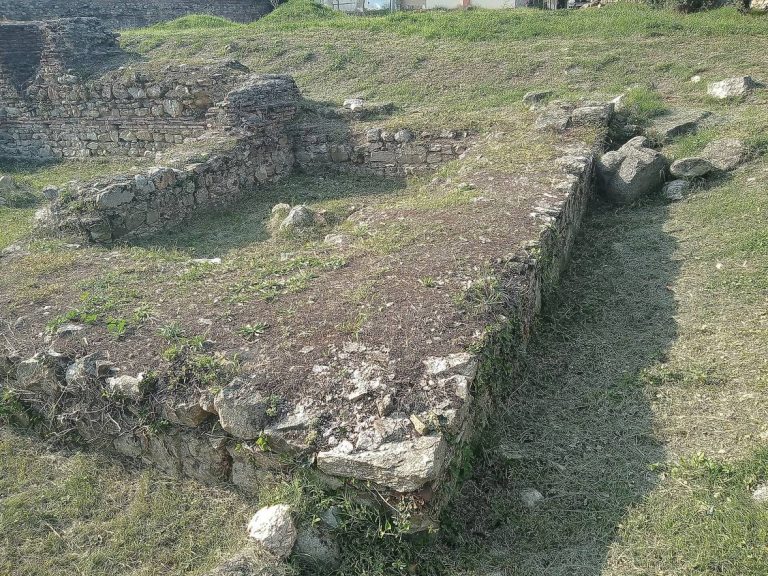
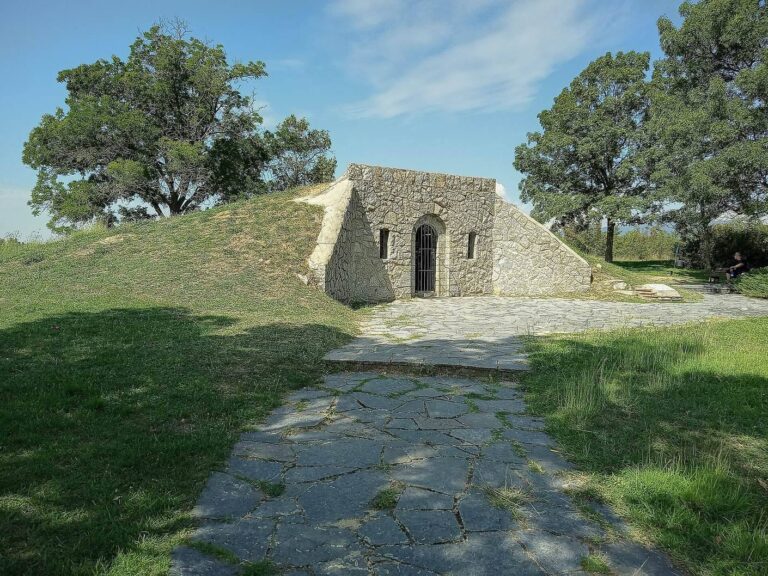
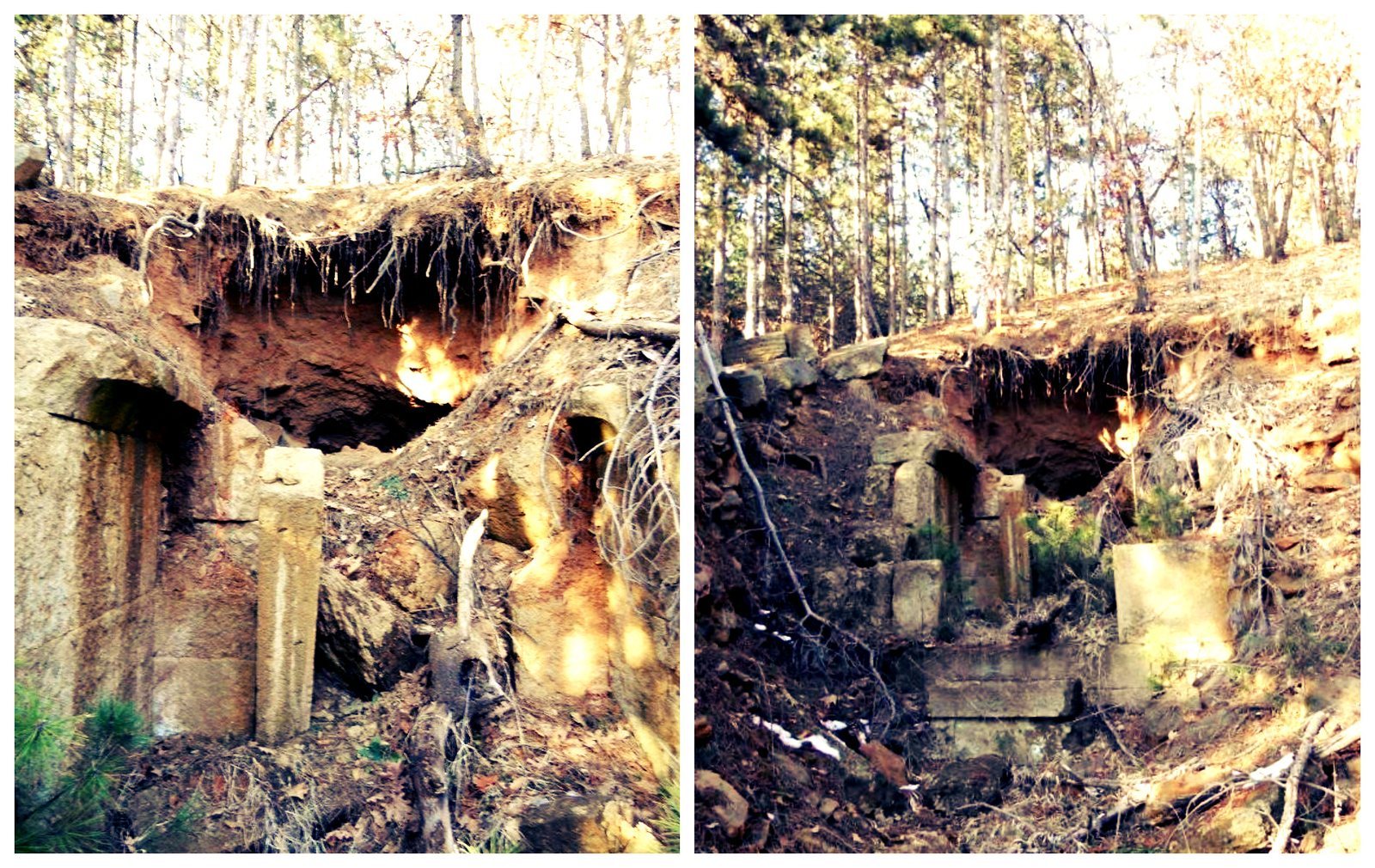
The tomb lies beneath a mound rising from a low rocky elevation west of Chetinyova Mound, near Starosel. The mound is about 5 m high and 44 m in diameter. Its masonry is at the southeastern edge, roughly 1 m below the surface. The structure consists of a vestibule and a circular chamber. Kisyov and Madzharov gave two different measurements for the rectangular vestibule, 3 by 2 m and 10 by 2.40 m. It was built in six horizontal courses joined with iron clamps and lead. Four columns with bevelled profiles on their front faces flanked the entrances to the vestibule and chamber; a single-leaf stone door closed the vestibule entrance. The circular chamber measures 4 m across and 2.40 m high. Two large stone blocks ritually sealed the tomb entrance, as at the temple in Chetinyova Mound. The tomb had been robbed, and the structure has suffered extensive damage. Hristov considered it restorable because most blocks from the vestibule and dome remained.