Manor House of Ignacy Paderewski in Kąśna Dolna: A Historic Noble Residence


Site at a Glance
- Rating
- 4.8
- Popularity
- Low
- Country
- Poland
- Primary era
- Modern
- External website
- Open
- Eras represented
- Modern
- Civilizations
- Habsburg
- Site type
- Domestic
- Remains
- Manor House
On this page11 sections
History
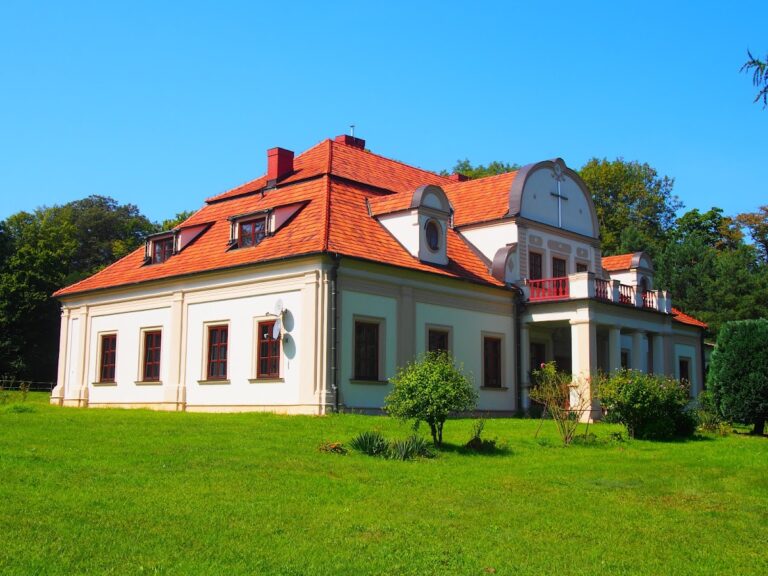
The manor house of Ignacy Paderewski in Kąśna Dolna, Poland, is a noble residence built in 1833 by Paweł Gostkowski, the owner of the village and the manor’s first owner. Dating from the first half of the nineteenth century, it later became associated with Ignacy Jan Paderewski, the Polish pianist, composer, and statesman whose international career made him one of Poland’s best-known public figures.
Gostkowski and Paderewski
In 1897, Stanisław Roszkowski, acting as Paderewski’s authorized representative, purchased the manor from Barbara Jordan Stojowska, née Gostkowska. The building was reconstructed between 1897 and 1899, with the participation of the artist-carpenter Bolesław Rzeszutko. Paderewski stayed there periodically, but the expense of maintaining the property contributed to his decision to live elsewhere.
Later owners and changing uses
Ownership passed in 1903 to the cavalry captain Włodzimierz Kodrębski and his wife, Zofia, née Foryst, the daughter of the Tarnów lawyer Piotr Foryst. The estate was later acquired by Stanisław Nowak, a landed proprietor from Sanok, who died at Kąśna in 1919.
The estate was nationalized in 1945. The manor subsequently served as an office for a nearby fruit-processing plant, a primary school, and a holiday center for employees of the Montin company. During these years, the buildings continued to deteriorate.
Restoration and musical institution
Responsibility for the manor passed to the Tarnów Musical Society in 1979. The society renovated the building and park while gathering memorabilia associated with Paderewski. Classical-music concerts began at the manor in 1983.
The Paderewski Center Tarnów–Kąśna Dolna was established in 1990 and assumed management of the manor and park on 11 September 1998. The manor, described as the world’s only surviving Paderewski estate, now contains museum rooms and hosts concerts. The manor, its outbuilding, and its park were entered on the register of monuments of the Lesser Poland region on 30 May 1980 under registration number A-216.
In the late 1980s, Dr. Franciszek Pulit located Paderewski’s Petrof piano in Warsaw and returned it to the manor after a prolonged search. Petrof is a Czech piano manufacturer. The piano’s owner, Krystyna Barbacka, had been born in Kąśna Dolna in 1903 and was the daughter of former owner Włodzimierz Kodrębski. Her brother, Janusz Kodrębski, had been Paderewski’s godson. The purchase was financed by the Tarnów Voivodeship Cultural Department, and Barbacka requested payment in the form of a color television. Musical gatherings also include screenings of a unique film about the fate of Paderewski’s heart, made by the Polish diaspora in the United States and brought to Kąśna by Dr. Pulit.
Remains
The manor house is a single-storey masonry building oriented toward the east. It stands on a hill within a 16-hectare park established at the turn of the eighteenth and nineteenth centuries. The complex includes the manor, an outbuilding, a pond with an island, avenues of lime, oak, and elm trees, and later structures connected with its changing uses.
Manor and park
Manor house
The building has an open porch resting on four columns and finished with a parapet. A gabled roof covers an unused attic. Its present interior includes museum rooms, linking the surviving residence with the history of Paderewski’s occupation and its later preservation as a cultural institution.
Park landscape
The manor occupies a hill surrounded by landscaped slopes. Tree-lined avenues of lime, oak, and elm extend through the 16-hectare park, while a pond with an island lies in its lower part. A water reservoir was also created within the grounds.
Interior and associated buildings
Neo-Rococo salon
The Neo-Rococo salon contains Paderewski’s Petrof piano, on which he played and composed. Neo-Rococo is a nineteenth-century revival of the eighteenth-century Rococo style, associated with ornate, asymmetrical, and delicately decorative forms. A bust of Paderewski stands beside the manor.
Outbuilding and later additions
The estate includes an outbuilding, and a dining hall was built behind the manor when the property operated as a holiday center for Montin employees. A house intended as a creative-work residence was later constructed beside the manor, adding another building to the historic complex.
Nearby sites