Malmesbury Market Cross: A Late-Medieval Market Shelter
Site at a Glance
- Popularity
- Medium
- Country
- United Kingdom
- Primary era
- Medieval
- Eras represented
- Medieval
- Civilizations
- English
- Site type
- Civic
- Remains
- Monument
On this page7 sections
History
Late medieval origins and market use
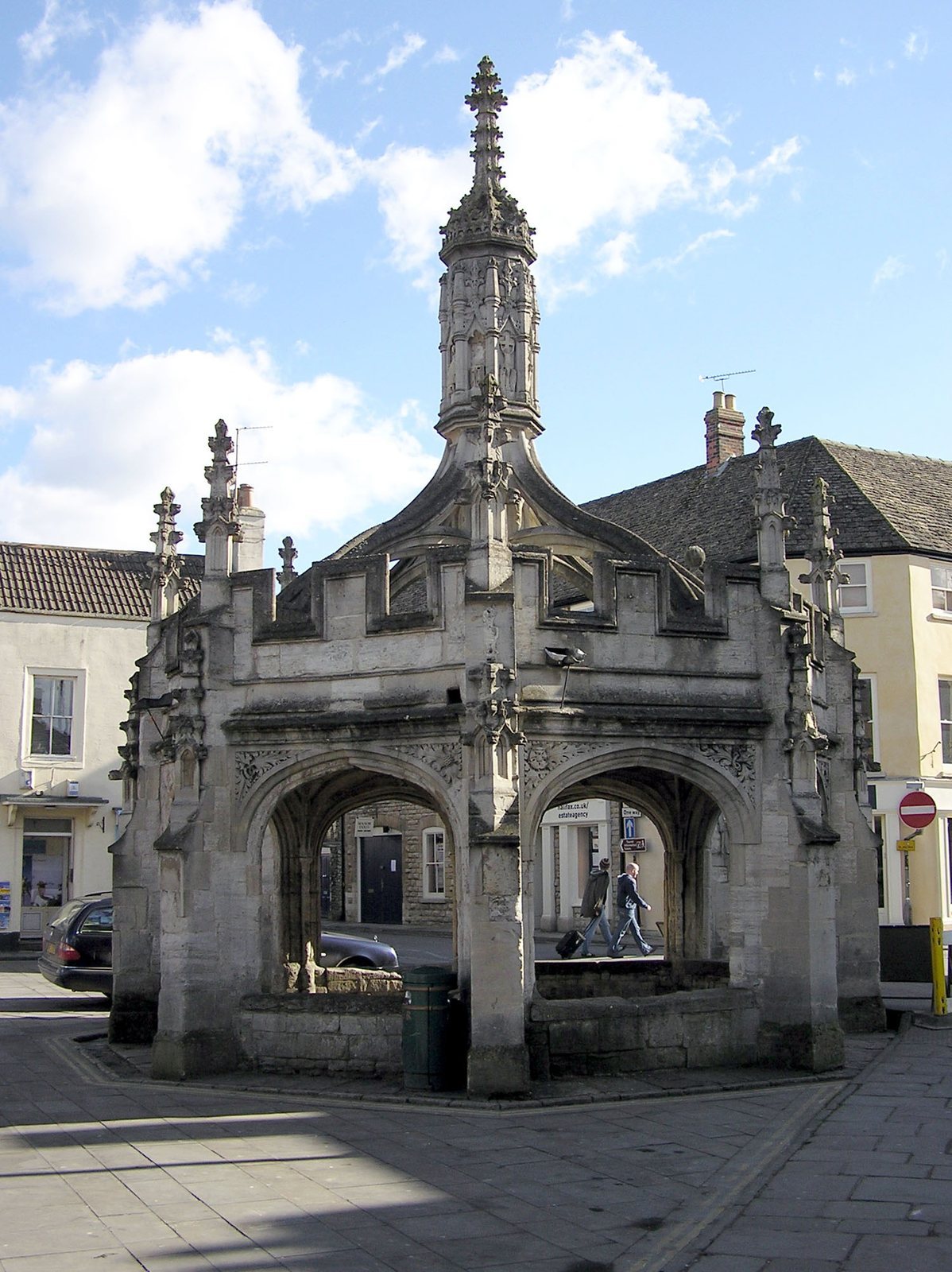
Malmesbury Market Cross is a covered marketplace structure in the United Kingdom, built around 1490 in the Perpendicular phase of English Gothic architecture. It is considered one of the best-preserved market crosses of its kind in England. The structure may include limestone reused from a recently ruined part of Malmesbury Abbey, a monastery.
John Leland, a 16th-century English antiquary who recorded historic places, visited Malmesbury in 1542. He wrote that townspeople had built the cross within living memory. Leland described a lively Saturday market and noted that the cross sheltered market-goers from rain. It continues to shelter traders by day and serves as a meeting point at night.
Repairs and later history
Around 1800, John Howard, the 15th Earl of Suffolk, paid for renovations. In 1879–80, two council members of the Society for the Protection of Ancient Buildings, a British historic-building preservation organization, reported to Lord Northwick, then owner, on repairs needed. What work followed is unclear. Further repairs took place in 1909–12 and 1949–50.
The cross received Grade I listing in 1949, the highest category of listed-building protection in England. Modern traffic has damaged the structure.
Remains
Architecture and decoration
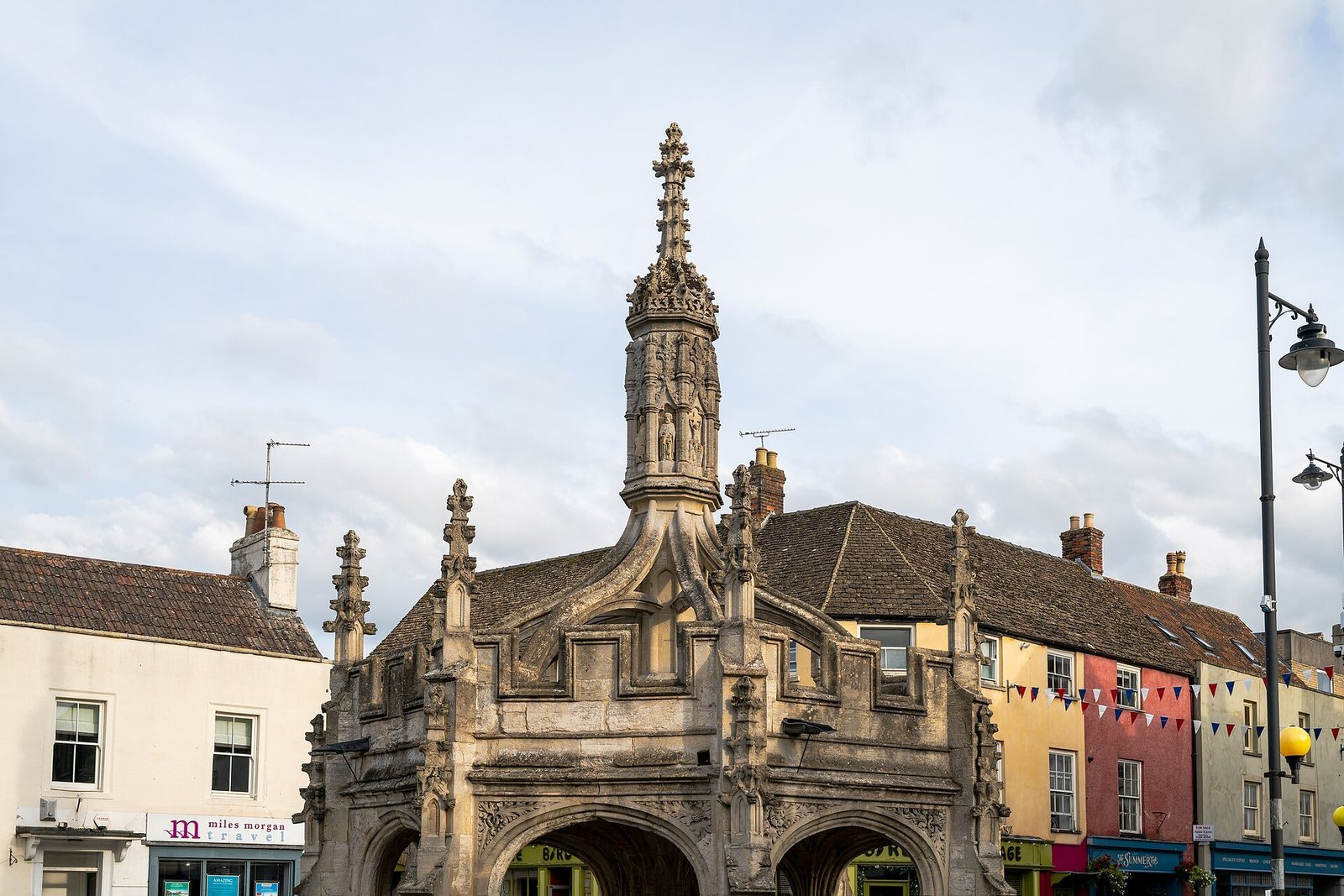
The cross stands at the north end of High Street in central Malmesbury, across the market square from Malmesbury Abbey. More than 40 feet high, it is an octagonal limestone structure with an open arch on each of its eight sides. Its Perpendicular design emphasizes vertical forms.
Shelter and structure
Two principal entrances face southwest and northeast. A low wall that also serves as a bench runs along the outer arches, with openings at two points. Inside, a central column supports a vaulted roof with carved bosses, and stone seats encircle the column. Attached columns rise along the central shaft, while paired columns stand within the projecting corner supports.
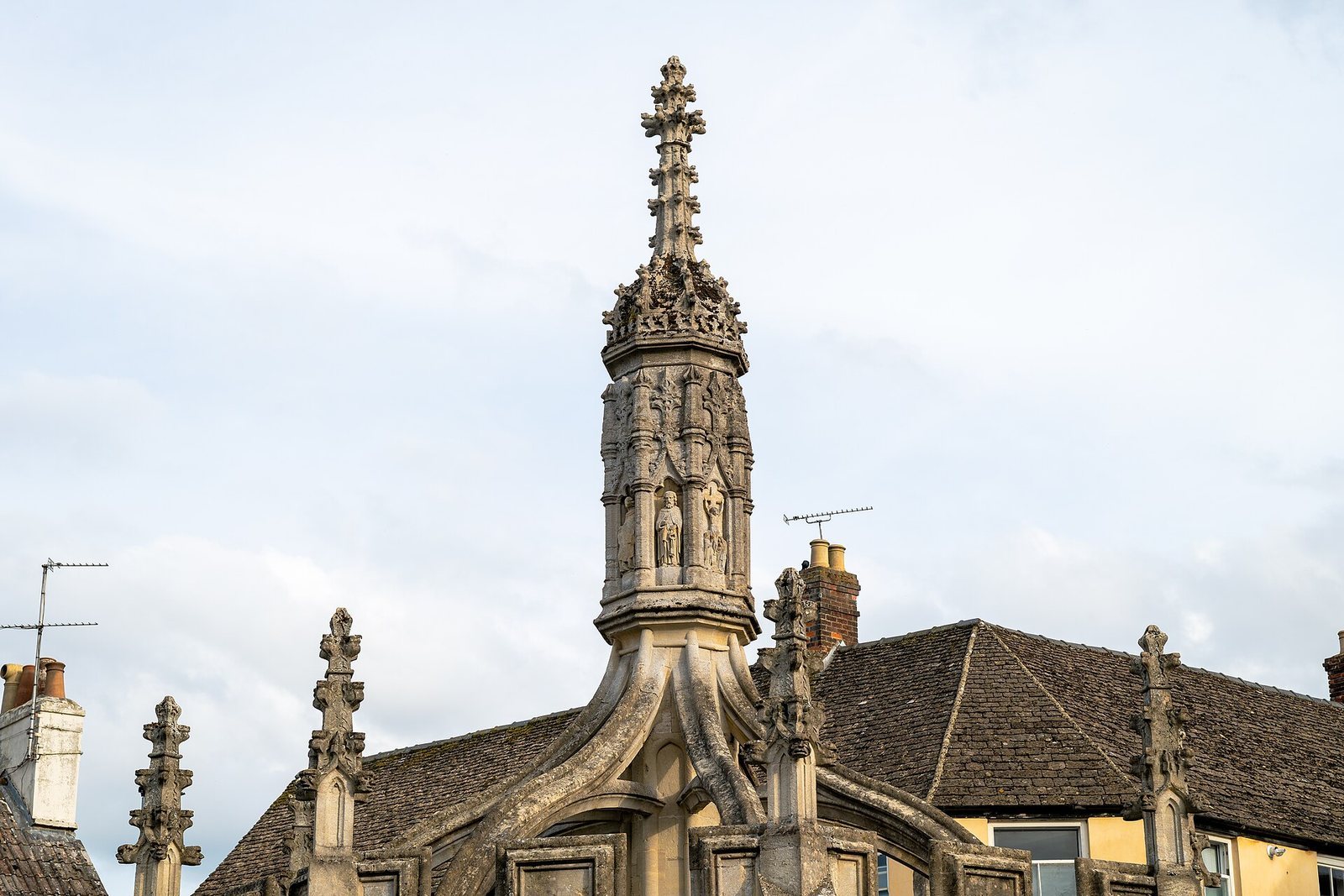
Leaf carvings decorate the panels below the arches, beneath a projecting drip molding. A battlemented wall runs around the roof edge, and carved pinnacles crown the corner supports. Molded arches with lobed edges extend above the roof to support the large lantern.
Lantern and carvings
The lantern bears a carved scene of the Crucifixion and figures of several saints. These carvings survived the English Reformation, the 16th-century religious upheaval that included the suppression of monasteries and the removal or destruction of religious images. The cross is also nicknamed the Birdcage for its appearance. A pinnacle knocked off by a heavy goods vehicle is held at the Athelstan Museum in Malmesbury.