Calne Town Hall: A Gothic Civic Building
Site at a Glance
- Popularity
- Very Low
- Country
- United Kingdom
- Primary era
- Modern
- Eras represented
- Modern
- Civilizations
- British
- Site type
- Civic
- Remains
- Town Hall
On this page7 sections
History
Calne Town Hall is a Gothic civic building in Calne, United Kingdom, built in 1886. It was created to provide a dedicated setting for the town’s civic functions.
Earlier civic premises
Calne established its first town hall in 1829. In 1835, when the town became a municipal borough, a local government district with borough status and its own council, the hall’s meeting room became the office of the borough council. An earlier market house on Market Hill had been made by converting a corn store and contained a meeting room on its first floor.
Building and civic use
In the early 1880s, civic leaders decided to demolish the old market house and construct a purpose-built town hall. They selected a site in The Strand, previously occupied by the old town mill. Bryan Oliver designed the new building in the Gothic style.
From an early stage, the public hall also served as a courthouse. On 22 July 1907, King Edward VII and Queen Alexandra visited Calne and received an address from civic leaders in front of the town hall. A small building behind the hall housed the fire service until it moved to Wenhill Heights in 1966. The town hall remained the headquarters of Calne Borough Council for much of the twentieth century. When the enlarged North Wiltshire Council was formed in 1974, it ceased to be the local seat of government and subsequently became the meeting place of Calne Town Council.
Remains
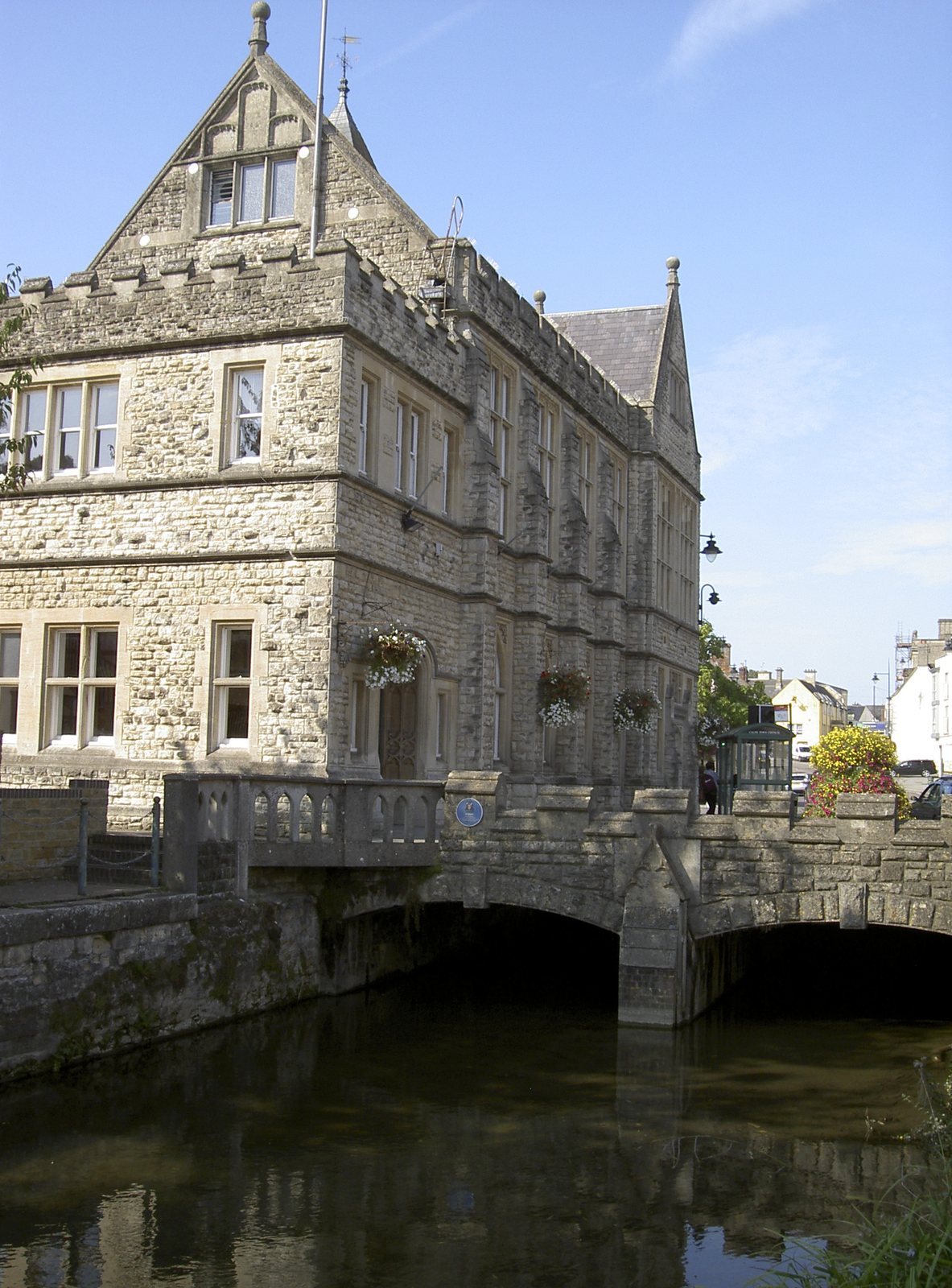
The limestone-rubble building stands in The Strand, with an asymmetrical main frontage facing Cox’s Hill. Its principal rooms served civic, public, and commercial purposes.
Main frontage
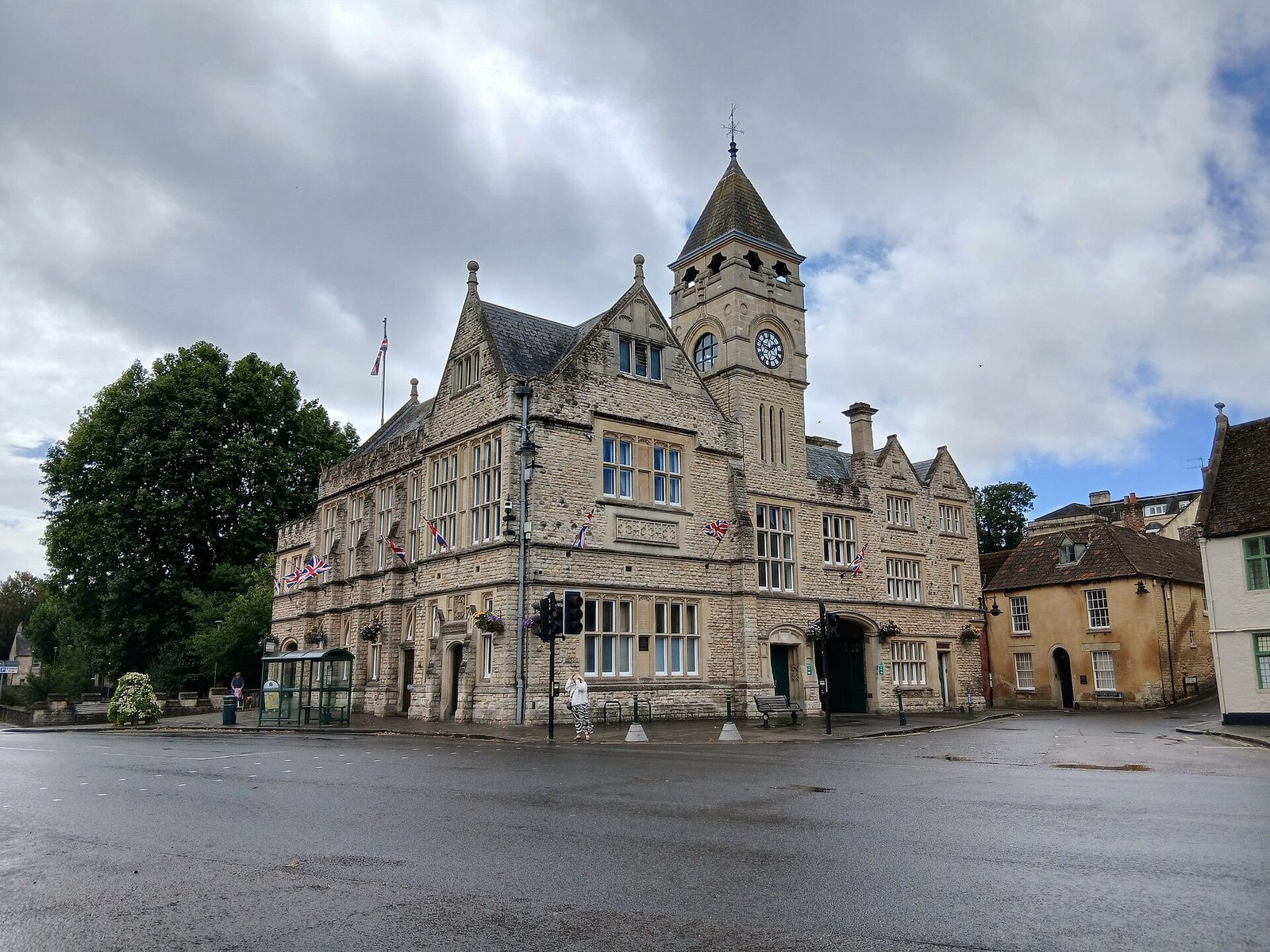
The frontage is divided into five bays, or vertical sections. The left-hand bay has two three-part windows on the ground floor, a carved panel, and two two-part windows above. A large gable rises over it, with a small three-part window. The next bay contains a ground-floor doorway and a nine-part first-floor window. Above this bay is a clock tower with a quarter-chiming clock made by John Smith of Derby, topped by a pyramid-shaped roof. The central bay has an opening for vehicles, with a three-part window above. The two bays on the right have a combination of four- and three-part windows and two smaller gables above.
Principal rooms
A panelled council chamber occupied the building’s left-hand side, while the public hall stood at the rear and was later known as the Large Hall. The building also contained a corn exchange, a space used for trading grain.
Commemorative plaque
In August 1986, English middle-distance runner Sydney Wooderson unveiled a plaque on the town hall commemorating Walter Goodall George’s world mile record, set in 1886.