Makravank Monastery: An Armenian Apostolic Complex in Hrazdan
Site at a Glance
- Rating
- 4.7
- Popularity
- Very Low
- Country
- Armenia
- Primary era
- Medieval
- Eras represented
- Medieval
- Civilizations
- Armenian
- Site type
- Religious
- Remains
- Monastery
On this page10 sections
History
Makravank Monastery is an Armenian Apostolic monastic complex in Armenia, in the Makravan district of Hrazdan. Founded in the tenth century, it developed through the medieval period, and its surviving buildings date from the tenth to the thirteenth centuries. The complex was consecrated in 990 by Arsharuni Catholicos, the senior ecclesiastical leader of the Armenian Apostolic Church.
Foundation and Medieval Development
Makravan is now a district of Hrazdan, in Kotayk Province. The monastery grew as a religious complex whose buildings included the Holy Redeemer chapel, the church dedicated to the Holy Mother of God, a gavit, a medieval cemetery, enclosure walls, and auxiliary structures. The Holy Redeemer chapel belongs to the tenth or eleventh century, while the Holy Mother of God church, also called Holy Katoghike, was built in the thirteenth century.
The monastery remains active and standing. Its medieval buildings and cemetery preserve evidence of the complex’s long religious and architectural development, while its recognition as a cultural monument in Armenia reflects its heritage status.
Legend and Later Recognition
A local legend tells that a conquering shah intended to demolish the church and reuse its stones in a bridge over the Hrazdan River. A popular uprising forced him to abandon the plan. The story associates the monastery’s name with a meaning such as “shah-killing” or “shah-defeating.”
In 2006, one of the monastery’s khachkars, an Armenian carved stone cross monument, was taken to France for the “Holy Armenia” exhibition at the Louvre. Its presentation formed part of the “Armenia, My Friend” program.
Remains
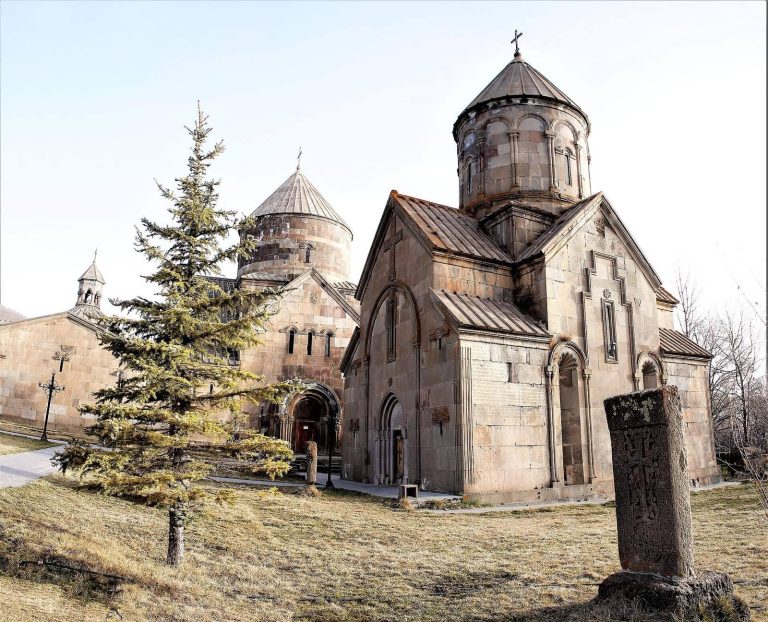
The surviving complex combines a domed central church, a partly ruined chapel, the foundations of an attached gathering structure, enclosure walls, and a medieval cemetery. The principal buildings stand within a group that also contains carved crosses, tombstones, inscriptions, and ornamental stonework.
Main Church and Chapel
Holy Mother of God Church
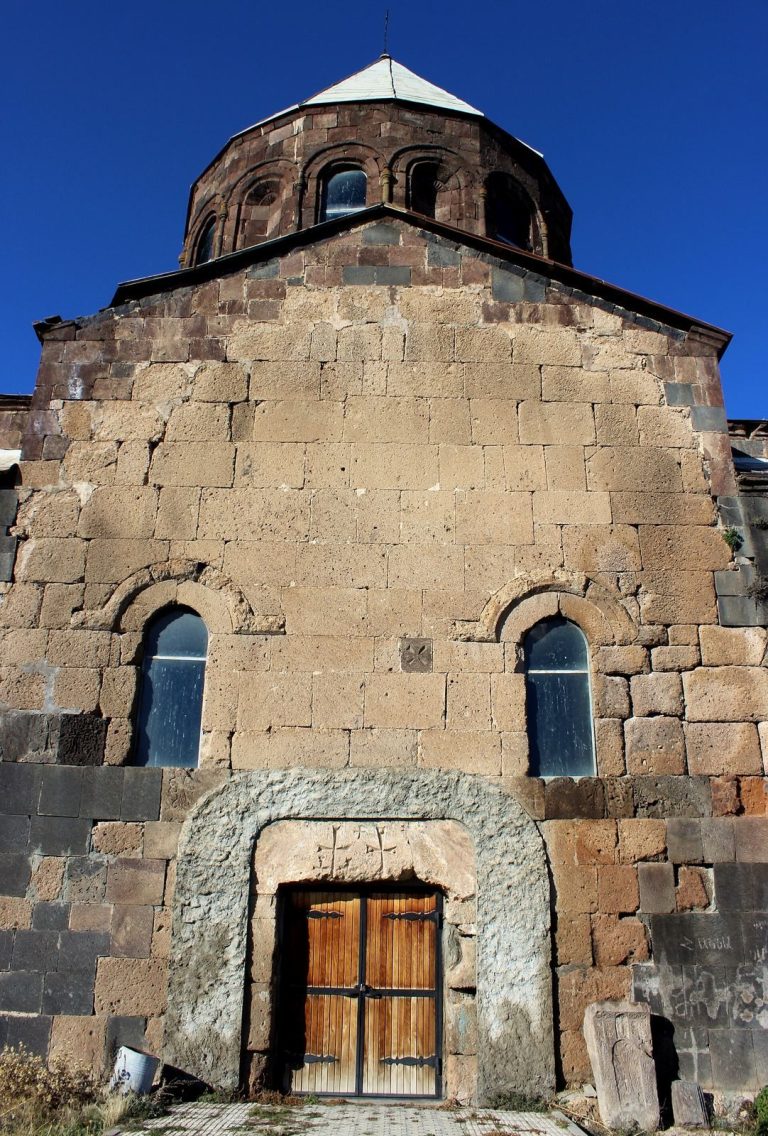
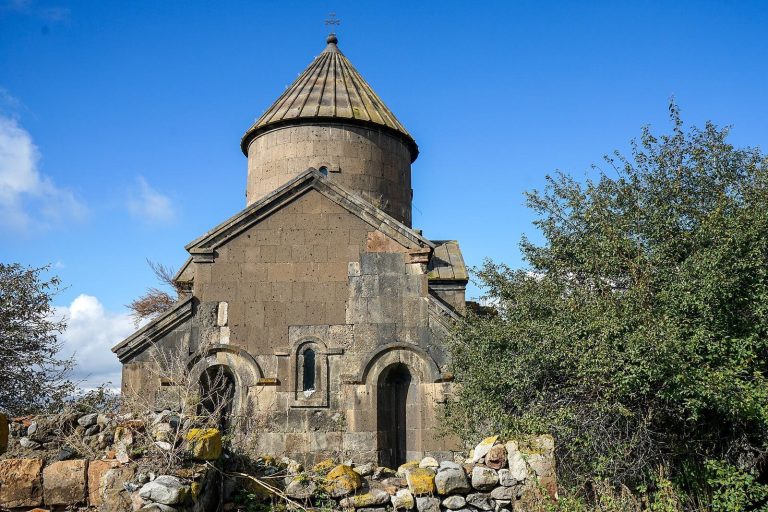
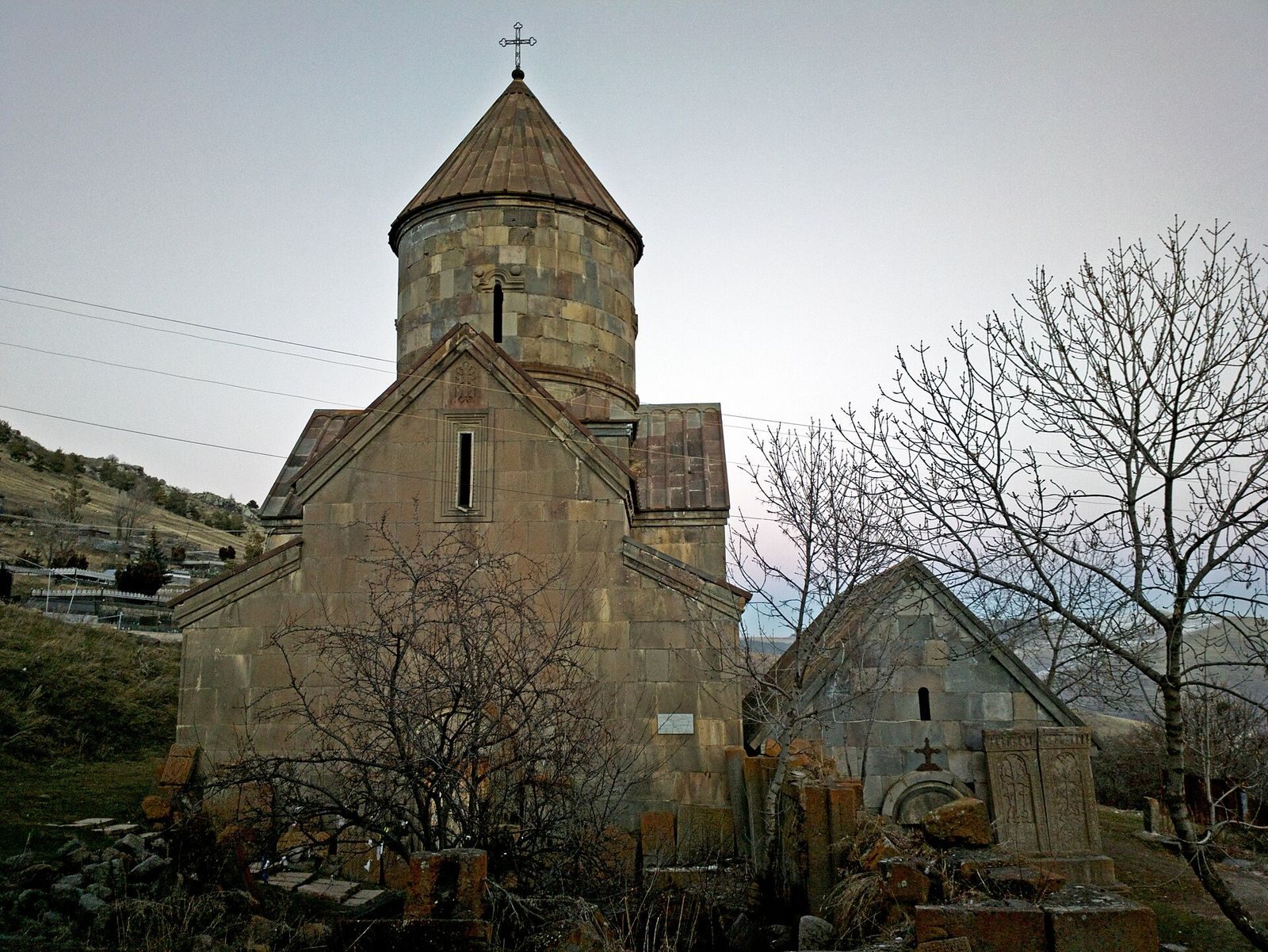
The thirteenth-century Holy Mother of God church is an Armenian cruciform, central-plan building with a dome. It has the form of a domed hall with a pair of wall piers and two-story annexes on the west. A circular central drum, the structure supporting a dome, carries the conical dome. Narrow windows with bell-shaped arches face the four cardinal directions.
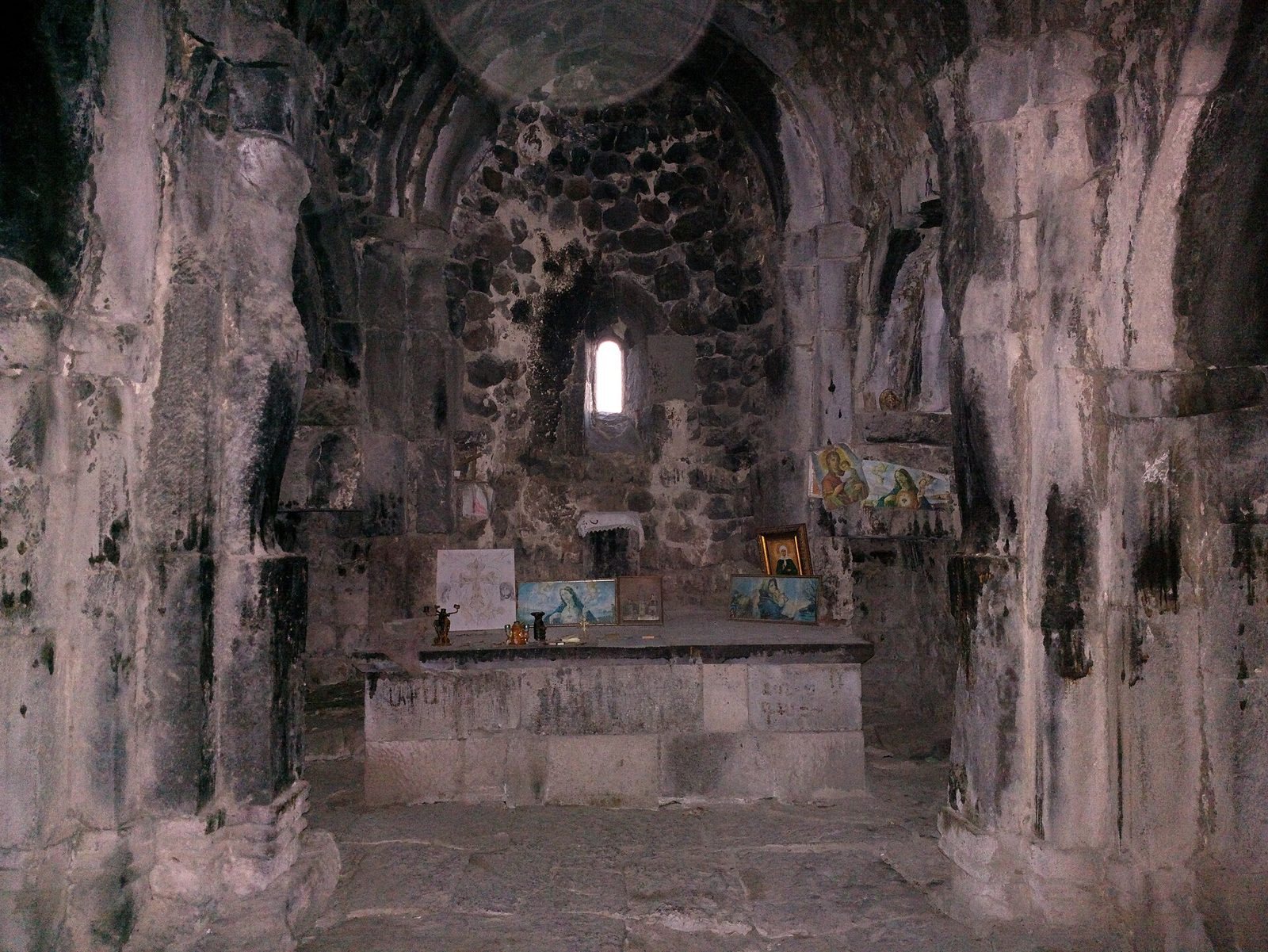
A single portal opens into the church. Above it, a semicircular tympanum, the field above a doorway, contains a one-line Armenian inscription and four Armenian-style crosses carved in bas-relief, or low relief. The church also carries numerous ornamental carvings, inscriptions, crosses, and other bas-reliefs. Its wooden altar is painted in several colors, including red, green, and blue.
The southern window is flanked by Bolnisi-style crosses, a medieval cross design named after examples at Bolnisi in Georgia and characterized by expanded or rounded terminals. Another such cross appears above the small rear window of the adjacent chapel, standing on a stepped base.
Holy Redeemer Chapel
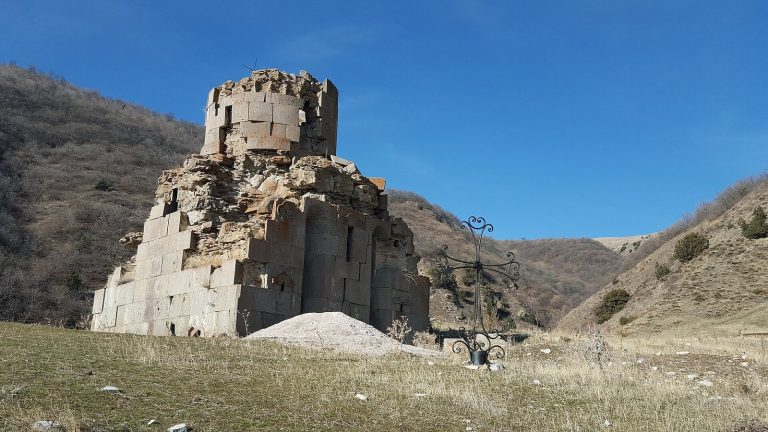
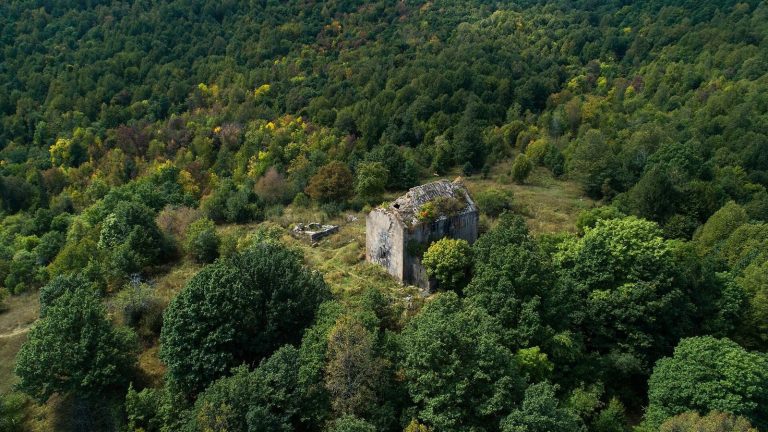
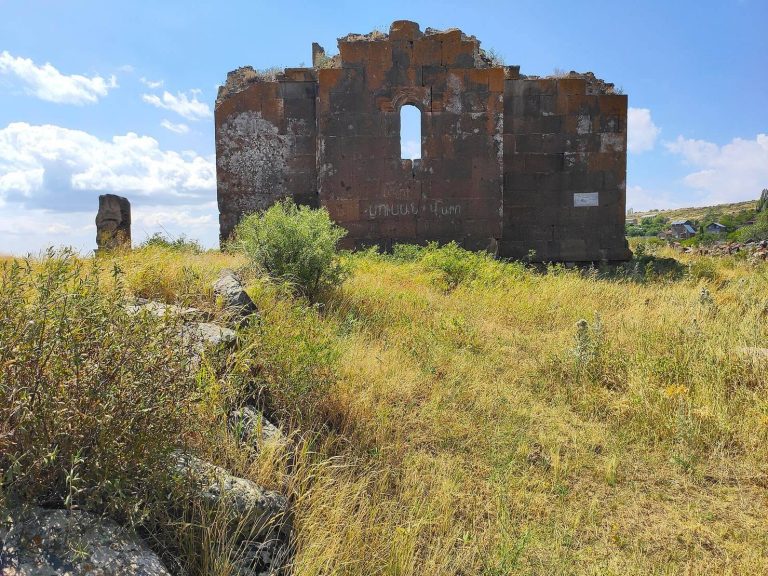
The Holy Redeemer chapel lies south of the main church and dates from the tenth or eleventh century. It is a simple, partly ruined, single-nave building with a gable roof. Two small, narrow windows pierce the structure, one at the front and one at the rear. A smaller semicircular tympanum stands above its doorway, and the chapel has its own entrance. Two large khachkars stand directly in front of it.
Monastic Enclosure and Cemetery
Gavit Foundations
The gavit stood west of the Holy Mother of God church and near the chapel. A gavit is an attached Armenian monastic building used as a vestibule, hall, gathering space, or funerary structure. The building had an almost square plan. Only its lower wall foundations survive, and they now form a wall enclosing a courtyard.
Medieval Cemetery
The medieval cemetery lies east of the church. It contains decorated khachkars and several tombstones, while additional khachkars stand around the church. Together, these carved stones and burial markers form part of the surviving archaeological and religious character of Makravank.