Mahakan Fort: A Late-Eighteenth-Century Defense of Bangkok
Site at a Glance
- Rating
- 4.4
- Popularity
- Medium
- Country
- Thailand
- Primary era
- Early Modern
- Eras represented
- Early Modern
- Civilizations
- Unclassified
- Site type
- Military
- Remains
- Fort
On this page4 sections
History
Construction and defense
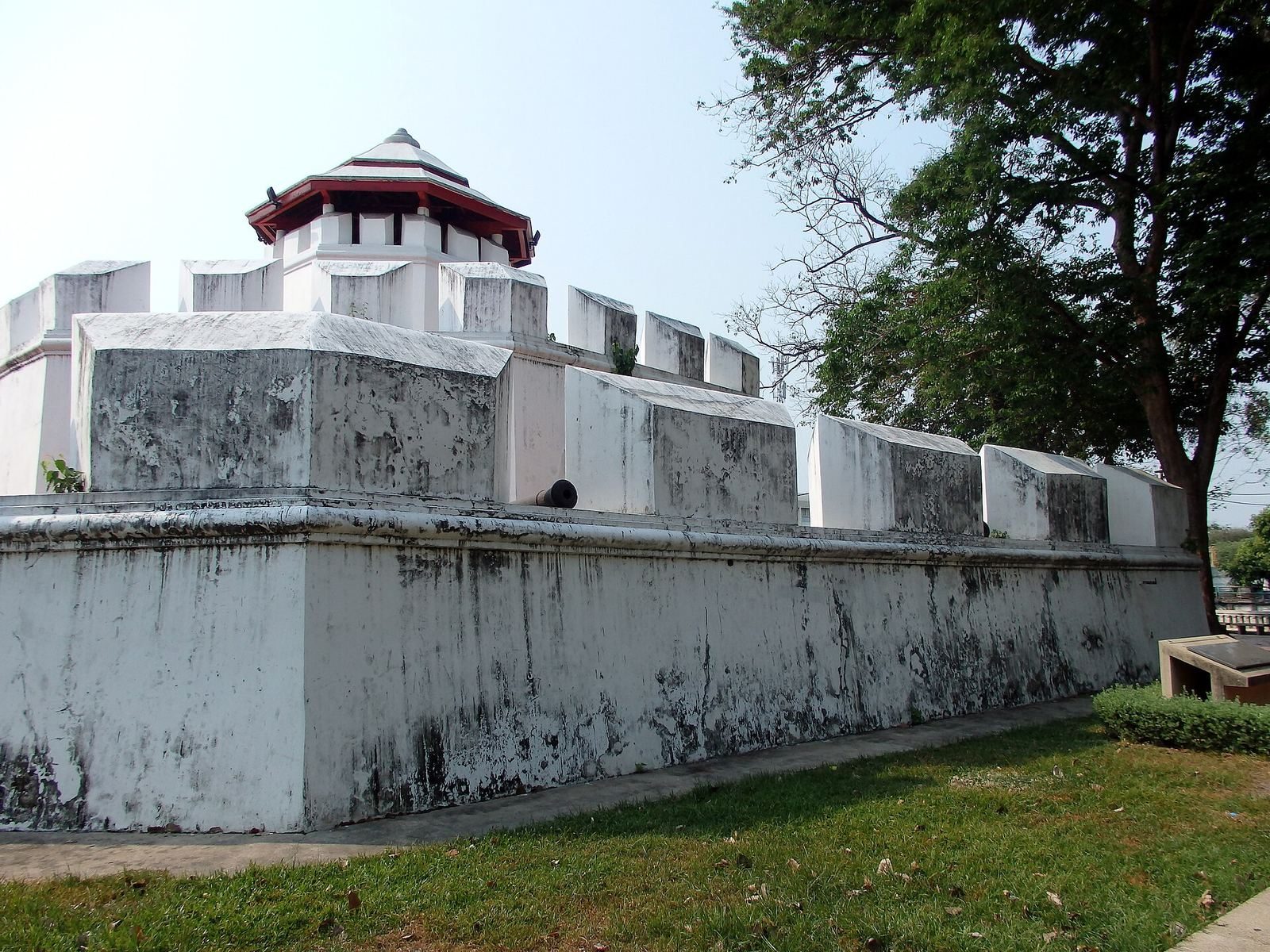
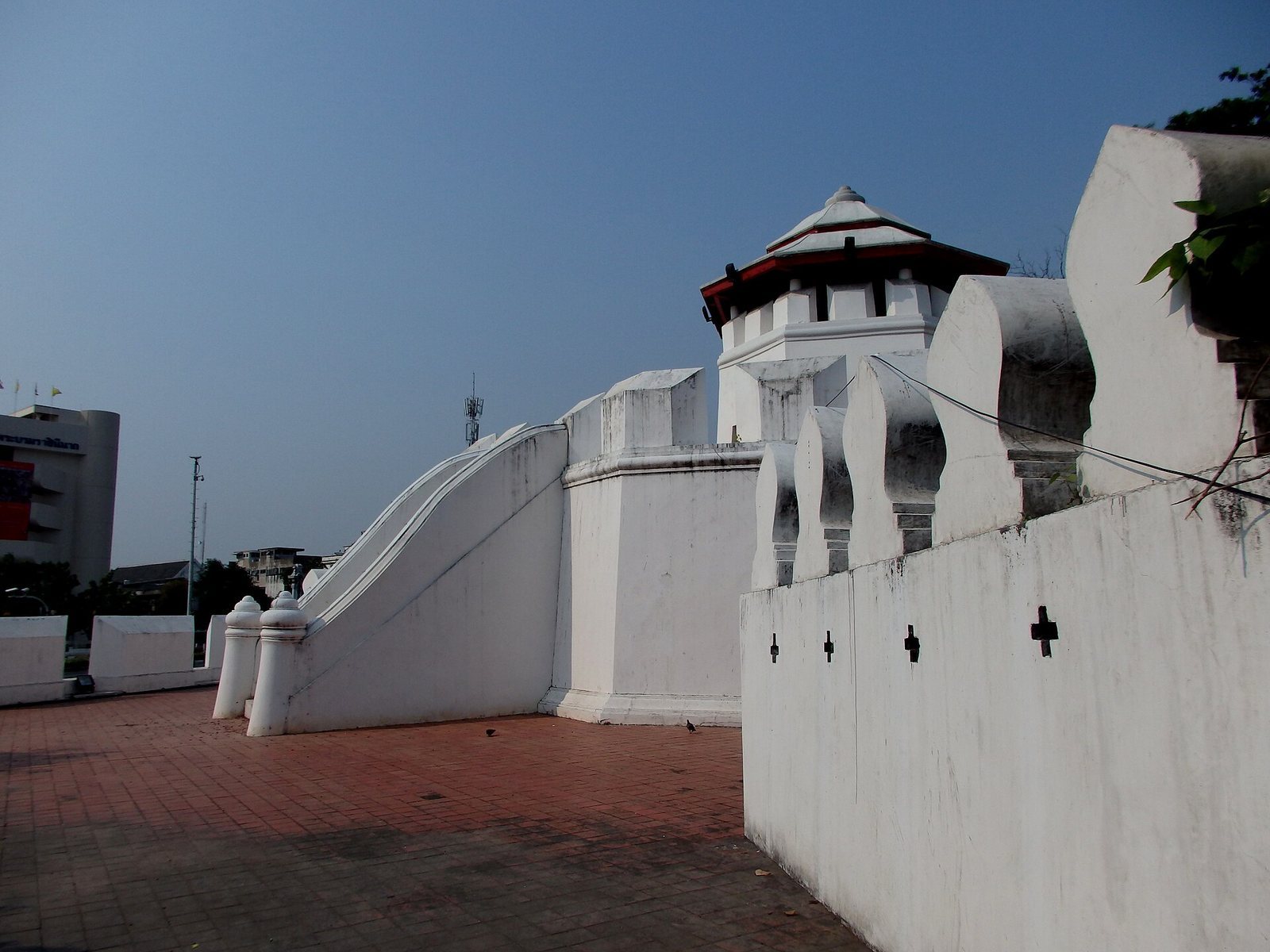
Mahakan Fort is a late-eighteenth-century military fort in Bangkok, Thailand, built in the 1780s as part of the city’s wall defenses. In 1782, King Rama I, the first monarch of the Chakri dynasty, Thailand’s royal house established that year, chose Bangkok as the kingdom’s new capital. Burmese forces had destroyed Ayutthaya, the former capital, in 1767, and the threat of another attack prompted the construction of city walls, forts, and defensive canals.
When Burmese forces invaded Siam, the former name of Thailand, again in 1785, they did not reach the capital. Bangkok’s forts were not involved in the fighting.
Redevelopment and restoration
In 1959, the municipal government began pursuing redevelopment around the fort. Its plans required the expropriation of 21 plots covering nearly 8,000 square metres, which were occupied by 28 homes. A regulation supporting the project was issued in 1992, by which time the area’s household count had risen to 102. Residents began moving away in 1994 in return for municipal compensation.
The redevelopment demolished wooden houses dating to the early Rattanakosin era, the period of Thai history that began when Bangkok became the capital in 1782, and displaced residents. The loss of homes regarded as part of Thailand’s heritage drew criticism, as did the small number of tourists attracted by a project whose main aim was tourism. A residential community had grown around the fort from the time it was built. The fort was restored by 2018.
Remains
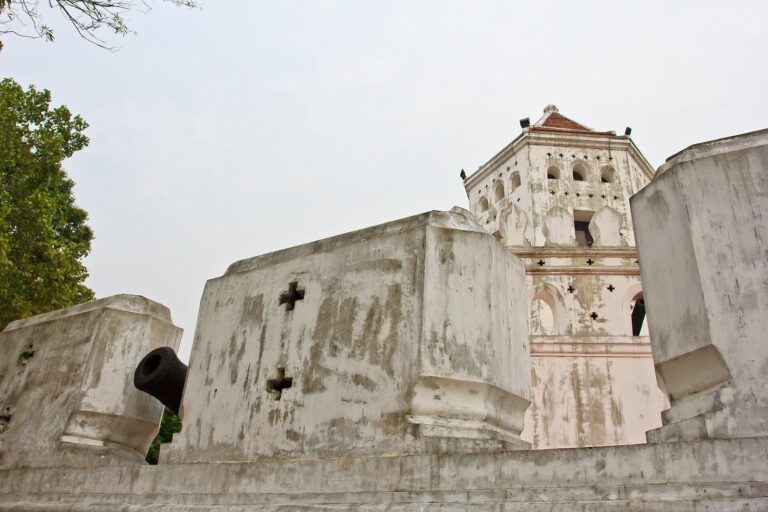
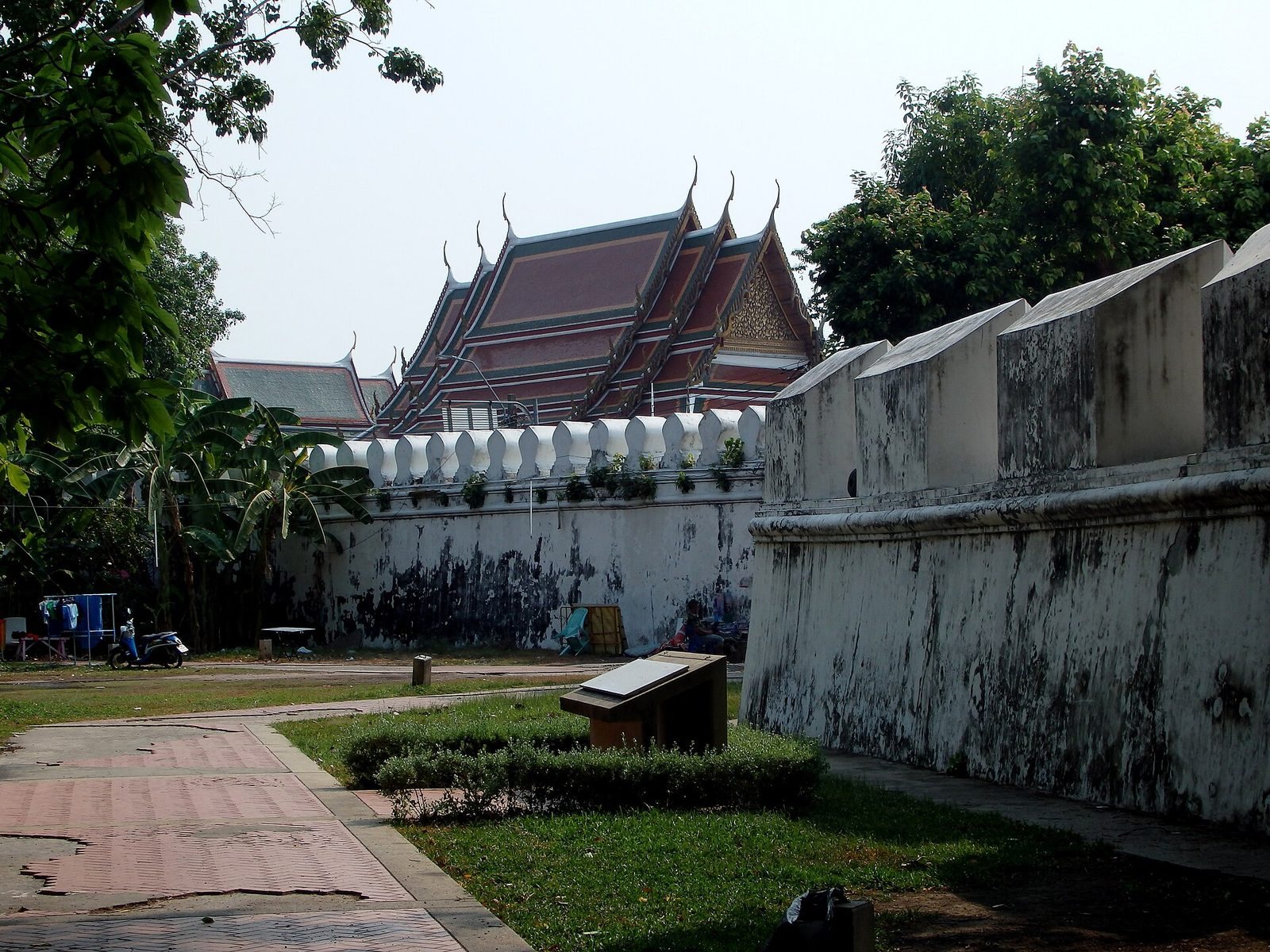
Mahakan Fort has an octagonal plan and stands beside Wat Saket, a Buddhist temple, along the line of Bangkok’s city walls. It formed part of the city’s defensive line. Of Bangkok’s 14 fortifications, Mahakan and Phra Sumen are the only two that survive; the city also had 16 gates. The restored fort marks the entrance to the capital’s Royal City and is surrounded by a public garden.